Three Classifications of Jamaican Coffee Beans: Blue Mountain Coffee, High Mountain Coffee, and Jamaica Coffee

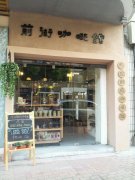
Before Geisha took the crown, Blue Mountain was regarded as one of the finest premium coffees on earth. A cup of authentic Blue Mountain at a café once cost several hundred yuan — out of reach for most people. Today it's far more attainable: at FrontStreet Coffee's store you can sip an aromatic, delicious cup for just 60 yuan, and the beans sell for 158 yuan per 100g bag.
The Growing Environment of Authentic Blue Mountain Coffee
Blue Mountain coffee comes from Jamaica, in the Caribbean. The Blue Mountain range on the island's eastern end rises straight from the sea and reflects a bluish sheen in sunlight — hence the name. Remote, with peaks over 2,000 meters, it's also a well-known tourist destination. Fertile volcanic ash soil, generous sunshine, and abundant rainfall nourish everything grown here, and locals plant coffee alongside bananas and avocados. Coffee, though, is the demanding one: it wants warmth, humidity, no frost, good nutrition, and proper shade. On Blue Mountain the peaks sit wrapped in cloud and mist year-round, draping the plantations in exactly the conditions coffee dreams of.

To keep quality stable, the Jamaican government founded the Coffee Industry Board (CIB) in 1952, giving it official authority over the country's coffee production. In 1953 the CIB designated roughly 6,000 hectares within the Blue Mountain range — just 15% of total Blue Mountain output — and decreed that only coffee from this zone could be called "Jamaican Blue Mountain Coffee." Everything else became "Jamaican High Mountain Coffee" or "Jamaican Premium Coffee." Thanks to its reputation, Blue Mountain commands a steep premium over both.
The Blue Mountain growing areas spread across four parishes — St. Andrew, St. Mary, St. Thomas, and Portland — at elevations of 910–1,700 meters (land above 1,700 meters is protected forest). CIB cupping of coffees from these designated areas reveals rich, mellow chocolate and nut aromas, a smooth palate, and almost no bitterness, with every element of the cup in perfect accord.

One chapter explains the mystique. In the 1960s, devastating hurricanes battered Jamaica's industries, coffee included. Japan's UCC stepped in with aid and introduced ecological farming methods to the Blue Mountain region. In 1972 Jamaica and Japan signed a 30-year coordination agreement granting Japan priority purchasing rights in gratitude — so for decades, 90% of Blue Mountain coffee went to Japan, with only the remaining 10% trickling out to Europe, the Americas, and Asia. That scarcity is why Blue Mountain was so expensive for so long.
How Are Authentic Blue Mountain Coffee Grades Classified?
The CIB was among the first bodies to grade coffee scientifically, combining green bean size, color, uniformity, defect rate, moisture content, and cupping performance.

Before export, the beans are packaged, sent for quality testing, and graded by size and post-processing defect rate into Blue Mountain No. 1, No. 2, No. 3, and Blue Mountain Peaberry. Size is checked with mesh sieves — beans too large to pass through the openings meet spec. Top-grade Blue Mountain No. 1 must screen at 17 mesh or larger, hold a defect rate below 3% and moisture around 13%, and cup with rich aroma, a smooth balanced flavor, low acidity, and a lasting sweet finish.
To keep the beans in peak condition until roasting — and dry through every stage of transit — Jamaicans insist on handcrafted wooden barrels, now one of the signatures of genuine Blue Mountain. According to FrontStreet Coffee, these are replicas of the Bonifieur barrels once made on Guadeloupe Island, originally built to carry flour from England to Jamaica and typically stamped with trademarks and makers' names. The Coffee Industry Board certifies all authentic Jamaican coffee and approves its exporters.

FrontStreet Coffee's Roasting Philosophy
FrontStreet Coffee roasts to bring out each coffee's most classic profile — the bright lemon acidity of Yirgacheffe, the rich roasted depth of Indonesian Mandheling — and Blue Mountain deserves nothing less. A medium-dark roast draws out its chocolate and nut aromas to the fullest while preserving the soft acidity and sweetness, landing on an overall balanced cup.
How to Identify Authentic Blue Mountain Coffee?
Genuine Blue Mountain is so rare that production can't meet demand, and some merchants exploit that by slipping the words "Blue Mountain" onto low-grade blends. FrontStreet Coffee offers a few checkpoints.

First, price. Authentic Blue Mountain grows in specific high-altitude zones with punishing labor costs, so it will never be cheap. If your "Blue Mountain beans" cost only a few dozen yuan, they're almost certainly fake.
Second, the cup. True Blue Mountain carries a rich, dense, long-lasting chocolate and roasted-hazelnut aroma that ordinary dark-roast blends can't approach, and in flavor it strikes a perfect balance of sour, sweet, bitter, and aromatic notes — nothing dominates, and body and sweetness sit in complete harmony.

Still unsure? Ask for the paperwork and the barrel. Jamaica is the only origin that ships green beans in wooden barrels, and FrontStreet Coffee's Blue Mountain No. 1 arrives with a quality certificate issued by the Jamaica Coffee Board, an authorized sales certificate from the producer, and a certificate of origin — all on display at the store along with the handcrafted barrels. FrontStreet Coffee's Blue Mountain No. 1 is grown at Clifton Mountain Estate and washed-processed, the most traditional method for Blue Mountain greens.
How to Brew Authentic Blue Mountain No. 1 for the Best Taste?
Bought a high-grade Blue Mountain No. 1 and not sure how to coax out the classic flavors? Here's FrontStreet Coffee's house pour-over method.

Freshness matters most. Roasted coffee has an optimal flavor window, and once the aroma peak passes, extraction gets difficult. FrontStreet Coffee ships every bag roasted within 5 days so you brew inside that window.
FrontStreet Coffee reaches for KONO drippers for medium-dark roasts. Their smooth, curved upper walls hug the filter paper, and compared with a V60 the KONO leans on immersion, raising concentration and body. Kalita trapezoidal drippers, flat-bottom cake drippers, and flannel filters all work well too.

Because medium-dark beans are more porous than light roasts and absorb water readily, over-extraction is the risk. FrontStreet Coffee uses a grind with a 75% pass-through rate on a No. 20 standard sieve, water at 88°C, and its customary three-stage pour.
Pour-over parameters: 88°C water, coarse-sugar grind (75% pass-through on No. 20 sieve), 15g of coffee, 1:15 ratio, three-stage extraction.

First stage: pour 30g of water gently to bloom for 30 seconds. Second stage: pour to about 125g with even, steady circles, then wait until the liquid drops to half. Third stage: pour to 225g and let the drip finish. Total extraction typically runs about 2 minutes.


Blue Mountain No. 1 flavor: served hot, it enters with dark chocolate — very rich and mellow — and a distinct almond aftertaste. As it cools, roasted hazelnut and creamy sweetness turn silky, edged with soft acidity and caramel, the fragrance lingering in the mouth long after.
FrontStreet Coffee Recommendation
Since not every Jamaican coffee is true Blue Mountain, certification is everything — and FrontStreet Coffee's Blue Mountain No. 1 represents the highest grade, backed by a government-issued certificate and full origin documentation, shipped in handcrafted wooden barrels marked with detailed batch information (the traditional 15kg, 45kg, and 70kg formats). The estate behind it, Clifton Mountain Estate, has grown coffee since roughly 1750, at an average of 4,300 feet (1,310.64 meters) where cool afternoon mists, ample sun, and mineral-rich soil slow the cherries' ripening. The greens themselves are full and even, slightly uptilted at both ends, green in color — and in the cup, intensely aromatic, dense, and perfectly clean, balancing sweetness, gentle acidity, and bitterness with a lasting fruit finish.
Pour-over is the best window into that balance: rest the beans 4–7 days from roast date, use 15g at 1:15 with 87–88°C water and a white-sugar-coarse grind, blooming 30g for 30 seconds before building to 120g, then 225g in slow spirals. You'll taste cream, caramel, chocolate, and nuts unfold layer by layer with a clean, long finish.
Blue Mountain isn't only for pour-over, either — its balance shines through a moka pot too. Grind slightly finer, start with hot water, heat on medium-low, and pull it off the flame just before the flow ends; the pot amplifies the chocolate, caramel, and nut tones into something thicker and fuller, and with milk it makes a superb latte or flat white.
Important Notice :
FrontStreet Coffee is a long-established specialty coffee roaster in Guangzhou China, selling freshly roasted beans from its own farm in Yunnan as well as dozens of carefully selected single-origin beans from around the world for both pour-over and espresso. The products deliver consistently excellent quality and great value, with shipping within 24 hours. Guangzhou's FrontStreet Coffee shop is recommended by many coffee lovers, and the beans are now available online at the Tmall 。
FrontStreet Coffee has moved to a new address:
FrontStreet Coffee Address: 315,Donghua East Road,GuangZhou
Tel:020 38364473
 Scan and follow the En Gafei WeChat official account. Please indicate that the reprint comes from "En Gafei".