Imported Coffee Beans - FrontStreet Coffee Americas Imported Coffee Beans Panama Hacienda La Esmeralda Manufacturer
FrontStreet Coffee · Panama · Hacienda La Esmeralda Geisha Coffee Beans
Panama Geisha (Hacienda La Esmeralda)
Origin: Panama
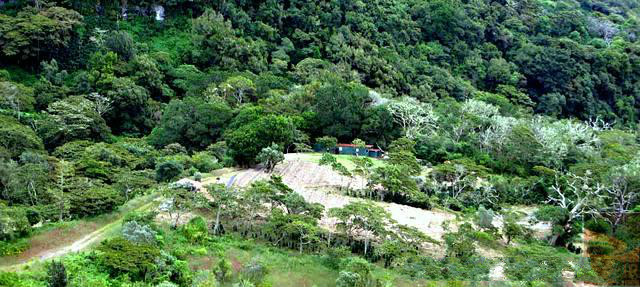
Region: On the slopes of Barú Volcano, the highest peak in western Panama
Estate: Esmeralda (La Esmeralda) / Hacienda La Esmeralda
Grade: SHB
Growing Altitude: 1450M
Processing Method: Fine washed processing
Special Certification: Rainforest Alliance Certified
Roast Level: Light roast, city-
Flavor Description: Oolong tea fragrance, peach aroma, honey sweetness — refreshing and comfortable, bright yet balanced, with remarkably layered aromatics all wrapped in caramel sweetness. On entry, the tongue picks up distinct fruit acidity that turns gentle and rounded mid-palate. The fruit sweetness and aftertaste are intense, like swallowing a mouthful of fresh fruit tea — clear and bracing. As the cup cools, the acidity grows more delicate, and the flavor lingers long enough to leave you deeply satisfied.
FrontStreet Coffee · La Esperanza Estate
Country: Panama
Region: Boquete
Grade: SHB
Varieties: Caturra, Catuai, Typica
Roast Level: CITY+ (Medium)
Processing Method: Washed
Growing Environment: Altitude 1400-1600M
Producer/Company: La Esperanza Estate, Hacienda La Esperanza
Certification: Organic Certification
Flavor Profile: This organic Boquete shows nut and berry aromas in both dry and wet fragrance. The acidity is gentle rather than sharp, the sweetness very high, and the body delicate yet rich, with an extremely long finish — it somewhat resembles a baby Geisha, or a sweeter interpretation of one.
La Esperanza Estate sits at 1400–1600 meters and produces between 300 and 700 bags a year. Most processing happens on the farm using washed methods with sun-drying, and the husks, pulp, and mucilage are composted back as fertilizer. The estate plants 60% Caturra, 20% Catuai, and 20% Typica, along with other varieties — most famously Geisha, which won Best of Panama in 2008. Native trees serve as shade, including citrus such as lemons and grapefruits plus many other tropical fruits. A vast tropical rainforest reserve covers part of the property, fed by at least three mountain wells; annual rainfall averages 3,200mm, with daytime temperatures of 16–23°C and nighttime temperatures of 14–20°C.
La Esperanza is unlike most estates: it employs a PhD botanist, three professional cuppers, and 100 full-time staff, and currently manages six farms. The estate belongs to the Herrera brothers, whose grandfather once ran a coffee farm in Colombia's Trujillo region. When that farm declined, the brothers left Colombia — but never gave up the dream of returning to run an estate of their own.
Back in their family's homeland, the Herreras' first purchase was La Esperanza in Trujillo, very close to their grandfather's original farm; it now serves as the regional headquarters. The estate is 100% organic, growing Colombia, Castillo, and Caturra varieties plus more than 14,000 organic Geisha trees. The brothers went on to buy four more estates in Trujillo and in Caicedonia to its north, and with La Cardeida estate in Boquete, Panama — rented in 2005 — they now operate six estates totaling 213 hectares of coffee.
The estates of Cafe Granja La Esperanza stretch across eight distinct microclimates in three Colombian mountain ranges, giving their botanists extraordinary scope to experiment with terroir, processing, and variety — combining scientific rigor, commercial sense, and an obsession with cup quality. Different microclimates and varieties get their own processing protocols, and from seedling to export, 95 data points track every lot.
Chief botanist Hernando Tapasco's team runs weather stations on the estates to inform harvest decisions, with farm data collected and analyzed weekly; after harvest, weather, production, and cupping data are compared to find correlations. Geisha pickers are trained to take only fully mature cherries and are paid by the day rather than by weight — unlike at estates where volume quotas encourage bad picking — and half the harvest crew has more than six years of experience. After picking, fruit reaches the central mill at La Esperanza quickly, where every Geisha batch is marked and processed separately: a three-day pre-drying on the patios, then finishing in small drying towers. Quality control is ruthless. At Cerro Azul estate, of 40,000 to 45,000 Geisha trees, only 5,000–7,000 produce beans good enough to carry the Cerro Azul brand.
The variety experiments never stop. Beyond the organic Caturra that once dominated La Esperanza, the roster now spans Geisha, organic Geisha, Mocha, Bourbon (red, yellow, and Tekisik), Laurina, Pacamara, San Bernardo, and Pache — the seriousness wineries bring to grape varieties, applied to coffee. Their Pacamara, Bourbon, and even Laurina have kept surprising the specialty coffee world long after Geisha made their name.
The approach paid off early: in the 2008 Best of Panama, La Cardeida — the estate the Herreras rented — took the championship with a score of 93.16. In the 2012 Annual Coffee Triple Crown, the three estates now growing most of their Geisha swept places: Cerro Azul second, Las Margaritas third, and Buenos Aires Experimental seventh.
FrontStreet Coffee Panama SHB Cesaruis Medium Roast Washed 69.00 138.00 Floral notes, citrus micro-acidity, clean and bright mouthfeel
FrontStreet Coffee Panama (free shipping within Guangdong Province) SHB Irlanda Estate Medium Roast Washed 75.00 150.00 Creamy bread, apricot kernel sweetness, rounded acidity
FrontStreet Coffee Panama SHB (containing 30% Geisha) Cupid Estate Medium Roast Honey Process Washed 79.00 158.00 White grapes, caramel, honey, black tea
FrontStreet Coffee Recommendation
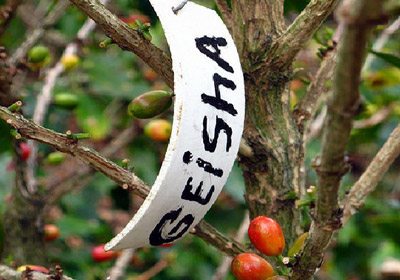
Geisha is the most celebrated variety in Arabica coffee — famous for its floral aromatics and exquisite sweet-acid balance, and priced accordingly, thanks to low yields, weak disease resistance, and demanding cultivation. If you want remarkable Geisha without a heart-stopping price tag, it pays to know the tiers. At the top sit the two Esmeralda lines: the Red Label ("Esmeralda Special"), grown at 1600–1800 meters, cupping above 90 points every batch, each lot from a single named plot — FrontStreet's Red Label comes from the Jaramillo plot — so buyers can choose by subtle flavor differences; and the Green Label ("Private Collection"), blended from multiple high-altitude plots to express Esmeralda's signature style, more affordable and arguably the better value.
Newcomers should start with FrontStreet Coffee's Boquete Geisha, the entry-level Panama lot: at a friendly price it delivers the classic Panama Geisha character — orange blossom and honeyed sweetness, an oolong-tea feel, delicate fruit acidity, and clean layering. For the origin story, look to Ethiopia: Geisha Village estate, founded by a couple 12 miles from the native Gesha forest on 475 hectares, identified the wild varieties closest to Panama Geisha by plant morphology, bean shape, and cup performance. The Gold Label (Gesha 1931, just 10% of production, their finest lots outside auction, often chosen by competition baristas) is an intricate natural, while the Red Label (Gori Gesha, 15% of production, SCA 88+ in the 100-point scale) is the estate's single-terroir series with fully traceable lot numbers.
And for Ethiopia's native Gesha at its most accessible, try FrontStreet Coffee's Genlana Gesha, from a washing station founded in 2014 and run by Israel Degefa at the border of Kochere and Genji Abaya — 700 hectares of mostly unfarmed, fertile, shade-covered land. Fully ripe cherries are hand-picked and dried on raised beds for 14–20 days depending on weather, then roasted medium-light: bright citrus acidity, elegant ginger-flower aroma, the full sweetness of ripe fruit, and a silky texture with that unmistakable Geisha finish. Brew it on a V60 — 15g of coffee, a 1:16 ratio, water at 91°C, and a grind passing 78% on the #20 sieve, in three pours of 30g, 125g, and 225g over roughly 2 minutes 10 to 20 seconds — and you'll taste why this variety conquered the coffee world.
Important Notice :
FrontStreet Coffee is a long-established specialty coffee roaster in Guangzhou China, selling freshly roasted beans from its own farm in Yunnan as well as dozens of carefully selected single-origin beans from around the world for both pour-over and espresso. The products deliver consistently excellent quality and great value, with shipping within 24 hours. Guangzhou's FrontStreet Coffee shop is recommended by many coffee lovers, and the beans are now available online at the Tmall 。
FrontStreet Coffee has moved to a new address:
FrontStreet Coffee Address: 315,Donghua East Road,GuangZhou
Tel:020 38364473
 Scan and follow the En Gafei WeChat official account. Please indicate that the reprint comes from "En Gafei".