Ethiopia's Specialties: Ethiopian Coffee Farms, Coffee Industry and Varieties
Ethiopia: The Birthplace of Coffee
Ethiopia is one of Africa's main producers of Arabica coffee, producing some of the world's finest Arabica beans. It is said that coffee was first discovered by shepherds in Ethiopia's Kaffa region, and the name "coffee" evolved from "Kaffa." Ethiopia is therefore truly the homeland of coffee.
Coffee Production and Processing
Ethiopia's geographical environment is exceptionally suitable for coffee cultivation. Coffee is primarily grown on the southern highlands at elevations between 1,100 and 2,300 meters. Major producing regions include Harar, Limu, Djimma, Sidamo, Kaffa, Yergacheffe, and Wellega. The soil in these regions is well-drained, slightly acidic, and red in color with a loose texture.
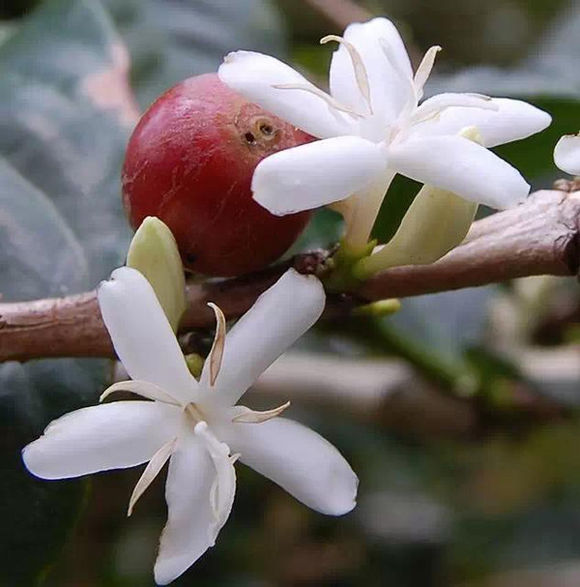
Ethiopian coffee is harvested once a year. From March to April, beautiful white coffee flowers bloom on the branches, after which the fruit begins to grow. From September to December, the red cherries mature and await picking. From November to December, the new season's coffee begins to be exported.
Currently, approximately 25% of Ethiopia's population relies directly or indirectly on coffee production for its livelihood. Most farmers use traditional cultivation methods: coffee trees are cared for manually, organic fertilizers are used, and harmful pesticides and herbicides are avoided. As a result, most coffee produced in Ethiopia is organic coffee.
Because of different cultivation methods, coffee can be classified into three types: forest or semi-forest coffee, garden coffee, and plantation coffee.
60% of coffee belongs to the forest or semi-forest category. In such wild coffee forests, no pesticides are used at all; biological methods handle pest control instead.
35% of coffee is garden coffee. In these coffee gardens, cultivation follows a three-dimensional distribution pattern, with coffee growing in the lower layer under the shade of other crops. Fertilizers consist mainly of fallen leaves, withered grass, and animal manure.
5% of coffee is plantation coffee, a modern cultivation method in which coffee also grows in groves, but with new varieties planted in rows interspersed with other shade trees.
Because of different processing methods, coffee can also be divided into two categories: washed coffee and sun-dried coffee.
Washed coffee accounts for 35% of exports. High-quality washed coffee is processed from freshly picked, fully mature cherries, with careful picking and close monitoring by professionals. After selection and cleaning, the beans are pulped on the same day as picking, then fermented, washed, dried, and hulled. The moisture content of processed beans is maintained at around 12%.
Sun-dried coffee accounts for 65% of exports. It is mainly picked by households, and the red beans are placed on cement floors or raised tables to dry to about 11.5% moisture content, then hulled and cleaned.
Coffee Grading and Quality Control System
In Ethiopia, the coffee grading and quality control system has three levels: producer, regional, and national. All coffee must be inspected by local inspection agencies before leaving its origin, then re-inspected at coffee inspection and grading centers in Addis Ababa and Dire Dawa to determine its quality grade. Grading before auction and sale matters to everyone involved in production, purchasing, export, and consumption. Before export, coffee must also be sent to a national quality control agency to confirm that origin, color, and other aspects meet export standards, protecting the reputation of Ethiopian coffee.
Ethiopia's grading and quality control system currently relies mainly on two indicators: visual inspection and cup evaluation, with assessment items including bean color, cleanliness, origin, taste, and characteristics. Export grading is indicated by simple numbers: the best washed coffee is Grade 5, and the best sun-dried coffee is Grade 4. After grading, the coffee is marked with its origin and can be exported. Typically, exports are paid for by letter of credit, which both reduces the foreign exchange risk for exporters and provides quality assurance to importers.
By legal requirement, all coffee must be traded through auctions held in Addis Ababa and Dire Dawa. During the harvest season, such auctions are even held twice daily.
Coffee Exports
Coffee is Ethiopia's most important export cash crop and its main source of foreign exchange earnings. Ethiopian coffee exports account for approximately 3% of the world market share, making the country the world's eighth-largest coffee exporter. Export volume rose steadily from 58,000 tons in 1990-1991 to 110,000 tons in 1995-1996, and remained at that level for several subsequent years. In 2001-2002, export volume exceeded 110,000 tons, and in 2002-2003 it reached 127,000 tons. Because international coffee prices declined continuously for a decade, Ethiopia's foreign exchange earnings were severely affected. Before the steep price drop, coffee export earnings accounted for more than half of Ethiopia's foreign exchange income, but they now account for only about 35%. According to International Coffee Organization reports, however, prices began to rebound in 2002, rising from 41 cents per pound in September 2001 to 52 cents in 2002 and further to 59.7 cents per pound in 2003. The average price in March 2004 was 60.8 cents per pound, a 50% increase over September 2001 prices—excellent news for Ethiopia.
Ethiopians are avid coffee drinkers, and domestic consumption in 2003 accounted for 42.3% of total production, with per capita consumption of 3 kilograms. Even so, more than half of annual production is exported to earn foreign exchange. Major export destinations include the United States, Italy, the United Kingdom, Sweden, Norway, Greece, France, Belgium, Germany, and Australia.
Before 1974, coffee production, processing, and trade rights were all in private hands. During the military regime, private farms were nationalized and small-scale coffee producers were neglected. In 1991, Ethiopia's transitional government issued a new economic policy encouraging private merchants to export coffee, and the number of private exporters increased dramatically. Currently, nearly 90% of coffee exports are controlled by private exporters.
FrontStreet Coffee's Ethiopian Coffee Characteristics
The natural characteristics of coffee beans include size, shape, acidity, texture, flavor, and aroma. Ethiopian beans are small and aromatic, with a wine-like acidity, and are deeply loved by enthusiasts. Because of their unique aroma and flavor, Ethiopian coffees are often used in beverages, ice cream, and candies, and in variety improvement.
World-renowned Ethiopian coffees mainly include:
1. Limu coffee grows at elevations between 1,400 and 2,000 meters. It is washed coffee of superior quality, with rich nutty aroma, moderate acidity, and wine-like intensity. Annual production is 29,000 tons.
2. Djimma coffee grows at elevations between 1,400 and 1,800 meters. It is sun-dried coffee, slightly acidic with nutty aroma and a long aftertaste. Annual production is 70,000 tons.
3. Ghimbi coffee grows at elevations between 1,500 and 2,300 meters. It is gourmet-grade coffee with moderate acidity and fruity aroma. Annual production is 34,000 tons.
4. Yergacheffe coffee grows at elevations between 1,500 and 2,200 meters. It has mocha flavor with floral and spicy notes. Average annual production is about 28,000 tons.
5. Sidamo coffee grows at elevations between 1,400 and 2,200 meters. It has suitable acidity and superior quality. Average annual production is about 37,000 tons.
6. Harar coffee grows on highlands above 2,700 meters elevation. It is among the world's best coffees, with moderate acidity, an intoxicating exotic flavor, and a tipsy, dried-fruit aroma—pure mocha coffee. Average annual production is about 26,000 tons.
Wholesale Prices
FrontStreet Coffee Yirgacheffe G3 - Bench Maji Zone - Medium Roast - Sun-dried - 78.00 - 156.00 - Jackfruit, spices, wine
FrontStreet Coffee Yirgacheffe G1 - Guji Zone - Medium Roast - Sun-dried - 85.00 - 170.00 - Blueberry, honey, purple fruits, citrus notes
FrontStreet Coffee Yirgacheffe G1 - Aricha - Light Roast - Sun-dried - 95.00 - 190.00 - Light fermented wine aroma, sweet orange, spices, honey sweetness
FrontStreet Coffee Yirgacheffe G2 - Dama Cooperative - Light Roast - Washed - 75.00 - 150.00 - Lemon peel, black tea, dried longan, floral notes
FrontStreet Coffee Yirgacheffe G2 - Kochere Zone - Light Roast - Washed - 69.00 - 138.00 - Jasmine floral, lemon, bergamot, honey, black tea
FrontStreet Coffee Sidamo G2 - Sidamo Zone - Light Roast - Washed - 69.00 - 138.00 - Wild ginger flower, honey, citrus, lemon
FrontStreet Coffee Sidamo G1 - Guji Zone - Light Roast - Sun-dried - 79.00 - 158.00 - Jasmine, honey, citrus, ripe berries
FrontStreet Coffee Recommendation
Ethiopia is famous as coffee's birthplace and as a treasure house of native varieties, and the best way to start is with the entry-level FrontStreet washed Yirgacheffe, which shows clear jasmine florals and bright citrus acidity. That is what baristas mean when they say Yirgacheffe is a small town in southern Ethiopia, spring-like all year round, wrapped in fog, cool and humid, where thousands of coffee trees flourish and give rise to a distinctive interweaving of florals and fruit acidity, light and elegant with a tea-like body—like a clean, refreshing lemon tea. Most Ethiopian coffee is grown in a garden model, with each smallholder sending harvested cherries to a village-level processing station and selling under the production team's name, which is why cooperatives large and small appear on the market, such as FrontStreet's Gedeb Geding, Woka, and Konga. The Gedeb Geding Cooperative lies in the Woka area at the southeastern end of Yirgacheffe and was originally part of the Woka cooperative under the Yirgacheffe union YCFCU; as demand for traceable green coffee grew, independent "single origins" were uncovered one by one by coffee hunters around the world, and in 2012 Gedeb Geding, with about 300 member farmers, became an independent cooperative. Because the pulp is stripped before drying, its inherent aromas come through more clearly, showing citrus and lemon tones with an elegant white floral note—bright and delicate overall.
For a natural contrast, FrontStreet's sun-dried Red Cherry is processed differently: defective or moldy cherries are removed first, then the fruit is dried in the sun for two weeks, and once the pulp's sugars and essence have fully penetrated the beans and moisture has dropped to 12%, the hardened pulp, pectin layer, and parchment are scraped off with a hulling machine. The extracted beans then undergo density and color testing to eliminate defects, and workers remove by eye any that slipped through, layer after layer, so that every bean is specialty grade—clean and refined, with a rich, captivating fruit aroma. Its flavor is peach, cocoa, honey, and lemon. FrontStreet's sun-dried Huakui comes from the Hambella area of Guji, Sidamo, on a farm covering 200 hectares and using traditional natural processing; to keep the cherries from molding or picking up earthy off-notes during drying, workers spread the ripe fruit on raised beds for 21 days, turning it constantly for even drying and even moisture loss, and every 3 to 5 days the farmers hand-sort out defective and moldy beans. Once the skin has dried hard, a huller removes it, and after the green beans are obtained the farmers do one final sorting for a flawless cup. Because the fruit and skin stay on throughout drying, a medium-light roast brings out light fermented wine, florals, citrus, and mango, with a much richer, more complex body—honey sweetness, a cocoa note, a touch of spice, a thick body, and a lasting finish.
The same Sidamo region also gives FrontStreet's sun-dried Hamasho, whose processing station has become a regular on Ethiopian green coffee competition winner lists thanks to its excellent quality and distinctive flavor. The coffee it produces is mainly based on the disease-resistant 74 series released by JARC (the Jimma Agricultural Research Center), and the 74158 line has smaller beans and a prominent floral-fruit character: FrontStreet's Hamasho 74158 has an alluring aroma with sweet notes reminiscent of perfume lemon, strawberry, and starfruit, and on the palate it shows obvious strawberry, starfruit, and green grape sweetness, with a light floral note gradually rising afterward. For something wilder, FrontStreet's Kaffa Forest differs from the backyard garden model: it represents wild-grown coffee, with trees growing in shaded conditions at 1,400-2,100 meters, where a pristine ecology, microclimate, red soil, and abundant rainfall provide an excellent environment. FrontStreet's Kaffa Forest beans are medium-light roasted, and after grinding they show an obvious white floral note; on the palate there is bright lemon acidity with sweet orange and bergamot, and a finish of light melon and nut with a green-tea-like mouthfeel.
Important Notice :
FrontStreet Coffee is a long-established specialty coffee roaster in Guangzhou China, selling freshly roasted beans from its own farm in Yunnan as well as dozens of carefully selected single-origin beans from around the world for both pour-over and espresso. The products deliver consistently excellent quality and great value, with shipping within 24 hours. Guangzhou's FrontStreet Coffee shop is recommended by many coffee lovers, and the beans are now available online at the Tmall 。
FrontStreet Coffee has moved to a new address:
FrontStreet Coffee Address: 315,Donghua East Road,GuangZhou
Tel:020 38364473
 Scan and follow the En Gafei WeChat official account. Please indicate that the reprint comes from "En Gafei".