Differences Between Arabica Coffee Bean Varieties: Typica vs Bourbon
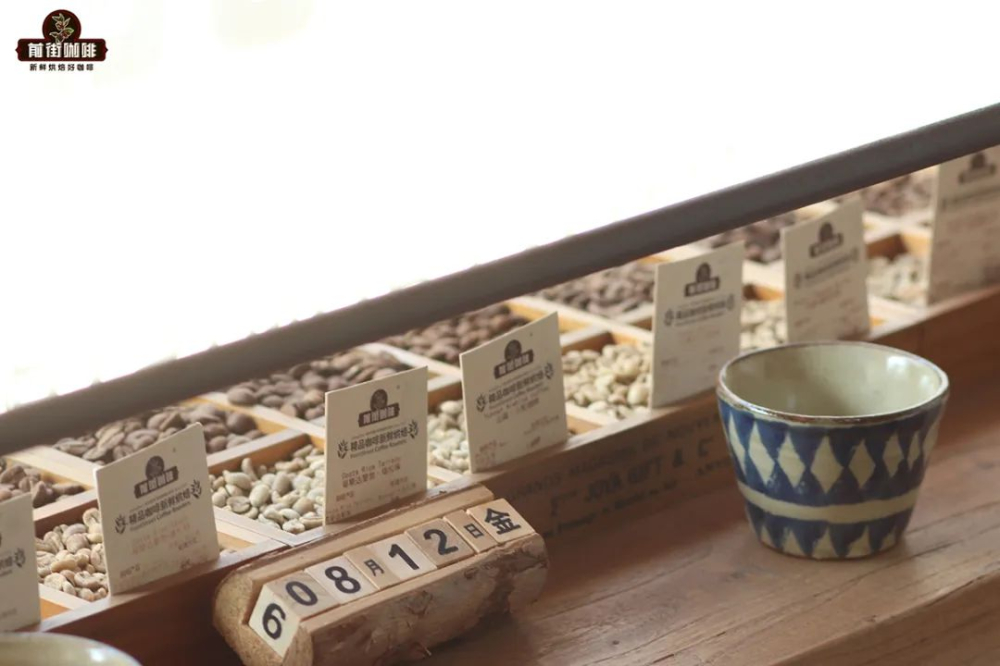
Have you ever watched a coffee expert glance casually at a handful of beans and immediately name their variety and origin? It looks like magic, but it is really just careful observation.
Although nearly all single-origin coffee comes from the Arabica species, the many varieties within Arabica differ noticeably in appearance. To identify coffee varieties at a glance, you have to study each type closely, learn its distinguishing features, and commit them to memory. Sound familiar? It is exactly like training your palate for cupping.

So let's walk through these lookalike beans together. Since most people have limited access to green coffee, FrontStreet Coffee will illustrate with roasted beans. If you have a bag of coffee at hand, grab a handful and start comparing right away.
Typica
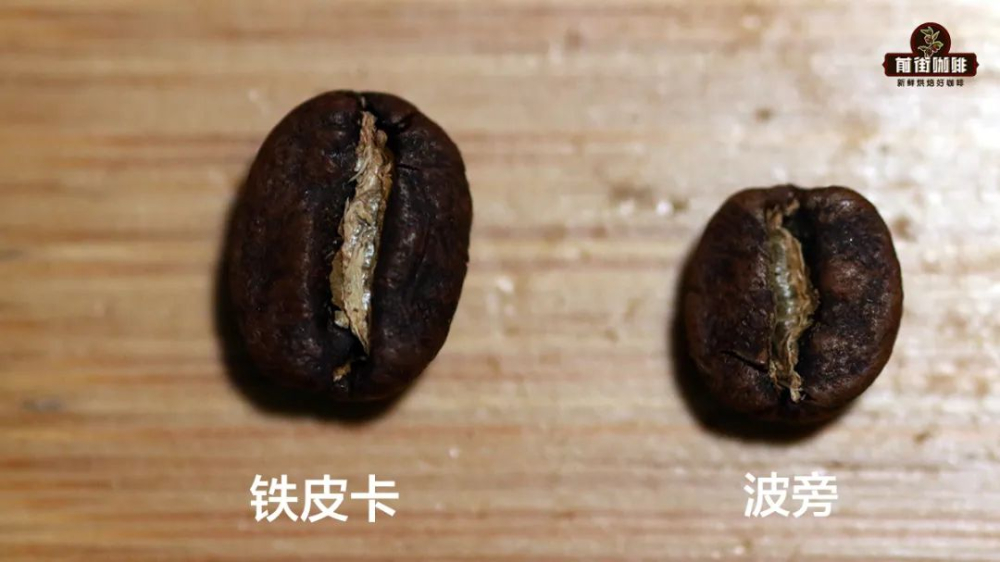
Start with the Arabica template: Typica. Open almost any coffee book and the beans pictured under "Arabica" will almost certainly be Typica. Typica beans are oval—slender, long, flat, and plump—the very picture of a "standard" coffee bean.

Bourbon
Bourbon is a natural mutation of Typica. Typica trees planted in Yemen mutated to produce rounder beans, which were dubbed "round-bodied" coffee. The French later planted a batch of those round seeds on Bourbon Island (today's Réunion Island), and the name Bourbon stuck. Today Brazil is the main producer of the Bourbon variety. Bourbon beans have short, blunt ends and a stocky, round shape, with a size comparable to Typica.
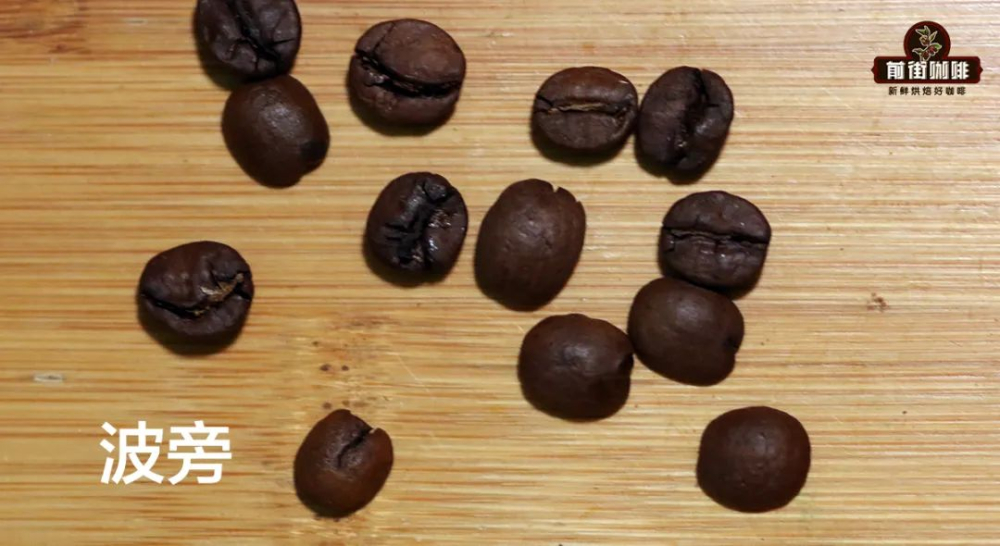
Typica and Bourbon are revered as the two ancient heirloom varieties of Arabica, and most of the widely cultivated varieties that followed descend from them.
SL28 & SL34
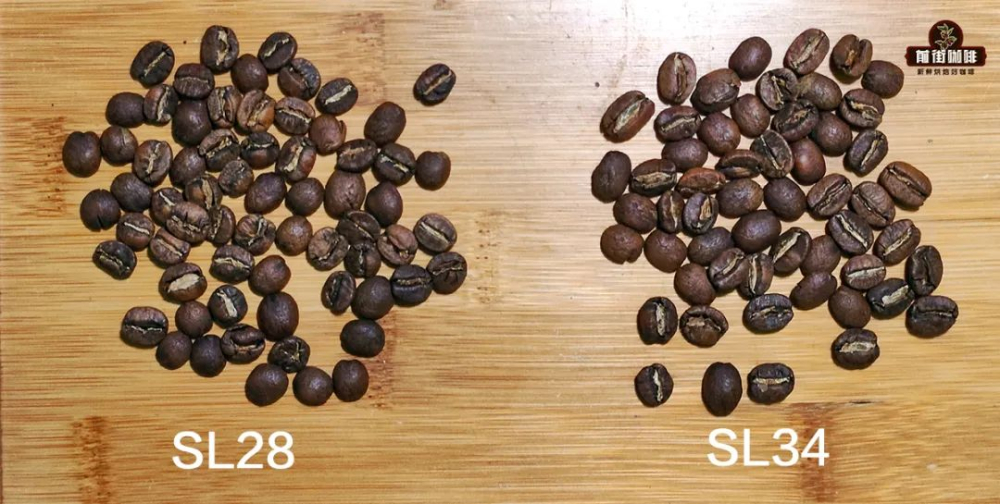
The most famous descendants are the two Kenyan workhorses, SL28 and SL34—and yes, they are two distinct varieties.
Both are products of classic artificial selection. "SL" stands for Scott Laboratory, which was set up to study coffee cultivation. The lab collected 42 varieties from the field and grew them in trial plots (selection, mind you, not hybridization). After more than a decade of trials, they settled on SL28 and SL34 as the varieties best suited to Kenya.

Later research showed that SL28 belongs to the Bourbon group while SL34 belongs to the Typica group, which is why Kenyan lots often mix beans of different shapes: sort them by appearance and you get the rounder SL28 and the longer SL34.
Caturra
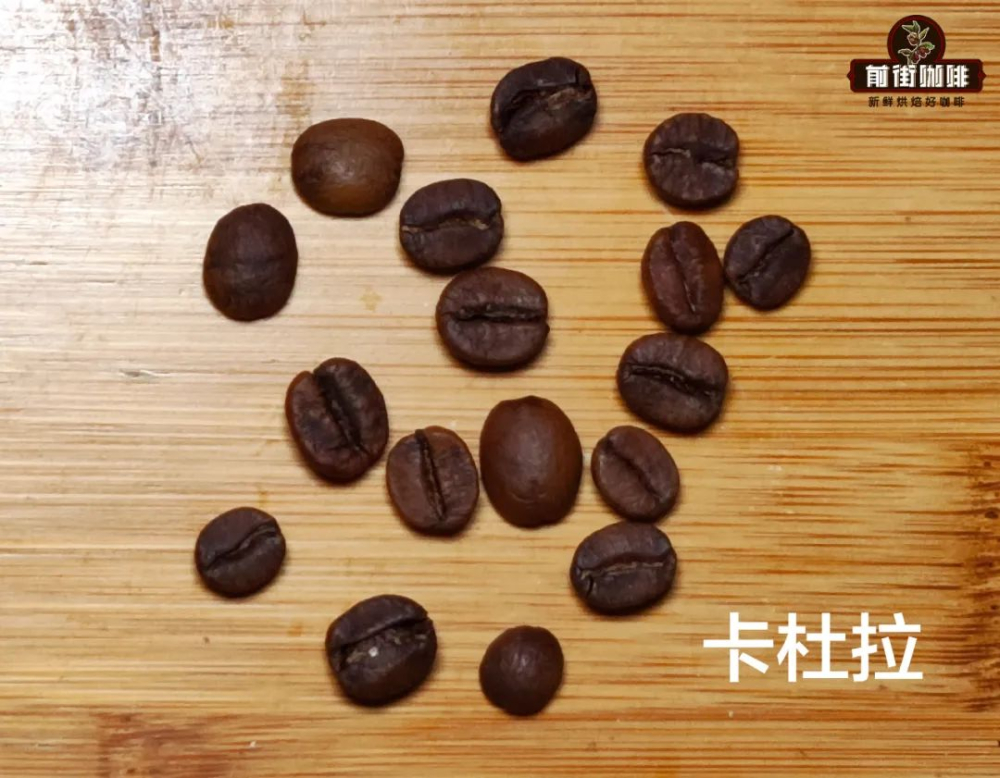
Caturra is a natural dwarf mutation of Bourbon. Its branches sit very close together and the cherries are smaller than Bourbon's, so more fruit fits in the same space and yields rise significantly. Caturra beans resemble Bourbon and also lean round, but are slightly longer—little chubby ovals.
Catuai
Catuai is a deliberately bred cross of Caturra and Mundo Novo (itself a natural Bourbon × Sumatran Typica cross), which is why Catuai shows Typica traits in its physical makeup.
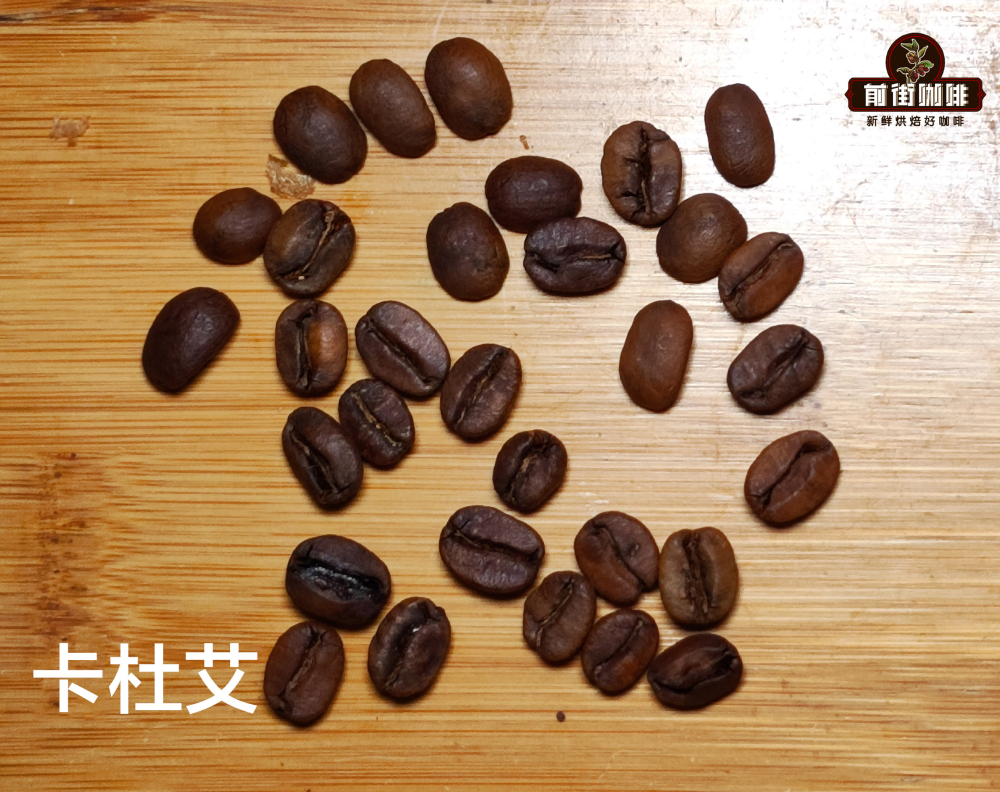
Catuai beans are oval and flat with a relatively slender tail end. Across Central and South America, Caturra and Catuai are often planted side by side, so in those coffees you can spot smaller, rounder Caturra beans mixed with larger, longer Catuai beans.
Geisha
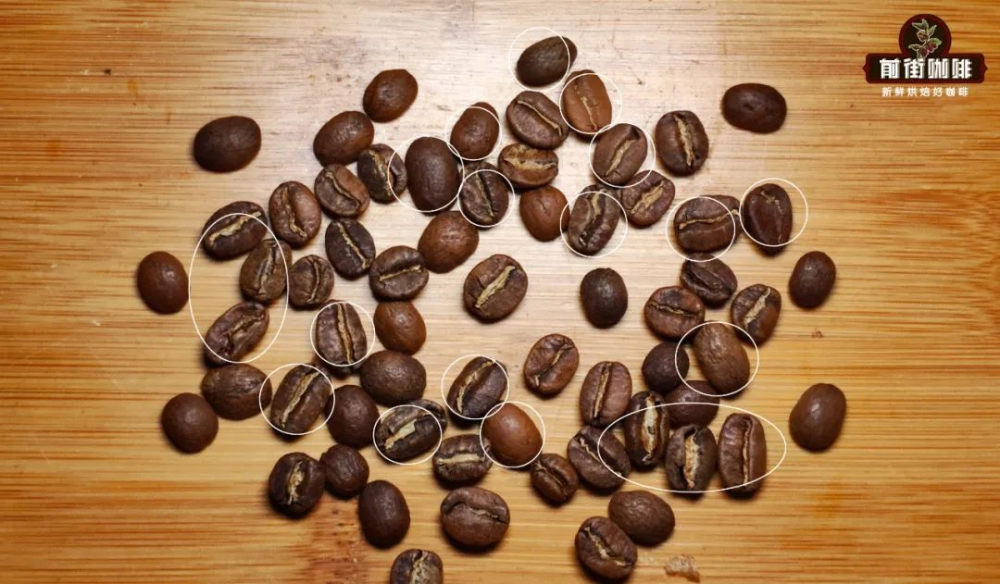
Geisha is probably the variety everyone knows by name, even if few have seen the beans up close. FrontStreet Coffee will use Panamanian Geisha as the reference because it is the most recognizable: long, slender beans with pointed ends and a plump middle. Roasted, they look a bit like sausage buns.
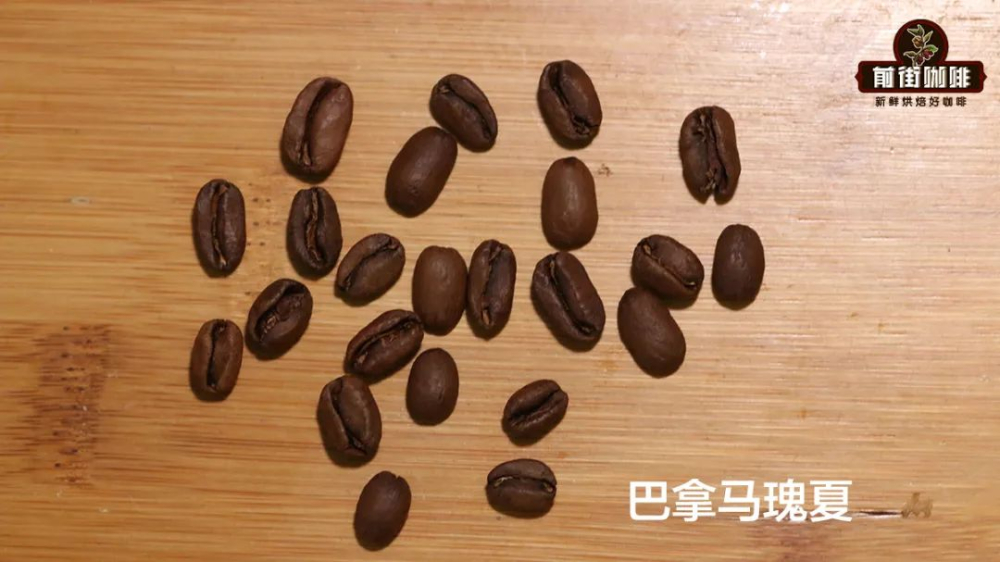
Take a blend like "Mariposa," which contains Geisha, Caturra, and Catuai: you can first pick out the large, elongated, pointed beans—classic Geisha. Smaller Geisha beans are less obvious, but look closely and they still show the pointed ends and full middle.
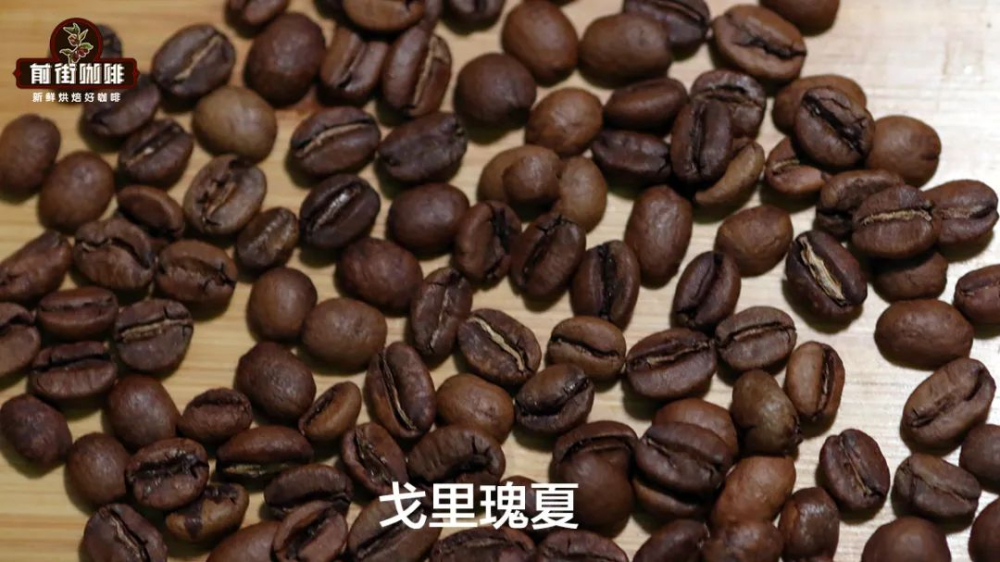
This rule of thumb does not extend to Ethiopian Geisha, however. Ethiopian Geisha was identified after Panamanian Geisha became famous, when researchers traced the original samples back to the Ethiopian forest where they had been collected and searched for trees whose cups resembled Panama's.
At Gesha Village Estate, for example, the varieties are called Gori Gesha and Gesha 1931. The owners followed historical records to a place called the Gori Gesha Forest, believing the British had collected the original Geisha samples there, then gathered fresh samples and selected Gesha 1931—not by genetic testing, but on plant morphology, bean shape, and cup flavor. From those samples they judged the variety to be a close match to Panamanian Geisha.

As for Gori Gesha, it was recovered when the owners re-entered the Gori forest in 2011. Even if they found the right place, a forest holds thousands of trees, and there is no guarantee the ones they collected were exactly the original Geisha (T2722). It is therefore unsurprising that the bean shape differs—after all, it is not strictly the same variety.
Gesha Village's beans run small. Gesha 1931 has slightly pointed ends and a plump middle; Gori Gesha is oval and relatively small.
FrontStreet Coffee Recommendation
Popular Arabica Coffees Worth Trying
Coffee splits into three species: Arabica, Robusta, and Liberica. Arabica is by far the most numerous and nuanced, which is why nearly every specialty single origin belongs to it. Among FrontStreet Coffee's most popular Arabica offerings:
FrontStreet Coffee Hua Kui (Ethiopia natural): an Ethiopian heirloom lot from mixed, unseparated trees, so bean sizes vary. Expect delicate florals with vivid fruit—cream strawberry, mango, jackfruit, citrus, and blueberry—thanks to the classic natural process. The same fragrant berry character won first place in that year's TOH green bean competition, and it comes at a friendly price.
FrontStreet Coffee Yirgacheffe Gedingding Cooperative: the washed counterpart. Ethiopia's top G1 grade, washed-processed, showing elegant white floral, citrus, orange, and green tea notes.
FrontStreet Coffee Jamaica Blue Mountain No. 1: yes, Blue Mountain is Typica, the archetype Arabica variety, moved from Martinique to Jamaica's Blue Mountains in the 1820s. Two centuries of local adaptation gave it better disease resistance than typical Typica, and its balanced, mild, silky cup remains hard to match anywhere else.
FrontStreet Coffee Panama Red Label Geisha: from the celebrated Hacienda La Esmeralda in Boquete, Chiriquí, where volcanic soil, old-growth forest, mist, and abundant rain create superb growing conditions. In the cup: layered floral, citrus, peach, and stone-fruit acidity, a creamy texture, and an oolong-tea sweetness on the finish.
FrontStreet Coffee Brazil Queen Estate Yellow Bourbon: Bourbon is the other heirloom variety, its trees broader-leafed and denser, yielding about 30% more than Typica, with short round beans. Yellow Bourbon is an orange-gold cherry mutation, and Queen Estate was among the earliest plantings—aromatic with cream, peanut, toasted bread, and sugarcane, rich and cleanly sweet, and equally happy in a pour-over, moka pot, or espresso machine.
FrontStreet Coffee Colombia Sidra: first noticed internationally when 2022 World Barista Champion Anthony Douglas used Finca Limitada's Sidra. Roasted medium-light by FrontStreet Coffee, it offers floral, tropical fruit, grape, dried fruit, and passion fruit flavors with a juice-like mouthfeel.
Important Notice :
FrontStreet Coffee is a long-established specialty coffee roaster in Guangzhou China, selling freshly roasted beans from its own farm in Yunnan as well as dozens of carefully selected single-origin beans from around the world for both pour-over and espresso. The products deliver consistently excellent quality and great value, with shipping within 24 hours. Guangzhou's FrontStreet Coffee shop is recommended by many coffee lovers, and the beans are now available online at the Tmall 。
FrontStreet Coffee has moved to a new address:
FrontStreet Coffee Address: 315,Donghua East Road,GuangZhou
Tel:020 38364473
 Scan and follow the En Gafei WeChat official account. Please indicate that the reprint comes from "En Gafei".