Coffee Variety Introduction: Geisha Coffee Bean Flavor Grading and Quality Levels

Few things shape a coffee's flavor as much as its variety, and Geisha may be the most famous and most expensive variety of the 21st century. People are captivated by Geisha's extraordinary cupping quality and soaring prices. There is even a saying in coffee circles: "If you have never experienced Geisha, you cannot really call yourself a connoisseur." So what exactly is Geisha, and why is it so popular? Today, FrontStreet Coffee will examine this legendary variety in depth.
The Rise to Fame of the Geisha Variety
Geisha has followed a rather tortuous path to fame. From obscurity to unrivaled recognition, it is the "ugly duckling" of the plant world. After Geisha became famous, scientists began tracing its origins and discovered that it came from the Geisha Forest in southwestern Ethiopia (Bench Maji zone, Keffa province). FrontStreet Coffee has compiled the rise of Geisha by year to help enthusiasts understand this variety better.

In 1930, the Geisha variety was discovered in Ethiopia. Although it had strong disease resistance, it was set aside because of its low yield and poor flavor. Official archives state: "This is not a high-yield variety. The beans are slender and unattractive in appearance, and taste poor when brewed, but it can resist leaf rust disease and can be used for hybridization to improve disease resistance in other varieties..."
In 1931, a group of botanists conducted an expedition in southwestern Ethiopia and discovered Geisha coffee seeds near the village of Geisha.
In 1932, they brought Geisha seeds to Kenya, where they were cultivated in nurseries.
In 1936, it was introduced to Uganda and Tanzania, and Geisha spread throughout East Africa.
In 1953, it was introduced to Costa Rica, finally arriving in the Americas, where Geisha would eventually flourish.
In 1960, it reached Panama. The former owner of Don Pachi Estate, Pachi Serracin, brought Geisha from CATIE in Costa Rica to Panama.
In 2004, Hacienda La Esmeralda separated it from other varieties and entered it in the Best of Panama (BOP) competition.
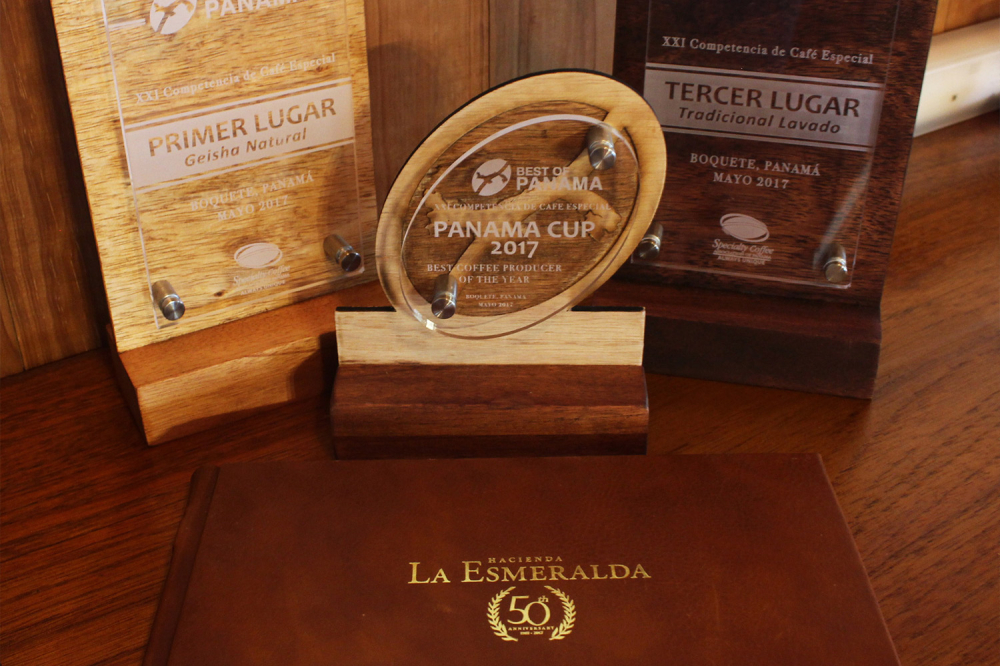
Geisha not only won the BOP championship that year but went on to win multiple major international competitions in the years that followed, including the SCAA (Specialty Coffee Association of America) Cupping Competition, the Rainforest Alliance Coffee Quality Cupping Competition, and the Roasters Guild Cupping Competition. Its green bean auction prices repeatedly broke records, and it became the preferred competition bean for many professionals at international events.
That is Geisha's nearly century-long journey from obscurity to stardom, ascending to the pinnacle of specialty coffee. FrontStreet Coffee notes that Geisha truly shone after winning the 2004 Best of Panama BOP championship. Over the past twenty years, many coffee-producing regions and estates have recognized Geisha's potential and competed to introduce and cultivate it. FrontStreet Coffee has also imported Geisha from various renowned producing regions in recent years, conducting analysis, comparison, and research, and sharing the findings across major websites and media channels to inspire coffee enthusiasts.

Differences Between Geisha, "Artisan," and "Hanaougi"
In recent years, the newly emerged Hanaougi coffee bean has often been confused with Geisha, with some even claiming that Hanaougi is Geisha. After encountering such baseless claims, FrontStreet Coffee immediately published an article clarifying that Geisha and Hanaougi are two completely different things.
According to FrontStreet Coffee's research, the specialty coffee trend in Asia was initiated by Japan and Taiwan, while mainland China first imported Geisha around 2006 through Mr. Yuan of Kalumo Coffee. Because "Geisha" sounds similar to the Japanese word for "artisan" (geisha), many people refer to Geisha coffee beans as "artisan coffee beans."

Left: Hanaougi 8.0, Right: Panama Geisha
Hanaougi beans, by contrast, are Hambela coffee beans - the 2017 Ethiopian TOH natural process champion beans. That same year, barista Li Jianfei used this championship batch to take second place in the China region of the World Brewers Cup Championship. Hambela beans defeated the Geisha beans used by other baristas, shocking the coffee community. The green bean importer who introduced Hambela was delighted and named the coffee after the "queen of flowers" - Hanaougi - for better promotion. In other words, Hanaougi gained fame by standing on the shoulders of Geisha ("artisan") coffee beans.
Characteristics of Geisha Coffee
Geisha coffee trees grow tall with slender leaves, are resistant to coffee leaf rust, and feature widely spaced branches on their trunks. The green beans are slender in appearance, while the roasted beans have delicate flavors with strong, intense fruity aromatic characteristics.

FrontStreet Coffee finds that Geisha beans have a rich, sweet aroma reminiscent of roasted sweet potatoes, which is quite appealing. In his writing, Brown has praised Geisha's flavor as otherworldly, with enchanting floral notes and bursting with juicy tropical and citrus fruit flavors. Although Geisha's flavor is exceptional, it cannot escape its low yield. FrontStreet Coffee has found that the variety is particular about growing conditions, requiring high altitudes with cloud cover or ample shade trees and fertile soil. Even with meticulous care, Geisha's yield remains very low, making it unsuitable for commercial trade.
Among the growing regions, Boquete in Panama is the most representative, and Geisha from this area is beloved by enthusiasts worldwide. The renowned Hacienda La Esmeralda is also located there. FrontStreet Coffee believes that the Panama Geisha produced by Hacienda La Esmeralda best represents Geisha's flavor profile.
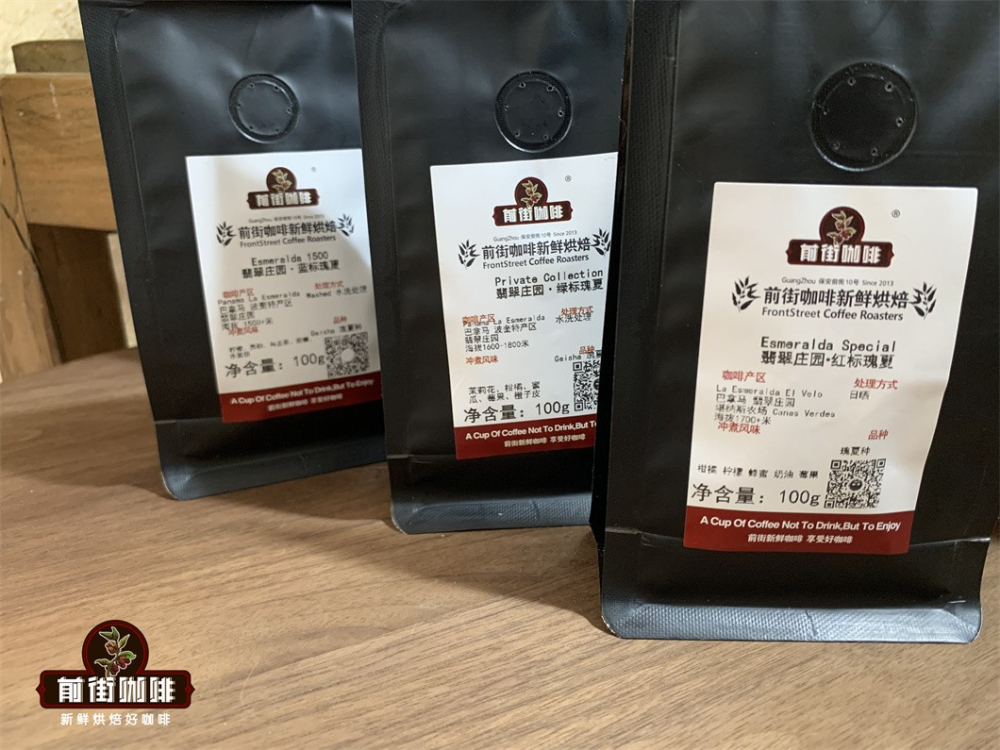
Besides Panama, Ethiopia, Jamaica, Malawi, Kenya, and Guatemala all have small-scale cultivation. FrontStreet Coffee has not only imported the famous Panama Hacienda La Esmeralda Geisha beans but also Geisha from various renowned producing regions, hoping to offer tasting opportunities to all coffee enthusiasts.
Hacienda La Esmeralda Geisha
Hacienda La Esmeralda was established in 1964 and has more than fifty years of history. La Esmeralda's Geisha is classified into three grade batches based on growing altitude and cupping profile: Esmeralda Special, Private Collection, and Geisha 1500 - commonly known as red label, green label, and blue label.
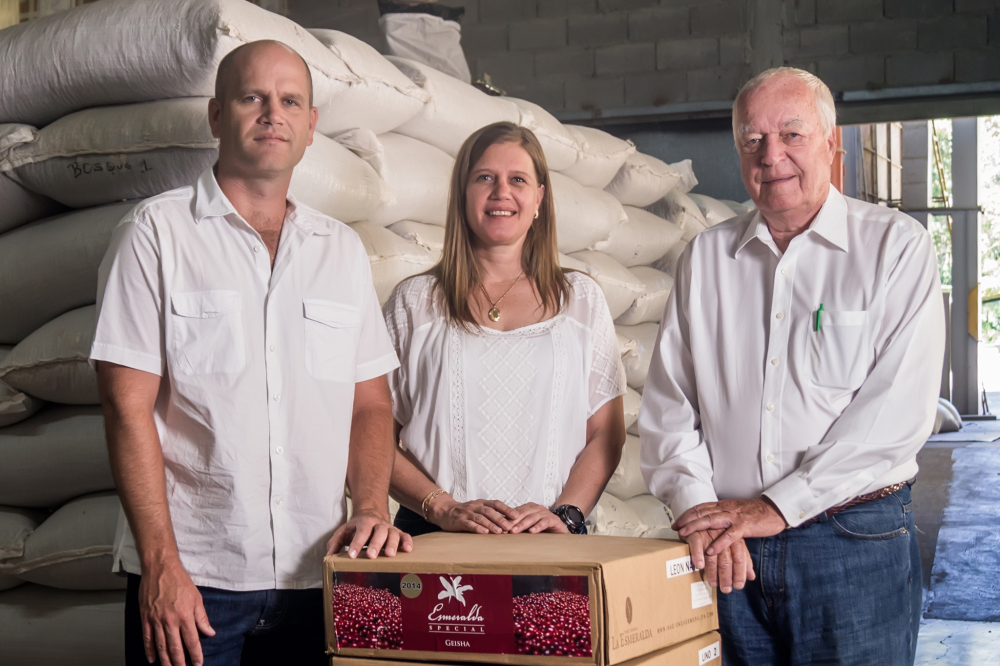
In the 2021 production season, the blue label was discontinued and replaced by "Volcanic Rock." According to FrontStreet Coffee's understanding, the 2021 harvest of 1500-meter Geisha (originally the blue label) was sold entirely to one green bean company, which launched a brand called Las Rocas (translated as "Volcanic Rock"). FrontStreet Coffee has confirmed through green bean appearance and cupping that it possesses La Esmeralda's characteristic Geisha flavor. In other words, Volcanic Rock is the new blue label.

The red label's official name is Esmeralda Special, which FrontStreet Coffee translates as "Esmeralda Special Selection." This series represents the highest-quality Geisha beans sold by La Esmeralda, grown in specific plots at altitudes of 1600-1800 meters, with each batch cupping above 90 points. Typically, this series comes from the two sub-estates of Jaramillo and Cañas Verdes. (FrontStreet Coffee reminds everyone that the Velo estate has also produced red label series, but that estate's plots are mainly used for exploring commercial viability, cultivating many coffee varieties.)
Another characteristic of red label batches is that each batch has an independent number, with all the beans in a batch coming from a single small plot. For example, FrontStreet Coffee's red label this year comes from the Mario plot. This allows buyers to choose suitable batches based on subtle flavor preferences. (The buyers mentioned here are those who trade directly with La Esmeralda.)
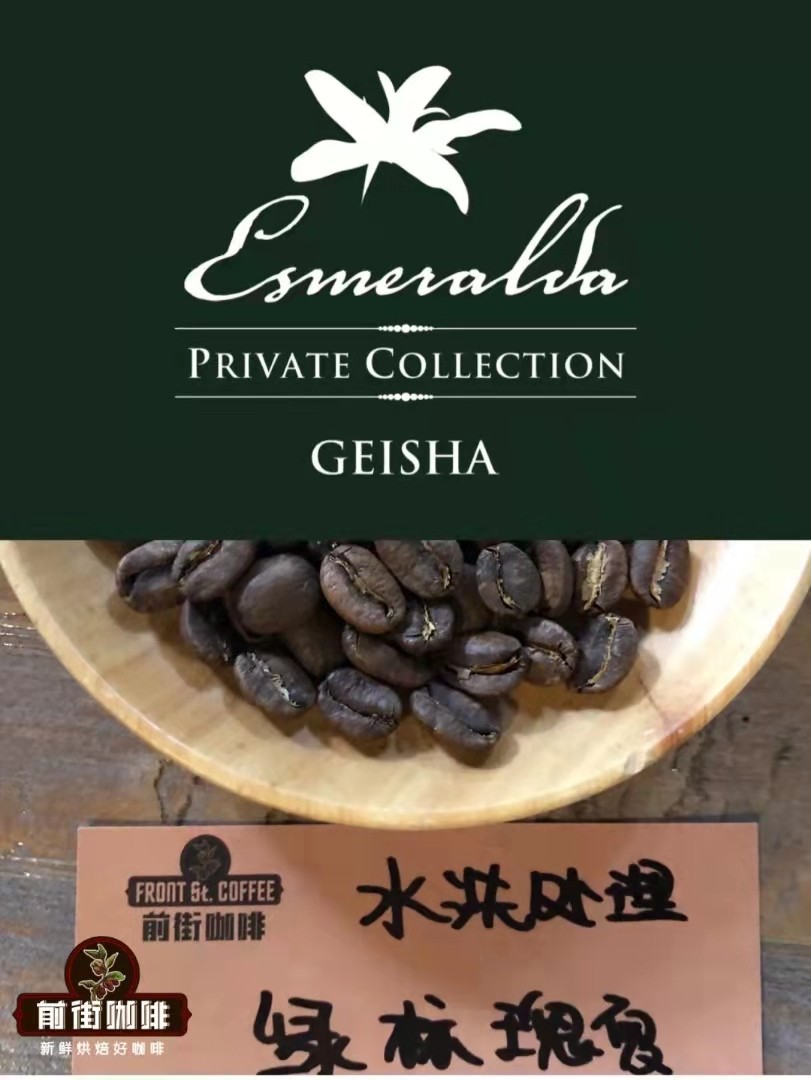
The green label Geisha's official name is "Private Collection." Do not read too much into the name; it is simply a product series title. Unlike the red label's emphasis on specific plots, this series highlights the signature flavor profile of La Esmeralda's high-altitude Geisha. It is a blend of batches from various plots, so the green label can be understood as a red label without plot separation.
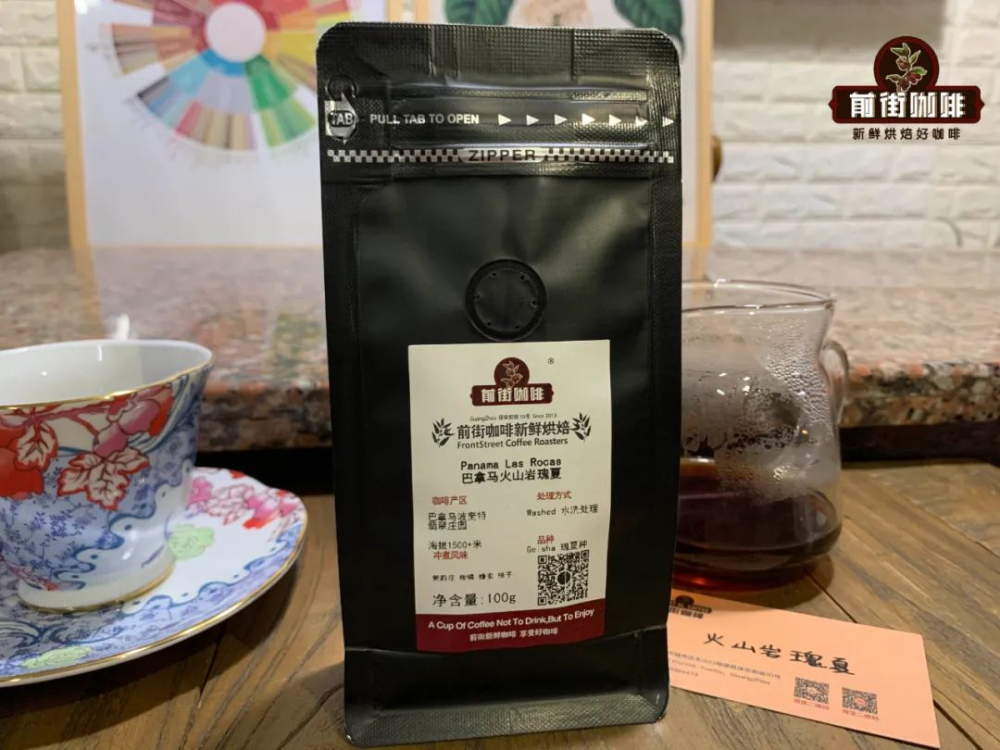
Volcanic Rock is grown at around 1500 meters and is a blend from three different estates: Jaramillo, Cañas Verdes, and El Velo.
Ethiopia Geisha Village
As mentioned earlier, after Panama Geisha became famous, people traced its origins and discovered that Panama Geisha likely comes from Ethiopia, the homeland of Arabica coffee.

At this time, Adam Overton and his wife Rachel Samuel became very interested in coffee. By a stroke of fate, they decided to return to the place of Geisha's origin, learn from Panama's cultivation and management practices, and establish their own coffee garden near the Geisha Forest in Ethiopia. By selecting varieties closest to Panama Geisha (Geisha 1931, Goré Geisha, and Illubabor) and learning from Panama's advanced estate cultivation, management, and brand marketing, they launched the blockbuster "Geisha Village" Geisha to the world, classifying their Geisha into auction batches, gold label batches, red label batches, green label batches, and Chaka batches.
The gold label "Rarities" represents the highest-quality non-auction batches from Geisha Village, accounting for 10% of the estate's total production.
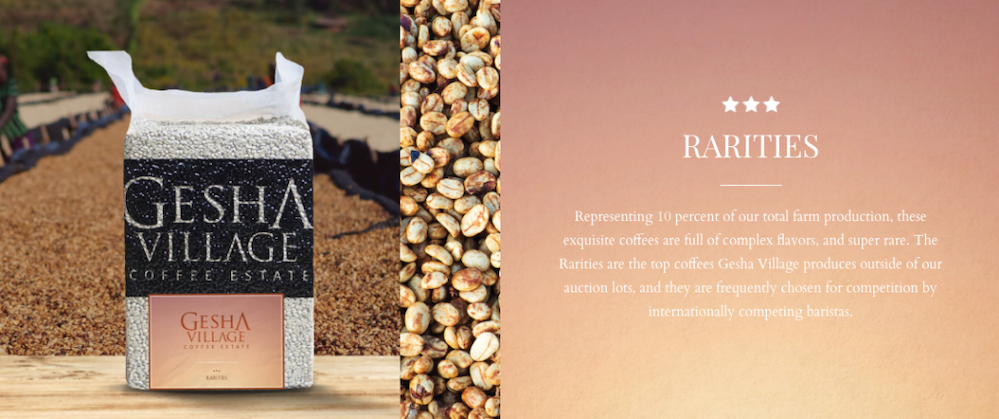
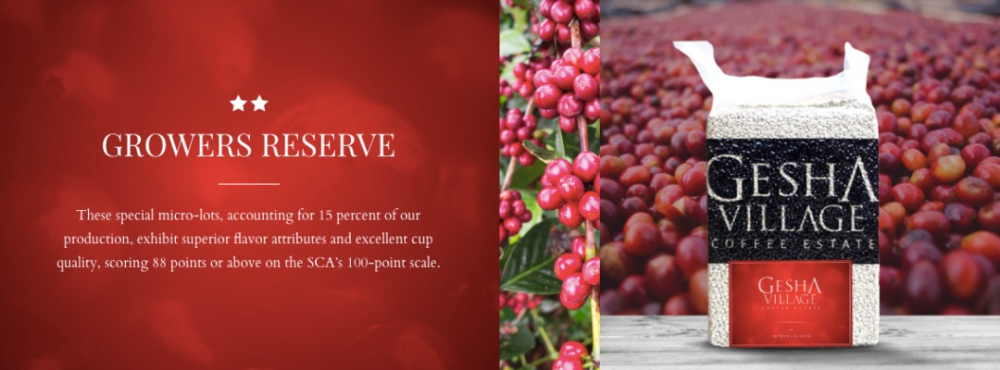
The Geisha Village red label "Growers Reserve" accounts for 15% of the estate's total production and scores above 88 points in SCA cupping.
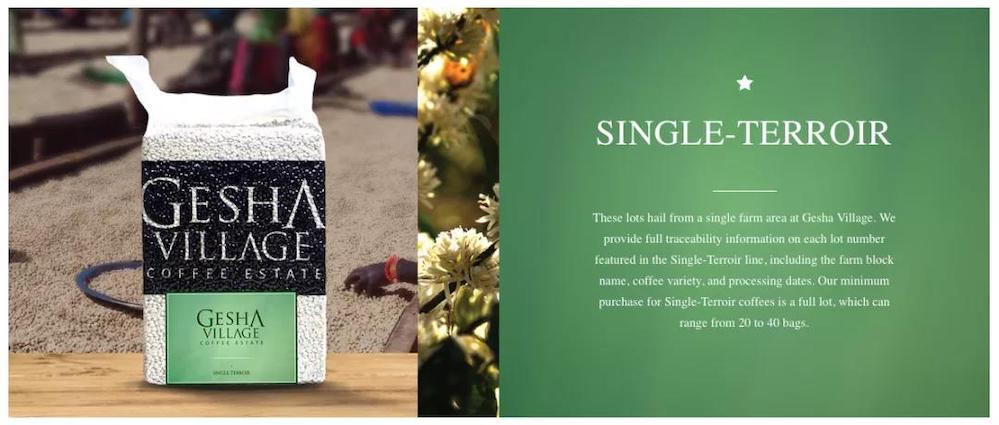
The Geisha Village green label "Single-Terroir" provides detailed traceability information, allowing the coffee to be traced to a specific single plot, variety, and processing method and date.
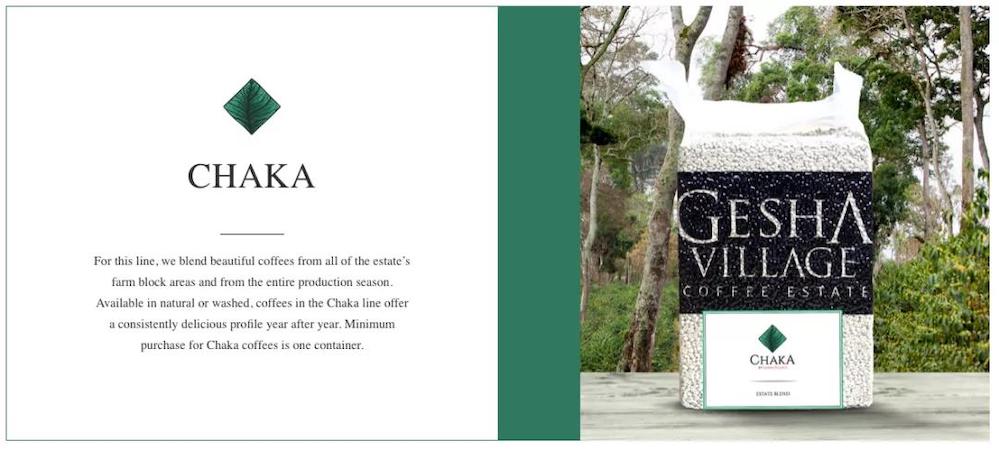
The Chaka batch emphasizes low purchase barriers - it is a blend of all plots and varieties from the entire estate, with no further subdivision. It can be said to represent the baseline quality of Geisha Village Estate.
Differences Between La Esmeralda Geisha and Geisha Village Geisha
FrontStreet Coffee wants to remind everyone that although both La Esmeralda and Geisha Village are called Geisha and both have red labels, they are two completely different coffee beans.
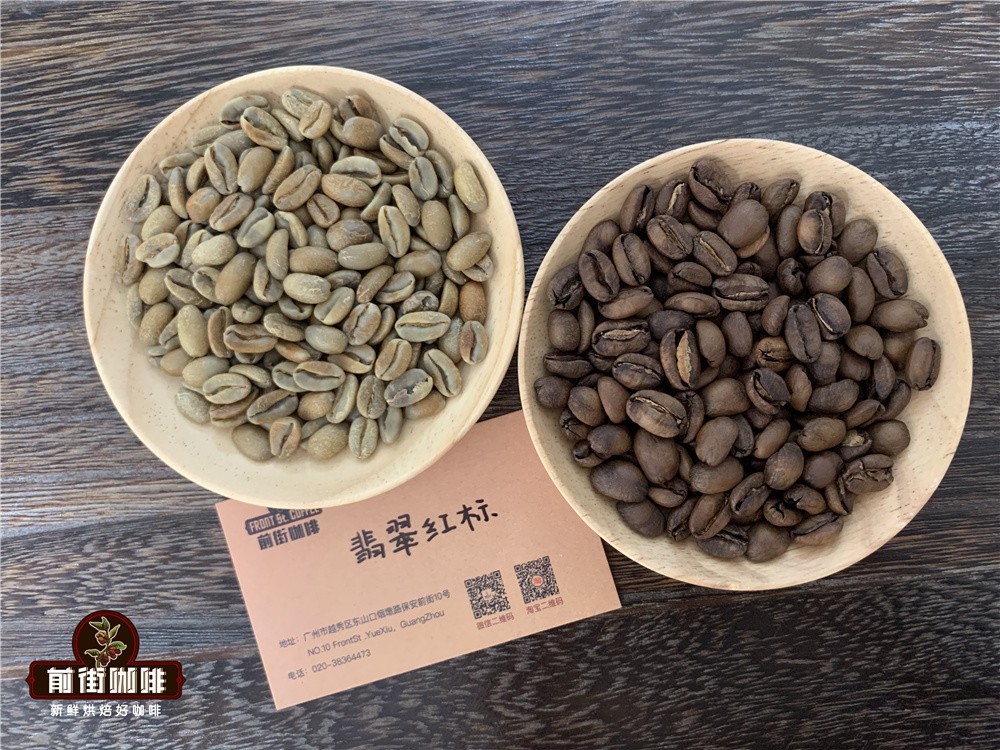

The appearance of Panama Geisha and Ethiopia Geisha green beans also differs significantly. FrontStreet Coffee compared the two: Panama Geisha has pointed ends and an elongated shape, with plump, full-bodied beans and large particles, making the green beans easily recognizable; Ethiopia's Geisha is "slightly smaller in size and not as long in shape."
The flavor profiles of the two are quite different as well. Through cupping and brewing comparisons, FrontStreet Coffee found their similarity is not high:
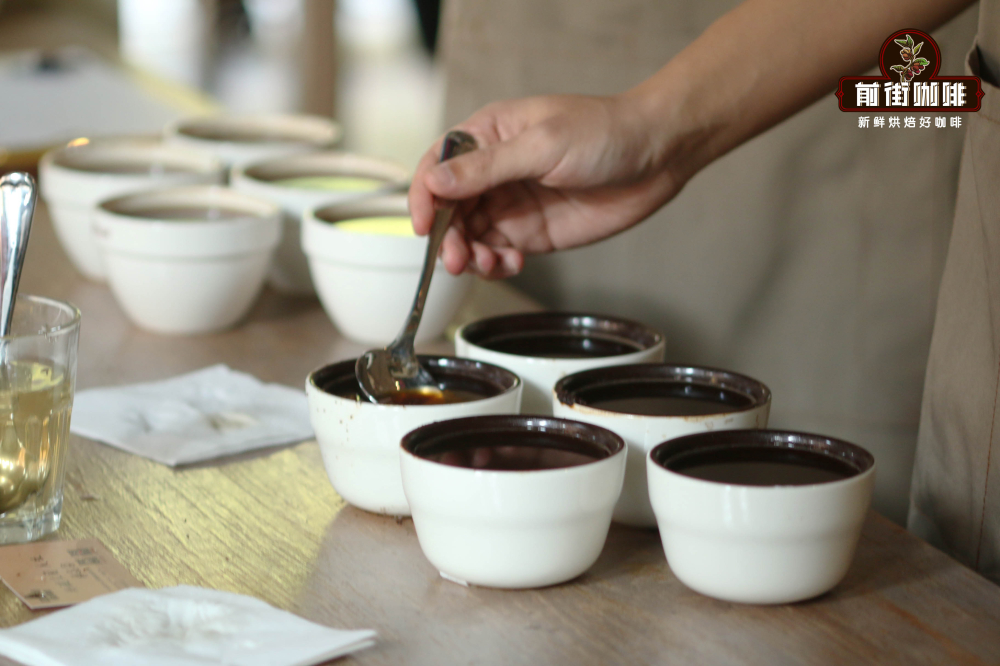
Panama La Esmeralda's washed Geisha typically features delicate floral notes, tea-like qualities, and almond nutty tones, while its natural-process Geisha often shows rich fruit characteristics with subtle floral notes, reminiscent of ginger lily and citrus when cooled. Geisha Village Estate's coffee predominantly features yellow stone fruit flavors, reminiscent of yellow peaches, with medium to high sweetness, and better-performing batches even show toffee-like flavors.
So it is not difficult to see that Panama's Geisha and Ethiopia's Geisha Village Geisha are two completely different varieties. The latter was developed through traceability work, selecting similar coffee varieties from Geisha's homeland of Ethiopia and naming them Geisha. At the end of the day, coffee is an agricultural product, and different varieties naturally have different flavors. Finally, La Esmeralda's red label is the highest grade batch of Geisha, while Geisha Village's equivalent is the gold label. FrontStreet Coffee kindly reminds everyone not to confuse the labels when making comparisons.
Below is a brief introduction to Geisha coffee flavors from other renowned producing regions.
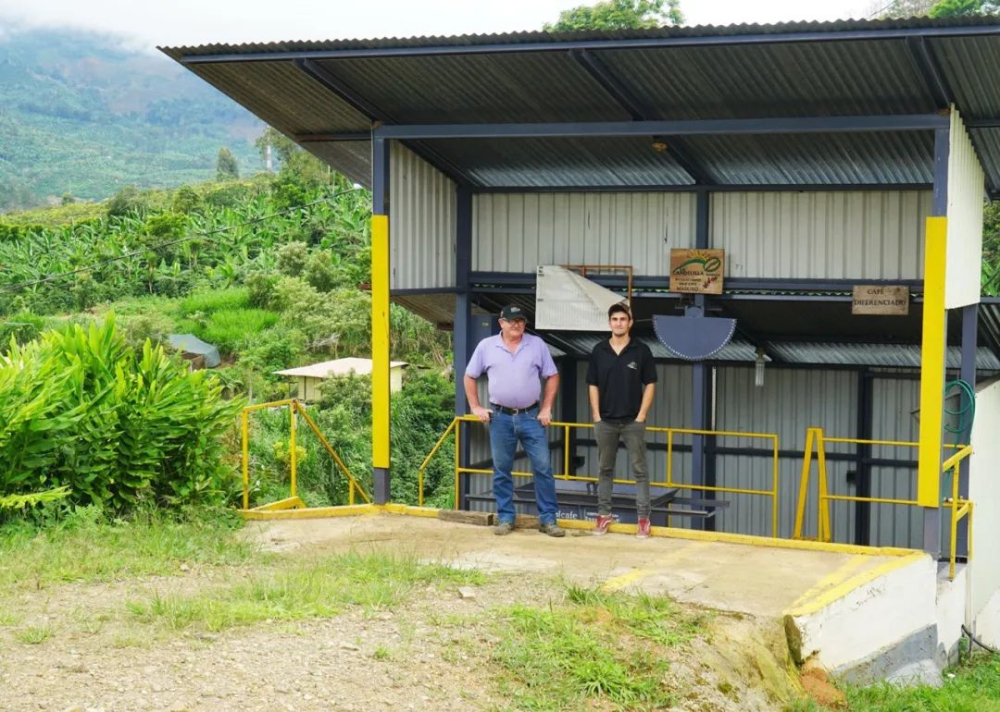
Costa Rica Dotto Estate Washed Geisha
This Dotto Estate washed Geisha has a jasmine floral aroma, with distinct lemon acidity on entry, high cleanliness, a juice-like mouthfeel, honey sweetness in the mid-palate, and a green tea aftertaste. Its profile is quite close to Panama's Geisha flavor.
Jamaica Blue Mountain Clydesdale Estate Geisha
Judging by the green beans, the color is vibrant green, the beans are pointed and elongated, with an extremely low defect rate. Blue Mountain Geisha displays captivating citrus notes during cupping, with the sweet-tart balance of pomelo, followed by jasmine floral aromatics, and a honey and caramel aftertaste.
China Yunnan Geisha
In China's southwestern Yunnan region, some coffee farmers also cultivate the Geisha variety. Its flavor, however, is not exceptional. In the 2016 Yunnan Green Bean Competition, Yunnan Geisha was defeated by other coffee varieties and even could not compare to Catimor, shocking the international coffee community.
Later analysis by professionals revealed three reasons for Geisha's poor performance. First, insufficient localization - variety optimization and domestication typically require more than a decade, and Panama Geisha transplanted to Yunnan had not undergone enough years of domestication, making poor adaptation inevitable. Second, it was related to low cultivation altitude: at that time, Yunnan Geisha was grown at approximately 1100 meters, where even Catimor would struggle to produce impressive high-level flavor profiles. Third, it was related to immature post-harvest processing techniques for Yunnan coffee at that time.

FrontStreet Coffee looks forward to a future when China can also cultivate Geisha with high cupping quality, genuinely improving Yunnan coffee's quality and thereby enhancing Yunnan coffee's and Chinese coffee's reputation in the international market, and consequently increasing the bargaining power of Chinese and Yunnan coffee.
FrontStreet Coffee's Brewing Recommendations
Geisha has distinct characteristics and is relatively expensive, so failing to fully extract its flavor would be truly wasteful. FrontStreet Coffee will therefore use the renowned La Esmeralda red label as an example to customize a Geisha brewing method.

Brewing equipment: Hario V60
Dose: 15 g
Water temperature: 90°C
Water-to-coffee ratio: 1:15
Grind size: Medium-fine (FrontStreet Coffee recommends using a China standard #20 sieve calibration with 78% pass-through)
FrontStreet Coffee's Geisha brewing method:
30 g of water for the bloom, bloom time 30 s. First pour to 120 g using a vertical water flow with slow, small circular motions; second pour to 225 g with a slightly faster flow and circular speed to reduce particle clogging of the filter, which would lead to over-extraction.

Flavor description: Jasmine floral notes, citrus, honey, and berry flavors. The flavor is delicate with complex layers and a persistent, lingering aftertaste.
FrontStreet Coffee Recommendation
For anyone who wants to taste the variety profiled above, FrontStreet Coffee's Panama Boquete Geisha is the most accessible starting point - a washed, entry-level Geisha that still delivers the classic Boquete orange-blossom honey character, an oolong tea mouthfeel, and layered fruit acidity. Stepping up, the Esmeralda Red Label is grown at 1,600-1,800 meters and cups above 90 points, while the Green Label blends several plots into the estate's signature high-altitude Geisha profile. If Ethiopia's side of the Geisha story appeals to you, the Grana estate Geisha shows bright citrus, ginger lily, and ripe-fruit sweetness. For a gentler everyday introduction, the Strawberry Candy Gesha blend pairs a Costa Rica honey-process coffee with Panama Geisha for rose florals and sweet fruit that works in a pour-over, moka pot, or espresso machine.
Important Notice :
FrontStreet Coffee is a long-established specialty coffee roaster in Guangzhou China, selling freshly roasted beans from its own farm in Yunnan as well as dozens of carefully selected single-origin beans from around the world for both pour-over and espresso. The products deliver consistently excellent quality and great value, with shipping within 24 hours. Guangzhou's FrontStreet Coffee shop is recommended by many coffee lovers, and the beans are now available online at the Tmall 。
FrontStreet Coffee has moved to a new address:
FrontStreet Coffee Address: 315,Donghua East Road,GuangZhou
Tel:020 38364473
 Scan and follow the En Gafei WeChat official account. Please indicate that the reprint comes from "En Gafei".