What is Blend Coffee Beans? Espresso Blend Coffee Bean Formula Espresso Coffee Bean Aging Time
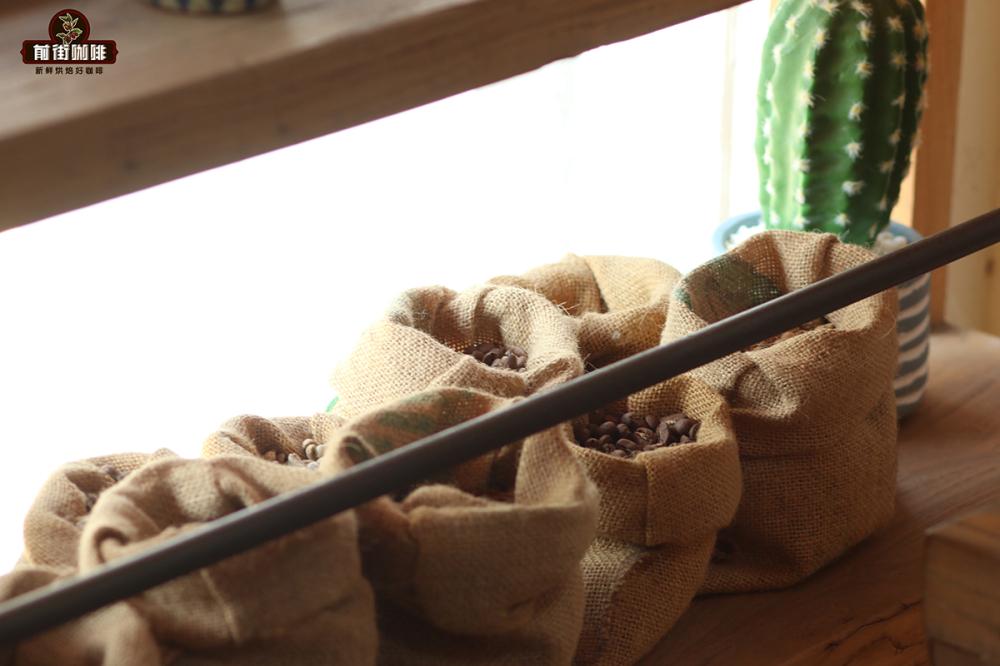
Regulars who buy FrontStreet Coffee's espresso blend know it well, but newcomers to the shop are often puzzled, wondering why the baristas mix several kinds of beans together and sell them as one. These are blended coffees, also called mixed coffee. This article explains what blended coffee beans are.
What is Blended Coffee
Coffee drinkers know that single-origin coffee comes from beans of one producing region, such as FrontStreet Coffee's Ethiopian Yirgacheffe or FrontStreet Coffee's Indonesian Mandheling. These are single beans, and the cup carries the character of their region. Blended coffee, by contrast, mixes single-origin beans from different regions. FrontStreet Coffee stresses that these blends are not thrown together at random: strict demands on blending ratio and flavour harmony have to be met before the result tastes good.

Take FrontStreet Coffee's Ethiopian Yirgacheffe and FrontStreet Coffee's Indonesian Mandheling. Their flavours sit at opposite ends: one is fresh with lemon and citrus, the other herbal and earthy. Mix them 1:1 and FrontStreet Coffee cannot imagine how murky the result would taste. Blending takes skill and cannot be done casually.
FrontStreet Coffee also holds that blending is an art. The blender has to understand the flavour character of the major producing regions in order to build an appealing aroma and make the coffee more delicious. That calls for wide experience and inspiration as well as precise ratio calculations, so calling the process an art is no exaggeration.
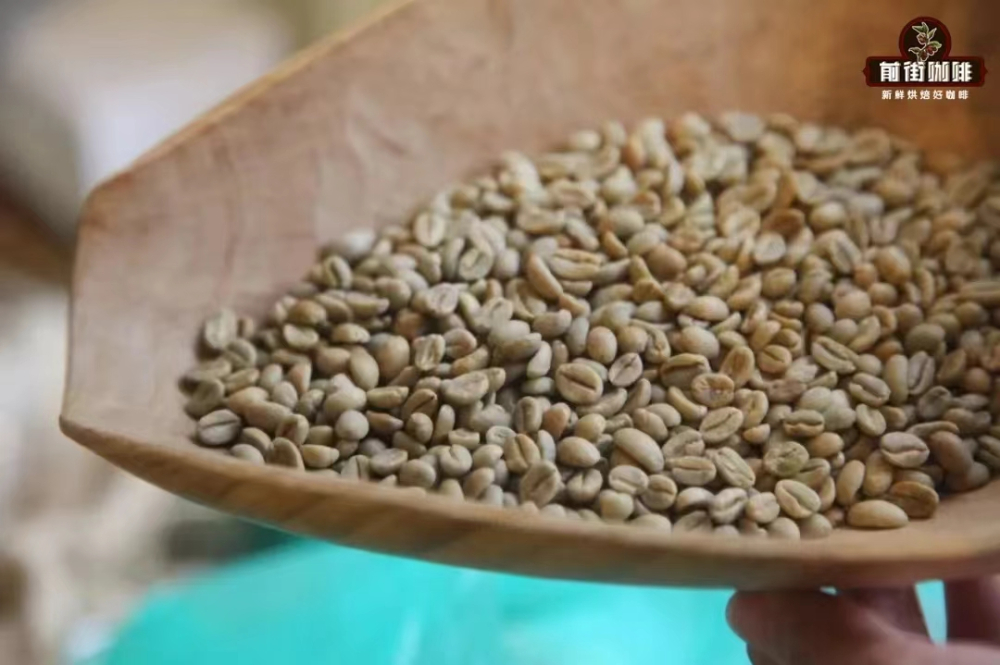
Since blending means combining two or more original beans, one special case is blending the same coffee at different roast levels, or even blending new crop with aged or old crop of the same bean. The types referred to in blending are therefore no longer narrowly varieties but flavours. Generally 2 to 6 kinds of coffee go into a blend; too many varieties make it impossible to express a clear flavour.
Why Blend Coffee
Some drinkers might ask FrontStreet Coffee: if single-origin coffee already tastes excellent, why blend?

Coffee blending began in Italy. The espresso found in cafés, whether in lattes, mochas or cappuccinos, all uses blended beans, because a blend can make coffee that is not rich enough richer. Where there is demand, a market follows. Italian blending first emerged because rich, bitter espresso was popular at the time, while single-origin coffees had flavour imbalances, advantages and drawbacks together. High-quality single-origin beans were also expensive, while blends offered better value: cheaper than single origin but with a flavour of their own. Many Italians therefore chose blends over single origin, and blended coffee grew and spread.
The main purpose of a blend is to hold flavour stable and keep the cup balanced. Coffee is always an agricultural product, and its flavour shifts from year to year with climate and conditions, sweeter one year and less so the next. Mixing several beans together solves this well, at least keeping the flavour consistent year after year.

Another question drinkers often ask is why espresso cannot be made from single-origin beans. The reason is that an espresso machine amplifies whatever flavour is most prominent. Ethiopian Yirgacheffe leads with citrus and lemon acidity, so the machine magnifies that acidity; Indonesian Mandheling leads with herbal, earthy bitterness, so the machine magnifies the bitterness. That is why FrontStreet Coffee does not use a single variety for espresso, since the result would be badly unbalanced and would hurt the taste. It is also why espresso is made with blends.
How to Blend Coffee Beans
Blending divides into raw blending and roasted blending. Raw blending mixes the beans before roasting, roasted blending roasts first and mixes after. FrontStreet Coffee believes raw blending lets a single roast level make the flavour more stable and uniform and can be done in one pass. One roast level also cuts quality-control difficulty sharply and improves efficiency. It is not perfect, though, and raw blending has real limits. FrontStreet Coffee generally recommends raw blending only for beans of similar density, or the flavour will fall short of each bean's original regional character. Beans suited to a light roast should be roasted with other light-roast beans to double the effect, while roasting a light-roast bean alongside a dark-roast bean is incompatible and gives poor flavour.

FrontStreet Coffee believes roasted blending lets each bean be roasted to its own optimal level, maximising its character. Its drawback is that daily quality control and management become harder, since different roast dates mean keeping track of different resting periods. Imagine using 4-5 kinds of beans for a roasted blend: one product would need to follow 4-5 roast dates. Raw and roasted blending each have their pros and cons, but the goal is the same: to make the coffee taste better.
There are also two ways of thinking about what goes into a blend. One is blending beans from different regions. FrontStreet Coffee's Sunflower Warm Sunshine Blend, for instance, uses FrontStreet Coffee's Honduran Sherry mixed with FrontStreet Coffee's Ethiopian natural Red Cherry. The Sherry provides most of the flavour, while the natural red cherry adds aroma and acidity.
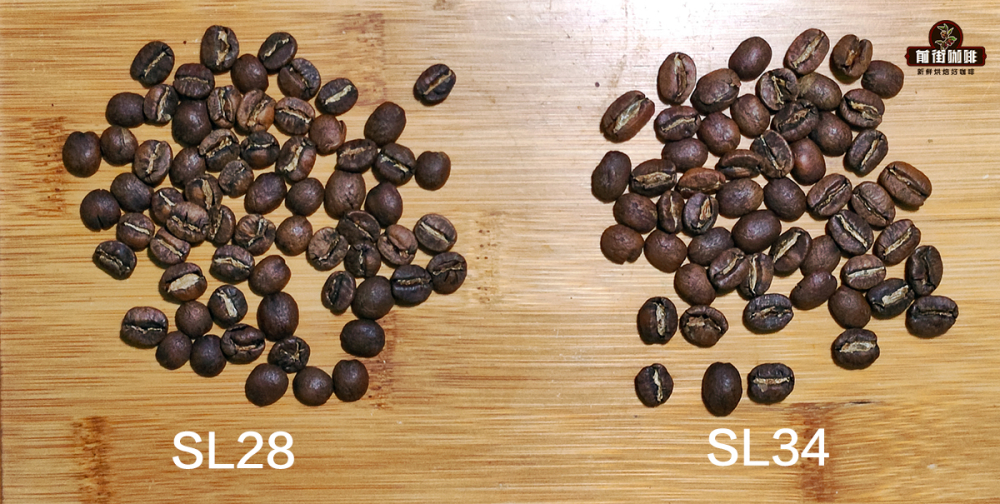
The other is blending across varieties. FrontStreet Coffee's Flower Butterfly is known for including about 70% Geisha, and FrontStreet Coffee's Costa Rica Mirazu Estate Geisha Blend mixes half Geisha with half SL28, ET47 and Maico. FrontStreet Coffee would add, though, that calling beans mixed from different varieties a blend is really about highlighting one variety rather than blending in the traditional sense. Interestingly, if mixed varieties counted as blends, then most of the coffee we see would qualify, since Kenya often mixes SL28 with SL34.
FrontStreet Coffee's Four Blended Coffee Beans
As FrontStreet Coffee said above, blending is an art. It cannot be done casually; it takes constant experimentation and repeated testing to build a cup with excellent flavour. FrontStreet Coffee's roasters have gone through continuous ratio testing to create the four blends currently available: FrontStreet Coffee's Sunflower Warm Sunshine Blend, FrontStreet Coffee's Specialty Blend, FrontStreet Coffee's Commercial Blend and FrontStreet Coffee's Basic Blend. The four differ in offering balanced, high-quality blended flavour at different price points. FrontStreet Coffee introduces each below.
FrontStreet Coffee Sunflower Warm Sunshine Espresso Blend
For this espresso blend, FrontStreet Coffee uses FrontStreet Coffee's Yirgacheffe Natural Red Cherry and FrontStreet Coffee's Honduran Sherry. The idea behind it is a blend that works for both espresso and pour-over. As espresso it gives obvious fermented wine aromas, with citrus and berry acidity arriving immediately, a whiskey aroma and a dark chocolate finish.
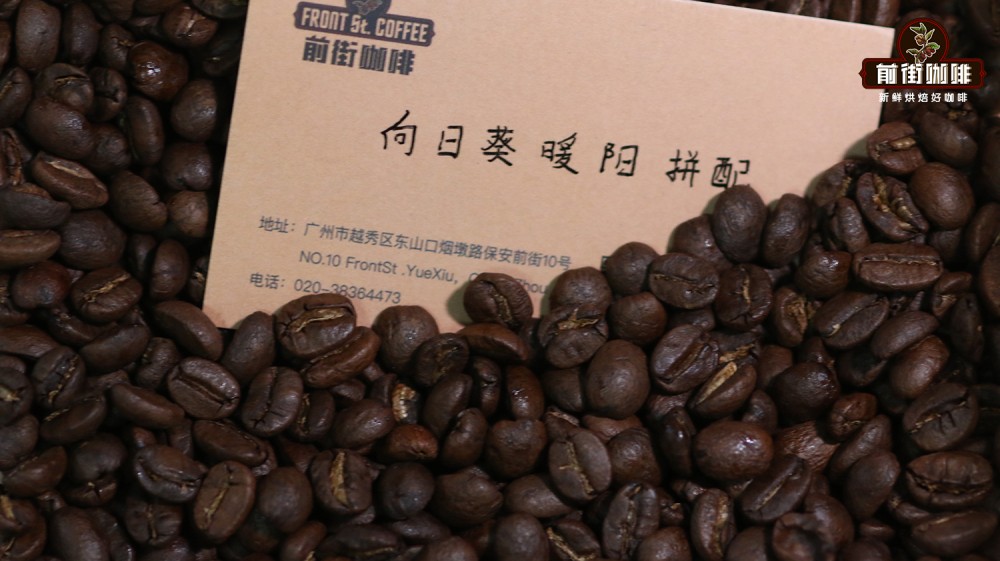
Brewed as pour-over, its flavours are less concentrated than as espresso. After brewing there are fermented wine aromas and a little citrus, and at high temperature only the wine aroma and dark chocolate finish stand out. As it cools, the citrus and berry acidity come forward slightly. The overall experience is clean and fresh, without a vanilla cream texture.
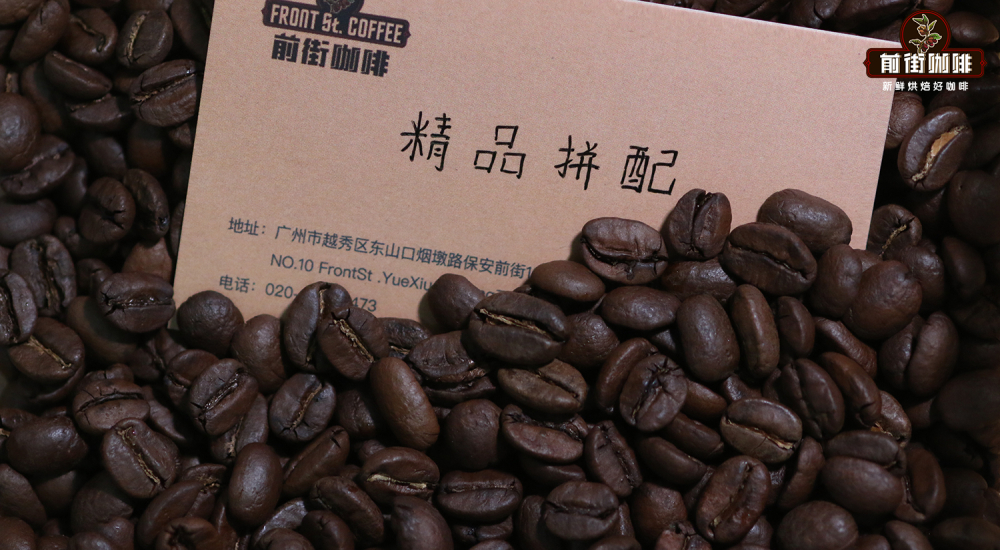
FrontStreet Coffee Specialty Espresso Blend
For this blend FrontStreet Coffee uses Brazilian and Colombian beans. It tastes of light roasted grass, fresh with a slight bitterness, sweet and smooth with a pleasant finish. Colombian Huila beans bring pleasing acidity, fragrant aroma, moderate acidity and rich, intriguing sweetness, while Brazilian Cerrado beans bring a comfortable bittersweet flavour and an extremely smooth feel. Together they meet a coffee shop's daily needs.
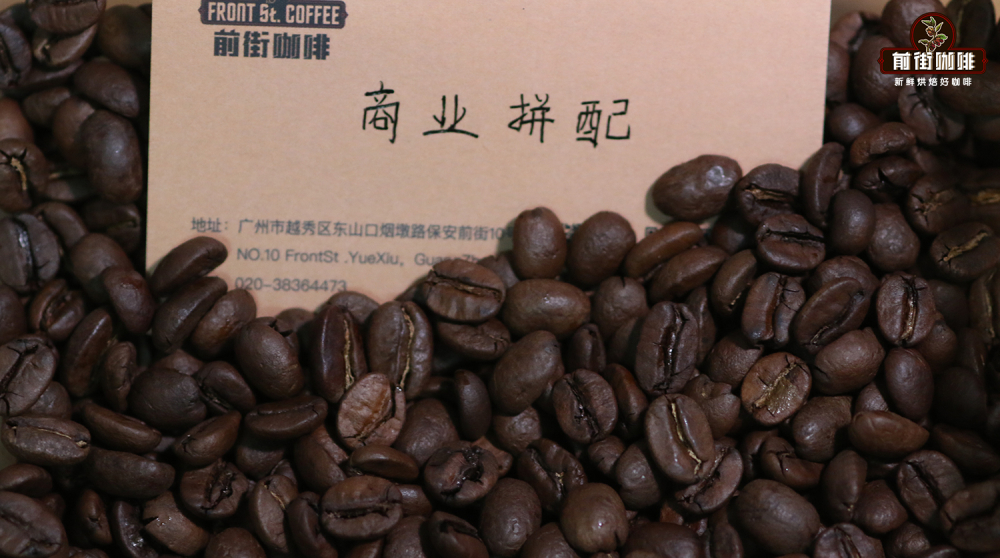
FrontStreet Coffee Commercial Espresso Blend
For this blend FrontStreet Coffee uses Brazilian and Colombian beans with 10% Robusta. The taste is classic. FrontStreet Coffee finds rich crema and texture, caramel sweetness, nut and cocoa flavours and dark chocolate, balanced sweet and sour with a slight bitterness and a lasting finish. Like the Specialty Blend it uses Colombian and Brazilian beans, but the addition of Robusta provides richer crema and a fuller texture, suited to the daily needs of a shop.
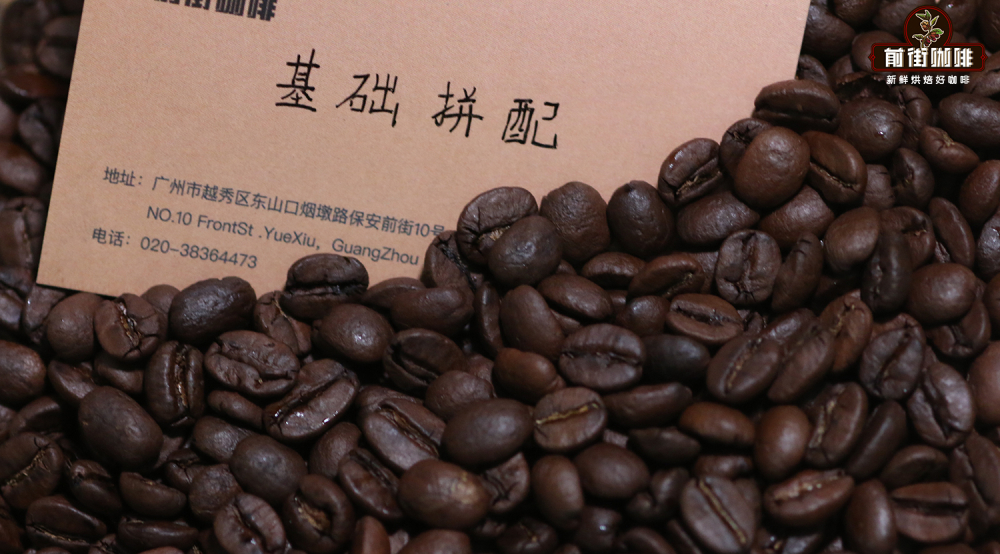
FrontStreet Coffee Basic Espresso Blend
For this blend FrontStreet Coffee uses Brazilian and Yunnan beans. FrontStreet Coffee finds soft fruit acidity and caramel sweetness, along with nut and dark chocolate flavours, smooth and thick but relatively light in the cup. Yunnan's natural conditions closely resemble Colombia's: high altitude, a large day-night temperature difference, a mellow flavour type, moderate acidity, a rich mellow taste, uniform particles and high oil content with fruit aroma. Its quality and texture are close to Colombian coffee, though slightly lighter, while Brazilian Cerrado beans add their comfortable bittersweet flavour and extreme smoothness. The combination works well, and this basic blend offers excellent value for espresso beginners, small coffee shops and home users who put cost first.
Pour-Over Use of Blended Coffee
Blended coffee is not only for espresso. It can also be brewed as pour-over, though the flavour will always differ somewhat from what an espresso machine produces. FrontStreet Coffee finds the pour-over result no less interesting, so choose whichever method you prefer and brew accordingly.

Next, FrontStreet Coffee shares pour-over parameters for anyone who wants to brew it themselves.
FrontStreet Coffee Pour-Over Parameters: Kono dripper, 15g coffee dose, 90°C water temperature, 1:15 coffee-to-water ratio, grind size at 80% pass-through on a No. 20 standard sieve, coarser than espresso grind.

Brewing method: FrontStreet Coffee uses segmented extraction. Bloom with 30g of water for 30 seconds. Using a small water flow, pour in circles to 125g, then pause. When the water level drops to just before the coffee bed is exposed, continue pouring to 225g and stop. When the water level drops to just before the bed is exposed again, remove the dripper. Extraction time is 2'00", starting from the bloom.
FrontStreet Coffee Recommendation
Once you understand blending, the natural next step is to taste a single origin on its own, and FrontStreet Coffee's washed Yirgacheffe is a good place to start. It is the classic introduction to Ethiopia, known for white jasmine, bright citrus and lemon acidity and a tea-like finish at an easy price, and many drinkers meet specialty coffee through it. Yirgacheffe lies in southern Ethiopia's Sidamo area at roughly 1,700-2,100 metres, with trees planted above 1,800 metres, and the town's white florals and lemon-citrus acidity have made the name shorthand for Ethiopian specialty coffee. The Ethiopia Commodity Exchange only separated Yirgacheffe from Sidamo as its own region in 2010, once the name had grown so well known.
For a single-lot step up, FrontStreet Coffee's washed Gedeb cooperative beans come from the Woka area, once part of the Yirgacheffe union and now a sought-after single-origin micro-lot. Traditional washing leaves clean citrus and lemon acidity and jasmine fragrance with none of the bitterness people often expect. If you prefer fruit, the natural red cherry lot uses only fully ripe red cherries, sorted at the mill, dried on raised beds for three to five weeks and turned every two to three hours in the first days, then hulled and stored. It keeps the typical Yirgacheffe character while adding tropical fruit, berry-juice body, honey sweetness and a creamy smoothness.
To brew it, FrontStreet Coffee uses a V60 with 15 grams of coffee at a 1:15 ratio and water at 90-91°C, ground to an EK43s setting of 10, roughly fine sugar with 80 percent passing a No. 20 sieve. Bloom with 30 grams for 30 seconds, pour to about 125 grams over one minute, then add water to about 225 grams over 1 minute 35 seconds when the level drops to two-thirds of the bed, finishing in 2 to 2 minutes 10 seconds.
Important Notice :
FrontStreet Coffee is a long-established specialty coffee roaster in Guangzhou China, selling freshly roasted beans from its own farm in Yunnan as well as dozens of carefully selected single-origin beans from around the world for both pour-over and espresso. The products deliver consistently excellent quality and great value, with shipping within 24 hours. Guangzhou's FrontStreet Coffee shop is recommended by many coffee lovers, and the beans are now available online at the Tmall 。
FrontStreet Coffee has moved to a new address:
FrontStreet Coffee Address: 315,Donghua East Road,GuangZhou
Tel:020 38364473
 Scan and follow the En Gafei WeChat official account. Please indicate that the reprint comes from "En Gafei".