Honduras Premium High Altitude Coffee - Introduction and Flavor Description of Premium Rainforest Certified Honduran Coffee
Honduras: Premium Highland Coffee
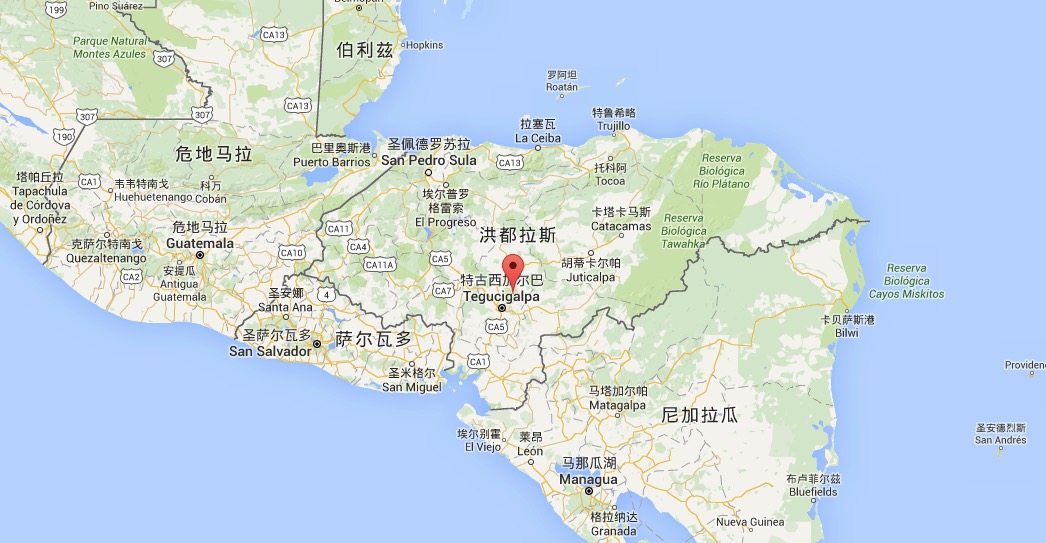
Honduras lies in northern Central America, bordered by the Caribbean Sea to the north and the Gulf of Fonseca to the south. It shares borders with Nicaragua and El Salvador to the east and south, and Guatemala to the west, and consists predominantly of mountains and plateaus. With a tropical climate of mild temperatures and abundant rainfall, it offers ideal conditions for coffee cultivation.
Flavor Profile and Characteristics
Honduran coffee has an excellent flavor profile—rich and mellow, making it suitable for blending. The most notable characteristic of Honduran beans is their soft, smooth texture with occasional hints of sweetness. With low acidity, Honduran coffee stands out among Central American growing regions for its distinctive blackberry flavors and caramel sweetness. It has a medium body, and some batches even show notes of black pepper and smoky tobacco.
Coffee Varieties
Honduras produces two exceptional varieties of coffee that enthusiasts hold in high regard. One is "Highland Coffee," grown at altitudes between 1,000-1,500 meters, and the other is "Premium Highland Coffee," cultivated at 1,500-2,000 meters and representing Honduras's highest grade. Most Honduran coffee is exported to the United States and Germany.
Bean Characteristics and Harvesting
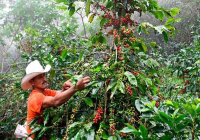
Honduran coffee beans are characterized by their large size, uniform shape, and even, glossy color. To make harvesting easier, farmers prune the trees so they do not exceed 150 centimeters in height—taller trees would require ladders for picking, which is both time-consuming and potentially damaging to the trees as the branches bend. Because the cherries ripen at different times, maintaining high bean quality requires hand harvesting followed by careful selection of only ripe fruit. Cherries on the same branch often take several weeks to harvest completely.
Processing Methods
Premium Honduran coffee uses the washed method. The beans are first soaked, during which defective fruits float to the surface and are discarded. The quality fruits then pass through a depulping machine, where rotational force removes the skin. The depulped beans undergo mechanical sorting to select only the highest quality fruit—typically, larger fruits indicate better maturity. Honduran coffee is dried using the natural sun-drying method, which imparts a subtle fruity aroma to its flavor profile.
Flavor Development and Roasting
Honduran coffee offers a rich, mellow taste that is neither astringent nor overly acidic, with excellent body and aroma, giving it a distinctive character. The flavor reveals multiple layers depending on the roast level. Medium roasting brings out the beans' sweetness to its fullest, while dark roasting enhances bitterness without eliminating the underlying sweetness. Generally, medium roast provides the best flavor profile, with rich, unique aromas, making it highly favored among Honduran coffee enthusiasts.
Some regional information sourced from FrontStreet Coffee, compiled and edited by the Coffee Workshop
FrontStreet Coffee Recommendation
Honduras is a natural fit for espresso blending, and FrontStreet Coffee's blends show just how much a well-built recipe can do. For a balanced, nutty, chocolatey blend for home or office and specialty community cafés, FrontStreet Coffee's specialty blend combines washed Colombian coffee with semi-washed Brazilian coffee, delivering nut, dark chocolate, and caramel notes with a comfortable bittersweet edge; paired with milk it makes a smooth latte with stable latte art, and it layers beautifully in a Dirty. For shops of every kind, FrontStreet Coffee's commercial blend uses the classic Brazilian and Colombian pairing plus a small amount of Robusta, adding toasted bread, almond, and walnut aromas with excellent oil flow and a low-acid, full body at a price advantage. For cafés, bakeries, drink shops, and home espresso machines, FrontStreet Coffee's Black Cocoa blend pairs washed Yunnan small-bean coffee with semi-washed Brazilian coffee, blending nutty tones with the acidity of ripe plums, and grinds up to give off creamy chocolate and cocoa-cookie aromas with a balanced taste and a golden, glossy crema. For beginners learning latte art and specialty shops aiming high, FrontStreet Coffee's classic blend is a medium-dark recipe of three origins inspired by the old "Mamba" style, adding a small amount of Robusta for aroma and body so even beginners can pull a golden-crema espresso at home. And for those who want a sweeter, bitter-free Americano or latte, FrontStreet Coffee's Strawberry Candy Geisha espresso blend brings out rose florals along with grape, raisin, sweet orange, and fruit-candy notes. If you would rather brew a single origin, FrontStreet Coffee also offers beans such as PWN Golden Mandheling, Brazil Queen's Estate, and Papua New Guinea Bird of Paradise—which shares the Typica variety and island character of Jamaica Blue Mountain and is often called a "little Blue Mountain"—each an excellent choice for a low-acid, full-bodied cup.
Important Notice :
FrontStreet Coffee is a long-established specialty coffee roaster in Guangzhou China, selling freshly roasted beans from its own farm in Yunnan as well as dozens of carefully selected single-origin beans from around the world for both pour-over and espresso. The products deliver consistently excellent quality and great value, with shipping within 24 hours. Guangzhou's FrontStreet Coffee shop is recommended by many coffee lovers, and the beans are now available online at the Tmall 。
FrontStreet Coffee has moved to a new address:
FrontStreet Coffee Address: 315,Donghua East Road,GuangZhou
Tel:020 38364473
 Scan and follow the En Gafei WeChat official account. Please indicate that the reprint comes from "En Gafei".