A Journey to Discover Coffee in Yunnan: FrontStreet Coffee's Latest News About Yunnan Coffee
A Journey Through Yunnan's Coffee Heritage
A week has passed since I got back from Yunnan, and I still feel the need to sort through these thoughts—if only to justify the trip and make the memories easier to revisit later.
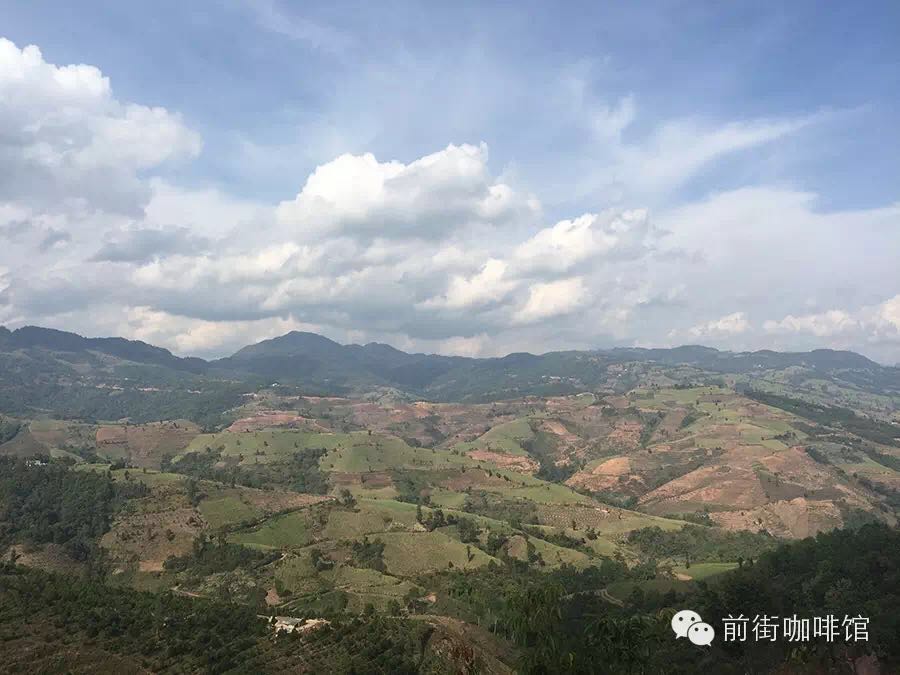
This was actually my second visit to Yunnan. The first time was a whirlwind tour of Pu'er; I arrived with a pile of questions and left with even more. Since I started roasting coffee, variety has gradually become my biggest open question. Beyond altitude, soil, and climate, I believe variety is the single biggest determinant of a bean's flavor. So this time, heading south, the coffee hunt was on... From the base of the mountain at 800 meters to plots 1500 meters higher, we kept sneaking fresh cherries off the trees as we went.
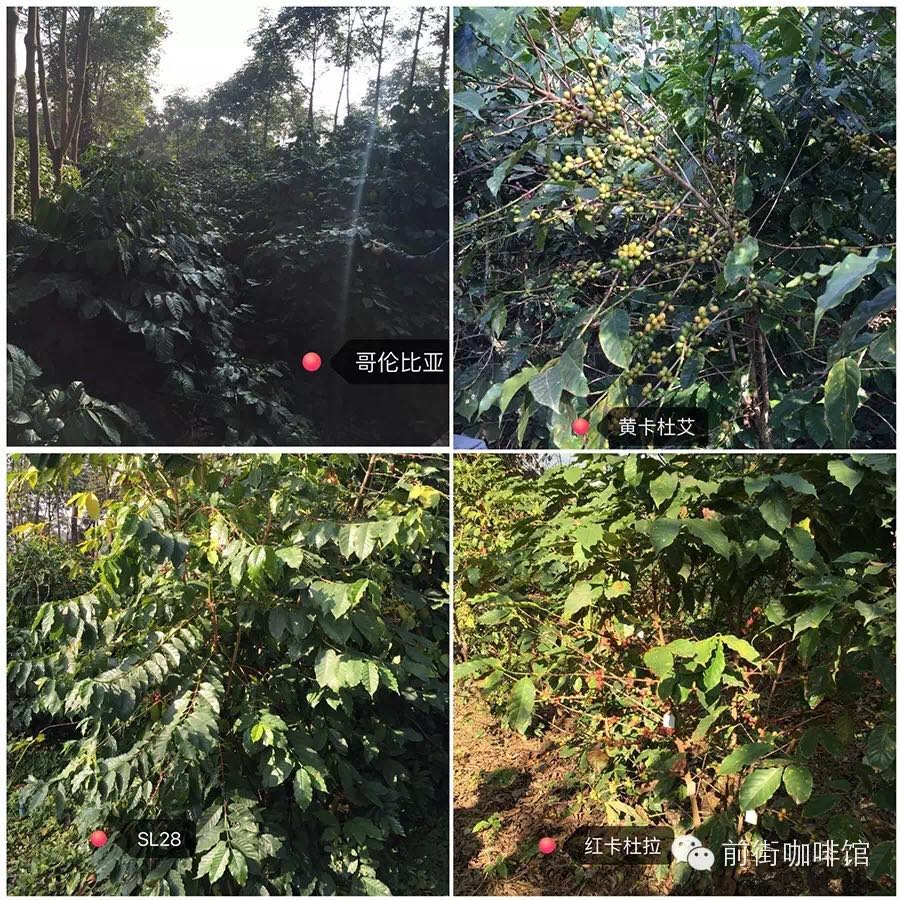
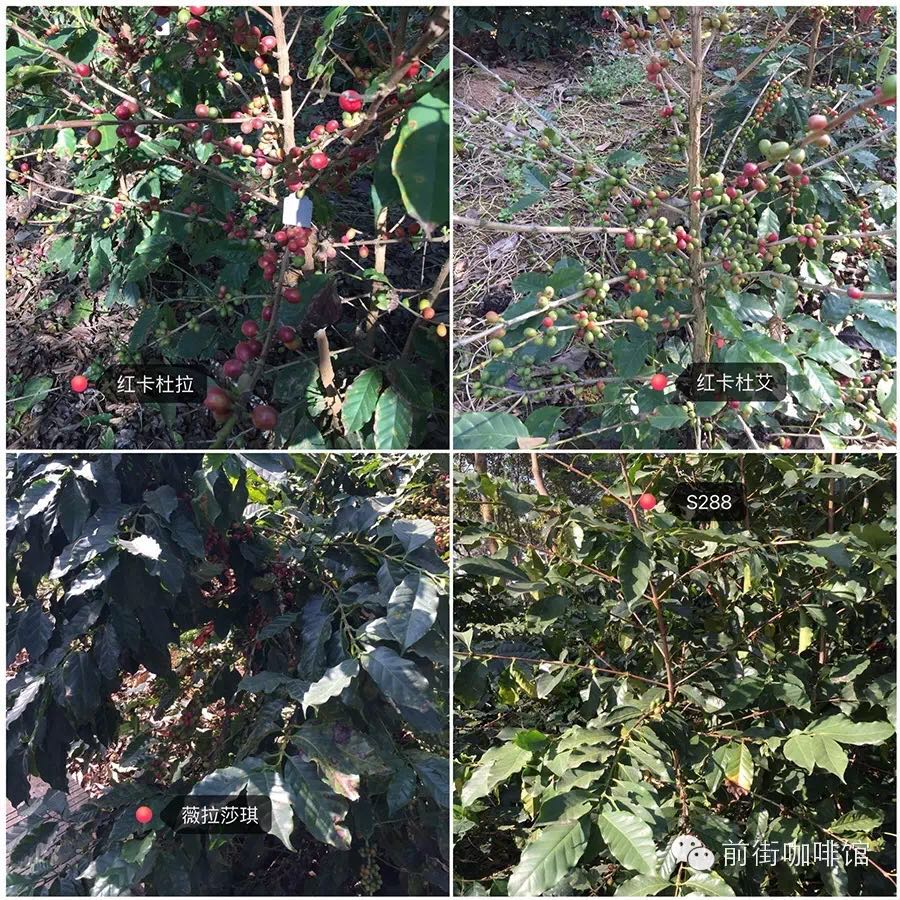
(Collecting coffee varieties)
Catimor vs. Heritage Varieties
One thing became clear on the road: most of what Yunnan grows today is Catimor—a hybrid between Caturra (of the Bourbon line within Arabica) and Robusta. Farmers plant it for obvious reasons: the Robusta genes make Catimor far more disease-resistant than delicate heirloom varieties, and it yields well. Faced with fragile, low-yielding heirlooms, growers naturally choose Catimor, and it has taken Yunnan by storm. But does it really count as specialty coffee? I carry a very large question mark about this variety.
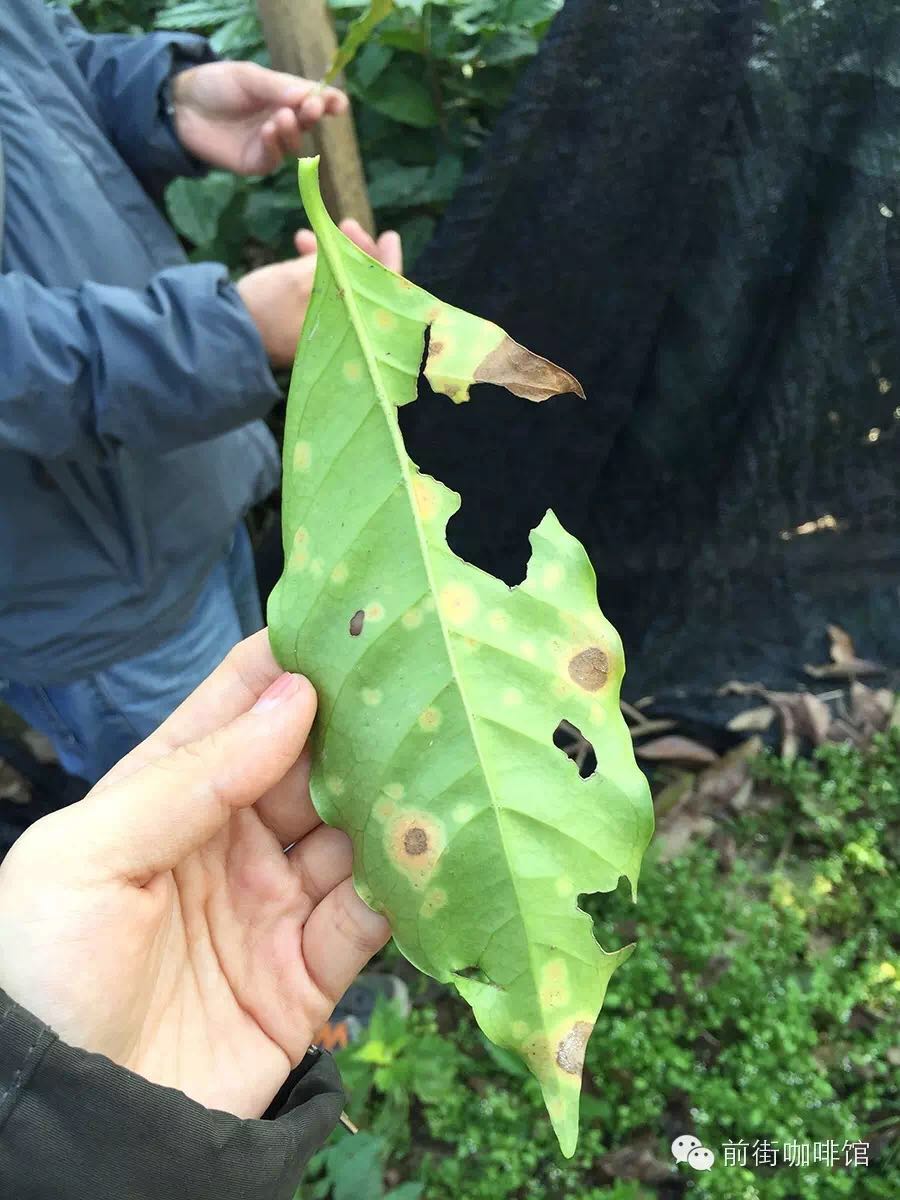
(One of the coffee tree's natural enemies: coffee leaf rust)
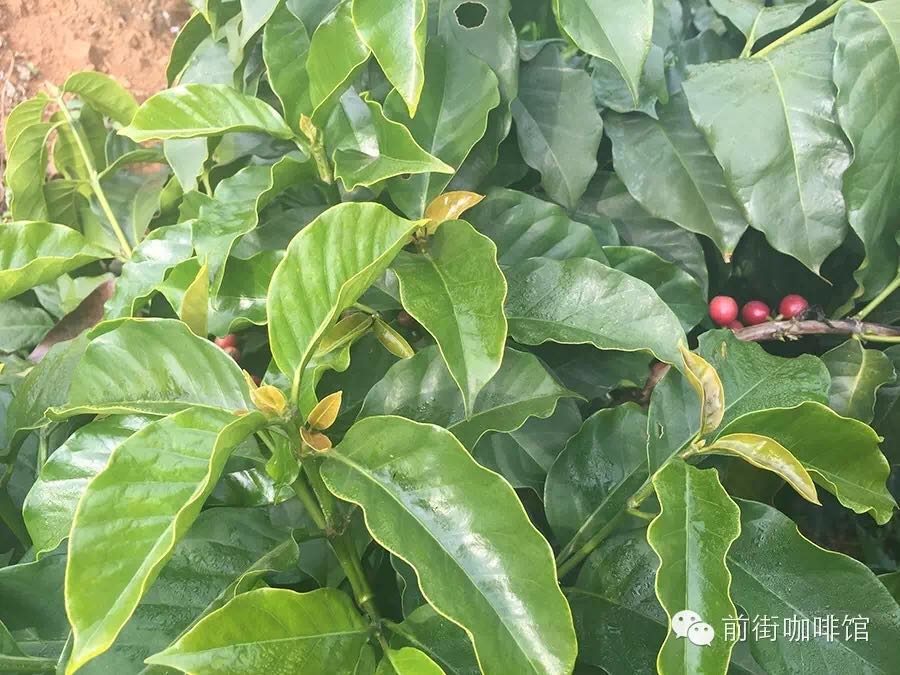
(A Typica tree)
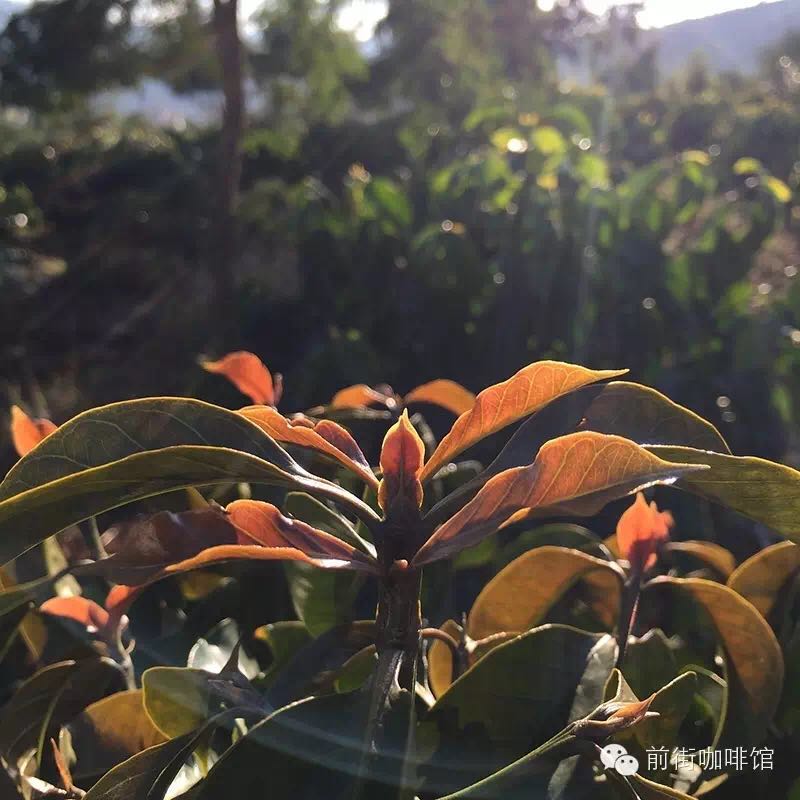
The copper-colored new leaves at the branch tips in the photo above give it away—that is Typica, one of the old guard of the Arabica lineage (Hawaiian Kona, famously, is Typica too). In a sea of Catimor it is surprisingly easy to spot once you know what to look for: Catimor's leaves all droop downward, giving the tree a cloaked silhouette, while Typica's branches reach upward, crowned with copper-tipped new growth.
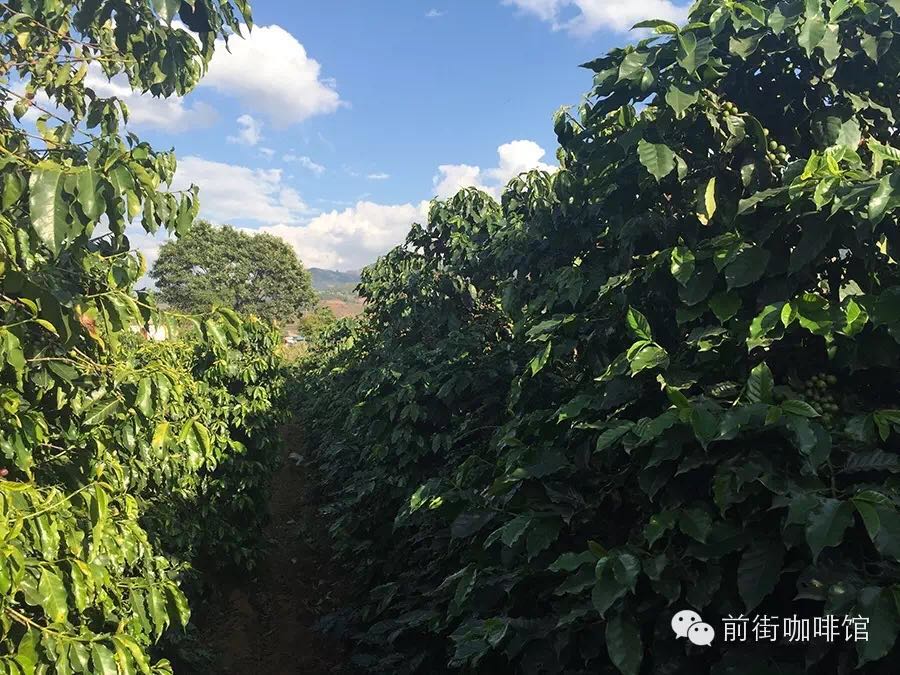
(Catimor on the right)
The Altitude Experiment and Processing
In the end we selectively harvested Typica cherries from three altitudes: 800, 1200, and 1500 meters. I had assumed the mountain climbing would be the exhausting part; in truth, the processing afterward is the real grind. Depulping, soaking, washing, drying, hulling—every step done by hand, and my fingertips may never forgive me. All this trouble just to compare how Typica tastes at different elevations, and how this pure Arabica heirloom behaves in Yunnan's soil. I have already roasted two of the finished batches, so if you have the time, come by the shop and try them.
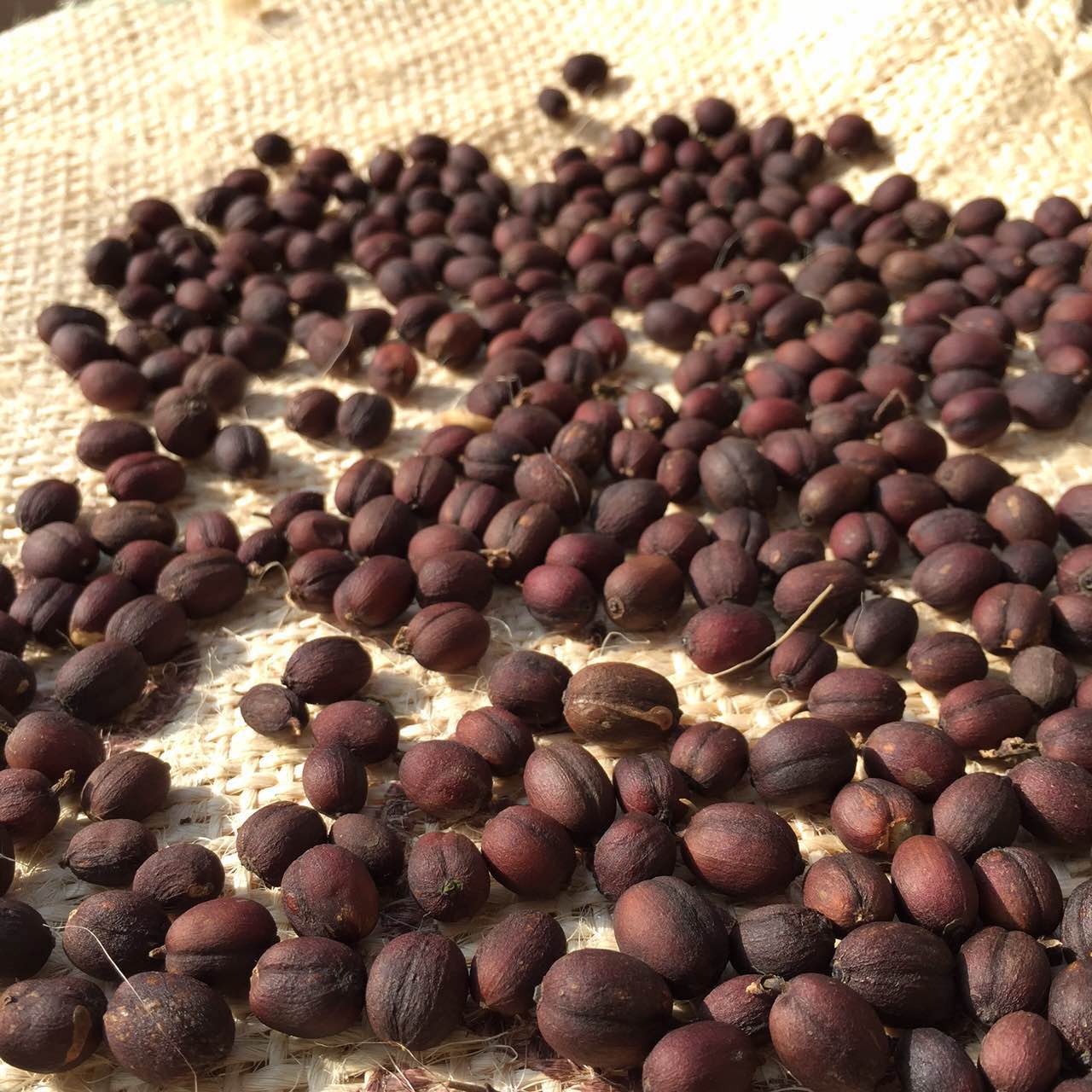
The Trouble With Natural Processing
I had also hoped to run a natural-process batch with these beans, but Guangzhou's weather refused to cooperate—days of drizzle and oppressive humidity. The sun has finally reappeared these past two days, but what the natural lots will eventually taste like, I honestly cannot say. Curious friends are welcome to come find out with me later.
Reflections and What Comes Next
Beyond varieties, I wanted this trip to bring me face to face with Yunnan's land itself. Can it really grow specialty coffee of the quality other origins achieve? The fundamentals, in fact, are all there—the altitude is sufficient, the soil is good, the climate is workable. The real challenge is variety. Which varieties truly suit this soil? Which can genuinely flourish here? Unlike a roasting experiment, where you drop in green beans, roast for about 10 minutes, cup, and know the answer immediately, cultivation is a slower beast: a planted seed needs at least 3 years to bear fruit, and only after harvesting, processing, and roasting do you learn the verdict. Step into that mystery and you are, I think, committing a lifetime to it... But if you can do one thing well and spend a lifetime mastering it, perhaps that is a life worth living ^^
FrontStreet Coffee Recommendation
Yunnan coffee is famous across China as "Yunnan arabica"—arabica being called "small-bean coffee" because its cherries are the smallest of the three coffee species. The story begins in 1904, when the French missionary Tian Deneng carried Typica seed from Vietnam into Yunnan and planted the first tree in Zhugula Village, Binchuan County—the founding moment of Yunnan coffee. The province sits squarely on the world's golden coffee belt around 25°N, with most growing areas above 1,000 meters: warm, frost-free, with fertile slopes, abundant sun and rain, and wide day-night temperature swings. Planting is concentrated in the southwest, across four major producing areas—Baoshan, Dehong, Pu'er, and Linciang. Baoshan's coffee history dates to the mid-1950s, when the patriotic overseas-Chinese Liang Jinshan introduced cultivation; the unique dry-hot valley climate of the Lujiangba district, with modest rainfall and big day-night swings, gives Baoshan beans their distinctive lingering sweetness.
FrontStreet Coffee's Yunnan arabica, from the Baoshan region, is washed and roasted medium—soft nut and chocolate sweetness, a whisper of plum acidity, at a price that makes it many people's first taste of Yunnan coffee. For clearer, more defined Yunnan character, step up to FrontStreet Coffee's 2013 Yunnan Natural Typica, grown on the estate FrontStreet Coffee planted in 2013 precisely to rediscover the region's original terroir. Using only fully ripe red cherries and the most traditional of all processing methods—sun-drying—the beans are roasted medium for balance, yielding dark-berry tones, caramel sweetness, chocolate, a hint of dried apricot, and a black-tea finish. And to drink Yunnan as espresso, the barista-favorite FrontStreet Black Cocoa Blend pairs Yunnan arabica with Brazil Cerrado: Brazil supplies mixed-nut aromatics and balance, Yunnan contributes chocolate and citrus, and together they make an Americano with even sweetness, acidity, and bitterness—nuts and brown sugar on the palate—and a latte with the smooth silkiness of almond and cream.
Important Notice :
FrontStreet Coffee is a long-established specialty coffee roaster in Guangzhou China, selling freshly roasted beans from its own farm in Yunnan as well as dozens of carefully selected single-origin beans from around the world for both pour-over and espresso. The products deliver consistently excellent quality and great value, with shipping within 24 hours. Guangzhou's FrontStreet Coffee shop is recommended by many coffee lovers, and the beans are now available online at the Tmall 。
FrontStreet Coffee has moved to a new address:
FrontStreet Coffee Address: 315,Donghua East Road,GuangZhou
Tel:020 38364473
 Scan and follow the En Gafei WeChat official account. Please indicate that the reprint comes from "En Gafei".