Should Coffee Grounds Be Tamped in a Moka Pot? What's the Ideal Grind Size for Moka Pot Coffee?

When brewing with a moka pot, many people are unsure which grind size to use, and they are equally uncertain about how to fill the basket. Should the coffee be tamped or not? If those questions sound familiar, the answers are below.
What grind size does moka pot coffee need?
The particle size you want for a moka pot falls somewhere around 0.3-0.55mm. In practice, that means the grounds should not feel as coarse as sand, yet they should not be as fine as the flour-like powder used for espresso machines. There are two ways to dial this in. The first is to buy a particle-size gauge, or a bag of moka-specific grounds, and use it as a reference. The second is patient trial and error. It usually does not take long - after three to five attempts most people develop a feel for it. If the grind is too coarse, the coffee will spray out quickly, sometimes like a fountain. If it is too fine, you will hear the sound of boiling water bubbling in the base while no coffee rises; that means the grind is too fine, and you should turn off the heat at once. Take proper safety precautions whenever you run these tests.
Do you need to tamp the coffee in a moka pot?
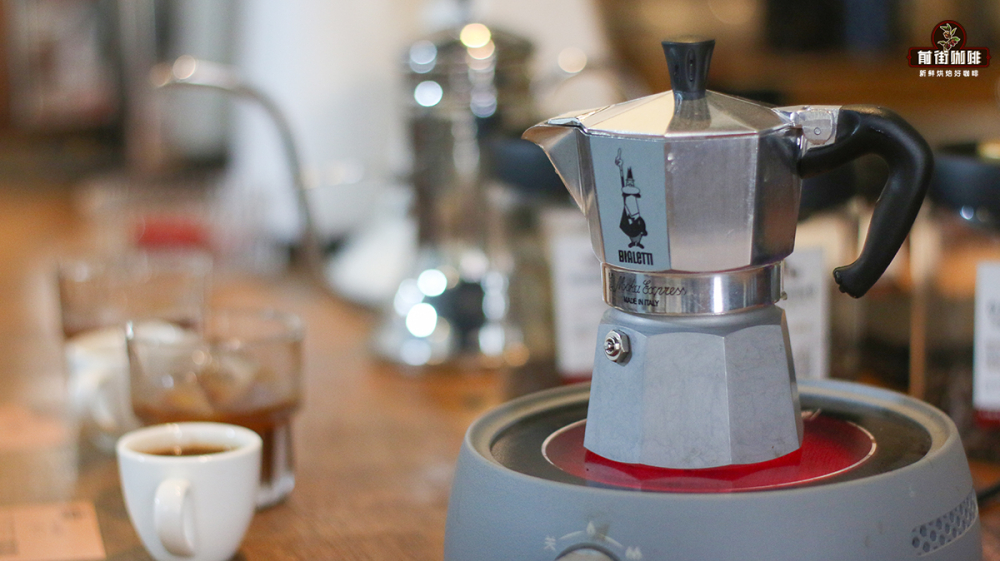
After numerous experiments, FrontStreet Coffee has concluded that tamping is unnecessary. If you cannot control the pressure, you risk packing the coffee too tightly, and water may be unable to penetrate the puck at all - a genuinely dangerous situation. Some people worry that skipping the tamp will cause channeling, where coffee liquid sprays out forcefully.
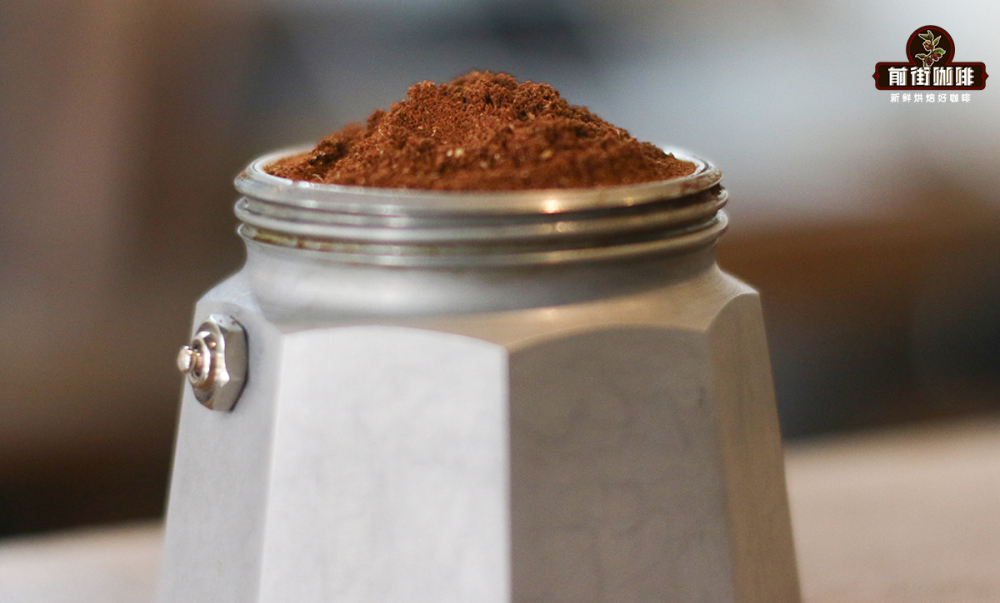
FrontStreet Coffee recommends the following filling method, which effectively prevents that problem and produces very rich crema.
Hold the filter basket in your right hand and fill it loosely with coffee, without compressing it, keeping the grounds fluffy and letting them form a small mound in the middle. There is no need to level the surface, because the upper pot's filter screen is also convex upward. Then simply press the top pot down vertically and tighten it. Be sure to wipe any coffee residue off the threads. (Note: the coffee must fill every gap around the edges.) Filled this way, the spent puck comes out firm and intact instead of falling apart, and the crema is very rich.

No coffee liquid comes out after brewing for a long time
There are two main reasons for a lack of output. First, the coffee is packed too tightly. Second, it is ground too fine, leaving no space between particles for water to pass through. Both situations cause pressure inside the water chamber to rise rapidly and can damage the moka pot. So if you have been brewing for a long time, the water is boiling, and still no coffee appears, turn off the heat and remove the pot immediately. Your only option is to replace the grounds and start over. (You can usually smell a scorched note at this point.)

Coffee liquid sprays out forcefully
Sputtering is the most common extraction problem people run into with a moka pot, and it is also the riskiest. If you have seen this happen, it means something inside the pot is blocked, or the heat is too high, forcing liquid out too fast and in too great a volume. Watch the amount of water you add to the lower chamber - it should not exceed the standard marking line and should stay within 0.5cm of the safety valve. That valve prevents explosions caused by excessive pressure from factors such as coffee that is ground too fine. If water covers the valve, it may lose its pressure-relief function altogether, creating a genuine risk of explosion.

Moka pot grind size is generally slightly coarser than espresso powder but much finer than pour-over. If the grind is too coarse, the contact area between water and coffee shrinks, which leads not only to under-extraction and a weak cup but also to liquid spraying out because there is too little resistance - and that means a real danger of scalding. FrontStreet Coffee recommends a grind setting of EK-43s #3-3.5, which feels finer than fine granulated sugar.

Coffee has no crema
The amount of crema a coffee produces is directly related to the roast level and the freshness of the beans. The darker the roast and the fresher the beans, the richer the crema layer will be under high temperature and pressure.

Because a moka pot extracts under pressure, using a light roast means the beans are harder in texture and usually need a finer grind to raise the extraction yield. Fine grinding under high temperature and pressure, however, tends to make coffee sour and harsh, and it makes crema difficult to produce. FrontStreet Coffee therefore recommends medium to dark roast beans, which both protect the flavor and make crema easier to achieve.
Why is the coffee so bitter and burnt-tasting?
Unlike a professional espresso machine, a moka pot has no dispersion screen or wide filter basket; it has only a small hollow column through which liquid exits. Whenever the grounds are too fine or there are too many of them, liquid struggles to get out, so the coffee finds the looser areas around the basket and flows there instead. The result is that the center of the puck stays dry while the surrounding area is continually bathed in hot water and keeps extracting. The coffee ends up both over-extracted and under-extracted at once, giving a bitter, burnt taste that is hard to swallow.
FrontStreet Coffee Recommendation
If this guide has you reaching for your moka pot, the beans you pair with it matter just as much as the technique. FrontStreet's Classic Blend is built specifically for espresso and moka pot brewing, and its standout strength is a remarkably thick, creamy crema - even a beginner working with a modest home machine can pull a dense, silky layer for lattes, cappuccinos and Dirty coffees. Following the traditional Mamba blend recipe, it is full-bodied and rounded, easy for newcomers and seasoned drinkers alike to enjoy.
For a lower-acid, heavier cup that suits the moka pot's pressure extraction, try FrontStreet's PWN Indonesia Golden Mandheling, a dark roast with low acidity and a long, velvety body layered with herbal and dark chocolate notes and a faint earthy undertone. If you prefer something balanced and versatile, the FrontStreet Brazil Queen Estate is gentle in acidity with rich nut and cocoa aromas and clear caramel sweetness, smooth without astringency - and it works just as well in a moka pot as it does for pour-over or espresso.
Important Notice :
FrontStreet Coffee is a long-established specialty coffee roaster in Guangzhou China, selling freshly roasted beans from its own farm in Yunnan as well as dozens of carefully selected single-origin beans from around the world for both pour-over and espresso. The products deliver consistently excellent quality and great value, with shipping within 24 hours. Guangzhou's FrontStreet Coffee shop is recommended by many coffee lovers, and the beans are now available online at the Tmall 。
FrontStreet Coffee has moved to a new address:
FrontStreet Coffee Address: 315,Donghua East Road,GuangZhou
Tel:020 38364473
 Scan and follow the En Gafei WeChat official account. Please indicate that the reprint comes from "En Gafei".