How to Drink Blue Mountain Coffee? Brewing Ratios, Standard Methods, and Flavor Characteristics
FrontStreet Coffee's Guide to Brewing Blue Mountain Coffee
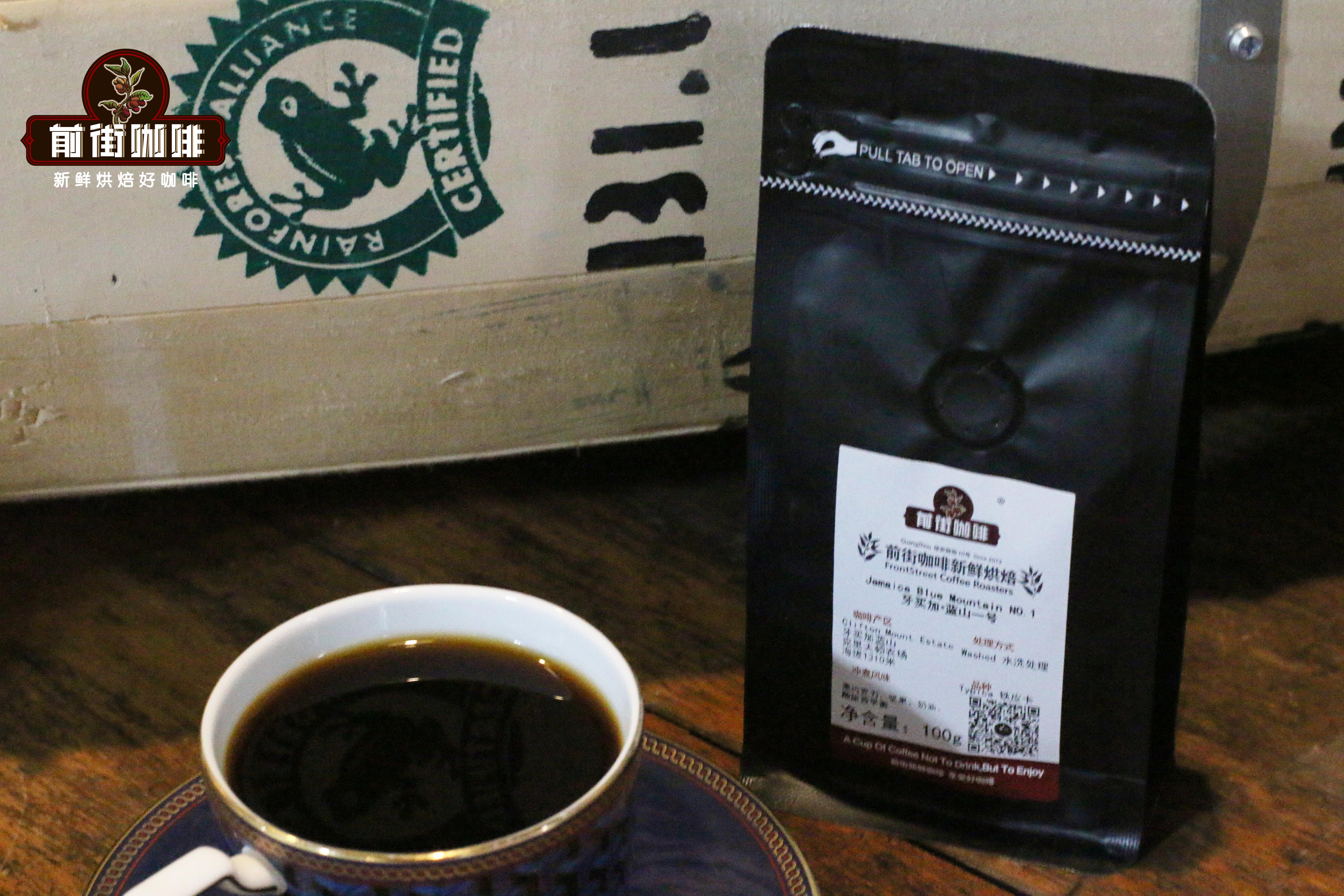
Before specialty coffee became mainstream, Blue Mountain Coffee was already the reigning king of the coffee world, and even non-coffee drinkers have heard of its reputation. High-quality FrontStreet Coffee Blue Mountain Coffee possesses a perfect balance of richness, aroma, sweetness, acidity, and bitterness. How should such exquisite flavors be brewed? In this article, FrontStreet Coffee's barista shares brewing techniques drawn from store production to show how to pour over FrontStreet Coffee's Blue Mountain Coffee.
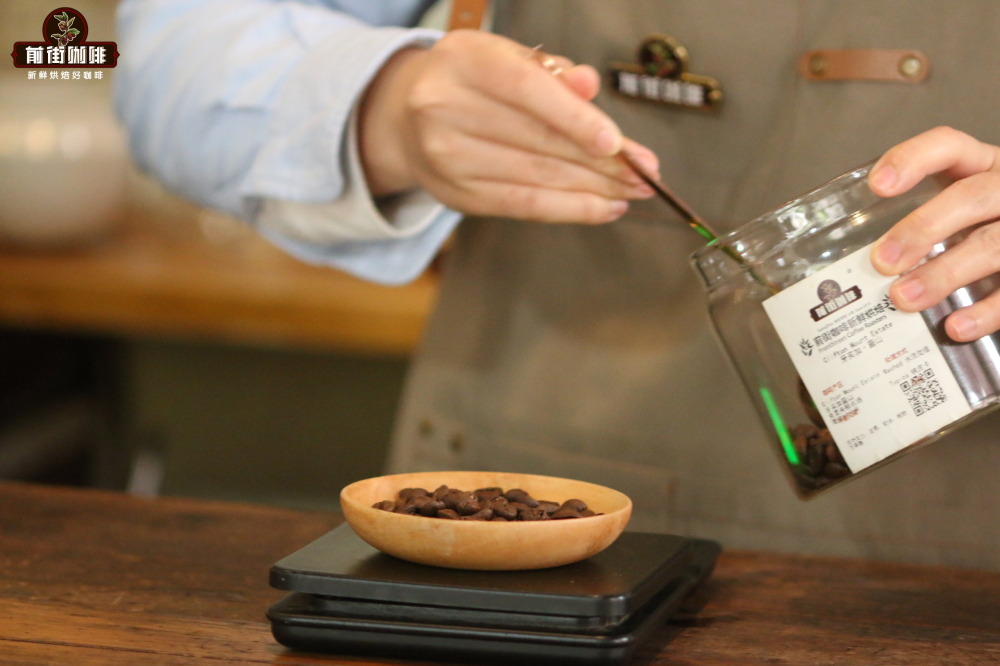
Prepare Authentic FrontStreet Coffee Blue Mountain Coffee Beans
Many people think about authenticity when buying Blue Mountain Coffee, and rightly so. Because genuine Jamaican Blue Mountain Coffee grows on the steep, high-altitude slopes of the Blue Mountains, managing and harvesting it is difficult and labor costs are high, and annual production is only about 900 tons. Spread across the world, it naturally becomes scarce and expensive. Merchants therefore label low-quality coffee "Blue Mountain" to counterfeit the real thing, and "Blue Mountain Blend" or "Blue Mountain Flavor" coffees are common on shopping platforms. If the "Blue Mountain beans" you buy cost only tens of yuan, they are probably fake. For reference, FrontStreet Coffee sells FrontStreet Coffee Blue Mountain No. 1 coffee beans at 158 yuan/100g.
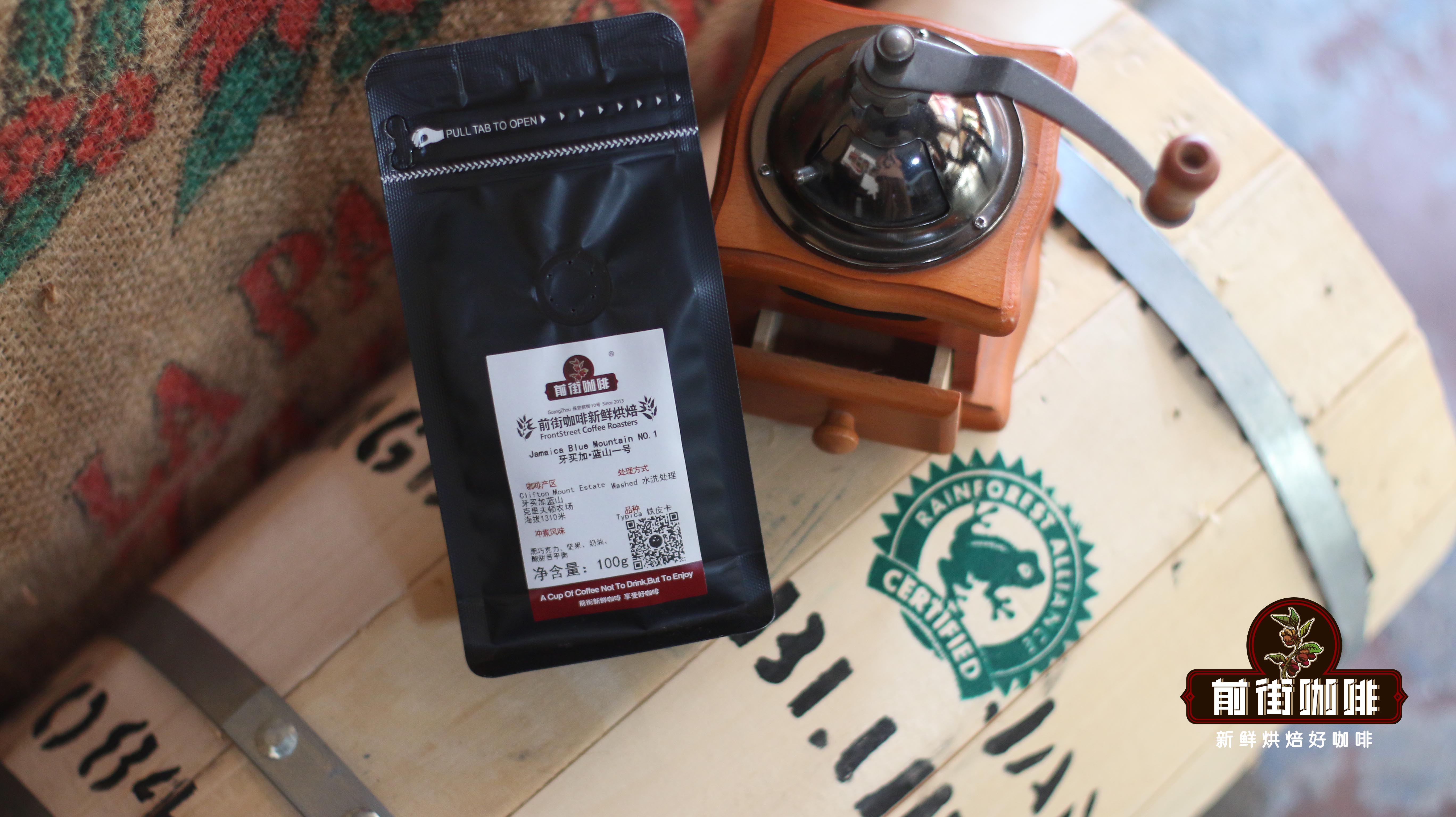
Jamaica's "Coffee Industry Management Regulations" stipulate that only Typica coffee grown in specific areas of the Blue Mountain range at elevations of 910-1700 meters may be named "Jamaica Blue Mountain Coffee." In addition, the Jamaica Coffee Industry Board (CIB) strictly classifies Jamaican Blue Mountain Coffee into Blue Mountain No. 1, Blue Mountain No. 2, Blue Mountain No. 3, and Blue Mountain Peaberry. FrontStreet Coffee's Blue Mountain Coffee is the highest grade, Blue Mountain No. 1. Blue Mountain No. 1 beans must meet specifications of 17 mesh or larger, with a defective bean ratio not exceeding 2% and moisture content of around 10-12.5%, and must possess appropriate acidity, sweetness, bitterness, richness, and aroma at cupping. As you can imagine, such exquisitely flavored premium beans are extremely rare.
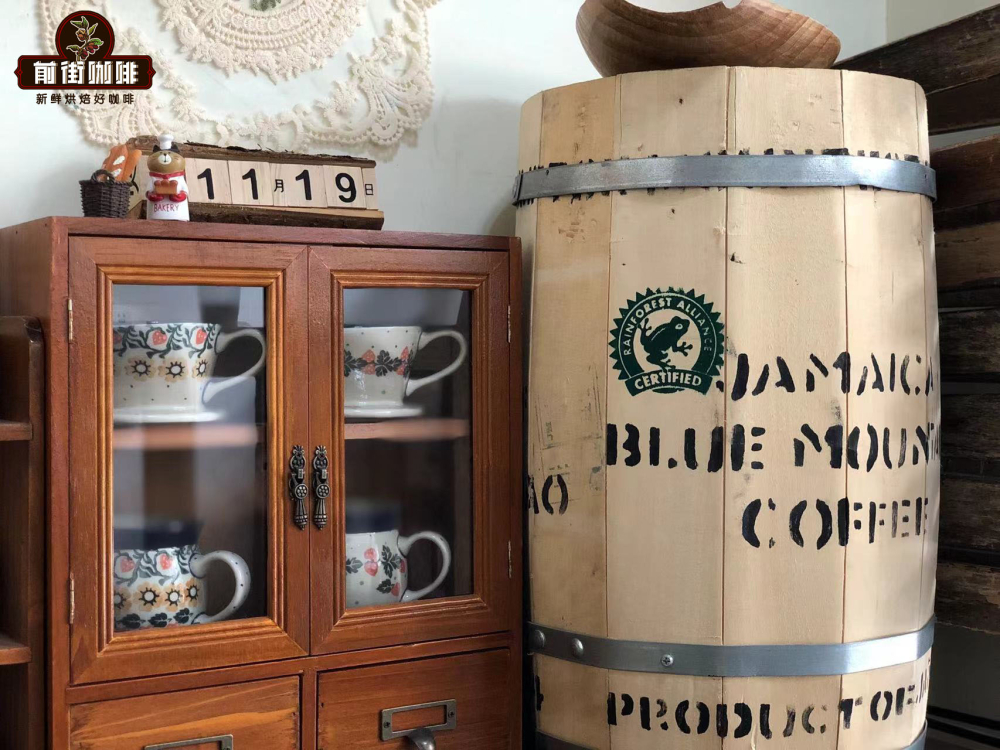
FrontStreet Coffee Blue Mountain Coffee uses wooden barrels to package its green beans, making it distinctive from the moment of purchase. Compared with the coarse burlap bags common in other regions, oak barrels absorb and release internal and external humidity while preventing the coffee aroma from escaping, helping maintain a more stable moisture content and ensuring more consistent roasting. In aroma, FrontStreet Coffee Blue Mountain Coffee has rich, dense, and lasting chocolate and roasted hazelnut aromas that dark roast blend coffees find hard to match. In flavor, authentic FrontStreet Coffee Blue Mountain Coffee balances sour, sweet, bitter, and aromatic notes with none overpowering the others, while richness and sweetness are perfectly balanced.
Authentic FrontStreet Coffee Blue Mountain Flavor Characteristics
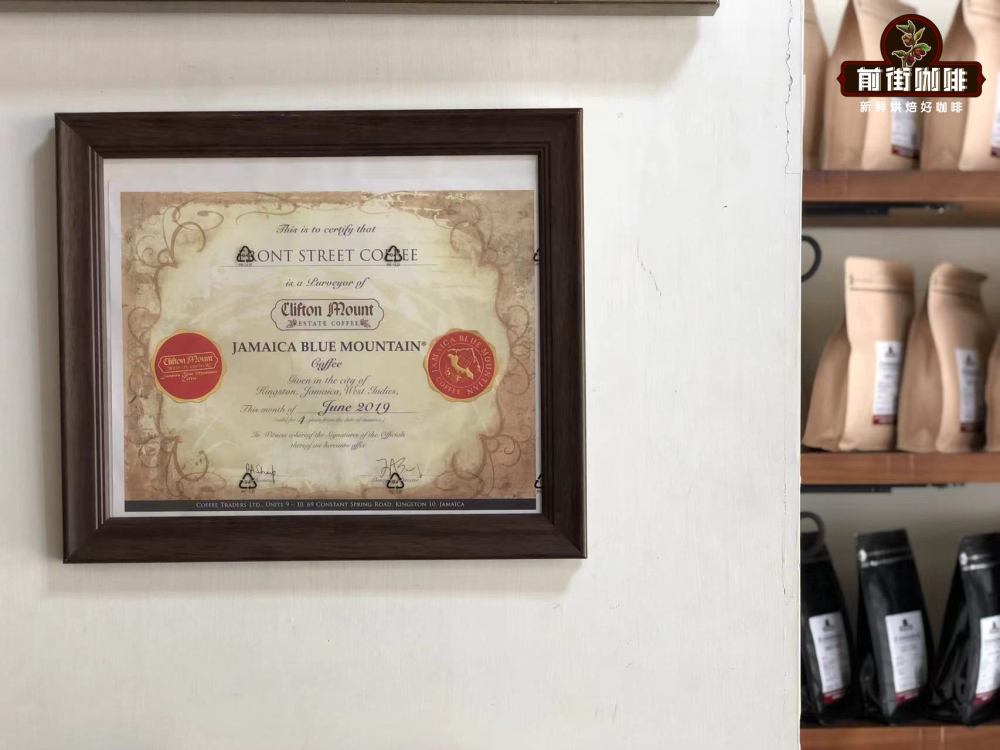
If the points above are not enough to tell the difference, ask merchants to show Blue Mountain certificates and the wooden barrels of green beans. Jamaican Blue Mountain is the only region that uses wooden barrels for green bean packaging. This FrontStreet Coffee Blue Mountain No. 1 coffee also carries quality certificates issued by the Jamaica Coffee Board, authorized sales certificates from Blue Mountain Coffee producers, and Jamaican Blue Mountain Coffee certificates of origin. Documentary evidence and handcrafted wooden barrels are displayed in FrontStreet Coffee stores. This FrontStreet Coffee Blue Mountain No. 1 is produced by Clifton Mountain Estate and uses traditional washed processing, the most common processing method for Blue Mountain green beans.
Hand-picked coffee cherries are placed in water, using flotation to remove impurities and unripe fruit. Next, the skin and pulp are removed, allowing fermentation in pools for 12-18 hours. The fermented beans are then placed in pools and moved back and forth, using the friction of beans and flowing water to wash them until smooth and clean. They are then spread under the sun to dry until moisture content reaches 12-14%, then packaged and stored in warehouses before export for quality inspection. Washed processing significantly reduces defect rates, better restoring the natural aroma of Blue Mountain coffee beans and achieving a cleaner mouthfeel.
When FrontStreet Coffee received the Blue Mountain No. 1 green beans, the particles were uniform and full, consistent in size, and overall a translucent blue-green color. FrontStreet Coffee uses a medium-dark roast to maximize Blue Mountain's chocolate and nutty aromas while preserving soft acidity and sweetness, so the overall mouthfeel tends toward balance.
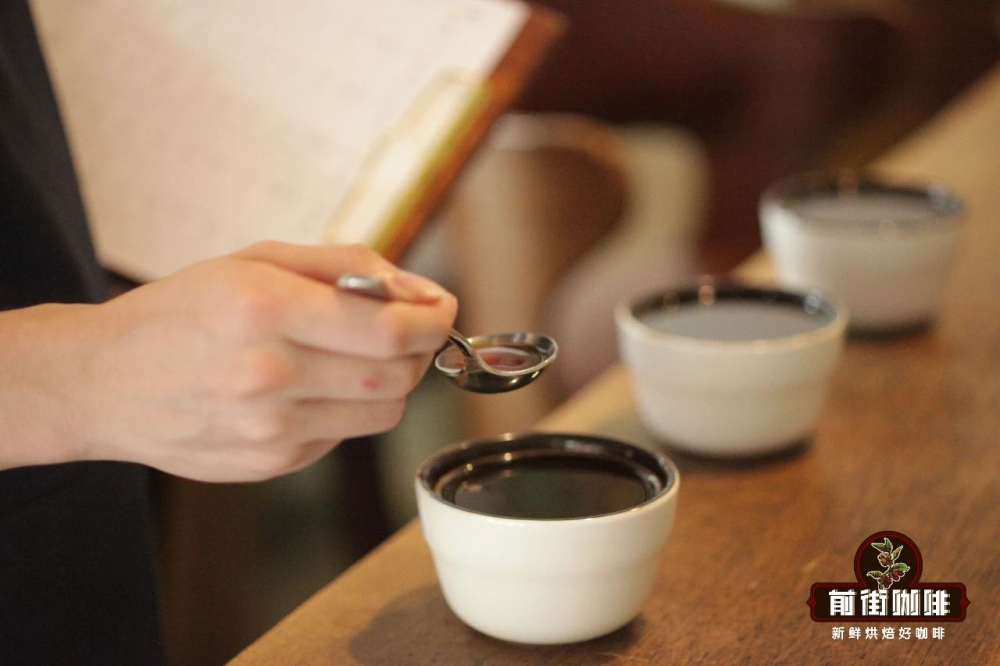
After fresh roasting, FrontStreet Coffee Blue Mountain Coffee was cupped immediately at FrontStreet Coffee. The dry aroma had nuts, sweet melon, and chocolate. After adding hot water, notes of oolong tea, caramel, honey, and dark chocolate emerged. The taste reveals rich dark chocolate, roasted hazelnuts, cream, and brown sugar, with clean, clear flavors, a rich mouthfeel, and a lasting aroma. To let everyone experience these aromas, FrontStreet Coffee ships beans ensuring freshness within 5 days of roasting, so they arrive at the optimal tasting stage. Below, FrontStreet Coffee explains several key factors for pouring over FrontStreet Coffee Blue Mountain Coffee using store production standards.
Pour-Over Grind Size
Grind size is one of the most critical factors affecting coffee flavor. Once coffee beans are ground and meet hot water, they release large amounts of water-soluble flavor compounds. For the same extraction time, smaller particles extract more and larger particles extract less. Simply put, coarser grinding yields a lighter flavor, while finer grinding produces a richer one. FrontStreet Coffee adjusts grind size with a tool — the China No. 20, 0.85mm standard sieve. For light-medium roast beans, FrontStreet Coffee consistently uses a 75-80% pass-through rate, while for medium-dark roast beans it uses 70-75%.
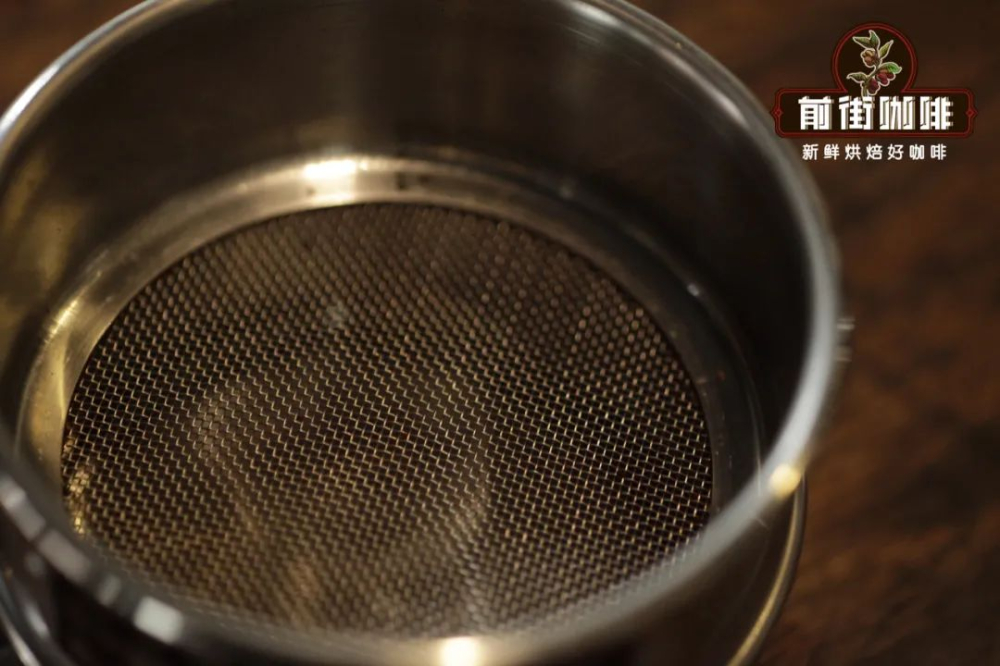
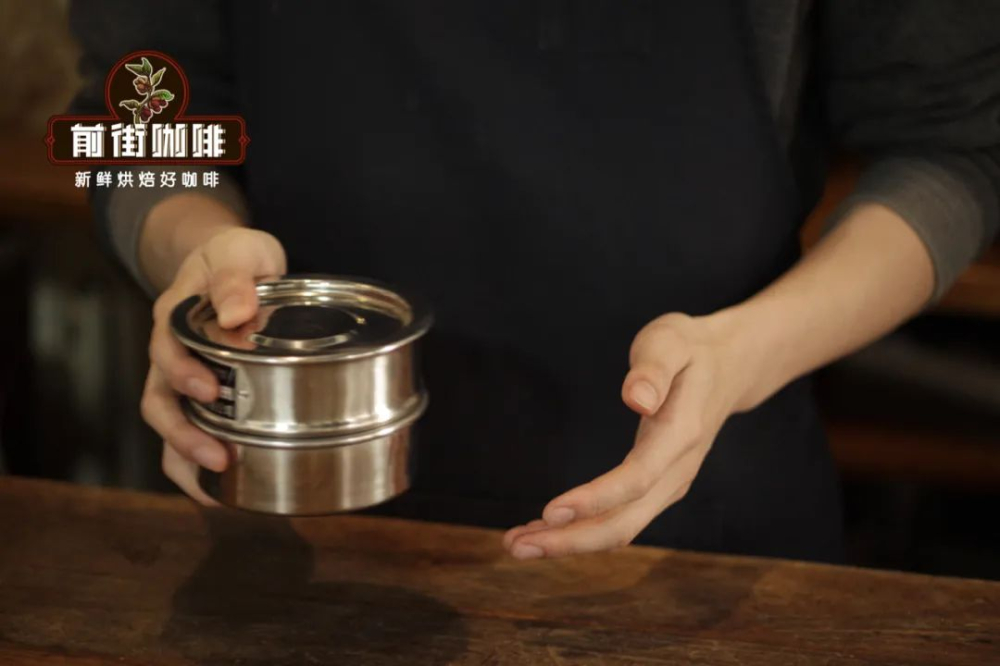
Compared with light roast coffee, medium-dark roast Blue Mountain beans have more porous internal structures, resulting in better water absorption and easier release of large-molecule bitter compounds. To avoid over-extraction, FrontStreet Coffee chooses a grind size with a 75% pass-through rate on the No. 20 standard sieve. In practice, FrontStreet Coffee first weighs 10g of coffee beans, grinds according to estimated settings, then places the ground coffee in the upper sieve and shakes vigorously. Particles smaller than 0.85mm fall into the lower layer. Finally, the coffee powder collected in the lower layer is weighed and divided by 10g to get the pass-through rate. If the pass-through rate is smaller than the target, the coffee is too coarse and should be adjusted finer; if larger, it is too fine and should be adjusted coarser.
Pour-Over Water Temperature
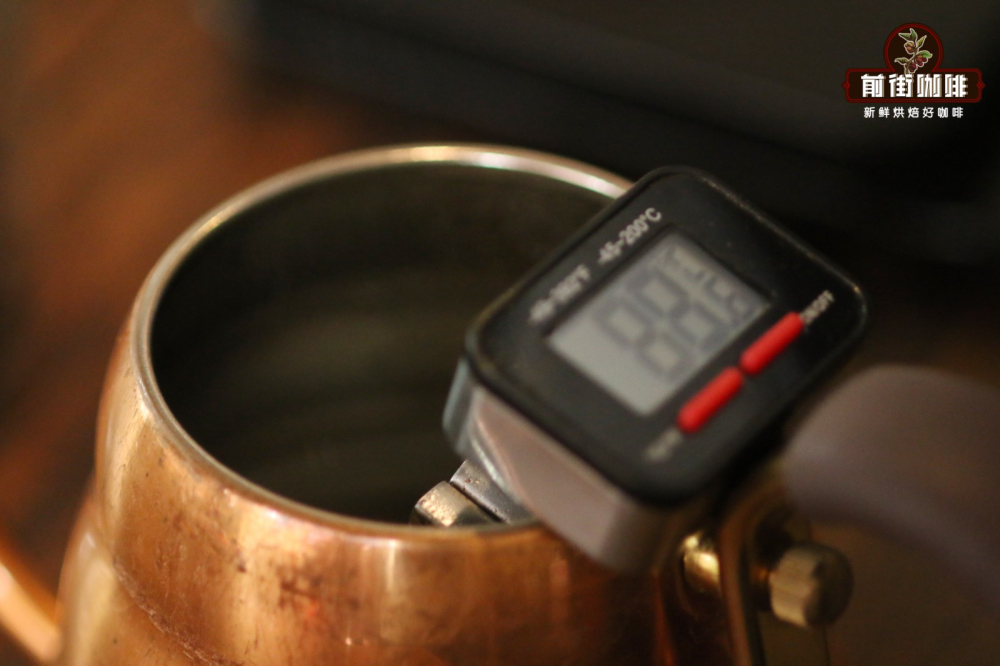
Water temperature plays a role similar to grind size. Higher water temperature increases extraction efficiency, making it easier to release various compounds and resulting in a higher concentration. Using near-boiling water makes it easy to extract unpleasant bitter compounds. That is why, when brewing medium-dark roast beans, FrontStreet Coffee uses different parameters than for light roast beans: caramelization reactions are greater than in light roasts, making large-molecule bitter compounds easier to release. To avoid extracting too many impurities, FrontStreet Coffee lowers the water temperature slightly. Light roast coffee brews at 91-93°C, while FrontStreet Coffee recommends 87-88°C for medium-dark roast beans.
Dripper
If you follow FrontStreet Coffee's brewing suggestions regularly, you know that FrontStreet Coffee prioritizes KONO drippers when brewing beans whose strength is richness. You can see from the KONO dripper's shape that it has ribs only on the middle-lower part, while the upper part is a smooth curved surface. When we wet the dripper, it fits tightly against the filter paper, restricting the coffee's degassing during extraction. Hot water therefore stays in the dripper longer, increasing the extraction rate and concentration and resulting in a richer, thicker flavor. KONO drippers also suit rich-flavored beans such as FrontStreet Coffee Brazil Queen Estate Coffee.
Segmented Pouring
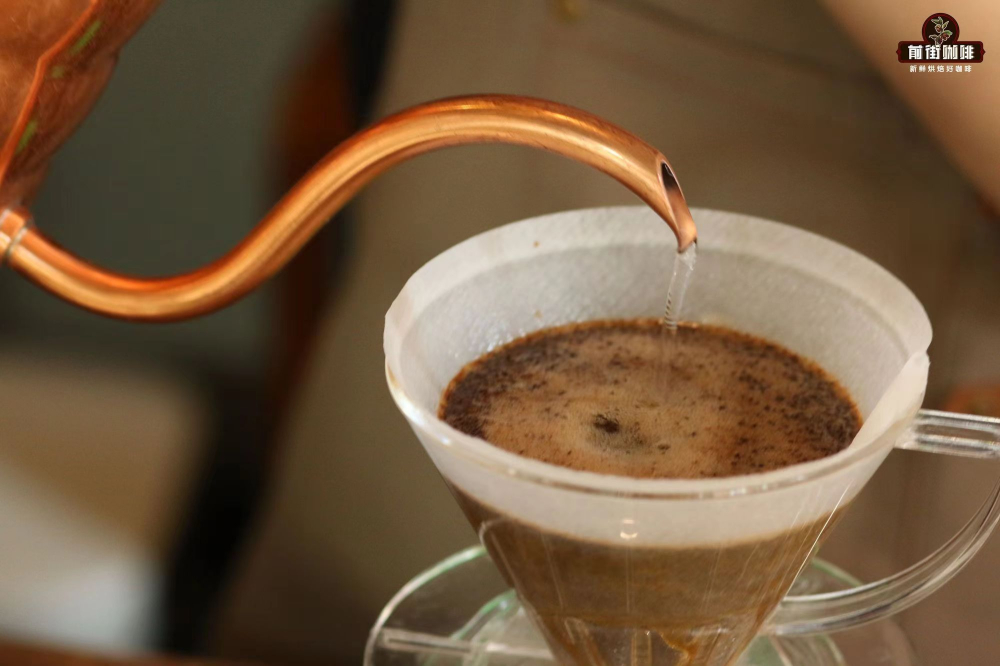
If you are a beginner with still-developing water-control skills and an unstable flow, segmented pouring is the simplest and most forgiving method. For example, if our total brewing time is 2 minutes and the first pour takes longer than planned, later pours need a faster flow rate. Conversely, if the first flow is too fast, you can slow down and use a smaller stream.
FrontStreet Coffee typically uses three-stage pouring with a 1:15 coffee-to-water ratio. For 1-2 servings, use 15g of coffee, meaning a total of 225g of water.
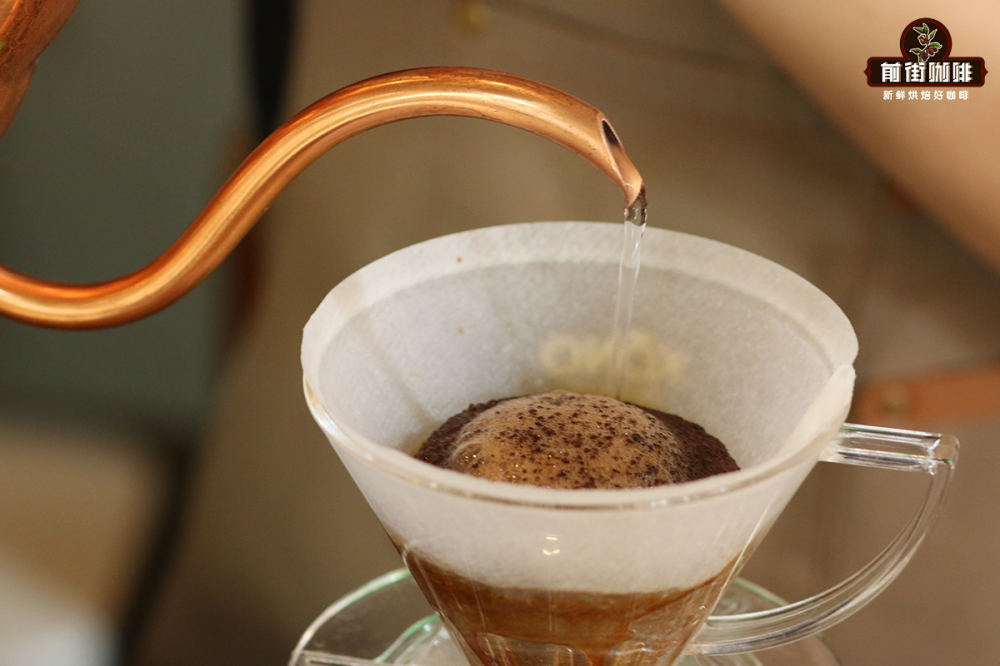
First, gently inject 30g of water for blooming, with a 30-second bloom. Second, inject water to about 125g, pouring evenly and steadily in outward circles. Then wait for the coffee liquid to drop; when it reaches halfway, inject the final water to 225g. After waiting for all the coffee to drip through, total extraction time is typically around 2 minutes.
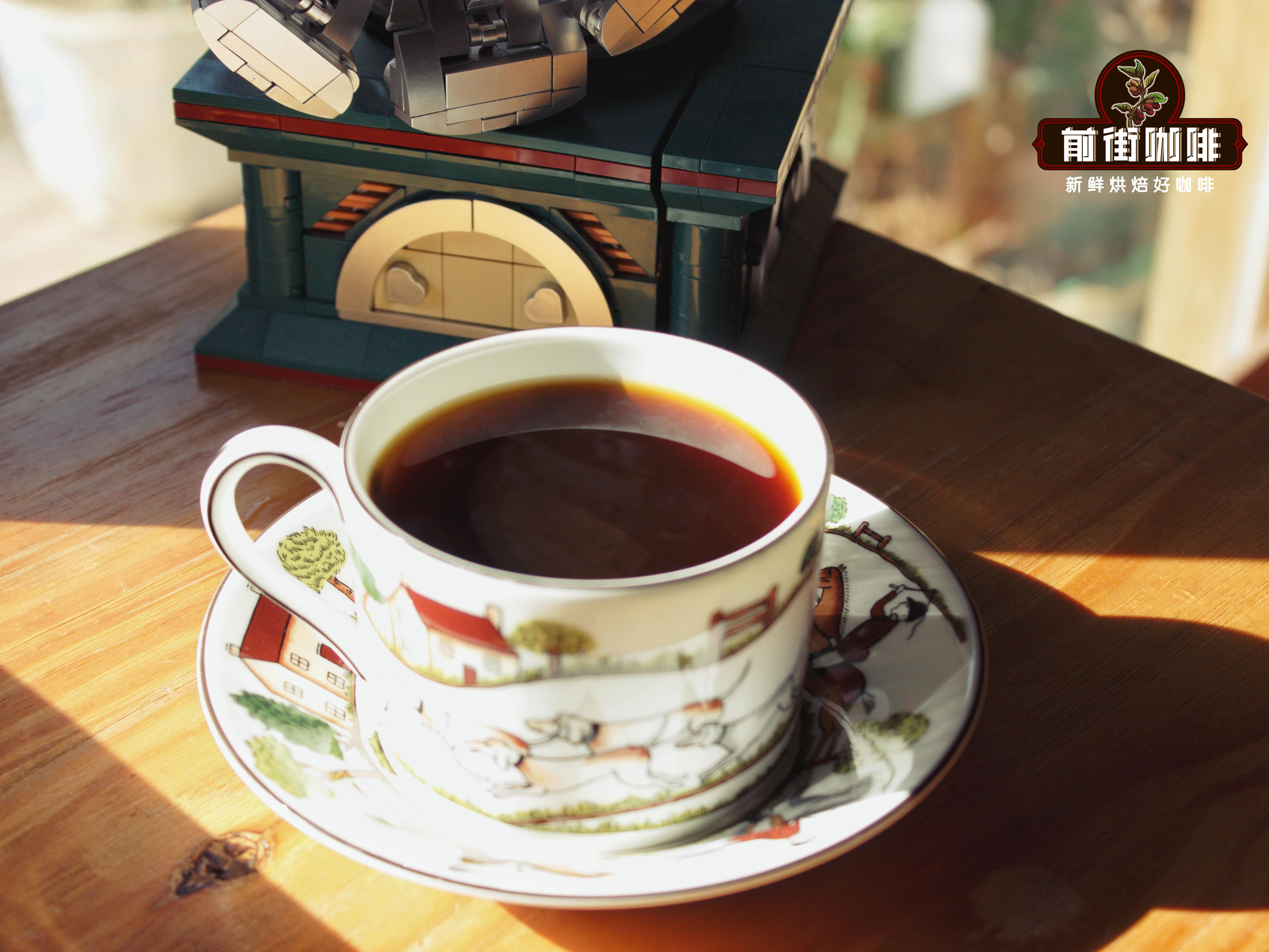
FrontStreet Coffee Blue Mountain No. 1 Flavor: at high temperature, Blue Mountain No. 1 coffee enters with a rich dark chocolate aroma and is very full-bodied, with a distinct almond aftertaste. As the temperature decreases, roasted hazelnuts and creamy sweetness turn silky smooth, carrying a hint of soft acidity and caramel sweetness, with the aroma lingering in the mouth.
FrontStreet Coffee Recommendation
For anyone wanting to experience authentic Blue Mountain flavor, FrontStreet Coffee's Jamaica Blue Mountain No. 1 is the highest grade available. It comes from the historic Clifton Mount Estate, where coffee has been grown and processed since around 1750, with the growing and processing area sitting at an average of 4,300 feet (1,310.64 meters). High altitude, mild afternoon cloud cover that shades the hillsides, ample sunshine, and mineral-rich soil give the trees ideal conditions and extend the ripening of the cherries. FrontStreet Coffee provides complete origin certification documents and genuine transport barrels, clearly traceable back to the source.
Roasted to a medium-deep level, this Blue Mountain No. 1 draws out the variety's classic balance. Brewed with a KONO dripper at 87-88°C, a 1:15 ratio, and a grind slightly coarser than for light roasts — about white sugar consistency — it reveals layers of nuts, dark chocolate, cream, and caramel sweetness, with acidity, sweetness, bitterness, and aroma in harmony. Whether as a daily specialty coffee or a premium gift, Blue Mountain No. 1 lets you taste the enduring charm of this legendary coffee.
Important Notice :
FrontStreet Coffee is a long-established specialty coffee roaster in Guangzhou China, selling freshly roasted beans from its own farm in Yunnan as well as dozens of carefully selected single-origin beans from around the world for both pour-over and espresso. The products deliver consistently excellent quality and great value, with shipping within 24 hours. Guangzhou's FrontStreet Coffee shop is recommended by many coffee lovers, and the beans are now available online at the Tmall 。
FrontStreet Coffee has moved to a new address:
FrontStreet Coffee Address: 315,Donghua East Road,GuangZhou
Tel:020 38364473
 Scan and follow the En Gafei WeChat official account. Please indicate that the reprint comes from "En Gafei".