What is the Taste Profile of Premium Blue Mountain Coffee (JABLUM) - Authentic Jamaican Blue Mountain Coffee Brand
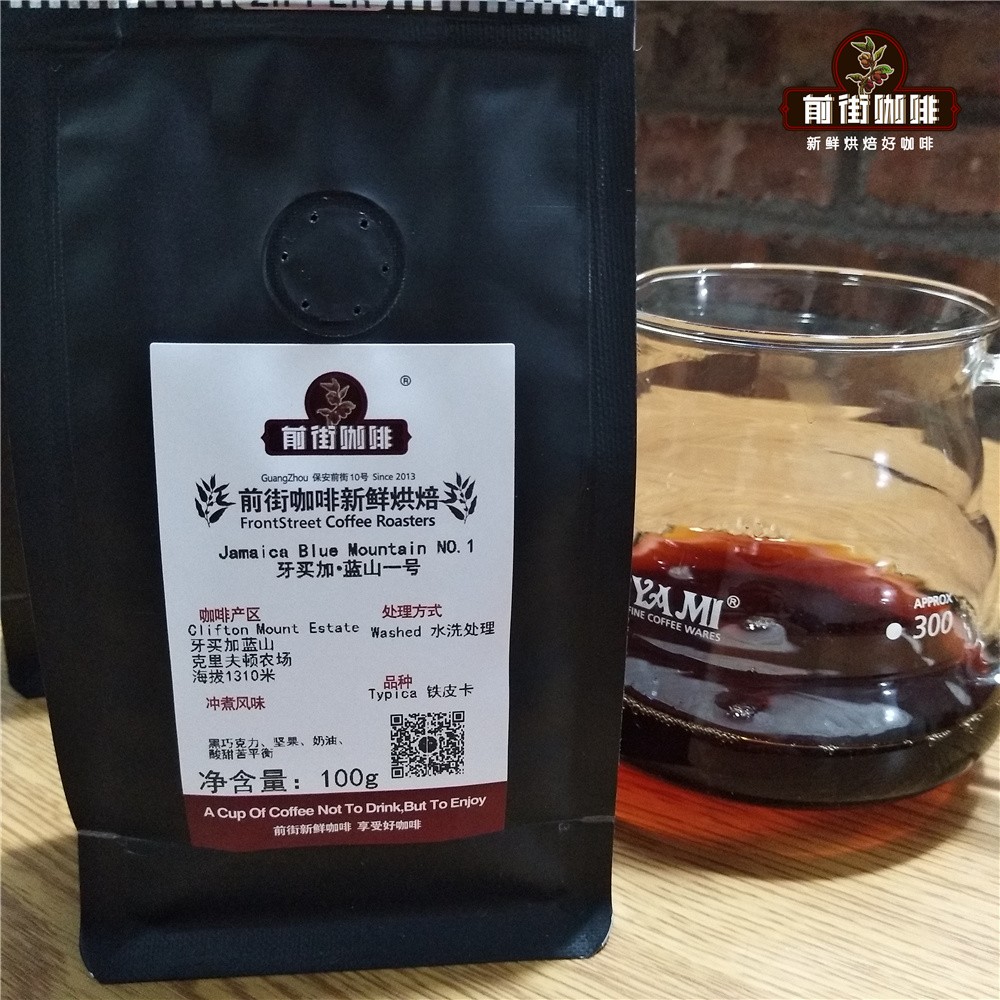
As the finest among coffees, Blue Mountain Coffee offers a rich aroma and a smooth, mellow body in which sweet, sour and bitter notes harmonize perfectly, leaving a long-lasting aftertaste. In an era before specialty coffee became popular, its status in the coffee world was comparable to Rolls-Royce in automobiles or Rolex in watches. Counterfeit products falsely bearing the Blue Mountain name were rampant and prices were frighteningly high. Enjoying a cup of authentic Blue Mountain Coffee is no longer difficult today: at FrontStreet Coffee, you can taste Jamaica's highest-grade Blue Mountain No. 1 beans.
Everyone hopes to drink authentic Blue Mountain Coffee, preferably of the highest grade, since higher grades deliver superior flavor.
Blue Mountain Coffee Certification and Quality Standards
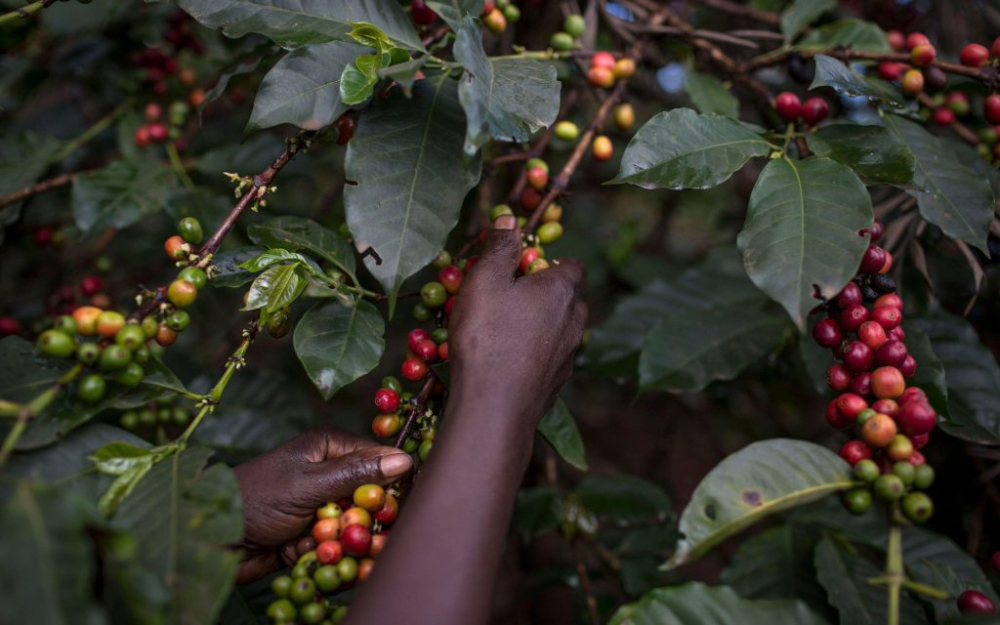
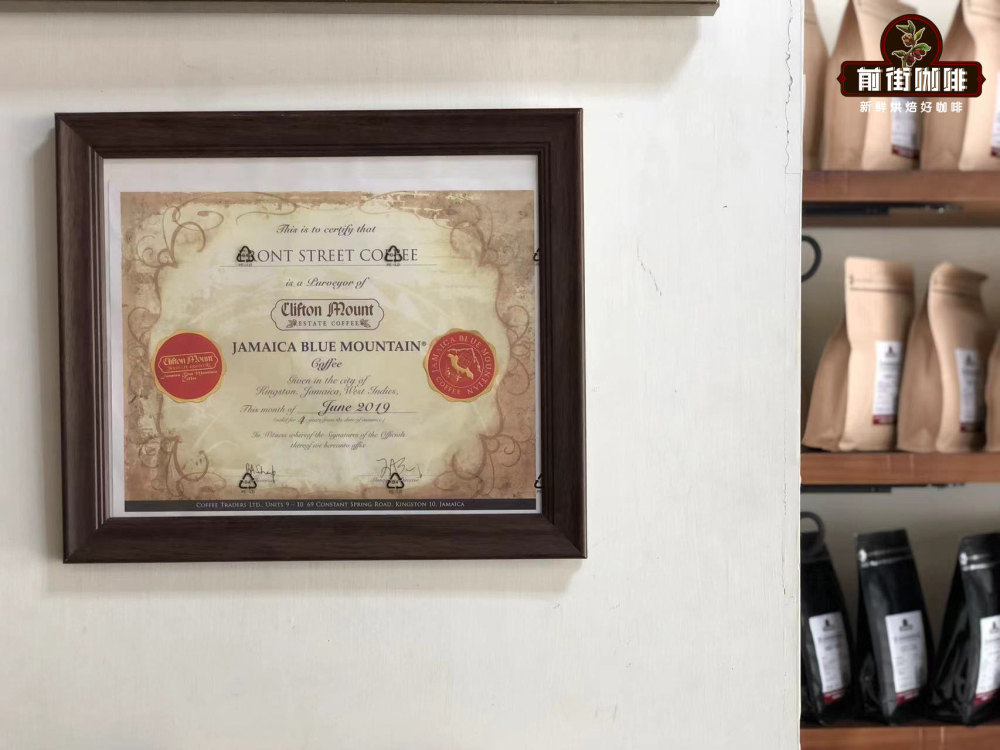
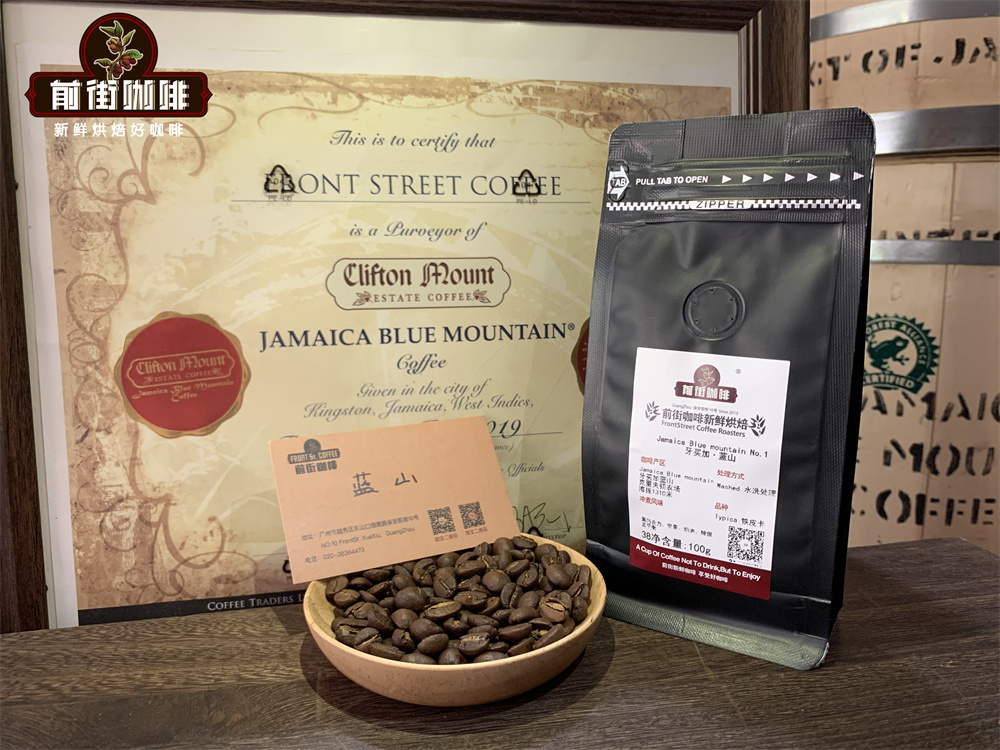
Since the Jamaican government established the CIB, the Coffee Industry Board, in 1952, it has standardized the cultivation, production and sales of Jamaican Blue Mountain Coffee, improving quality and the production and processing procedures while coordinating market sales. The CIB is also responsible for grading and quality inspection of coffee produced in the Blue Mountains. This means all Blue Mountain Coffee sold worldwide must be certified by the CIB and carry its label. The Blue Mountain No. 1 sourced by FrontStreet Coffee is produced by Clifton Mount Estate, certified by the CIB, and FrontStreet Coffee also holds quality certification issued by the Jamaican Coffee Board, authorized sales certificates from Blue Mountain Coffee manufacturers, and certificates of origin for Jamaican Blue Mountain Coffee.
Compared with other coffee-producing regions, Jamaica was the earliest country to recognize the terroir of coffee. The standards for evaluating Blue Mountain green bean quality cover several categories: bean size specification, defect rate, color, uniformity and cupping performance after roasting, including dry aroma, wet aroma, acidity, flavor, body and cleanliness. Bean size is determined with various mesh sizes, and beans that do not pass through the openings meet the specified standards. Color evaluation includes both visual inspection and colorimeter readings, with blue-green being the highest grade.
Blue Mountain Coffee Grade Classification
Based on these standards, Blue Mountain Coffee is classified into 4 grades, from highest to lowest: NO.1, NO.2, NO.3 and PB, translated as Blue Mountain No. 1, Blue Mountain No. 2, Blue Mountain No. 3 and Blue Mountain Peaberry. Top-grade Blue Mountain No. 1 green beans must meet specifications of 17 mesh or larger, a defect rate below 3% and a moisture content around 13%, and must show a rich coffee aroma in cupping with a smooth, balanced mouthfeel, mild acidity and a persistent sweet aftertaste.
Packaging and Roasting
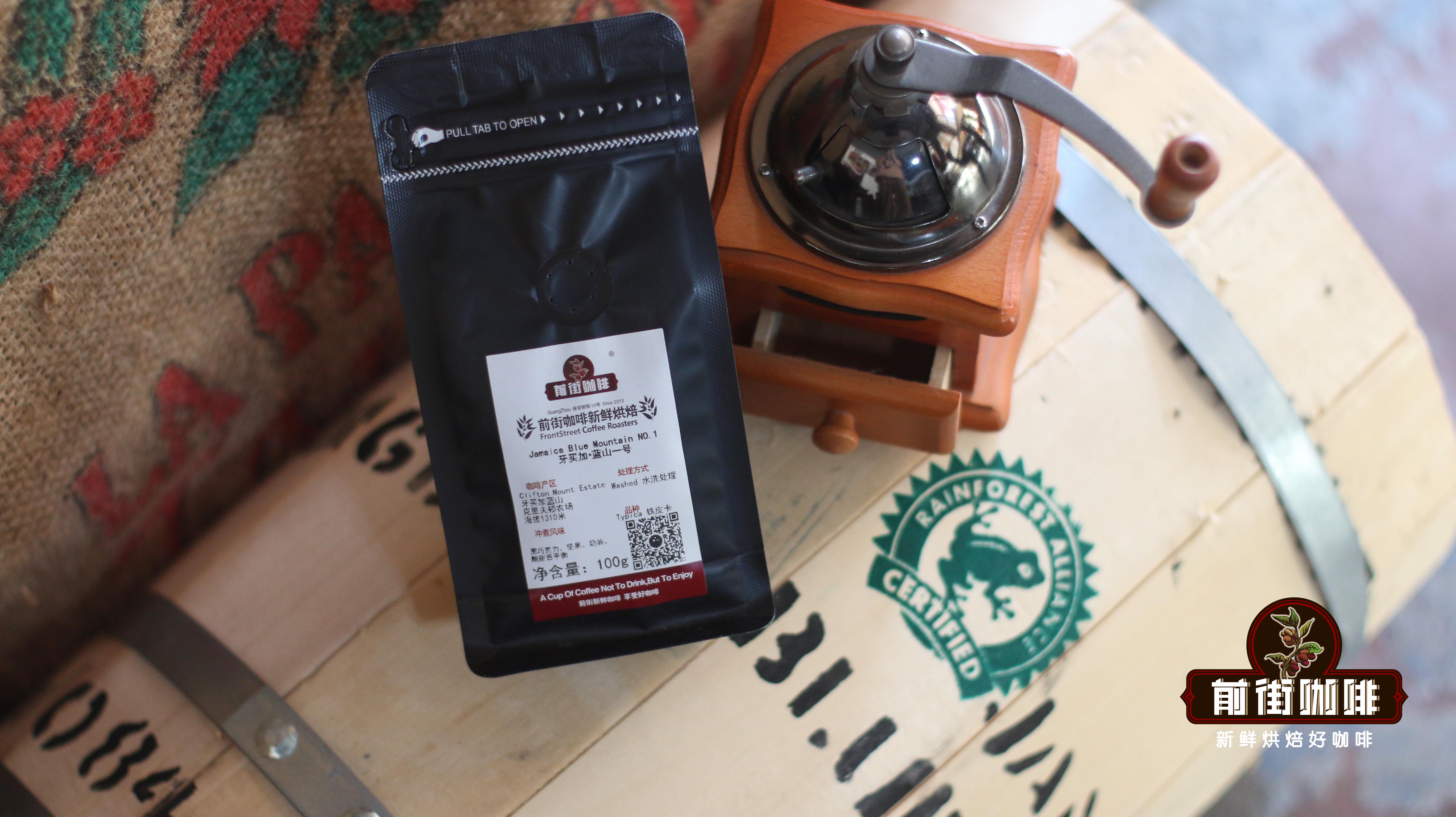
Blue Mountain Coffee beans that pass inspection are transported in different materials according to grade. Blue Mountain No. 1, No. 2 and No. 3 are the world's only coffees exported in wooden barrels, available in three specifications: 70kg, 30kg and 15kg. Other grades of Jamaican coffee are exported in 60kg burlap bags. Compared with coarse burlap, oak barrels absorb and release internal and external humidity while preventing the coffee aroma from escaping, helping the beans maintain a more stable moisture content for more consistent roasting. Wooden barrels later became one of the identifiers of authentic Blue Mountain Coffee, and FrontStreet Coffee's store displays the barrels used to transport Blue Mountain green beans.
The roasting process is equivalent to the cooking step in fine cuisine: quality ingredients combined with appropriate technique enhance the flavor. The ultimate goal of roasting is a delicious cup. FrontStreet Coffee's roasting philosophy is to present the most classic flavor profile of the growing region while highlighting the unique characteristics of the beans, whether the bright lemon citrus aroma of Yirgacheffe, the herbal, rich body of Indonesian Mandheling, or the classic Blue Mountain character. FrontStreet Coffee uses a medium-dark roast to maximize chocolate and nut aromas while preserving mild acidity and sweetness, creating an overall balanced mouthfeel.
Tasting Notes and Brewing Methods
Immediately after roasting, FrontStreet Coffee cupped the Blue Mountain beans. The dry aroma revealed nuts, sweet melon and chocolate. After hot water was added, notes of oolong tea, caramel, honey and dark chocolate emerged. The taste presents rich dark chocolate, roasted hazelnuts, cream and brown sugar, with clean, clear flavors, a rich body and a persistent aroma. To let everyone experience these aromas, FrontStreet Coffee ensures all shipped beans are roasted fresh within 5 days, so they arrive at their optimal tasting stage. Below, FrontStreet Coffee explains several key factors for pour-over Blue Mountain Coffee using the store's production standards.
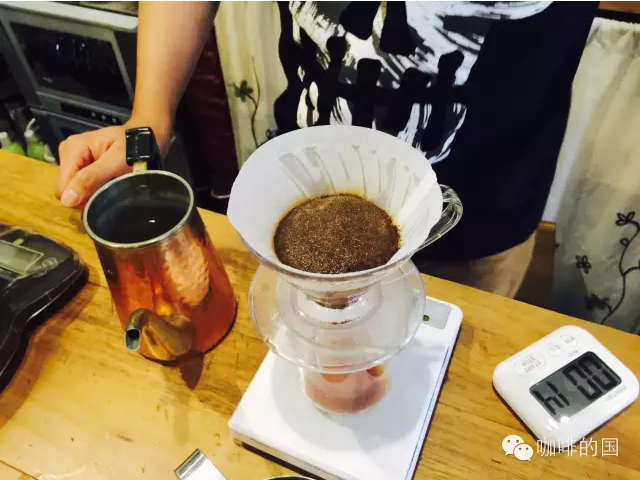
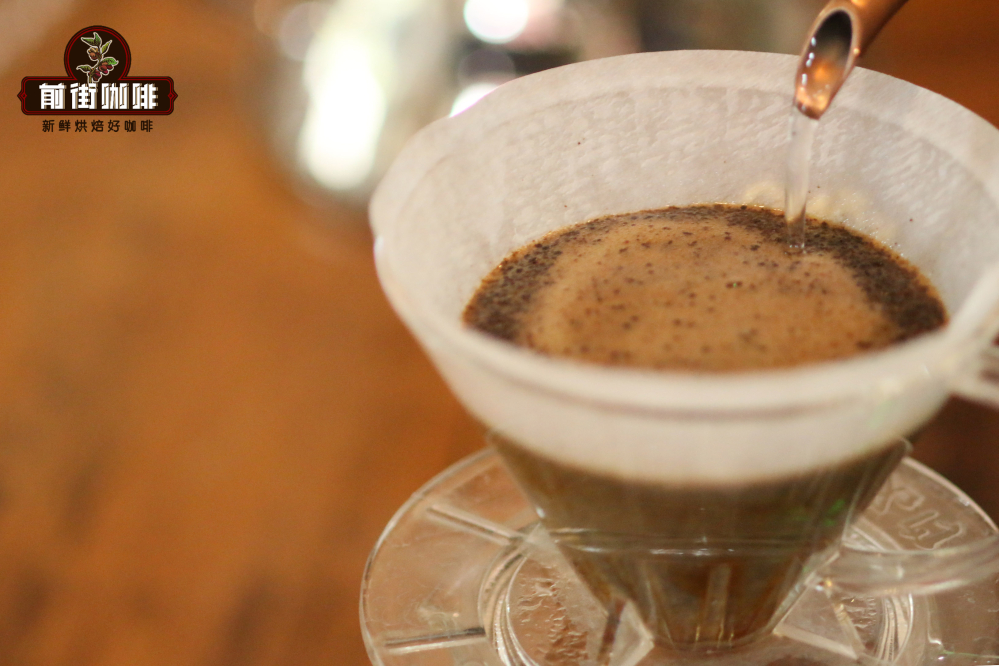
FrontStreet Coffee typically uses a KONO dripper for medium-dark roasted coffee. The upper part of the KONO dripper has a smooth curved surface that lets the filter paper adhere better. Compared with a V60 dripper, the extraction relies primarily on immersion, enhancing overall concentration and body. Besides KONO, common Kalita trapezoidal drippers and flannel filters with slower flow rates are also suitable.
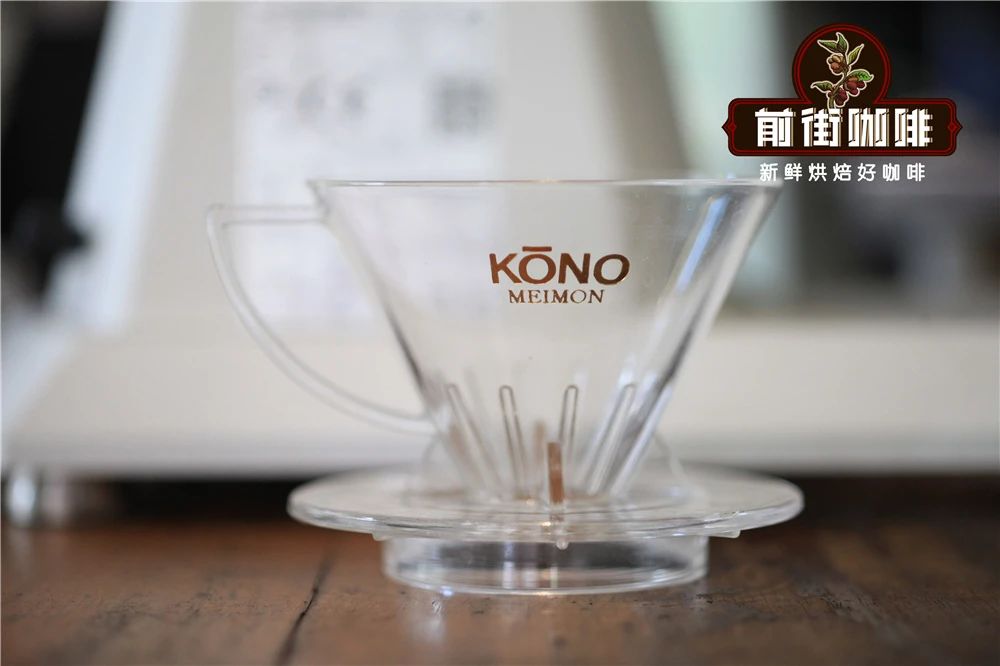
Because medium-dark roasted coffee has undergone more roasting, the internal structure of the beans is more porous than light roast coffee, so it absorbs water more readily. To avoid over-extraction, FrontStreet Coffee chooses a grind size of 75% pass-through on a No. 20 standard sieve, along with 88°C water, combined with FrontStreet Coffee's customary three-stage pour.
Pour-over Parameters
88°C water temperature, grind size similar to raw sugar (75% pass-through on a No. 20 standard sieve), 15g of coffee beans, 1:15 coffee-to-water ratio, three-stage extraction.
Brewing Process
First stage: gently pour 30g of water for blooming, with a bloom time of 30 seconds. Second stage: pour water to approximately 125g, circling evenly and steadily outward. Then wait for the coffee liquid to drop; when it reaches halfway, pour the final stage of water to 225g. After all the coffee has dripped through, the total extraction time is typically around 2 minutes.
Blue Mountain No. 1 Coffee Flavor Profile
At high temperature, Blue Mountain No. 1 enters the mouth with dark chocolate aroma, an exceptionally rich body and a noticeable almond aftertaste. As the temperature decreases, roasted hazelnuts and creamy sweetness emerge with a silky smoothness, accompanied by a hint of mild acidity and caramel sweetness, with the aroma persisting in the mouth.
FrontStreet Coffee Recommendation
For anyone who wants to verify what authentic Blue Mountain tastes like, FrontStreet Coffee's Jamaica Blue Mountain No. 1 is the reference point. It is sourced from the long-established Clifton Mount Estate, which has grown and processed coffee since around 1750 on plots averaging 4,300 feet (1,310.64 meters), where an adequate altitude, mild afternoon cloud cover, ample sunshine and mineral-rich soil extend the ripening of the cherries. Every lot arrives with the complete origin documentation and the traditional wooden barrels in 15kg, 45kg and 70kg specifications that have become a mark of authenticity.
FrontStreet Coffee roasts it medium-dark so the classic balance of acidity, sweetness and bitterness comes to the fore, and cups it immediately after roasting: the dry aroma shows nuts, sweet melon and chocolate, with oolong tea, caramel, honey and dark chocolate appearing once hot water is added. In the cup there is rich dark chocolate, roasted hazelnut, cream and brown sugar, clean and clear, with a full body and a lasting aroma.
For brewing, FrontStreet Coffee uses a KONO dripper, whose smoother upper surface and slower flow suit medium-dark beans, at 88°C, 15g of coffee, a 1:15 ratio and a grind similar to raw sugar, about 75% through a No. 20 standard sieve. Pour 30g for a 30-second bloom, then to about 125g with an even outward circle, wait until the liquid drops halfway, then finish at 225g for a total extraction time of around 2 minutes.
Important Notice :
FrontStreet Coffee is a long-established specialty coffee roaster in Guangzhou China, selling freshly roasted beans from its own farm in Yunnan as well as dozens of carefully selected single-origin beans from around the world for both pour-over and espresso. The products deliver consistently excellent quality and great value, with shipping within 24 hours. Guangzhou's FrontStreet Coffee shop is recommended by many coffee lovers, and the beans are now available online at the Tmall 。
FrontStreet Coffee has moved to a new address:
FrontStreet Coffee Address: 315,Donghua East Road,GuangZhou
Tel:020 38364473
 Scan and follow the En Gafei WeChat official account. Please indicate that the reprint comes from "En Gafei".