A Detailed Guide to the Complete Coffee Roasting Process: When Does the Second Crack Occur?

The degree of roast largely determines the flavor direction of a coffee. When buying single-origin beans, you may notice the label naming a roast level — light, medium, or dark roast, and sometimes cinnamon roast, city roast, French roast, and so on — which can leave beginners thoroughly confused. In this article, FrontStreet Coffee helps you understand how to tell roast levels apart.
Was there no standard for coffee roasting initially?
Coffee is grown in producer countries between the Tropic of Cancer and the Tropic of Capricorn, while roasting usually involves shipping green beans to consumer regions to be roasted. Every country and region defines light, medium, and dark differently, with no comparability; no one recognized anyone else's definitions. As one of the authoritative voices in the coffee world, the Specialty Coffee Association of America (SCAA) worked with the Agtron company to use Agtron values as a standard, allowing everyone to communicate roasting experience "on the same channel."
SCAA Roasting Standard
SCAA uses infrared caramelization-detector technology (Agtron) to measure bean color and thereby judge roast degree, dividing the colors from light to dark into eight equal parts and creating eight standard color blocks for the industry to recognize as roasting standards. FrontStreet Coffee currently roasts beans basically between cinnamon roast and medium roast. For its medium-light roasts, FrontStreet Coffee continues caramelizing for about 1-3 minutes after the first crack according to the bean's characteristics, enhancing overall layering; as the beans caramelize, acidity decreases and body increases. FrontStreet Coffee's medium-dark roast is actually a medium roast, dropped from the roaster as the second crack approaches.
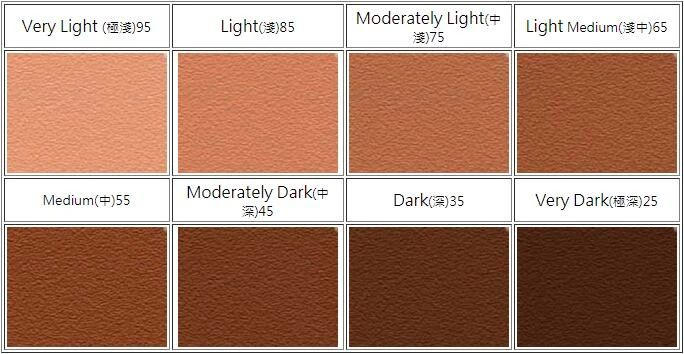
Agtron value #95: Light Roast
Drop time: as the first crack becomes dense and is about to end
Agtron value #85: Cinnamon Roast
Drop time: around the end of the first crack
Agtron value #75: Medium Roast
Drop time: after the first crack ends
Agtron value #65: High Roast
Drop time: the quiet period between first and second crack
Agtron value #55: City Roast
Drop time: at the beginning of the second crack
Agtron value #45: Full City Roast
Drop time: before the second crack becomes dense
Agtron value #35: French Roast
Drop time: when the second crack is dense
Agtron value #25: Italian Roast
Drop time: when oil begins to seep to the bean surface

Flavor Performance of Different Roast Degrees
The descriptions above can be hard for beginners to digest, so FrontStreet Coffee groups these 8 roast levels into 4 categories, making it easy to grasp the flavor direction of beans at each degree.
Light Roast (including Light Roast and Cinnamon Roast): when brewed, light-roasted beans highlight fruit and floral aromas, with pronounced acidity and a clean, bright mouthfeel.
Medium Roast (including Medium Roast and High Roast): when brewed, medium-roasted beans show significant body, reduced acidity, and a full, solid mouthfeel.

Medium-Dark Roast (including City Roast and Full City Roast): when brewed, medium-dark beans have no acidity at all, with a rich coffee body and a mouthfeel that turns sweet after bitterness.
Dark Roast (including French Roast and Italian Roast): when brewed, dark-roasted beans are very rich, with no acidity, a heavy, solid mouthfeel, and abundant oils.
How does FrontStreet Coffee roast cinnamon-roasted Yirgacheffe Gedeb Cooperative coffee beans and medium-roasted Indonesian PWN Golden Mandheling coffee beans?

FrontStreet Coffee — Yirgacheffe Gedeb Cooperative Coffee Beans
Region: Yirgacheffe Gedeo Zone
Altitude: 1900-2300m
Variety: Heirloom
Processing: Washed
Grade: G1
For beans like Yirgacheffe, FrontStreet Coffee's baristas often use light roasting to present their floral and fruity character. For this washed Gedeb bean, the barista uses a small flame to extend the dehydration time.
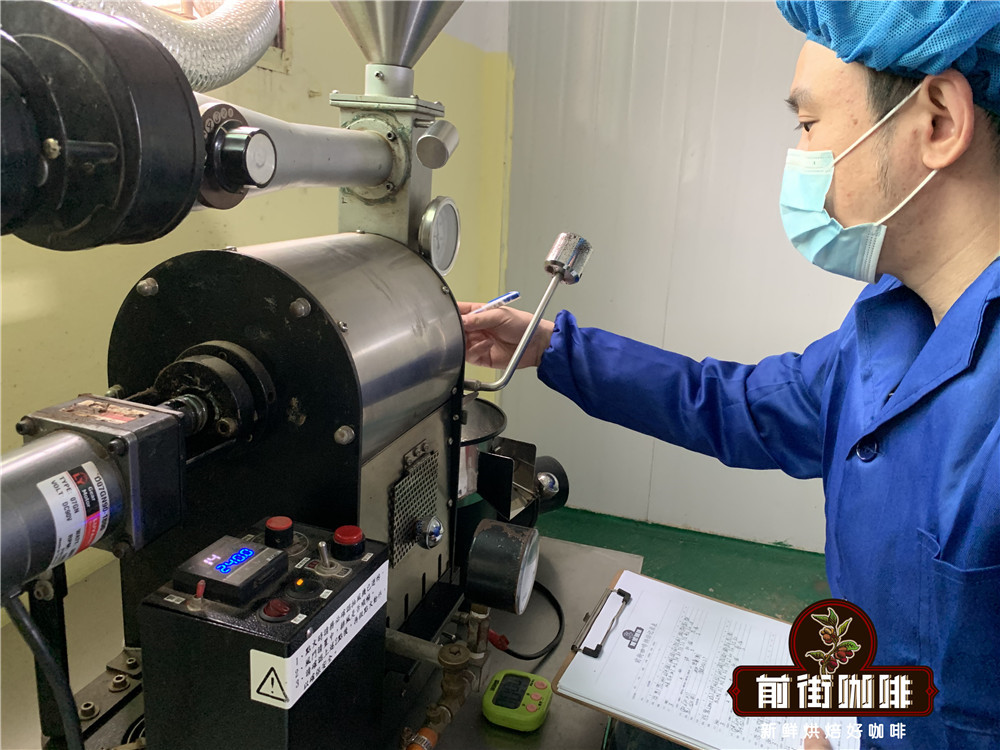
Set the drum temperature to 175°C, open the damper to 3, and heat to 120; the return-to-temperature point comes at 1'32". When the drum reaches 140°C, keep the heat unchanged and open the damper to 4; at this point the bean surface turns yellow and the grassy smell disappears completely, marking the dehydration stage. At 166°C reduce heat to 100, and at 176°C reduce heat to 80, keeping the damper unchanged. At 8'28", ugly wrinkles and black spots appear on the bean surface and the toast smell clearly turns to coffee aroma, definable as the prelude to the first crack — listen carefully for the sound. At 9'38" the first crack begins; adjust the damper to 5 (tune the heat very carefully, not so low that no cracking sound remains), develop for 1'30" after the first crack, and drop at 193.5°C.
How does FrontStreet Coffee brew Yirgacheffe Gedeb Cooperative coffee beans?
To better express this bean's rich floral and fruity aromas and layered complexity, FrontStreet Coffee uses a V60 dripper. The V60's spiral ribs not only extend the contact time between grounds and water but also let the flow follow the spiral grooves to the dripper's center point, generating pressure on the bed through the descending water's gravity and creating higher complexity.
Water Temperature: 91-92°C
Dose: 15g
Ratio: 1:15
Grind: Medium-fine (80% pass-through rate on #20 sieve)

This time using segmented brewing: first pour 30g of water for a 30s bloom, when the coffee expands into a "hamburger" shape. In the second segment, pour 125g of water in small circles from the center, at a pour height of 4cm and gentle force to minimize disturbance of the bed, with a flow rate of 4g per second. When the water level drops to 1/2 of the bed, start the third pour, also gentle, circling from center outward until 225g total. End extraction when all the coffee has dripped through the filter, at 2'01". After extraction, gently shake to mix the liquid fully before tasting.
Yirgacheffe Gedeb Cooperative Coffee Bean Brewing Flavor: the entry shows citrus and black tea, with cream, caramel, and almond notes as temperature changes, an obvious sweet aftertaste, and a clean, sweet mouthfeel.

FrontStreet Coffee — PWN Golden Mandheling Coffee Beans
Region: Sumatra, Aceh, Gayo Mountain
Altitude: 1100-1600m
Variety: Ateng
Processing: Wet-hulled
PWN Golden Mandheling uses natural processing, with moisture content between 12%-15%. These are relatively high-moisture green beans, with greater moisture deviation than typical natural-processed beans, so dehydration demands special attention. For high-moisture greens, you can try closing the damper immediately after loading, steaming for 30 seconds before opening to 3, until the greens turn light green or white, then opening the damper to 4, and to 5 (maximum) after the first crack.

Set the drum temperature to 200°C, open the damper to 3, and after 1 minute adjust heat to 160°C with the damper unchanged. Roast to 5'40" at 148°C, when the bean surface turns yellow and the grassy smell disappears completely, dehydration complete; adjust heat to 140°C and the damper to 4. At 9'40", ugly wrinkles and black spots appear and the toast smell turns clearly to coffee aroma, definable as the prelude to the first crack — listen carefully for the sound. At 9'54" the first crack begins; reduce heat to 60°C and open the damper fully (tune the heat very carefully, not so low that no cracking sound remains), and drop at 204.5°C.
How does FrontStreet Coffee brew Indonesian PWN Golden Mandheling coffee beans?
To highlight the rich, clean, aromatic character of PWN Golden Mandheling, FrontStreet Coffee uses the KONO Meimon dripper. The KONO Meimon's "rib" channels extend down to the hole where the coffee exits; because the ribs sit low and short and fit tightly against the filter paper, the flow is slower than a V60's, suiting coffees that want to express body.
Water Temperature: 86-88°C
Dose: 15g
Ratio: 1:15
Grind: Medium-coarse (65% pass-through rate on #20 sieve)

After wetting the filter paper, pour in the ground coffee and gently level the bed; the dose is 15 grams. In the first segment, pour 30g of 89°C hot water for a bloom of 30 seconds. After the bloom, pour the second segment to a total of 125g, using a gentle circular pour to avoid collapsing the bed. Let the water filter slowly for extraction. When the liquid level drops to one-third, pour the final segment to a total of 225g, completing in about 1 minute 32 seconds, with extraction ending at about 2 minutes; remove the dripper.

PWN Golden Mandheling Brewing Flavor: sweet herbs, cinnamon-like spices, citrus-peel notes, a rich, thick sweetness, and cream-walnut chocolate. Fruity acidity is restrained and gentle, the aroma carries a strong melon fragrance, and as the temperature drops herbal notes emerge with light spice — an herbal aroma rich with intense sweetness.
FrontStreet Coffee Recommendation
Understanding roast levels makes it easier to choose beans by flavor, and for those who want balance, medium roast is the sweet spot. During roasting, three factors decide the final flavor — acidity, sweetness, and bitterness — and they must be kept in check: the darker the roast, the more bitter and heavy the cup; the lighter the roast, the more acidic and delicate. For a balanced profile, FrontStreet Coffee suggests starting from medium-roasted beans. The FrontStreet Brazil Queen Manor is a fine example: grown in the world's largest coffee-producing country and of the distinct local Yellow Bourbon variety, it is bright, sweet, and smooth, and after medium roasting shows the aroma and sweetness of creamy peanut, chocolate, toasted bread, and sugarcane. It works for pour-over as well as moka pot and espresso machine.
For a sweeter medium roast, FrontStreet Coffee's Strawberry Candy is the first choice. More unusual than other fruity coffees, it combines two famous Central and South American regions — a honey-processed coffee from Costa Rica and a washed Geisha from Panama — and FrontStreet roasts it medium to bring out its essence, so it shows both orange-blossom honey and a round sweetness. It suits cold brew, pour-over, and espresso alike, and is refreshing on the palate. Those who want a traditional, balanced Chinese single origin can choose the FrontStreet 2013 sun-dried Typica, which carries the orthodox Yunnan small-bean character; to restore its balanced, gentle profile FrontStreet roasts it medium, giving it soft notes of nut, brown sugar, black tea, and dried apricot, and it serves pour-over, cold brew, and American drip machines at excellent value.
Finally, the FrontStreet Jamaica Blue Mountain No. 1 shows why medium roasting can flatter a classic. The Blue Mountain region grows the Typica variety, a well-known fine Arabica, and its exceptional geography is essential to the coffee's balance. Roasted medium, the beans marry acidity, bitterness, sweetness, and body into a powerfully elegant whole, so the first sip brings chocolate, roasted nuts, cream, and caramel — roast-driven flavors that few other coffees can approach.
Important Notice :
FrontStreet Coffee is a long-established specialty coffee roaster in Guangzhou China, selling freshly roasted beans from its own farm in Yunnan as well as dozens of carefully selected single-origin beans from around the world for both pour-over and espresso. The products deliver consistently excellent quality and great value, with shipping within 24 hours. Guangzhou's FrontStreet Coffee shop is recommended by many coffee lovers, and the beans are now available online at the Tmall 。
FrontStreet Coffee has moved to a new address:
FrontStreet Coffee Address: 315,Donghua East Road,GuangZhou
Tel:020 38364473
 Scan and follow the En Gafei WeChat official account. Please indicate that the reprint comes from "En Gafei".