Blue Mountain Coffee Basics The Unique Blue Mountain Coffee in the World
Jamaican Blue Mountain coffee is widely regarded as one of the finest coffees in the world. The Blue Mountains sit in the eastern part of Jamaica, and on clear days the sunlit Caribbean Sea casts a brilliant blue glow over the peaks — hence the name. At 2,256 meters, the highest summit is the tallest mountain in the Caribbean region and a well-known tourist destination. The area lies within the coffee belt, blessed with fertile volcanic soil, clean air, a humid climate, and year-round fog and rain (average annual precipitation of 1,980 mm and temperatures around 27°C). These conditions created the world-renowned Jamaican Blue Mountain coffee — and, for decades, the world's most expensive coffee. It has all the hallmarks of great coffee: a rich, mellow body, a perfect balance of sweetness, acidity, and bitterness with no harsh edge, and only moderate, well-judged acidity. It suits drinkers who enjoy full-flavored coffee and is generally recommended as a single-origin brew. Because production is extremely limited and prices are steep, however, cafés often substitute coffees with a similar flavor profile.
The Secret Behind Pure Blue Mountain Flavor
The coffee trees grow on rugged mountain slopes, which makes harvesting extraordinarily difficult — only skilled local pickers, mostly women, can handle the work. Selecting perfectly ripe cherries is crucial, since underripe or overripe fruit compromises quality. After picking, the cherries must be pulped the same day, then fermented for 12 to 18 hours, followed by washing and grading. Next comes drying on concrete patios or thick blankets until the moisture content drops to 12%–14%, after which the beans rest in special warehouses until they are brought out for roasting and grinding. Every one of these steps must be tightly controlled, or the quality suffers.
Geographical Advantages
Jamaica's weather, geology, and terrain combine to create an almost ideal terroir. The mountain range running through the eastern part of the island rises above 2,100 meters. Cool, foggy weather and frequent rainfall nourish the fertile soil. Coffee is grown in mixed cultivation, planted on terraces alongside banana and avocado trees, and some smallholdings grow coffee as well. Even the largest estates in the region are small by international standards, and many are family smallholdings that have worked the same land for two centuries. The island's coffee industry faces real challenges — hurricanes, rising labor costs, and the difficulty of mechanizing terraced farming — and many small estates struggle to farm economically.
Because Japan has invested consistently in Jamaica's coffee industry, most Blue Mountain production is controlled by Japanese interests, which hold priority purchasing rights. In 1992, Jamaica sold 688 tons of Blue Mountain coffee to Japan, 75 tons to the United States, and 59 tons to the United Kingdom. Today, around 90% of the crop goes to Japan. With only 10% left for the rest of the world, genuine Blue Mountain coffee is in short supply at almost any price.
Unique Characteristics
One important point: only coffee grown on 6,000 hectares of land above 1,600 meters altitude may legally be called Blue Mountain, and total production has never exceeded 900 tons. Apply the rule that 10% goes to markets outside Japan, and the entire global supply outside Japan amounts to roughly 90 tons a year. Coffee that scarce can hardly be the stuff served in any ordinary café for a few dozen yuan.
The best Blue Mountain coffee is undoubtedly among the finest coffees you can drink, but its price alone does not guarantee the best flavor. To bring out its full character, you need a higher dose than with other coffees — typically 10% to 15% more grounds than a cheaper coffee would require.
True Blue Mountain coffee is made from the finest local green beans, and that is precisely where the connoisseur's pleasure lies. Its flavor is rich, balanced, and gently fruity, satisfying a broad range of tastes. Fresh, high-quality Blue Mountain coffee also has an exceptionally long finish — the kind that lingers like a fine wine.
The finest Blue Mountain beans are No. 1 peaberries, also called pearl beans: carefully selected small, round beans grown at 2,100 meters — the cream of an already elite crop.
Flavor: Intensely aromatic with a lasting fruity finish.
Bean Size: Relatively full
Recommended Roasting Method: Medium roast
Blue Mountain coffee has very low caffeine — less than half that of other coffees — which suits modern ideas of healthy drinking.
The same varieties, planted in comparable climates in Hawaii, Kenya, Papua New Guinea, or anywhere else, simply cannot reproduce the flavor of Blue Mountain beans.
Pure Jamaican Blue Mountain coffee blends acidity, bitterness, sweetness, and body into a smooth, enticing elegance that other coffees cannot match. Admirers call it the "coffee beauty" that combines every advantage of great coffee. Jim, a manager at Peet's Coffee & Tea, described it this way: "Its aroma is fragrant, smooth, and rich — as precious as gemstones. Because the flavor is so moderate and perfect, it is best enjoyed black." In sunlight, the brew glows golden and goes down remarkably smoothly. Coffee books say Blue Mountain is the only coffee in the world whose acidity and bitterness are so perfectly balanced that anyone can enjoy it — you'll understand once you taste it.
So what makes Jamaica's Blue Mountain coffee so special? The answer is everything about it. The trees are grown under some of the most privileged conditions in the coffee world, in the designated Blue Mountain region north of Kingston in the island's east. Coffee grows at elevations up to 1,800 meters (about 6,000 feet) — quite high for Arabica — on steep, uneven mountains that make harvesting extremely difficult (the pickers are almost all women). The trees are mainly the Arabica "Geisha High Bred" type; seed has been exported to Hawaii, Kenya, Papua New Guinea, and elsewhere, but nowhere has the flavor been recreated.
With careful cultivation and harvesting on these steep, high mountains, all Jamaican Blue Mountain coffee is processed, cupped, and distributed under the authority of the Jamaican Coffee Industry Board. The cup is remarkably clean, and it is one of the sweetest coffees in the world. Jim Reynolds of Peet's Coffee & Tea put it this way: "The finest example of Jamaican Blue Mountain coffee has its fragrant, smooth, and rich flavor... It gives me the feeling of gem-like quality. It's complex but very gentle, it's sweet, and it has a very strong body. You must taste it to know what I'm talking about." Those unique growing conditions, and the extreme care taken at every step, are what make Jamaican Blue Mountain coffee so famous.
This lot is FrontStreet's No. 1 Blue Mountain coffee from Wallenford Estate, grown at 7,000 feet and accompanied by a product certificate.
Up close, genuine Blue Mountain beans are slightly larger than ordinary beans, round, and uniform in size, with a distinctive sweet fragrance — one sniff and you know these are Blue Mountain beans.
Grind the beans to a fine, even powder.
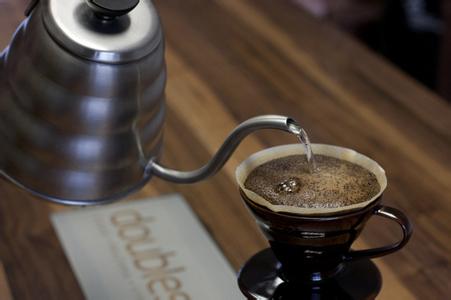
FrontStreet recommends drip filtration as the best brewing method for Blue Mountain coffee, since it extracts the coffee's original flavor most faithfully. And since Blue Mountain is the king of coffees, it deserves the king of drip filters — SwissGold. Warm the cup, steep the grounds, and begin the drip.
Blue Mountain coffee harmonizes acidity, bitterness, sweetness, and richness with a rich, distinctive aroma — no wonder coffee lovers everywhere are captivated by it. The high-altitude origin gives it a slight, elegant acidity; bitterness is minimal, brief, and never lingers, turning gently sweet on the swallow, with a mellow aftertaste that keeps you coming back.
FrontStreet Coffee Recommendation
Many people assume any coffee grown in Jamaica is Blue Mountain, but strictly speaking only coffee from the designated Blue Mountain range that passes official Jamaican certification earns the name Jamaica Blue Mountain Coffee. The range, in eastern Jamaica, is one of the tallest in the Caribbean — its highest peak reaches 2,256 meters — and the near-constant cloud cover is what gave the mountains their name. High altitude widens the day-night temperature gap and lengthens the ripening cycle, volcanic soil feeds the trees, and steady, even rainfall lets the cherries accumulate sugars slowly. That is how Blue Mountain coffee developed its famously delicate texture and balanced flavor.
How do you spot the real thing? Check the paperwork first: genuine Jamaican Blue Mountain coffee comes with export certification and origin documentation from the importer. The traditional wooden barrels used for shipping — in 15, 45, and 70 kg sizes, each marked with detailed batch information — are themselves a hallmark of authentic Blue Mountain. On the green-bean side, genuine Blue Mountain beans are well-formed and plump, slightly upturned at both ends, and greenish in color. In the cup, real Blue Mountain is dense, clean, and fragrant, with no off-flavors. For brewing, FrontStreet suggests a pour-over with a 1:15 to 1:16 ratio, water at 85–88°C, and a medium-coarse grind to bring out the cream, caramel, and nut notes while keeping the gentle, bright sweetness clean and transparent; if you prefer a heavier cup, a moka pot with a slightly finer grind and hot water in the base will amplify the chocolate, caramel, and nut character while preserving the signature balance — and it stands up beautifully to milk in a latte or flat white.
Important Notice :
FrontStreet Coffee is a long-established specialty coffee roaster in Guangzhou China, selling freshly roasted beans from its own farm in Yunnan as well as dozens of carefully selected single-origin beans from around the world for both pour-over and espresso. The products deliver consistently excellent quality and great value, with shipping within 24 hours. Guangzhou's FrontStreet Coffee shop is recommended by many coffee lovers, and the beans are now available online at the Tmall 。
FrontStreet Coffee has moved to a new address:
FrontStreet Coffee Address: 315,Donghua East Road,GuangZhou
Tel:020 38364473
 Scan and follow the En Gafei WeChat official account. Please indicate that the reprint comes from "En Gafei".