Blue Mountain Coffee Introduction - Essential Guide to Gourmet Coffee

Around the turn of the millennium, films, television, books, and newspapers alike portrayed Blue Mountain Coffee as the coffee equivalent of a legendary 1982 Lafite Rothschild, its premium price placing it seemingly beyond the reach of ordinary drinkers. Is the legendary Blue Mountain really as precious as the rumors suggest, and what does it cost to enjoy a cup in 2025? Many people are already eager to find out, so let us get straight to it.
First and foremost, Blue Mountain is a specialty coffee produced in Jamaica. "Specialty coffee" means coffee made from the highest-quality beans, roasted appropriately to reach their potential flavor, and extracted consistently under specific conditions. It is not merely about the brewing process; it covers a great many details from the plant's growth to the final cup.
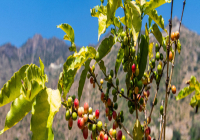
Specialty coffee begins with the origin of the coffee's life, the diversity of its varieties, and differences in growing conditions such as temperature, soil, sunlight, and altitude. It also includes the human factors in cultivation: careful tending, manual harvesting, meticulous processing, and hand sorting.
Blue Mountain embodies that whole chain, from variety to planting, harvest to processing, roasting to the cup in a customer's hand. What follows is a brief look at the character of Blue Mountain beans.
Blue Mountain Coffee Growing Environment

Under Jamaica's Coffee Industry Board regulations, only coffee grown in the four regions of St. Andrew, St. Mary, St. Thomas, and Portland at altitudes between 910-1700m may be called Jamaica Blue Mountain Coffee.
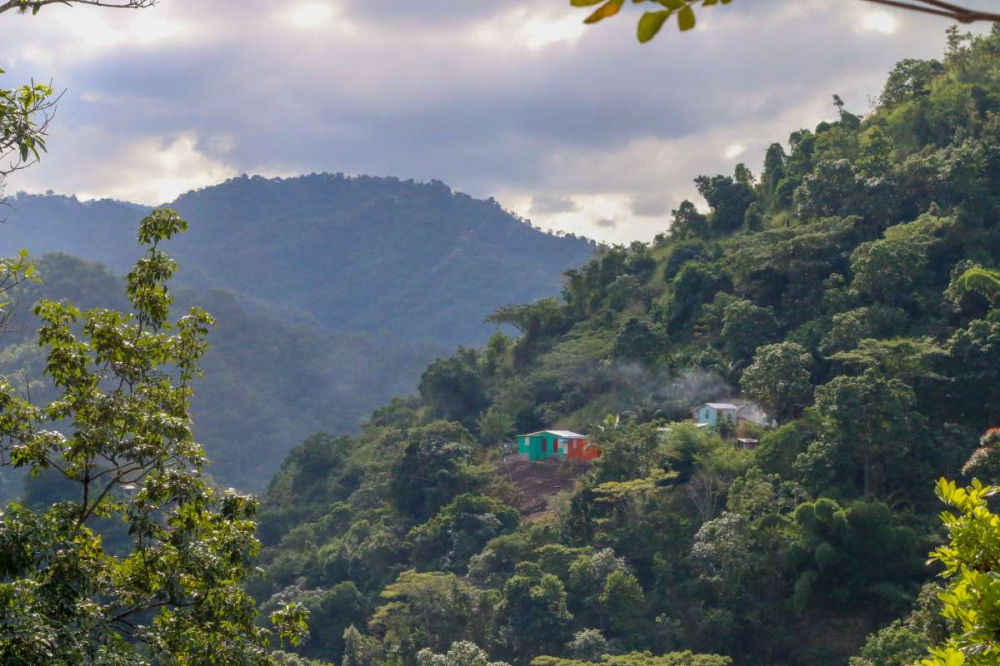
Coffee grown between 460 and 910 meters may only be called Jamaica High Mountain Coffee, and coffee below 460 meters only Jamaica Prime Coffee, or Jamaica Low Mountain Coffee.
FrontStreet Coffee's Blue Mountain No. 1 beans are selected from coffee grown at Clifton Mountain Estate, Jamaica's oldest coffee plantation, at an altitude of 1310m. Because the trees are planted on relatively steep slopes, harvesting is quite demanding, and the estate arranges for local women who know the terrain to pick the cherries at the right ripeness high on the hillside, which is how the quality stays so high.
Blue Mountain Coffee Varieties

Blue Mountain Coffee is 100% pure Arabica, representing the oldest variety in the Arabica lineage: Typica.

The variety was introduced to the Blue Mountains for cultivation in the 18th century. After 200 years of adaptation, Blue Mountain's Typica has developed into an Arabica with relatively good disease resistance, very well suited to local growing, and it has formed delicate flavors that are not easily replicated elsewhere.
Blue Mountain Coffee Processing Method
Traditional Blue Mountain uses washed processing. In 2021, Clifton Mountain Estate introduced a natural-processed Blue Mountain No. 1. After cupping both side by side, FrontStreet Coffee found the natural lot was less balanced overall than the washed, with berry acidity standing out.
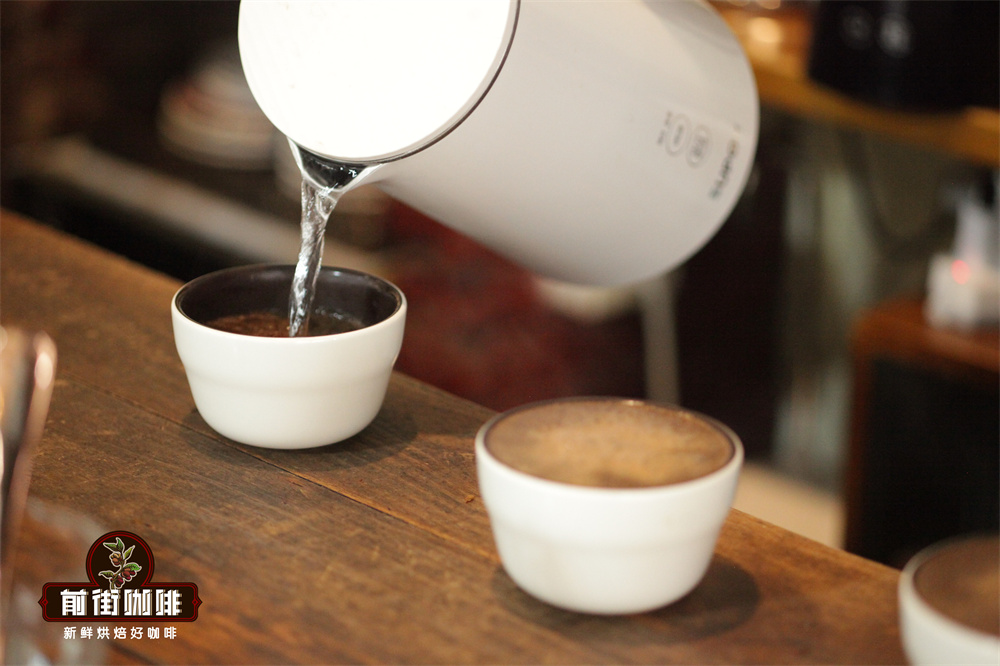
Blue Mountain's greatest characteristic is its balanced sweet-sour-bitter profile and its rich, solid mouthfeel. FrontStreet Coffee therefore offers Blue Mountain No. 1 in the washed version.
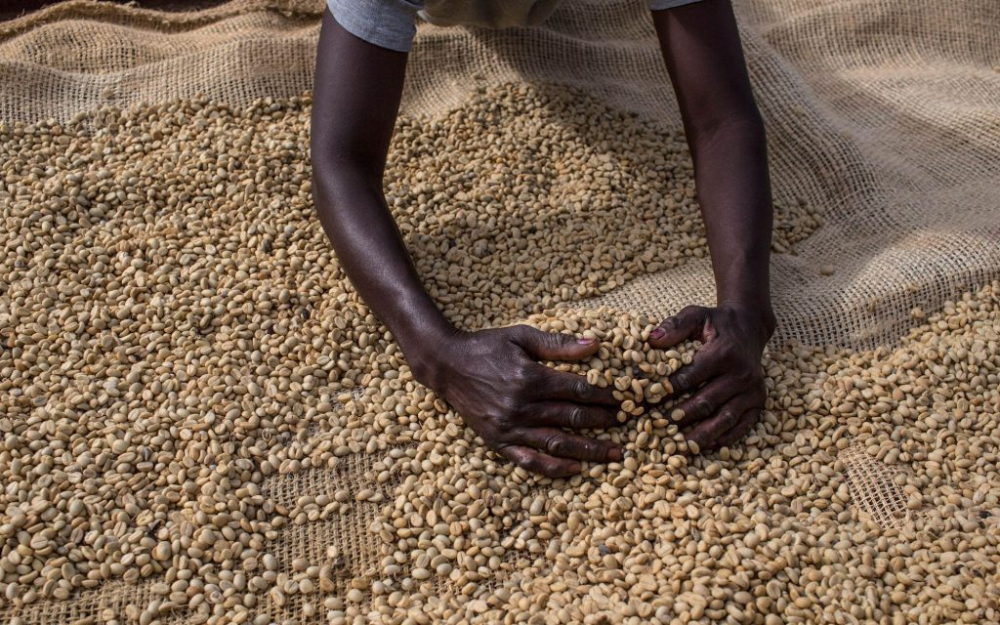
Clifton Mountain Estate first hand-sorts defective beans out of the harvested fruit, removes the outer skin by machine, then places the beans in water tanks to ferment for 12-18 hours and break down the mucilage layer. They are moved to clean water tanks for repeated washing and a second screening for defects. The clean parchment coffee is drained, spread on raised beds to dry until bean moisture content reaches 10-12%, and finally stored in wooden barrels in temperature- and humidity-controlled warehouses. Hulling and quality testing happen before shipping, once orders are received.
Blue Mountain Coffee Roasting Method
To highlight Blue Mountain's balanced sweet-sour-bitter and nutty notes and to recover more of the classic flavor, FrontStreet Coffee's roaster takes the beans to a medium-dark degree, giving the coffee clear richness while retaining soft fruit acidity.

FrontStreet Coffee uses a Yangjia 800N roaster for Blue Mountain, with a batch size of 480g. The drum temperature is set to 170 degrees Celsius at charge, with the damper at 3. After 1 minute, heat is adjusted to 140 degrees Celsius with the damper unchanged. At 5'10", the temperature reaches 153 degrees Celsius, the bean surface turns yellow, the grassy aroma disappears completely, and dehydration is complete. Heat is adjusted to 115 degrees Celsius and the damper to 4. At 8'00", uneven wrinkles and black spots appear on the bean surface and the toast aroma clearly turns to coffee aroma, which can be defined as the prelude to first crack. Listen carefully for the crack itself. At 8'12", first crack begins; reduce heat to 90 degrees Celsius and open the damper fully, taking care with the heat so it does not fall so low that no cracking is heard, and finish at 201.3 degrees Celsius.
Blue Mountain Coffee Brewing Method
Every bean FrontStreet Coffee sells ships within 5 days of roasting, so customers receive coffee at its best flavor and aroma. This is a crucial step for specialty coffee as well: freshness.
Because the roast is darker, coffee compounds dissolve more easily in water, so FrontStreet Coffee recommends slightly cooler water and a medium-coarse grind or coarser. For daily brewing in its retail locations, FrontStreet uses a Kono dripper, 88 degrees Celsius water, a 1:15 coffee-to-water ratio, a 15g dose, and a grind like granulated sugar at a 70% pass-through rate on the #20 standard sieve.

The pour follows a segmented pattern. First pour 30g of water for a 30-second bloom. Second pour to approximately 125g, then wait for the coffee to drain. When it has dropped to half, pour the final segment to 225g. End extraction once all the coffee has dripped through, with total extraction time typically around 2 minutes and 10 seconds.
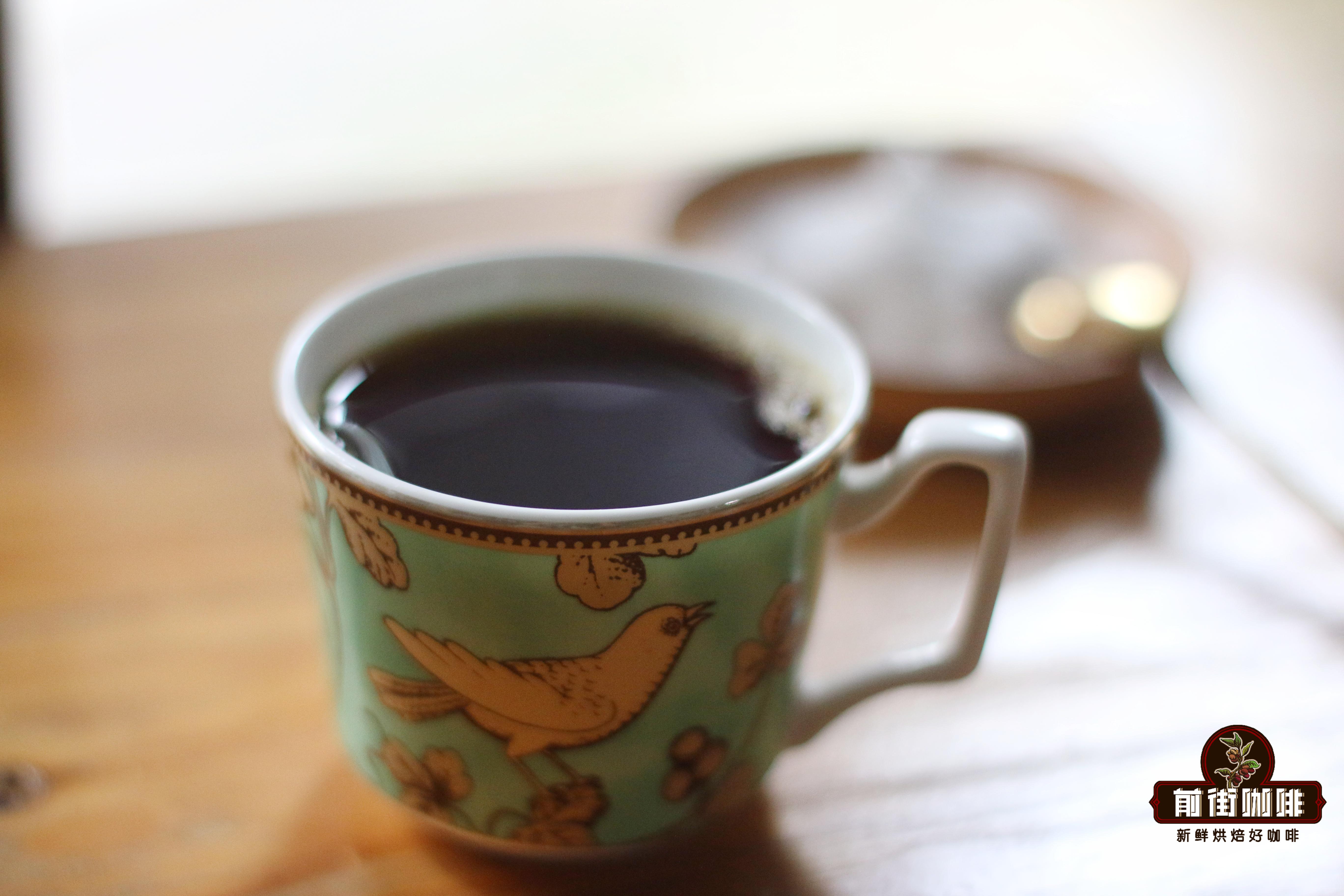
Pour-over "FrontStreet Coffee Blue Mountain No. 1" flavor profile: rich dark chocolate and nutty flavors, a creamy smooth texture, and balanced sweet, sour, and bitter notes.
FrontStreet Coffee Recommendation
For anyone who wants the genuine article rather than the legend, FrontStreet Jamaica Blue Mountain No. 1 is the answer. It is the highest grade in the Jamaican Blue Mountain system, and the beans come from Clifton Mountain Estate, the oldest coffee plantation still operating in Jamaica, at 1310 meters on Jamaica's steep hillsides. The fruit is harvested by local women who know the terrain and pick at exactly the right ripeness, and it is processed by the traditional washed method, fermenting 12-18 hours in water tanks, washing and re-screening, then drying on raised beds to 10-12% moisture and resting in wooden barrels in a controlled warehouse. Washed processing is the most stable and reliable of the traditional methods and is central to the balance Blue Mountain is known for.
FrontStreet roasts it to a medium-dark degree, which is what keeps the classic balance of sweetness, acidity, and bitterness while retaining a soft fruit acidity. In the cup you get rich dark chocolate and nutty flavors, a creamy texture, and that even, complete structure.
The beans ship within 5 days of roasting, so rest them 4-7 days from the roast date before brewing. FrontStreet recommends a Kono dripper with 88 degrees Celsius water, a 1:15 ratio, 15g of coffee, and a grind about the size of granulated sugar at 70% pass-through on the #20 sieve, poured in three stages: 30g for a 30-second bloom, then to about 125g, then, once the level drops to half, a final pour to 225g, finishing around 2 minutes and 10 seconds. Using the same beans, a moka pot with a slightly finer grind, hot water in the base, and low heat with the pot removed just before the flow ends will thicken the chocolate and nut character while keeping the signature balance, and it also works beautifully as a latte or flat white.
Important Notice :
FrontStreet Coffee is a long-established specialty coffee roaster in Guangzhou China, selling freshly roasted beans from its own farm in Yunnan as well as dozens of carefully selected single-origin beans from around the world for both pour-over and espresso. The products deliver consistently excellent quality and great value, with shipping within 24 hours. Guangzhou's FrontStreet Coffee shop is recommended by many coffee lovers, and the beans are now available online at the Tmall 。
FrontStreet Coffee has moved to a new address:
FrontStreet Coffee Address: 315,Donghua East Road,GuangZhou
Tel:020 38364473
 Scan and follow the En Gafei WeChat official account. Please indicate that the reprint comes from "En Gafei".