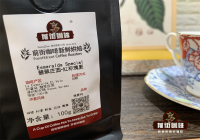
Premium Colombian Coffee Introduction - Recommended Gourmet Coffee Beans from Colombia
The Iconic Symbol of Colombian Coffee
For more premium coffee knowledge, follow the WeChat official account: FrontStreet Coffee
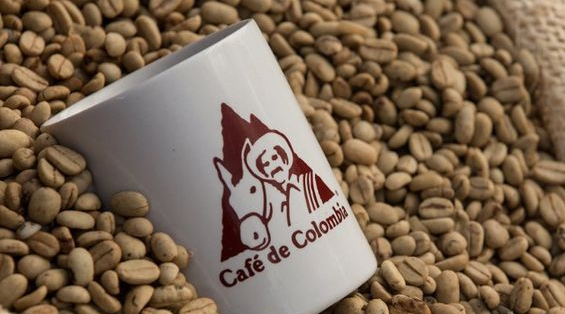
Search for Colombian coffee brands and one image comes up again and again: a kind-faced coffee farmer, Uncle Juan, in a white straw hat and an Andean wool vest, a leather bag slung over one shoulder, canvas shoes on his feet and his loyal donkey at his side. The figure turns up in advertisements and films alike, carrying the classic Colombian coffee image out to the world.
Colombian Coffee Growing Regions
Colombian coffee grows in the valleys of the Andes Mountains, with climates that vary sharply from one terrain to the next. The southern eastern plains and the Pacific coast have a tropical rainforest climate, mountainous areas at 1,000-2,000 meters are subtropical, and the northwest has a tropical savanna climate. Average temperatures across the coffee regions range from 18°C to 22.5°C. Thanks to that geographical and climatic variety, whether you want a round, rich cup or a bright, fruity one, you can find it somewhere in Colombia.

Colombia's coffee regions have unusually clear boundaries. Stretching across latitudes and shaped by Andean topography, they run from south to north as three major zones: Northern, Central and Southern. The northern and southern zones have fairly distinct harvest seasons, while the central zone, depending on whether it leans north or south, has a main and a secondary season, giving it two harvests a year. The main season runs from October to January and the secondary from April to July. Because the climate shifts so much from mountain to mountain, harvesting goes on somewhere in Colombia all year, with different coffees ripening in turn - which is why you can see pickers at work in the forests in every season.
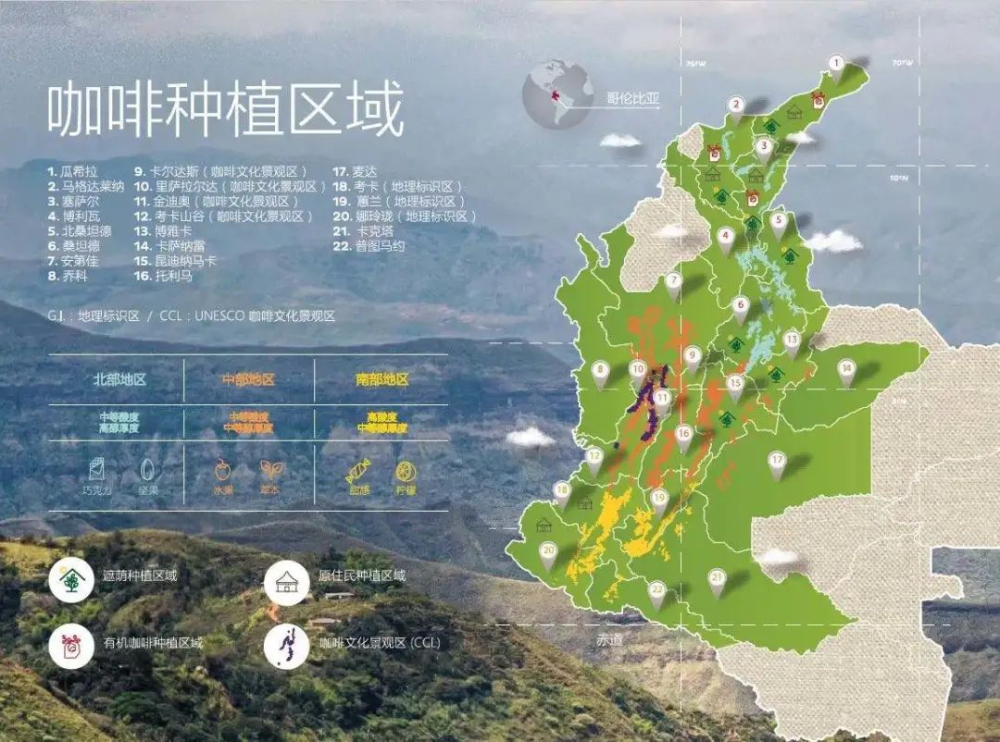
In the last century, Colombian coffee was best known through the "MAM" of Medellin, Armenia and Manizales. As specialty coffee developed, many new specialty production areas emerged in southern Colombia, among them San Augustin in Huila, Popayan in Cauca, Nariño and Tolima. Their very high altitudes and distinctive processing methods yield coffees with delicate acidity and fruit flavors that regularly place well in Cup of Excellence competitions. After repeated cupping comparisons, FrontStreet Coffee chose washed beans from Huila as its representative Colombian coffee and made them available in small packages so everyone can taste the classic Colombian profile.
Huila: The Pride of Colombian Coffee
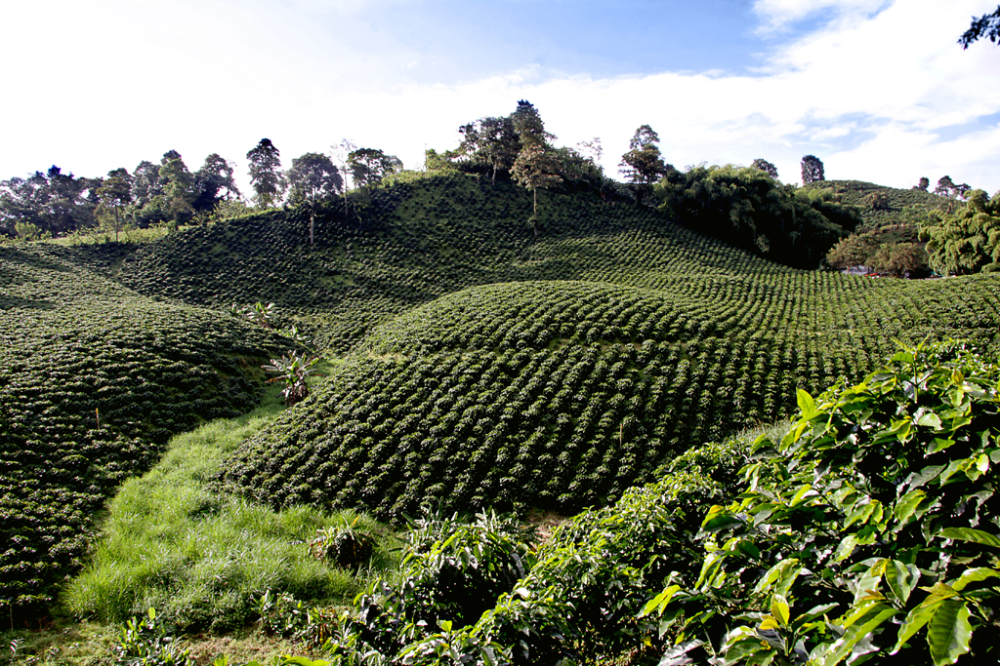
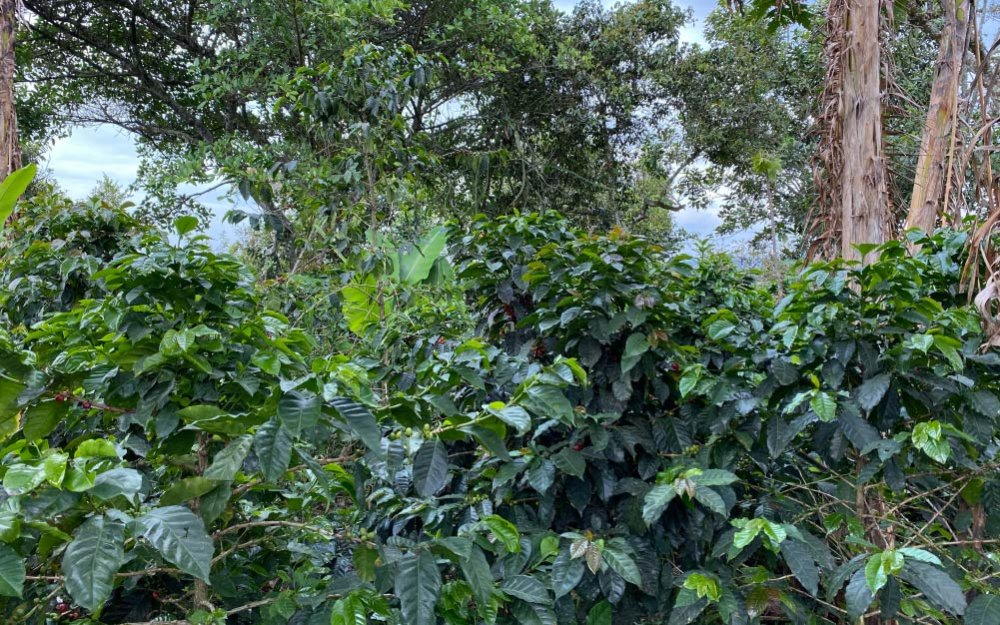
Huila Province sits in the southern part of the Central Mountain Range in southern Colombia and is the country's most famous specialty coffee region. The landscape is a series of hills ringed by mountains, with cultivation above 1,500 meters - the altitude and mild temperatures that high-quality Arabica needs. The soil and geography are as good as it gets for coffee, and Colombia's most important rivers converge here, bringing abundant water and water vapor. The climate of the canyon slopes keeps cold winds out while drawing in cool mountain breezes and no high heat, and rainfall is ample. It is, you could say, a uniquely blessed coffee-growing area.
Traditional Processing Methods
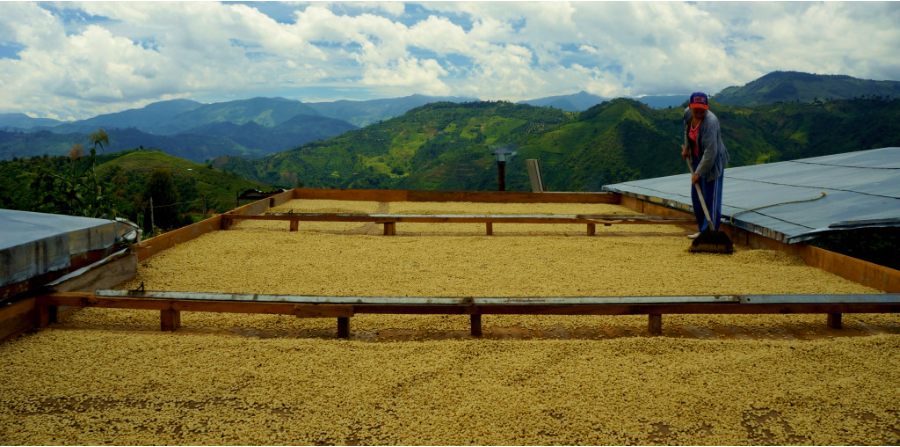
Most Colombian coffee is washed. The country's coffee regions have water to spare, which suits washed processing perfectly. Family farms are equipped with dedicated green bean machines, an Ecomill or Eco-Pulper. Farmers pour the harvested cherries in; the machine removes skin and pulp and needs only a very small amount of water to strip most of the mucilage. The parchment beans, still carrying a little mucilage, go into a small pool or container - sometimes a tiled tank - to ferment overnight so the remaining mucilage loosens. The next day they are rinsed thoroughly with clean water and finally spread in the sun to dry down to the target moisture content. Washed processing both protects coffee quality and lets Huila coffee show its truest character. It is also why FrontStreet Coffee prioritizes washed lots when selecting daily drinking beans.
Colombian Green Bean Grading System
Colombian green beans are graded by size. Bean size is not the main determinant of quality or flavor, but many producing regions hold that full, uniform, larger beans show the coffee reached complete maturity, develop a better aromatic profile and roast more evenly, which in turn produces a consistent cup.
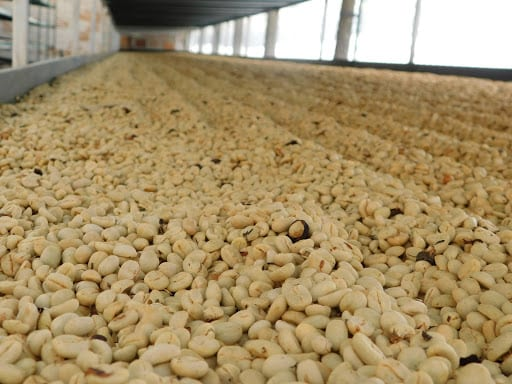
Fixed-size screens are the tool, with different specifications giving different hole sizes. A size 17 screen, for instance, will not pass beans larger than 17, so a larger screen number means larger particles remain on top. The most common export grades are UGQ, EP and Supremo.
Excelso UGQ 12*60 (1.5%): UGQ stands for Usual Good Quality. Green bean size is above 14 mesh, with 1.5% of beans allowed between 12 and 14 mesh but all above 12 mesh, and more than 50% above 15 mesh.
Excelso EP 12*60 (10%): EP stands for European Preparation. Green bean size is above 15 mesh, with 10% of beans allowed smaller than 15 mesh but all above 14 mesh.
Excelso Supremo 12*60 (5%): Green bean size is above 17 mesh, with 5% of beans allowed smaller than 17 mesh but all above 14 mesh.

Whatever the size grade, any green bean that is exported belongs to the Excelso grade. In other words, nearly every bag of Colombian green beans shipped anywhere in the world today must be marked Excelso. The Excelso export grade is the most widely used standard grade adopted by the FNC and the optimal grade for Colombian green bean exports.
Colombia also has Extra for beans above 16 mesh, Premium for beans above 18 mesh (larger even than Supremo), and Minama for beans almost uniformly sized at 15 mesh. Colombian beans that do not meet the Excelso export grade are called "Product of Colombia" locally and generally go into commercial-grade instant coffee.
Every farmer in Colombia reports a number and logs green bean information, which supports later traceability. Exported Colombian green bean names typically follow the format Country + Region + Grade + other information. The green beans for FrontStreet Coffee's Huila daily drinking coffee, for example, are Colombia Huila Supremo SC17/18 FNC.
FrontStreet Coffee Brewing Recommendations
Washed Huila daily beans pair a soft acidity with appropriate body and aftertaste. FrontStreet Coffee wants to show the classic Colombian nuttiness while keeping some acidity, so we chose a medium-dark roast. Before any coffee goes on sale, FrontStreet Coffee cups it at least once, because cupping reflects a coffee's strengths and weaknesses more objectively.
Because the Huila daily beans are medium-dark roasted with flavors leaning nutty, chocolatey and thick, the deeper roast makes the beans more porous and the grounds more absorbent. To avoid pulling out excessive off-flavors, FrontStreet Coffee grinds medium. Since darker roasting pushes out bitter and burnt notes more easily, we also lower the water temperature slightly, and pair the coffee with a KONO dripper.

Dripper: KONO dripper
Water Temperature: 88°C
Coffee-to-Water Ratio: 1:15
Coffee Powder: 15g
Grind Size: EK43s - setting 10.5 (75% pass-through rate on #20 standard sieve)
Add the grounds to the dripper, wet the bed with twice the amount of water to form a dome and bloom for 30s. Then pour in slow circles from the inside out to 125g, wait until the bed drops to half the height of the dripper, and continue with the same fine stream for a third segment up to 225g. Remove the dripper once all the liquid has filtered through, about 2 minutes in total.
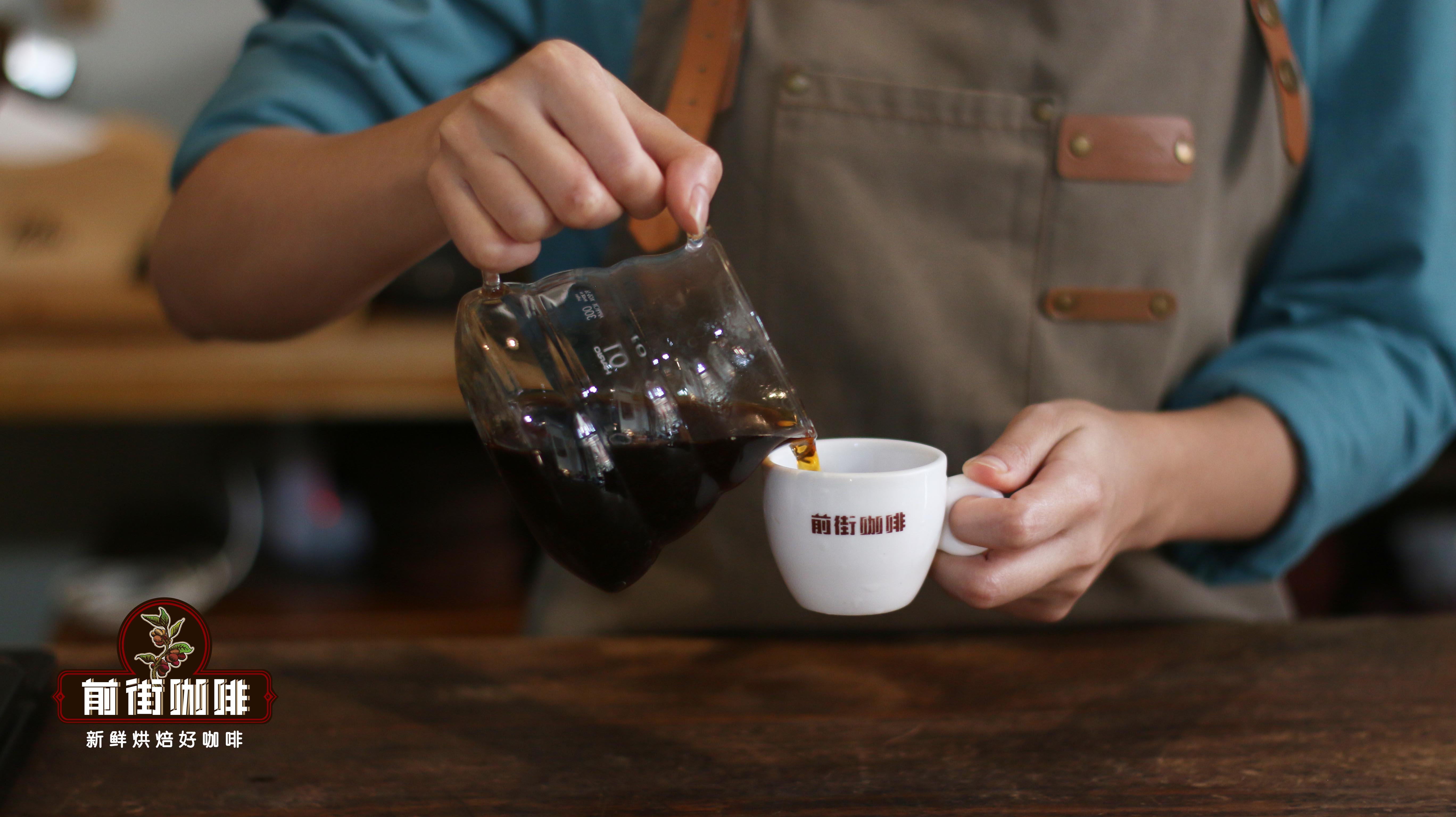
This Colombian Huila daily bean carries clear roasted aromas of chocolate, nuts and caramel. It is smooth and sweet, with moderate body and a clean taste, and as it cools you notice a pleasant, soft acidity.
FrontStreet Coffee Recommendation
FrontStreet Colombia Huila is the dependable everyday Colombian. Huila, in the southern Central Mountain Range, is the country's best-known specialty region: hills ringed by mountains, cultivation above 1,500 meters, and Colombia's most important rivers converging to bring abundant water and vapor. FrontStreet roasts the washed Huila medium-dark, which brings out black chocolate, the sweetness of nuts, moderate oils and a full body. It suits pour-over and French press, and it extracts just as well in a moka pot or on an espresso machine for an americano or a latte.
If you want to explore beyond the familiar washed cup, look to FrontStreet Colombia Sidra. Colombian coffee was traditionally washed, but innovative processing has taken hold in recent years, and anaerobic fermentation - sometimes called carbonic maceration - is one of the most interesting new taste experiences. It is simply fermentation in a low-oxygen or oxygen-free environment, usually in a pressure-resistant stainless steel tank where temperature, time and pH can be controlled. The best-known styles are anaerobic natural and anaerobic washed. FrontStreet Sidra uses the anaerobic natural method: after oxygen-free fermentation the coffee has converted into far more tropical fruit aroma, and roasted medium-light it delivers complex, intense notes of passion fruit, grape, apricot and candied fruit whether you brew it as pour-over, cold brew, a drip bag or in a moka pot.
For anyone with a home espresso machine or a moka pot, FrontStreet Premium Blend is the baristas' pick. Built for cafe use, it combines the creamy, nutty character of Brazilian coffee with the dark chocolate bittersweetness of Colombian coffee, and it extracts with a fine, golden crema. Paired with milk it makes a rich, smooth latte and is very forgiving for beginners, and it also works as the base for an americano, cappuccino or mocha.
Important Notice :
FrontStreet Coffee is a long-established specialty coffee roaster in Guangzhou China, selling freshly roasted beans from its own farm in Yunnan as well as dozens of carefully selected single-origin beans from around the world for both pour-over and espresso. The products deliver consistently excellent quality and great value, with shipping within 24 hours. Guangzhou's FrontStreet Coffee shop is recommended by many coffee lovers, and the beans are now available online at the Tmall 。
FrontStreet Coffee has moved to a new address:
FrontStreet Coffee Address: 315,Donghua East Road,GuangZhou
Tel:020 38364473
 Scan and follow the En Gafei WeChat official account. Please indicate that the reprint comes from "En Gafei".