Introduction to Panamanian Coffee Bean Flavor and Taste Characteristics - What Grade is Panamanian Geisha Coffee and Why is it So Popular
Mention the flavor of Panamanian coffee and most drinkers immediately picture the citrus, florals, and rich berry notes of Hacienda La Esmeralda's Geisha. Ever since Geisha made its name in Panama, estates across the coffee belt have planted it, and even Yunnan in China has begun cultivating the variety. Yet Geisha grown in different places does not taste the same. As FrontStreet Coffee has noted before, coffee is an agricultural product and therefore bound tightly to its environment, and Geisha is especially particular: it wants both high altitude and shade trees. Panama's climate and terrain suit it perfectly, which is why Panamanian Geisha reaches such captivating floral aromatics, delicate fruit acidity, and a rich, layered cup that Geisha from other origins rarely matches, though those too can be excellent in their own way.
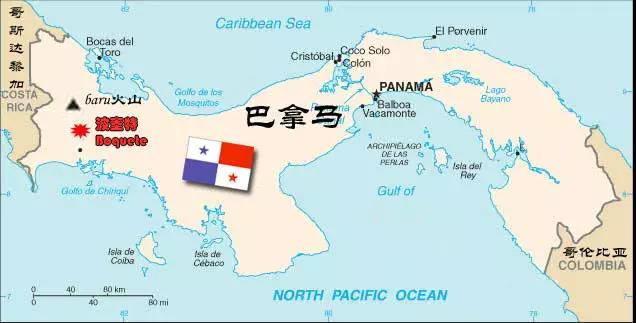
Panama occupies the isthmus of the same name in Central America, bordering Colombia to the east, the Pacific Ocean to the south, Costa Rica to the west, and the Caribbean Sea to the north. Shaped like an S, the country links North and South America, while the Panama Canal runs north to south to join the Atlantic and Pacific, earning Panama the title "World Bridge."
Panamanian Coffee Growing Regions
Panama's coffee areas lie in the west of the country and include Boquete, Volcán, Santa Clara, and Piedra de Candela. Boquete and Volcán are the two names most often heard in specialty coffee. Both sit in Chiriquí Province, right in the middle of the coffee belt, with fertile volcanic soil and ancient forest. Panama's terrain is rolling, cut by countless valleys and ravines; apart from the coastal plains in the north and south, most of the country is mountainous. Close to the equator, Panama has a tropical maritime climate with humid days, cool nights, and average annual temperatures between 23 and 27°C. The year splits into a dry season and a rainy season, with annual rainfall averaging 1,500 to 2,500 millimeters.

The Origin of Panamanian Geisha
Panamanian Geisha was discovered in 1931 in the Geisha forest of Ethiopia. From there it was sent to the Coffee Research Institute in Kenya, and five years later, in 1936, it was introduced to Uganda and Tanzania. It reached Costa Rica in 1953 and finally Panama in 1970. For a long time nobody paid it much attention, and Geisha trees were used only as windbreaks. It was not until the variety met Hacienda La Esmeralda that it became famous around the world.
Boquete Region
Boquete is a town in Chiriquí Province, close to the border between Panama and Costa Rica and near the famous Barú Volcano. With beautiful scenery and rich, fertile soil, its climate and land are ideal for high-quality coffee.
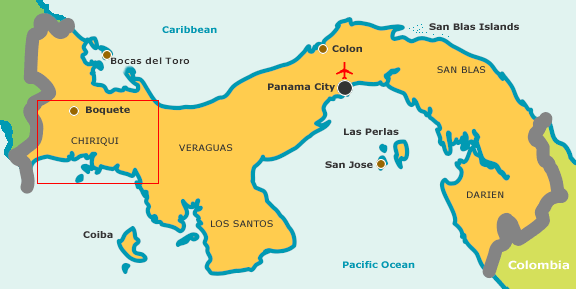
The unique microclimate of the Boquete highlands is the crucial resource behind the region's distinctive specialty coffee. Panama's east-to-west arrangement forces cold air currents to converge above 6,500 feet along the central mountain range, creating several microclimates around Boquete. Temperature and rainfall there are ideal for plant growth, so coffee trees thrive, and with year-round mist and abundant rain the growing conditions are excellent. That is why so many outstanding estates, among them Hacienda La Esmeralda, Elida Estate, and Duncan Estate, established themselves here.
Hacienda La Esmeralda
Any discussion of Panama has to mention Hacienda La Esmeralda. The estate sits on a corner of Barú Volcano, which is why Panamanian beans from the area were often named after Barú Mountain before the coffee became famous. Around Boquete the scenery is beautiful and dotted with leisure hotels, vacation estates, and development along the important Rio Caldera. In 1964, the American banker Rudolph A. Peterson retired, moved to Panama, and bought Hacienda La Esmeralda in Boquete, initially focusing on dairy.
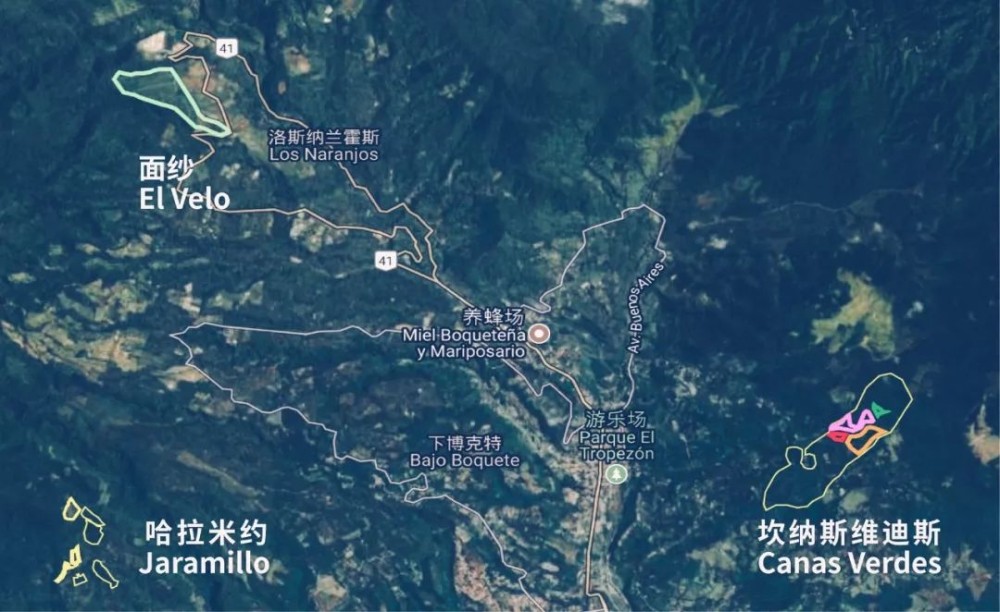
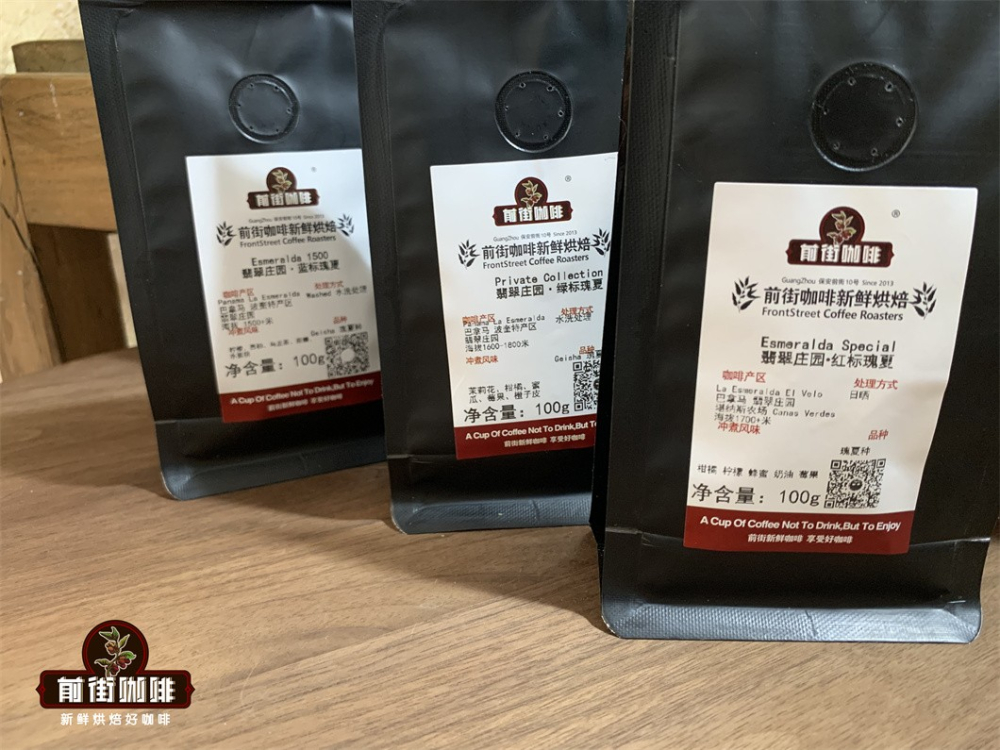
After Price took over, the estate's plantings were divided into five major brands for sale, sorted by altitude, microclimate, cupping performance, and cultivated variety. The Geisha variety covers three brands, Esmeralda Special, Private Collection, and Geisha 1500, while the Catuai variety covers two, Diamond Mountain and Palmyra.
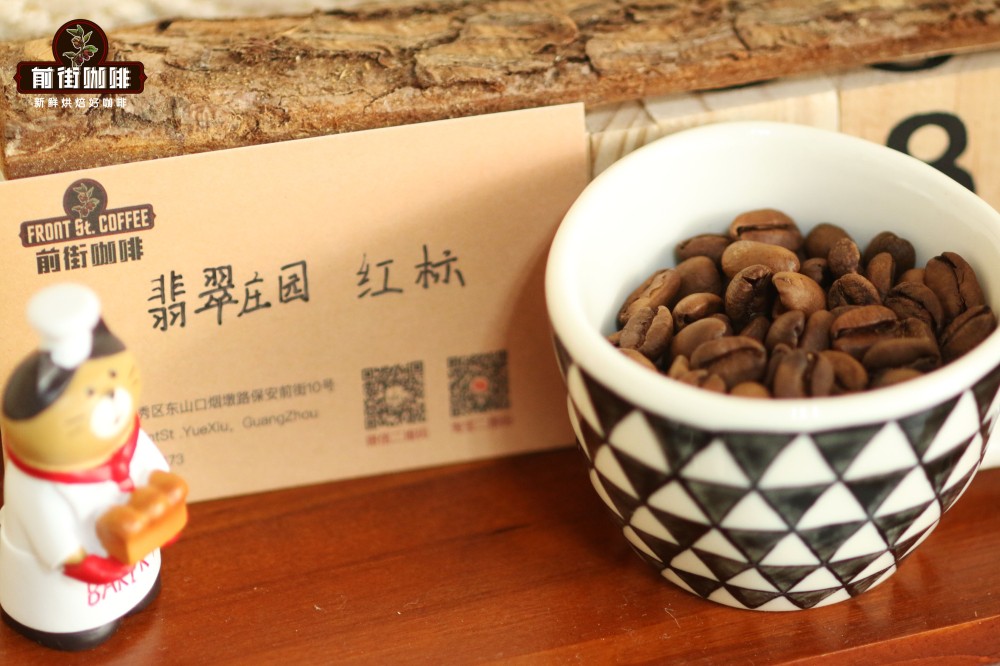
Red Label Geisha
The Geisha released as Esmeralda Special is what drinkers commonly call Red Label. It uses Geisha grown at 1,600 to 1,800 meters and cups above 90 points, produced from the Jaramillo and Canas Verdes areas. Hacienda La Esmeralda's refined processing and strict quality control make the slow-dried Red Label lots especially rich in fruit character, with excellent sweetness and acidity. Of course, the variety's characteristic sweet fruit aroma and jasmine fragrance come through as well.
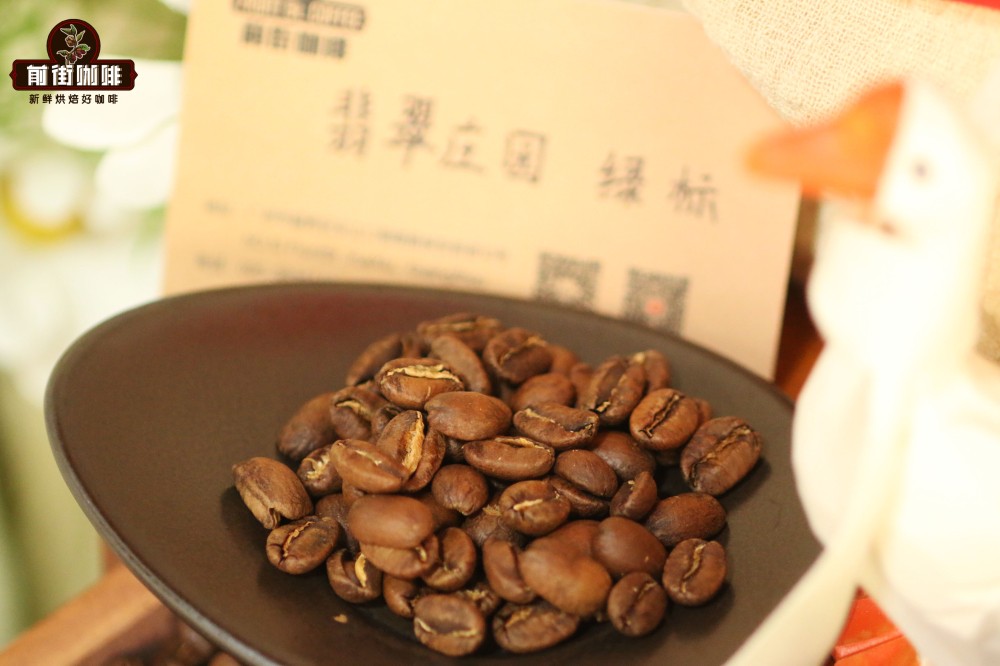
Green Label Geisha
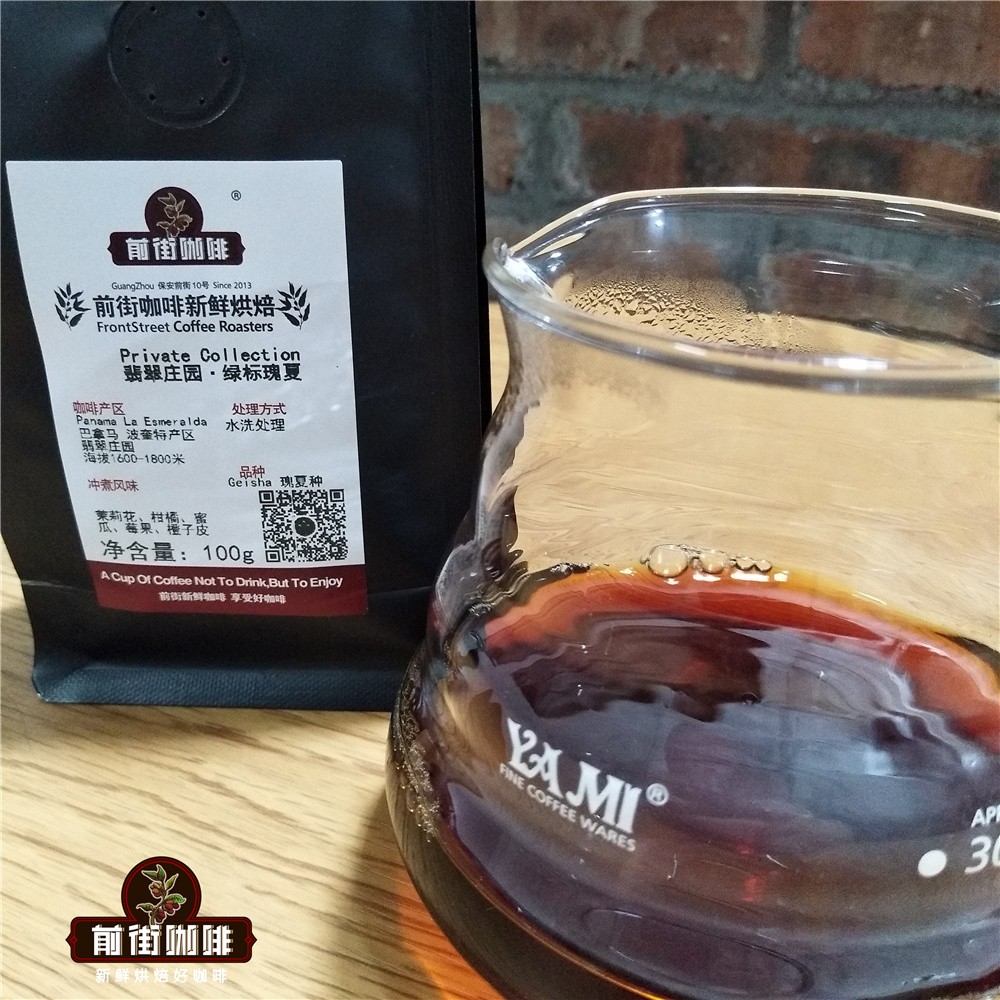
Private Collection, commonly known as Green Label, consists of lots that do not enter the independent auction but are still of excellent Geisha quality. It blends micro-lots from different plots, including Jaramillo and Canas Verdes, grown at 1,600 to 1,800 meters. Although Green Label is not graded as highly as Red Label, it has great clarity with an overall lean toward jasmine tea and high acidity. The naturally processed Green Label Geisha has good sweetness, with a pleasant sweet-and-sour character reminiscent of passion fruit and floral tea. Green Label batches are offered in both washed and natural processing.
Blue Label Geisha
The Geisha 1500 brand is what drinkers call Blue Label Geisha. It blends beans from three plots, Jaramillo, Cañas Verdes, and El Velo, grown at 1,400 to 1,500 meters. The flavor shows subtle florals, fruit acidity, and a lighter body. Blue Label Geisha is offered in washed processing only.
From 2021 onward, however, Hacienda La Esmeralda adjusted its Geisha grading system. Starting with the 2021 harvest season, the estate discontinued the Blue Label (Geisha 1500) lots.
FrontStreet Coffee's Perspective on Washed Geisha
FrontStreet Coffee believes that washed processing, one of the most traditional ways to handle green beans, not only makes production more consistent but also lets Geisha show higher clarity and fresher character. After roasting, FrontStreet Coffee tastes Geisha's elegant white florals, bright citrus and lemon acidity, and a subtle green tea aftertaste, much like sipping a smooth cup of Tieguanyin tea.
Elida Estate
Elida is a renowned Panamanian estate with a century of high-quality coffee behind it, located in the famous specialty region of Boquete. Last year a Geisha from Elida won the championship in the Geisha Processing category at the BOP competition. FrontStreet Coffee selected Elida Geisha from the same plot and altitude for cupping, and comparing it with Hacienda La Esmeralda's Geisha, the different processing methods made Elida's Geisha read as more complex and layered than other Panamanian Geisha.
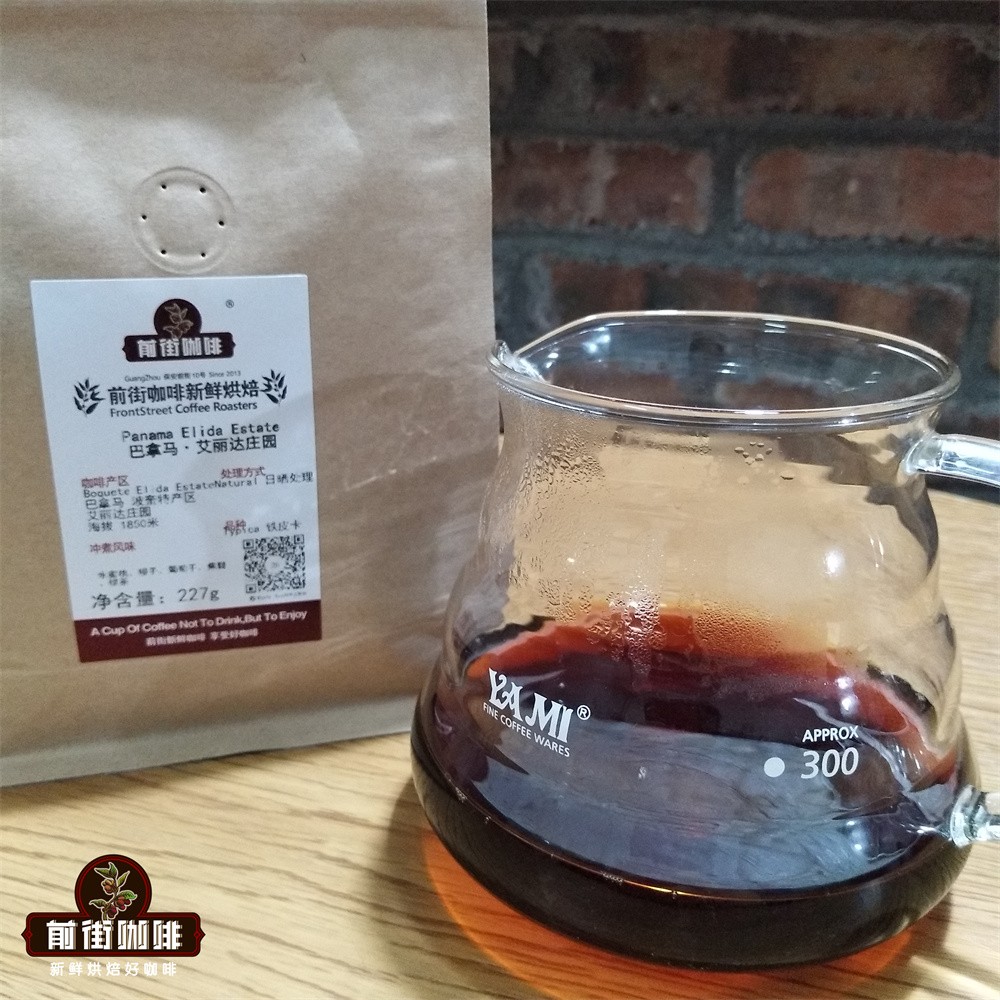
Elida Estate covers 65 hectares in total, more than half of it inside Barú Volcano National Park. Only 30 hectares are planted with coffee, while the rest remains pristine forest. The coffee grows at altitudes from 1,670 to 1,850 meters, making Elida one of Panama's highest-altitude coffee estates; another at a similar height is Carmen Estate, in the Volcán Valley.
In such a high-altitude environment, low temperatures delay the ripening of the cherries by about a month compared with the normal season. Fertile volcanic soil feeds the trees, and the excellent microclimate created by Barú Volcano combines with the owner's innovative ASD slow anaerobic natural processing, allowing Elida to post outstanding cupping results year after year.
FrontStreet Coffee's Panamanian Elida flavor profile: fermented aroma, roses, berries, citrus, green tea, cream, and nuts.
The Legacy of Geisha
Once Geisha became famous, producing regions everywhere rushed to introduce and cultivate it. Even so, the same variety grown under different terroirs and climates yields coffee of different quality and flavor. FrontStreet Coffee believes that as the birthplace of Geisha's fame, Panama's mature cultivation and processing still guarantee the coffee its industry acclaim. To let more drinkers experience the classic Geisha profile, FrontStreet Coffee has released a Boquete Geisha using washed processing.
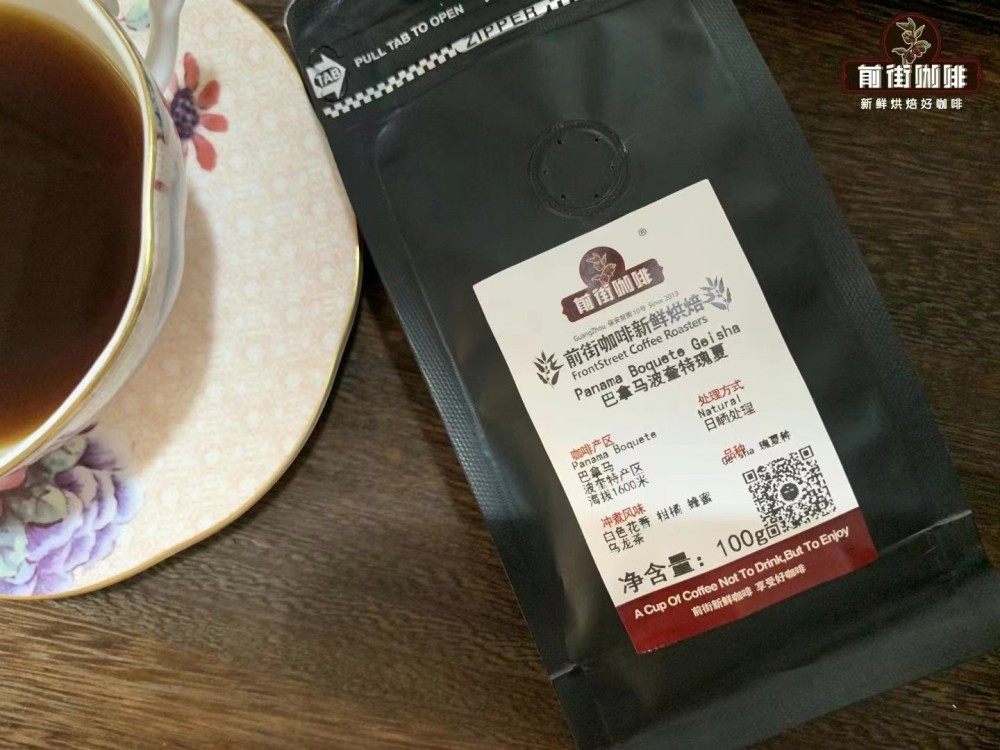
Brewed as pour-over, FrontStreet Coffee's Panamanian washed Boquete Geisha shows distinct citrus, lemon, and bergamot clarity in the acidity, a creamy mouthfeel as it goes down, and a finish of green tea and honey sweetness.
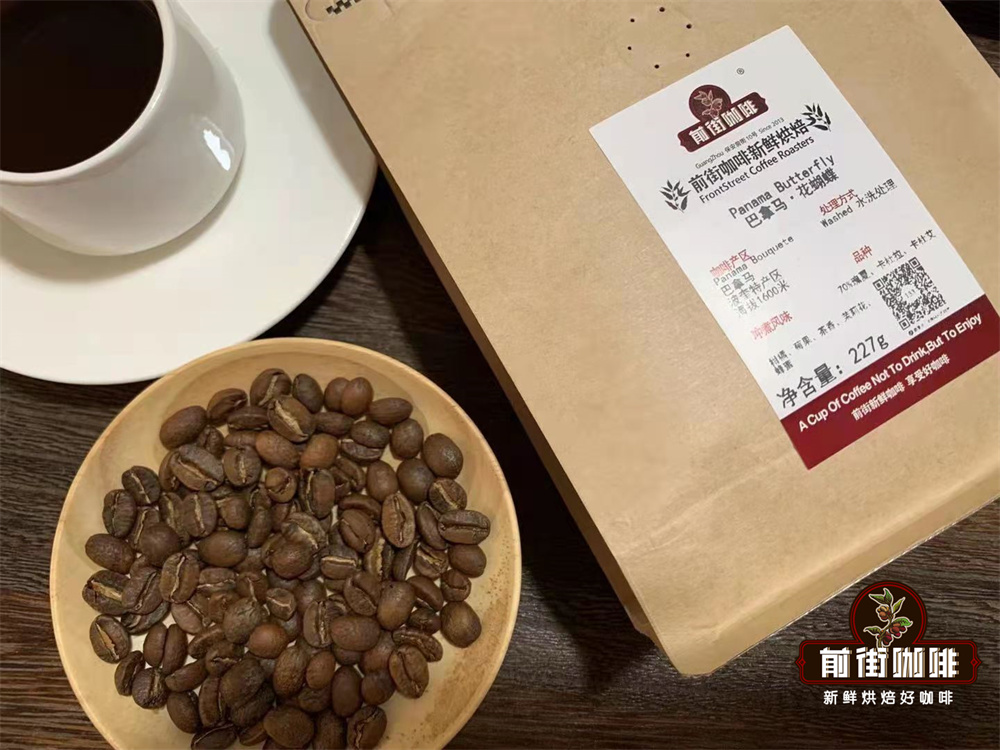
For anyone who wants to taste Geisha flavors, FrontStreet Coffee's Panamanian Flower Butterfly Blend Geisha is another excellent option. Flower Butterfly is a Panamanian coffee with particularly good value, carrying 70% premium Geisha heritage, and it combines three varieties: Geisha, Caturra, and Catuai. It is grown in the Barú Volcano area of Boquete at an altitude of 1,600 meters on volcanic land, and the mill uses refined washed processing. The region's special microclimate brings abundant rainfall and a large day-night temperature difference, and together with the unique volcanic rock soil, careful harvesting, and refined processing, the coffee performs exceptionally well in body, acidity, and floral aroma.
Why Is Panamanian Geisha Coffee So Popular?
Panama's microclimate is exceptionally well suited to Geisha, which is why Panamanian Geisha tastes better than Geisha from other producing countries. Drinking it does not feel like drinking coffee so much as sipping a cup of fruit tea. The cup presents rich, elegant florals, citrus and peach, and the full acidity of complex fruit, with a creamy mouthfeel and an oolong-tea-like sweet aftertaste. Those delicate characteristics are exactly why it feels less like coffee and more like a fragrant fruit tea.
Hacienda La Esmeralda's Geisha is very famous, but Geisha from other estates is excellent too. And you do not have to drink Geisha at all: taste preferences differ, and coffee from other regions may suit you better. If you are unsure where to start, sampling FrontStreet Coffee's daily selection beans is a good way to find your flavor, since they represent a range of producing countries at excellent value.
FrontStreet Coffee's Geisha Brewing Parameters
Dripper: Hario V60. Water temperature: 91°C. Coffee amount: 15g. Coffee-to-water ratio: 1:15. Grind size: medium-fine, with an 80% pass-through rate on the Chinese standard #20 sieve.
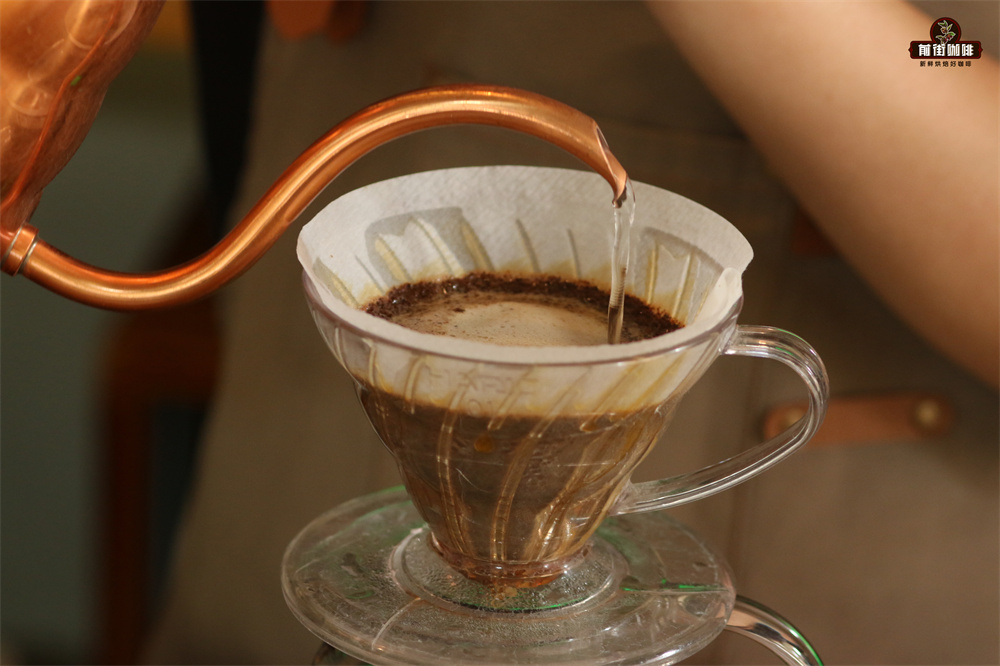
FrontStreet Coffee uses segmented extraction with a three-stage pour. Start with 30g of water for the bloom and let it rest for 30 seconds. For the first stage, pour with a small circular flow to 125g and stop. When the water level drops to just before the coffee bed is exposed, continue with the second stage to 225g to complete extraction. Total extraction time, counted from the first pour, is 2'00".
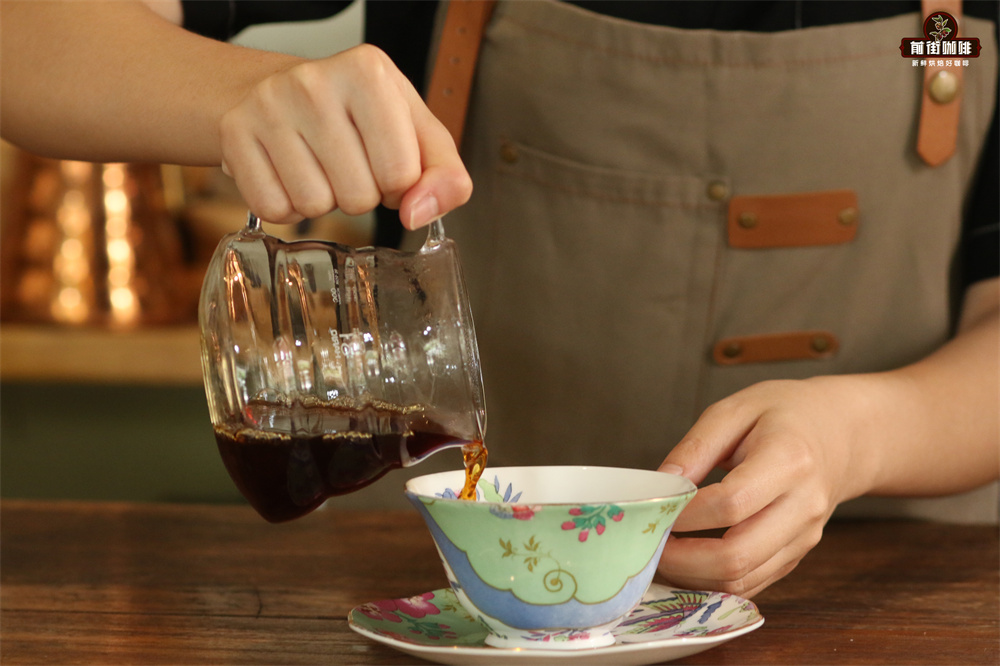
FrontStreet Coffee's Brewing Recommendations
To brew a good cup, freshness matters as much as variety. FrontStreet Coffee ships beans roasted within 5 days because freshness greatly affects flavor, and the roasting philosophy is simple: "Freshly Roasted Good Coffee," so that every order arrives at its best. The degassing period is about 4 to 7 days, which means the coffee is close to its peak flavor when it reaches the customer.
Some customers ask FrontStreet Coffee to grind their beans, and that is no problem. One reminder, though: pre-ground coffee does not need further degassing, because during transport the pressure from carbon dioxide building up in the packaging helps round out the flavor, so it can be brewed as soon as it arrives. Ground coffee should be brewed promptly, however, since it oxidizes quickly in air and the flavor fades faster. FrontStreet Coffee therefore recommends buying whole beans and grinding fresh before brewing.
FrontStreet Coffee Recommendation
If you want to explore Geisha by grade, FrontStreet Coffee carries both Hacienda La Esmeralda labels plus approachable alternatives from Panama and Ethiopia. The Red Label, officially Esmeralda Special, is the estate's top tier: grown at 1,600 to 1,800 meters, with each lot drawn from a single plot such as Jaramillo and every batch required to cup above 90 points with its own traceable number. The Green Label, officially Private Collection, blends lots from several plots to express the estate's signature high-altitude Geisha profile, so it sells at a friendlier price with excellent value. For an easy entry into the style, the Boquete Geisha from Panama is an entry-level Gesha that still delivers the classic orange-blossom honey, oolong-tea texture, and delicate fruit acidity. Beyond Panama, Ethiopia offers its own expression: the Grana Gesha, from a single-variety estate at the border of the Kochere and Gelena Abaya areas, where the washing station was founded in 2014 and the coffee is dried on raised beds for 14 to 20 days depending on the weather, shows bright citrus acidity, elegant ginger-lily aroma, and ripe-fruit sweetness. Geisha Village adds two more tiers: the Gold Label, a Geisha 1931 that accounts for 10% of the village's output and is reserved for competition use, and the Red Label, a Gori Gesha making up 15% of production and scoring 88 or above on the SCA 100-point scale, with full traceability for every lot.
Geisha is a medium-light, floral-and-fruity style, and its dense beans tend to sink and clog the dripper, so FrontStreet Coffee suggests grinding to a coarseness that passes 78% through the Chinese standard #20 sieve, about the texture of fine granulated sugar, and brewing at 91°C. A pour-over with 15g of coffee in a small Hario V60 at a 1:16 ratio works well: start the timer, pour to 30g and let it bloom for 30 seconds, then pour in a slow spiral to 125g, wait for the bed to drain halfway, and continue in a slow spiral to 225g, for a total extraction of roughly 2'10" to 2'20". Geisha also makes a fine SOE; because medium roasting keeps the lively fruit character that dark roasting flattens, a medium-roast Grana Gesha pulled as espresso at 20g of coffee, a 1:2 brew ratio, 25 seconds, and 40g of liquid gives a cup of dried apricot, caramel, and nuts, and it works as an Americano with 200g of hot water at 1:5 or as a latte with 200g of milk. For something cold, FrontStreet Coffee's Strawberry Candy blend, combining a Costa Rican honey process with a Panamanian Geisha, suits cold brew: grind 30g to fine granulated sugar, add 360g of room-temperature water at 1:12, refrigerate for 8 hours, filter, then let the liquid rest in the fridge for another 3 hours for a cup of grape juice, rose, sweet orange, and fruit wine.
Important Notice :
FrontStreet Coffee is a long-established specialty coffee roaster in Guangzhou China, selling freshly roasted beans from its own farm in Yunnan as well as dozens of carefully selected single-origin beans from around the world for both pour-over and espresso. The products deliver consistently excellent quality and great value, with shipping within 24 hours. Guangzhou's FrontStreet Coffee shop is recommended by many coffee lovers, and the beans are now available online at the Tmall 。
FrontStreet Coffee has moved to a new address:
FrontStreet Coffee Address: 315,Donghua East Road,GuangZhou
Tel:020 38364473
 Scan and follow the En Gafei WeChat official account. Please indicate that the reprint comes from "En Gafei".