Yunnan Coffee: The Story and Flavor Differences Between Typica and Catimor Arabica Bean Varieties
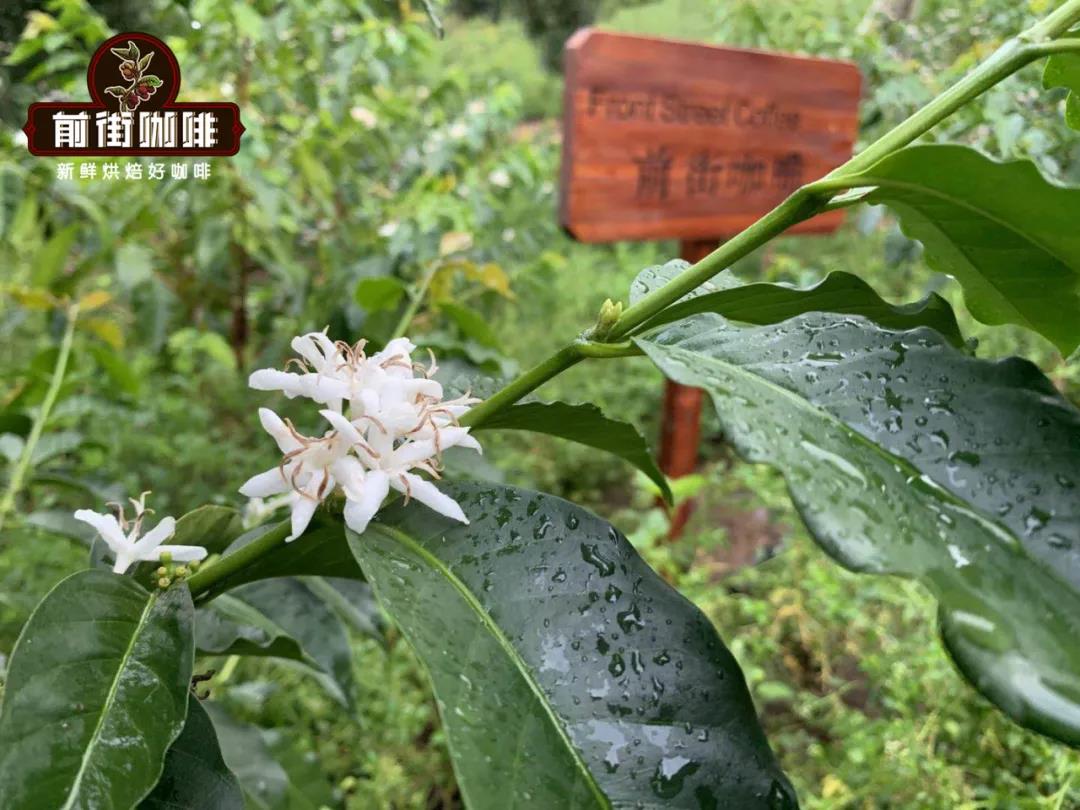
Yunnan coffee, also called Yunnan small-bean coffee, gives uniform, plump beans and a mellow, moderate mouthfeel. FrontStreet Coffee loves it because this is China's own coffee. The FrontStreet bean list carries two Yunnan small-bean coffees: one Catimor and one Typica. Because Catimor carries Robusta genes, its flavor is somewhat inferior to Typica. Yunnan has excellent growing conditions, but FrontStreet Coffee believes the current quality of Yunnan coffee has not yet reached specialty coffee standards.
Consider varieties first. Yunnan grows mostly Catimor, which is inherently inferior to the excellent Typica. Consider processing second: many producers use anaerobic methods, and while these are novel, they mask the coffee's original flavor, so on what basis can we call the result specialty coffee?
FrontStreet Coffee has been growing Yunnan coffee in the border area between Yunnan and Myanmar. Choosing the right variety, planting at an appropriate altitude, and experimenting with processing after the cherries ripen in order to express a distinctive flavor is the only logical relationship through which specialty coffee can acquire a clear regional identity. That is also what the Yunnan Department of Agriculture has recently been leading: building a flavor map of Yunnan specialty coffee, which means establishing what regional flavors Yunnan specialty coffee ought to have.

Why the Focus on Processing Methods?
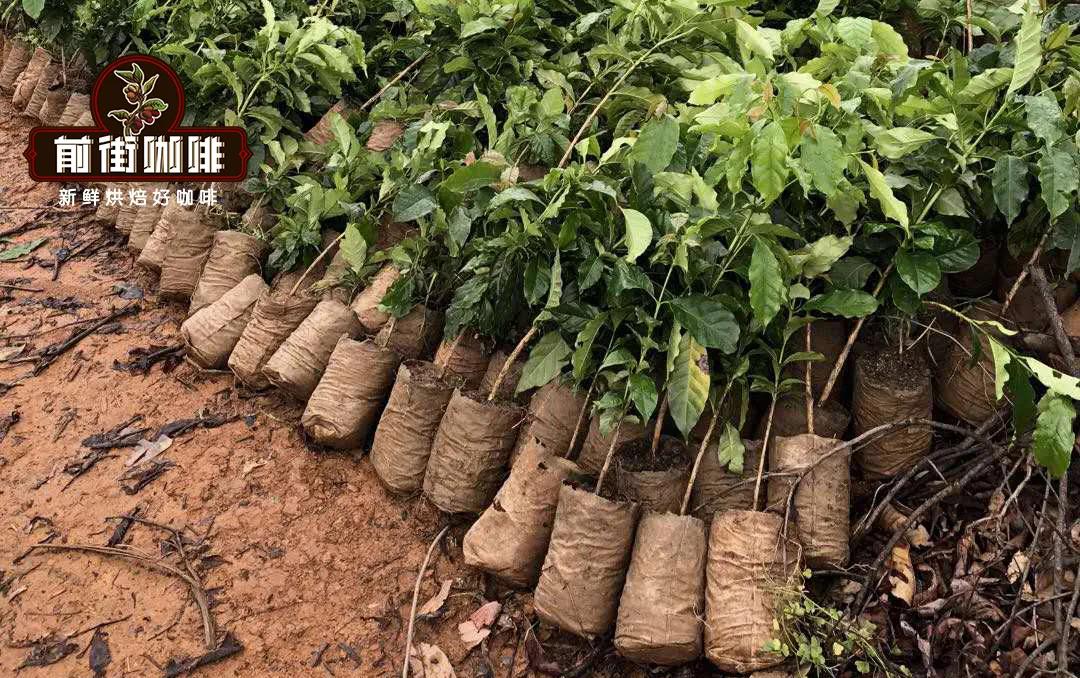
Why have Yunnan beans leaned so heavily on processing methods in recent years? In practice, they are working around two fixed constraints. The planted varieties cannot be changed quickly, since 99% of Yunnan's large-scale planting is Catimor, a hybrid of small and medium varieties, and bringing a new variety from planting to flowering and fruiting takes four to five years. Altitude cannot be changed either. Processing happens to be what the market is excited about, so many Yunnan beans emphasize post-processing. Changing only the processing while setting variety and altitude aside is both strange and quite understandable.
Understanding Yunnan Coffee's Challenges
FrontStreet Coffee has also visited researchers with deep expertise in coffee cultivation, the Tropical Agricultural Science Research Institute, which houses the Ministry of Agriculture's coffee germplasm repository, and a number of farmers growing specialty coffee, in order to clarify why Yunnan does not grow mainstream specialty varieties such as Typica and Bourbon. Catimor is too cheap and can only be sold as bulk commodity at around 15-20 RMB per kilogram. That price barely covers harvesting labor and fertilizer, so farmers are unwilling to manage it properly. Typica and Bourbon yield little and fall easily to disease, with high management costs and long development periods, to say nothing of whether they can develop a distinctive flavor at all. On one hand, growers lack specialty coffee awareness; on the other, even those who understand it would hesitate to cut down mature trees and spend several years replanting.
Yunnan Coffee Varieties
The most widely planted variety in Yunnan today is Catimor, with small amounts of Typica and Bourbon also grown in the Baoshan area. All belong to the broad Arabica species, yet the differences between them are essential rather than incidental.

Typica Coffee Beans
The most classic of the high-quality Arabica varieties, and the ancestor from which many commercial improved varieties descend. Typica is prized for its excellent flavor and is recognized as a specialty coffee variety, but its yields are extremely low and it is susceptible to coffee leaf rust, requiring more labor to manage. Typica originates in Ethiopia and southeastern Sudan and is the most widely cultivated coffee variety in the Western Hemisphere. The plants are relatively robust but do not tolerate strong light, and yields are higher in Hawaii. The top leaves are copper-colored, which earned it the name red-topped coffee.
Bourbon Coffee Beans
Bourbon descends from Typica and spread after the French planted it in 1708 on Bourbon Island, today's Reunion Island. It too has a wonderful aroma and rich flavor, with higher yields and greater vigor than Typica, and it suits planting at 1200-2000 meters. It is, however, weak against pests and disease and sensitive to strong wind and heavy rain. Bourbon is the second most important small-bean variety after Typica. The main branches initially rise at a 45-degree angle to the trunk and droop as the fruit load increases. The lateral nodes are denser, which means more fruit and higher yields, but the berries are smaller and ripen more slowly. Bourbon's top buds and young leaves are green, earning it the name green-topped coffee.
Catimor Coffee Beans
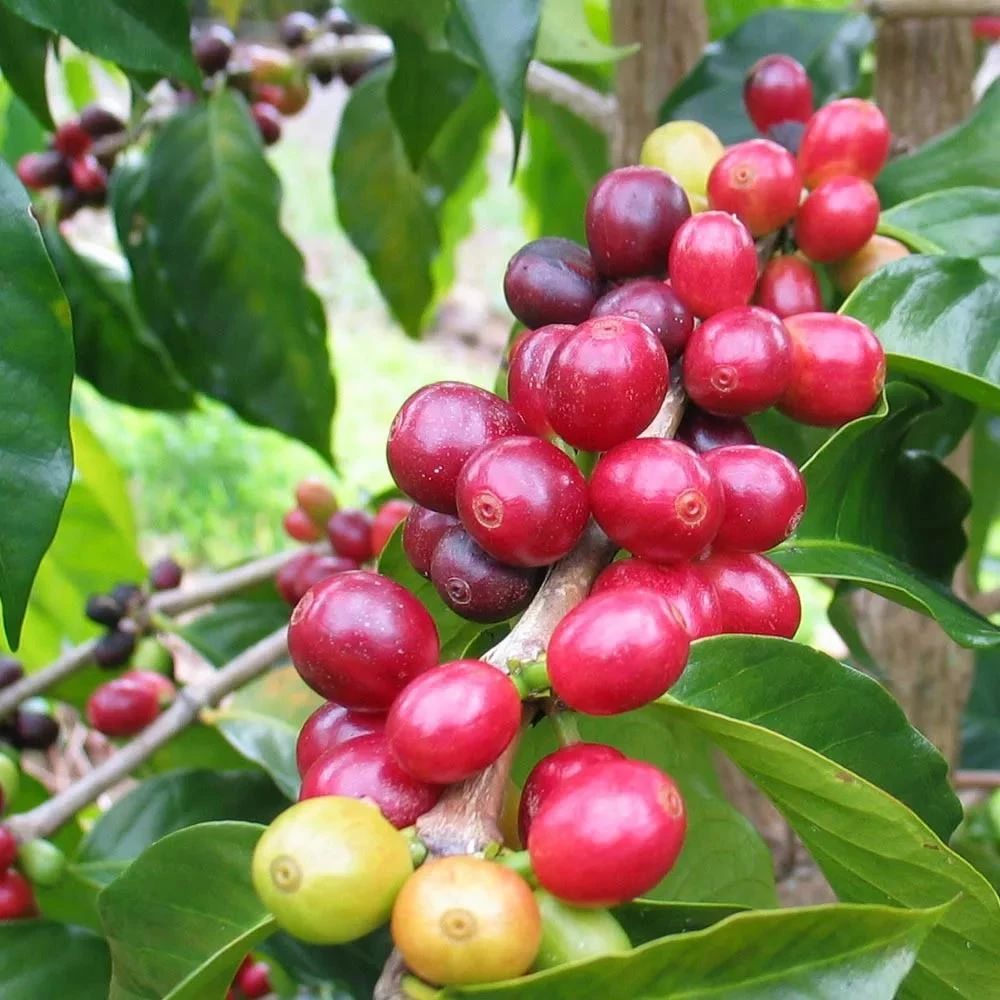
Catimor is not purely Arabica. It is a cross between Timor, which belongs to the Robusta species, and Caturra, a Bourbon variant, which gives Catimor 25% Robusta lineage. That lineage determines its flavor flaws: insufficient aromatic complexity, bitterness overall, a tendency toward astringency, and relatively harsh moldy notes.
FrontStreet Coffee's Yunnan Planting Philosophy
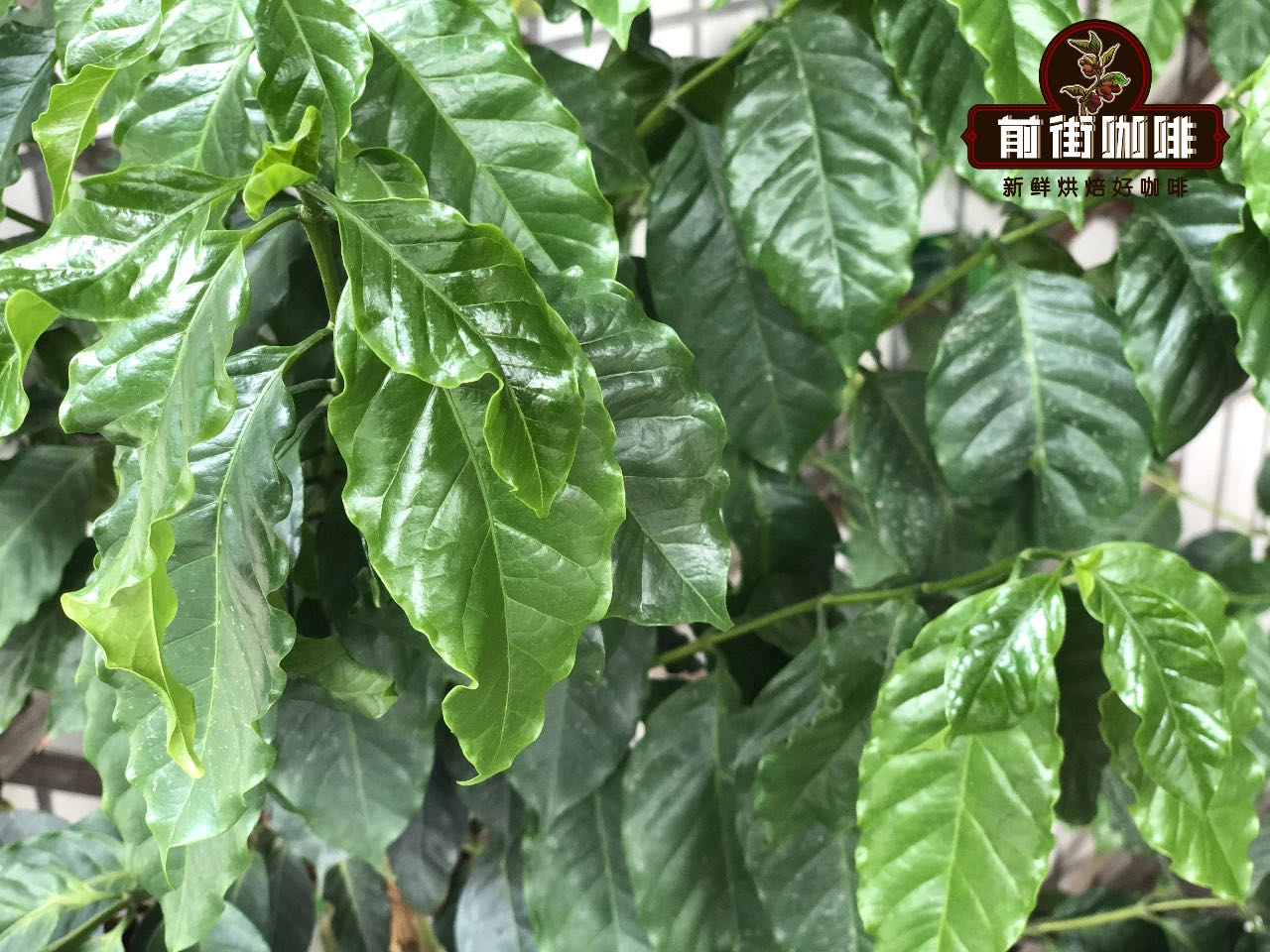
FrontStreet Coffee mainly plants Typica in Yunnan. Even with Arabica coffee in the ground and varieties given their proper weight, no one can promise high-quality specialty coffee straight away. FrontStreet Coffee firmly believes that nothing in this world comes that easily. Several rounds of variety selection, refined processing trials after fruiting, and several more years lie ahead. This difficult path always requires someone to walk it first. Trying offers some hope; without trying, it stays a blank space.
FrontStreet Coffee currently offers two Yunnan beans: FrontStreet Coffee 2013 Yunnan Sun-dried Typica and FrontStreet Coffee Yunnan Baoshan Small-bean Coffee.

FrontStreet Coffee 2013 Yunnan Sun-dried Typica Coffee Beans
- Coffee Origin: China, Yunnan, Lincang
- Coffee Variety: Typica
- Production Altitude: 1200 meters
- Processing Method: Sun-dried
- Roast Level: Medium roast
FrontStreet Coffee Yunnan Huaguoshan Coffee Roasting Suggestions
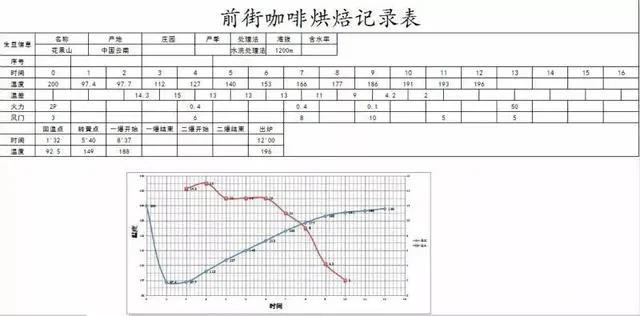
The beans carry a moisture content of 10.9%, so the plan is to charge at 200 degrees Celsius, then use high heat and low airflow to accelerate dehydration. Once dehydration ends, switch to medium airflow and medium heat so the Maillard reaction is not rushed. Develop for 3 minutes after first crack, then discharge. Temperature return point: 1'32", 92.5 degrees Celsius; Yellowing point: 5'40", 148.5 degrees Celsius; First crack: 8'59", 188.0 degrees Celsius; Develop for 3 minutes then discharge: 12'00", 196 degrees Celsius.
FrontStreet Coffee Yunnan Huaguoshan Coffee Cupping Report

Cupped 12 hours after roasting: rich fruit aroma on entry, melon and herbal plant notes, a smooth entry, nuts and milk chocolate through the middle, and a lively, bright plum acidity in the finish that waters both cheeks. Balance is good, the body medium with a full texture. From hot to warm, the layered sweetness and acidity come forward, sweet first and then acidic, with apricot-peach and citrus-toned acidity and a black tea finish carrying some brown sugar.

FrontStreet Coffee Yunnan Small-bean Coffee
- Region: Yunnan Baoshan
- Altitude: 1200 meters
- Processing Method: Washed
- Variety: Catimor
FrontStreet Coffee Yunnan Small-bean Coffee Roasting Suggestions
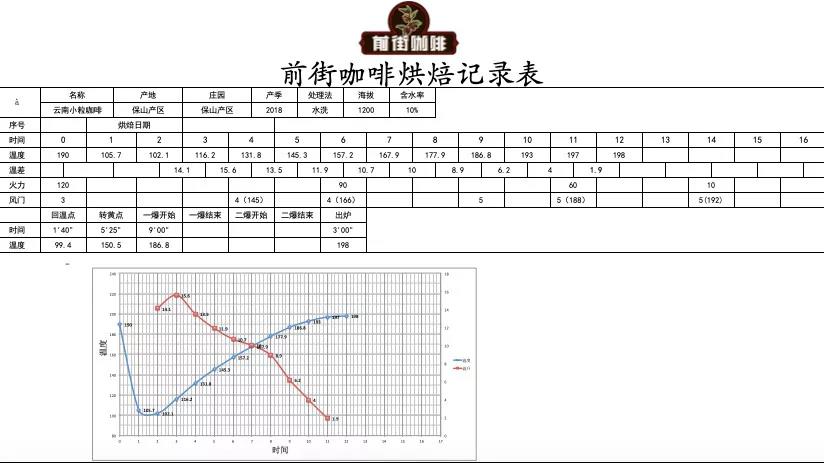
Charge at 190 degrees Celsius, heat at 120, airflow at 3. Temperature return point: 1'40". When the drum reaches 145 degrees Celsius, open airflow to 4 with heat unchanged. When it reaches 166 degrees Celsius, the bean surface turns yellow and the grassy aroma disappears completely, marking entry into the dehydration stage. At 188 degrees Celsius, adjust heat to 60 and airflow to 5. At 8'37", the bean surface shows uneven wrinkles and black spots and the toast aroma turns clearly to coffee aroma, which can be defined as the prelude to first crack. Listen carefully for the crack itself. First crack begins at 9'00"; with airflow unchanged, develop for 3 minutes after first crack and discharge at 198 degrees Celsius.
FrontStreet Coffee Yunnan Small-bean Coffee Cupping Report
A smooth entry with Asian herbal plant aroma, lively and bright acidity that waters both cheeks, soft acidity, mellow with good balance and rich layers, and a finish dominated by dark chocolate, honey, and cane sugar, turning to brown sugar once fully cooled.

FrontStreet Coffee Brewing Suggestions for the Two Yunnan Beans
FrontStreet Coffee recommends a V60 conical dripper. Its wide opening and spiral rib design let air escape more easily and improve extraction quality. The mouthfeel may not be the thickest, but the higher concentration brings out the fruit acidity and distinctive aroma that are hallmarks of Yunnan coffee.

- Dripper: V60
- Water Temperature: 90-92 degrees Celsius
- Coffee-to-Water Ratio: 1:15
- Grind Size: Medium-fine, similar to fine sugar (HARIO V60: 80% pass-through on the China standard #20 sieve)
- Brewing Method: Segmented extraction. Use 30g of water for a 30-second bloom. Pour in small circles to 124g, then break the stream. When the water level drops and is about to expose the coffee bed, continue to 227g and stop. When the level drops again and is about to expose the bed, remove the dripper, timing from the start of the bloom. Extraction time is 2 minutes.

FrontStreet Coffee 2013 Yunnan Sun-dried Typica Brewing Flavor Description: Nuts, cocoa, caramel, berries, black tea, cantaloupe sweetness in the middle, black tea finish.
FrontStreet Coffee Yunnan Baoshan Small-bean Coffee Brewing Flavor Description: Aromas of nuts, herbs, chocolate, and caramel, with a light fruit acidity in the finish.
FrontStreet Coffee Recommendation
FrontStreet Yunnan Baoshan Small-bean Coffee is the entry point to Chinese Arabica. Baoshan's coffee history began in the mid-1950s, and the frost-free year-round warmth suits small-bean coffee well; the dry-hot river valley around Lujiangba keeps the annual range narrow while the day-to-night range stays wide, which shapes the region's distinctive sweet finish, and rainfall that is modest but well distributed gives the cherries a further advantage. Washed processing, which removes the pectin layer through fermentation and rinsing before drying, lets the bean show its regional character, and a medium roast keeps some caramel alongside a portion of the acidity. It is the most affordable way to find out what Yunnan tastes like.
FrontStreet 2013 Yunnan Sun-dried Typica is the step up. FrontStreet established its own estate in 2013 and planted Typica, partly because it is one of the oldest varieties with pure Arabica genetics and an elegant, clean flavor long recognized as a specialty variety, and partly because the first coffee trees planted in Yunnan were also Typica, brought in by a French missionary. Only fully ripe all-red cherries are used, and after sun-drying the beans are given a medium roast for a more balanced cup with brighter acidity: dark berry character, caramel sweetness, chocolate, a touch of dried apricot, and a black tea finish.
For a Yunnan flavor in an espresso, FrontStreet Dark Cocoa Blend combines Yunnan small-bean with Brazil Cerrado. The Brazilian portion supplies mixed-nut aroma and a balanced structure while the Yunnan portion carries the chocolate and citrus. As an Americano it is balanced across sweet, sour, and bitter with nutty and brown sugar notes, and as a latte it gives the smoothness of almond and cream. It is an easy blend for beginners to work with.
Important Notice :
FrontStreet Coffee is a long-established specialty coffee roaster in Guangzhou China, selling freshly roasted beans from its own farm in Yunnan as well as dozens of carefully selected single-origin beans from around the world for both pour-over and espresso. The products deliver consistently excellent quality and great value, with shipping within 24 hours. Guangzhou's FrontStreet Coffee shop is recommended by many coffee lovers, and the beans are now available online at the Tmall 。
FrontStreet Coffee has moved to a new address:
FrontStreet Coffee Address: 315,Donghua East Road,GuangZhou
Tel:020 38364473
 Scan and follow the En Gafei WeChat official account. Please indicate that the reprint comes from "En Gafei".