Pour-Over Coffee-to-Water Ratio Parameters: Standard Brewing Ratio Recommendations
Understanding Coffee Brewing Ratios
Everyone knows the coffee-to-water ratio is one of the key parameters in brewing — a primary lever for controlling extraction yield and strength — which is why it draws so much attention. In the comments, FrontStreet Coffee regularly sees enthusiasts asking detailed ratio questions, so here is our take on the subject.
The "Golden Ratio" and the Golden Cup Extraction Chart
Anyone digging into ratios will eventually meet a particular chart: the Golden Cup extraction chart. At its center lies the zone where extraction yield sits between 18–22% and strength between 1.15–1.45% — the range where coffee tastes its best. The diagonal lines running across the chart represent coffee-to-water ratios.
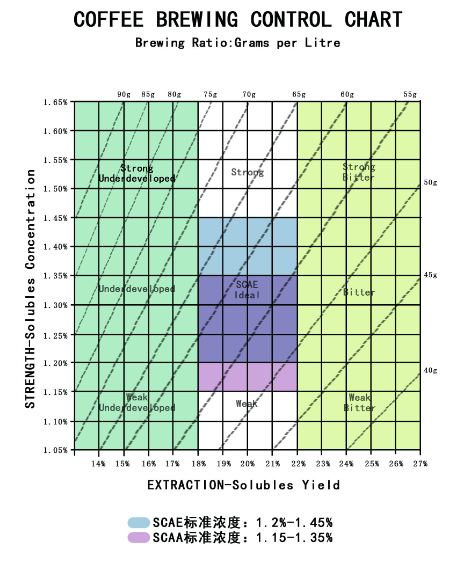
Read literally, ratios that land in that optimal zone run from roughly 1:14 to 1:20, with 1:17 the easiest way to hit the target. So if you recommended ratios purely from the chart, you'd say 1:17. Yet in real pour-over practice, 1:17 is uncommon — and the gap between the chart and everyday brewing is exactly what puzzles so many enthusiasts.
The reason is that most of us know the chart without knowing how it was made. The Golden Cup standards were derived by Dr. Lockhart's team from extensive — and, frankly, crude — experiments conducted between 1952 and 1975. Pour-over was hardly popular in mid-century America. Look closely at how the ratios vary in the data: water was held constant at 1 liter while only the coffee dose changed, so the equipment involved was almost certainly the large-capacity drip machines of that era.
The other parameters were equally foreign to modern pour-over. Grind was around the coarseness of granulated sugar, water temperature near 96°C, and extraction times ran 4–8 minutes — a completely different regime from today's methods.
The boundaries of the Golden Cup zone came from feedback sampled across nearly ten thousand street trials, later refined by professional research institutions — and the coffee being tested was far below today's quality standards. The chart's real legacy is conceptual: it teaches the relationship between ratio, extraction yield, and strength. The Golden Cup zone itself should be treated as reference, not gospel.
Does 5ml More or Less Water Matter?
Some enthusiasts wonder whether brewing 15g of coffee with 220ml, 225ml, or 230ml of water actually tastes different. This is a question of thresholds. If 1:15 is the target, no one hits exactly 225ml every time — a ±2ml slip is only human.
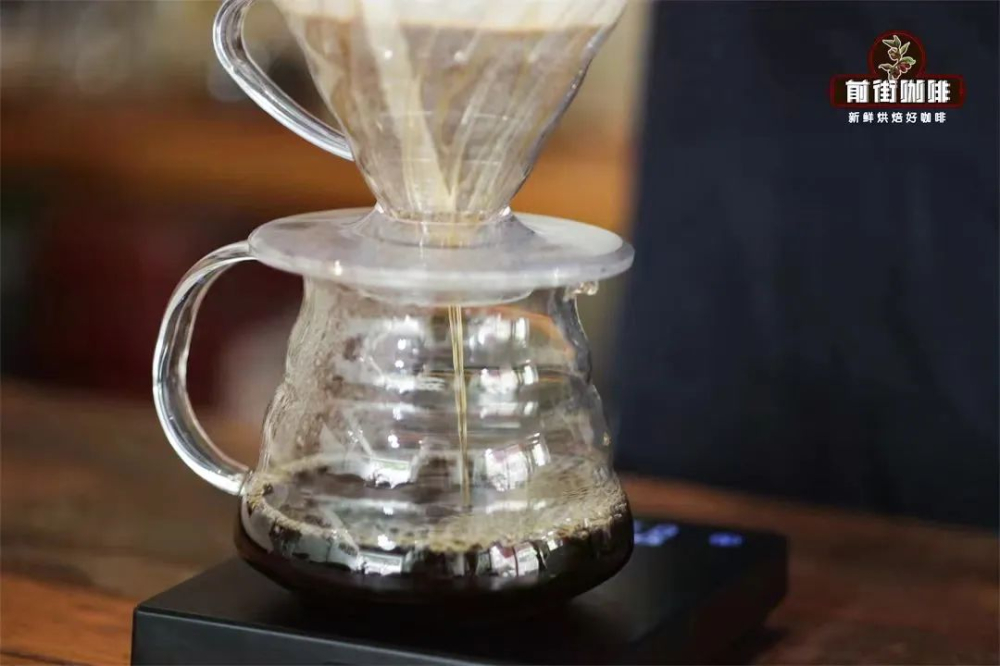
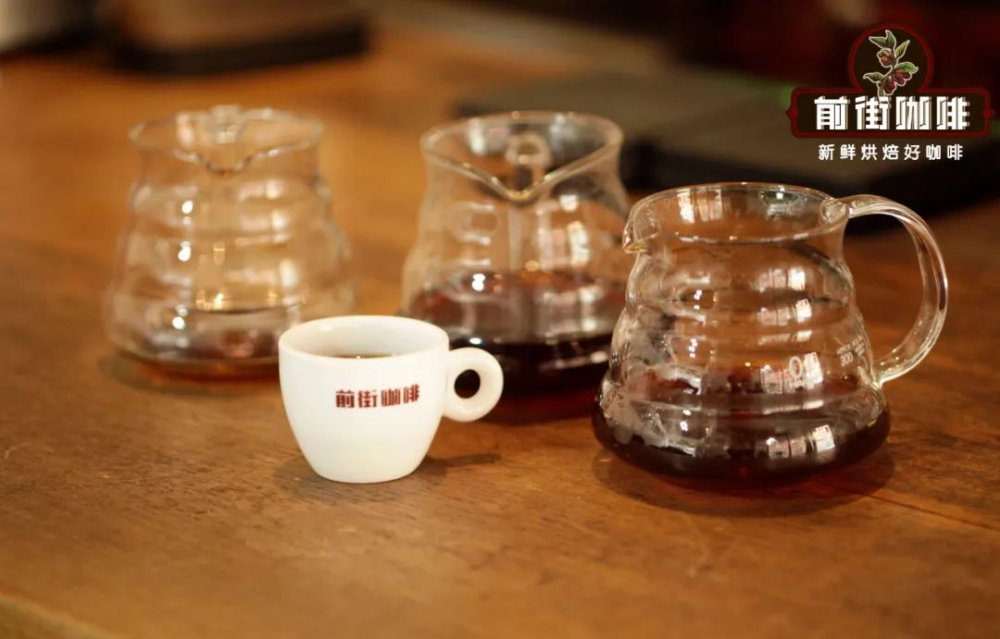
But once the gap reaches 5ml, the difference becomes detectable. FrontStreet Coffee once brewed all three volumes side by side and served them blind to customers: five tasters took part, and every one correctly ordered the three cups by water volume. Four found all three cups acceptable; one found the 220ml version too concentrated, but enjoyed the other two.
The experiment was informal — small sample, no rigor to speak of. Still, it suggests that at 1:15, a 5ml difference in water is perceptible, even if the variation stays comfortably within the acceptable range.
So Is There a Golden Ratio for Pour-Over?
In practice, brewing ratios are not that strict — 1:15 doesn't guarantee a great cup any more than 1:16 dooms one. What you want is a ratio with a forgiving window. For light roasts, where the goal is showcasing delicate flavors, FrontStreet Coffee suggests working between 1:15 and 1:16. The two are noticeably different — 1:15 gives a richer, fuller body while 1:16 opens up more layered complexity — but both readily produce delicious coffee.
For dark roasts, FrontStreet Coffee recommends 1:13–1:15. Some regulars prefer their coffee rich and strong, so we brew their cups at 1:13: the higher concentration holds bitterness in check rather than letting it sprawl, and adds to the full-bodied texture.
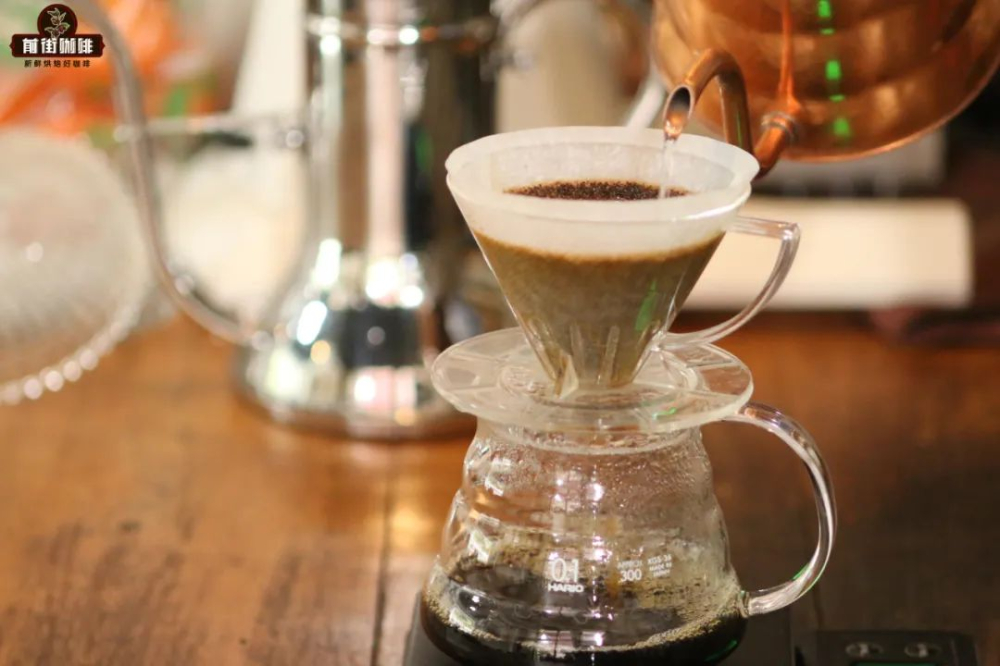
And with the other parameters properly balanced, even 1:17 or 1:20 can shine. FrontStreet Coffee has tasted a light roast brewed at 1:20 that offered delicate florals, very low acidity, and abundant berry sweetness — never thin or watery.
Ratio is one component inside a whole framework of parameters. Grind size, for instance, reshapes the ratio window: a finer grind extracts more easily but also slows the flow, so 1:15 might sing while 1:16 falls flat — until you coarsen the grind slightly and both ratios perform beautifully. The lesson is that an ideal ratio can't be discussed in isolation. It only makes sense in complementary combination with every other variable in the brew.
FrontStreet Coffee Recommendation
Wondering which beans reward a well-tuned pour-over? For light roasts in that 1:15–1:16 window, the FrontStreet Washed Yirgacheffe is a perfect match — its white jasmine, bright citrus acidity, and tea-like body show exactly how a slightly longer ratio opens up flavor layers, and it's gentle enough for anyone new to pour-over.
If you brew darker roasts in the 1:13–1:15 range, the FrontStreet Jamaica Blue Mountain No. 1 is the classic choice: medium-dark roasted, with cream, caramel, chocolate, and nut flavors whose sweetness is beautifully concentrated by a tighter ratio.
Important Notice :
FrontStreet Coffee is a long-established specialty coffee roaster in Guangzhou China, selling freshly roasted beans from its own farm in Yunnan as well as dozens of carefully selected single-origin beans from around the world for both pour-over and espresso. The products deliver consistently excellent quality and great value, with shipping within 24 hours. Guangzhou's FrontStreet Coffee shop is recommended by many coffee lovers, and the beans are now available online at the Tmall 。
FrontStreet Coffee has moved to a new address:
FrontStreet Coffee Address: 315,Donghua East Road,GuangZhou
Tel:020 38364473
 Scan and follow the En Gafei WeChat official account. Please indicate that the reprint comes from "En Gafei".