Why Does My Pour-Over Coffee Taste Too Sour? How to Make Coffee Taste Sweeter? What Water Temperature for Light Roast Coffee?
Understanding Acidity in Coffee: Achieving the Perfect Balance
"Acidity" has become the defining flavor trend of modern coffee culture. Since specialty coffee took off, roasting has shifted from dark to light, and flavors have moved from uniformly bitter toward a vibrant spectrum of fruit-like acidity. Plenty of people who could never stomach the traditional bitter "coffee taste" have been drawn into the hobby by the floral and fruity brightness of light roasts.
But many soon hit a wall: the coffee they brew at home never tastes like the cafe's. Same beans, yet the shop's cup is pleasantly sweet and tart while the homemade version is sharp and astringent - like biting into a raw lemon, sour and drying all at once.

That sensation almost always means the coffee was not extracted enough - under-extraction. As FrontStreet Coffee often explains, flavor compounds dissolve at different rates depending on molecular size and polarity. If you split extraction into early, middle, and late stages, acids come out first, followed by sweetness and then bitterness.

Flavors exist in balance. Coffee tastes harshly sour because the sweetness and bitterness never arrived. Think of a lemon: its acidity is hard to enjoy precisely because its sugar content is so low, leaving acid and sweet badly out of proportion. To brew coffee with pleasing acidity, you need to draw out enough of the flavors beyond the acids - just as lemon desserts add sugar to tame lemon's bite. Getting there is not hard; it comes down to using three parameters correctly: grind size, time, and water temperature.

1. Adjusting the Grind Finer
Grind size determines how much coffee surface area meets the water. A finer grind means more contact area and faster dissolution - and the reverse holds too. For full extraction, a sufficiently fine grind is obviously needed. But how fine, exactly?

Like every other parameter, the right fineness depends on whether it pairs well with your water temperature, time, and brewing method. FrontStreet Coffee, for example, grinds light roasts to a fine granulated sugar texture - 75-80% pass-through on a #20 sieve - because that size works well with 92°C water and a 2-minute extraction. If you keep your other variables fixed, you can find your own ideal grind through gradual trial and error; there is no universal standard, and not everyone owns a #20 sieve anyway. The practical rule: if the cup tastes sharply sour, grind finer; if it tastes bitter, grind coarser.

When in doubt, start finer - light-roasted beans are denser and their flavors harder to extract. As long as the coffee bed does not turn to mud after brewing, you are unlikely to run into serious extraction problems.
2. Extending Extraction Time
Coffee tastes sharply sour because extraction ended before sweetness and bitterness could emerge in quantity. Extending the contact time between water and grounds therefore naturally produces a sweeter cup.

There are several ways to stretch extraction time. Grinding finer is one. You can also switch drippers or change your pouring technique. Drippers with no ribs, short ribs, or a small outlet hole drain more slowly, because the gases released from the coffee have fewer escape routes and form resistance against the descending water - so those drippers reliably lengthen extraction.

Changing the brew itself is even simpler: split the water into multiple pours. Thanks to water pressure and waiting time, many small pours always take longer than one large pour - which is why a three-pour brew runs longer than a single pour. As a general guideline, keeping total brew time between 2 and 2.5 minutes is the most reliable zone. It is not that good coffee cannot exist outside that range - it depends on how the other parameters pair with the time - but within it you are unlikely to over-extract while avoiding under-extraction, which gives you generous fault tolerance.

3. Increasing Brewing Water Temperature
Water temperature governs how fast compounds dissolve: hotter water extracts faster, cooler water slower. From countless conversations, FrontStreet Coffee has found that many people fail with light roasts simply because their water is not hot enough. Some brew from the office water dispenser - and on most machines, the "hot" setting delivers only 85°C to 88°C. That is acceptable for dark roasts but too low for light ones; unless you dramatically lengthen the brew and grind much finer, full extraction will be out of reach.

FrontStreet Coffee generally recommends 90°C to 94°C for light roasts, adjusted to suit the other parameters. We usually brew around 92°C: the coarser the grind and shorter the extraction, the higher the temperature should be, and vice versa. That covers the theory - now let us put it into practice with a full demonstration you can use as a reference.
Brewing Demonstration
For this brew FrontStreet Coffee used the Yirgacheffe Gedeb from our bean list: it has excellent flavor expression, and its high growing altitude and light roast give it high density - perfect for demonstrating these principles. The parameters:
Coffee dose: 15g
Coffee-to-water ratio: 1:15
Grind: Ek43 at setting 10, 75% pass-through on a #20 sieve, fine granulated sugar texture
Water temperature: 92°C
Brewing method: three-pour method
Dripper: V60
First, bloom with twice the coffee's weight in water - 30ml - for 30 seconds.

After the bloom, pour the second segment of 120ml with a moderate flow (roughly 4-5ml/s), circling from the center outward. Because this bean is dense, we keep the flow a little smaller to prevent the water from flooding the coffee bed and causing channeling, which also extends extraction. If controlling the flow is difficult, simply split the post-bloom water into three equal pours - the effect is the same. The 120ml pour takes about 30 seconds; once finished, wait for the liquid to drain until the grounds at the bottom are visible, then start the third pour.

The third segment also uses a moderate flow: 75ml poured in small circles from the center of the bed. When it is in, let the coffee finish dripping, then remove the dripper to end the extraction.

Total time: 2 minutes 17 seconds. That is longer than a conventional brew, but no matter - light roasts are famous for their extraction tolerance.

In the cup: first the delicate fragrance of lemon and jasmine, gentle and elegant, followed by the lively acidity of red berries and honeyed sweetness in pleasant balance. After swallowing, a clear, long-lasting oolong tea aroma. In short, when brewing light roasts you can afford to be bold - extreme-looking parameters rarely produce bitterness. Most light-roasted coffees are genuinely extraction-tolerant: even with longer times and finer grinds, unpleasant flavors are hard to coax out.
FrontStreet Coffee Recommendation
If your homemade pour-over keeps coming out sour, the beans themselves can help too. FrontStreet Coffee's Yirgacheffe Gedeb - the same bean used in the demo above - offers gentle citrus, berry, and floral notes with a green-tea finish, and its soft, bright acidity is remarkably forgiving for beginners.
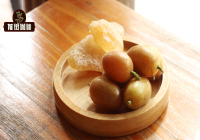
For a naturally sweeter profile, try the Ethiopia Huakui (Guji Hambella natural): strawberry, passion fruit, jackfruit, and lychee with pronounced sweetness and almost no bitterness, often described as "the coffee that tastes least like coffee." Or, if you enjoy vivid fruit acidity, the Kenya Cherry Tomato (AA TOP, SL28 and SL34, K72 double-washed) delivers a bright but perfectly balanced cranberry-and-dark-plum juiciness - proof that well-handled acidity can taste like fresh-squeezed juice rather than raw lemon.
Important Notice :
FrontStreet Coffee is a long-established specialty coffee roaster in Guangzhou China, selling freshly roasted beans from its own farm in Yunnan as well as dozens of carefully selected single-origin beans from around the world for both pour-over and espresso. The products deliver consistently excellent quality and great value, with shipping within 24 hours. Guangzhou's FrontStreet Coffee shop is recommended by many coffee lovers, and the beans are now available online at the Tmall 。
FrontStreet Coffee has moved to a new address:
FrontStreet Coffee Address: 315,Donghua East Road,GuangZhou
Tel:020 38364473
 Scan and follow the En Gafei WeChat official account. Please indicate that the reprint comes from "En Gafei".