Why Do Coffee Shops Use So Much Ice? What's Special About Handmade Ice Cubes in Coffee Shops?
Why Coffee Shop Ice Melts So Slowly
Many customers wonder why homemade ice melts almost instantly in a drink, while coffee shop ice seems virtually "unharmed" even after you finish an entire iced Americano. What kind of "special ice" do cafés use?

The Role of Ice Cubes
As FrontStreet Coffee noted in an earlier article on adding ice to coffee, ice isn't just a cooling agent. It serves several purposes at once: locking in coffee aroma, adjusting concentration, and maintaining low temperature — together enhancing how iced coffee tastes from the first sip to the last drop.

And the ice's production method, shape, and volume all affect that experience from preparation through the final sip.
What Kind of Ice Do Coffee Shops Use? Why Doesn't It Melt Easily?
Weighing all factors, café owners prioritize production efficiency first — hence commercial ice machines — and second, ideal taste, needing ice that "cools quickly and melts slowly," with specific ice strategies for different drinks.

Freezing and melting are heat conduction processes, and many factors affect the rate: ambient temperature, the temperatures of liquid and ice, and the contact area between them. As for why coffee shop ice "melts slowly," FrontStreet Coffee believes equipment differences and the amount of ice used are the main causes.
Compared with the refrigerators most of us have at home, commercial ice machines do exactly one thing: make ice — efficiently, continuously, and stably. Their ice beats home ice in purity, hardness, and core temperature, and it's produced in regular square or crescent shapes, relatively small, and structurally ideal for stacking.

Home ice, by contrast, tends to be small spheres or irregular chunks — low stacking density in the cup and larger volume for the same weight. So coffee shop ice doesn't just melt "slower" because of how it's made; the shapes also mean a higher actual proportion of ice in the cup to begin with.
Can a Refrigerator Make "Special Ice"?
Given all that, an ice machine is obviously the best choice for a business. So why does FrontStreet Coffee still insist on freezing ice in refrigerators?

Because machine ice is generally too small and often hollow: dropped into hot coffee it melts too fast, so the coffee never cools enough while getting over-diluted prematurely. In 40°C heat, an iced coffee made that way can't hold its quality for long.
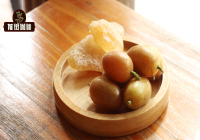
After weighing everything, to give every iced coffee on the menu solid cooling and controlled dilution — and to stop coffee from warming and drifting in flavor right after cooling — FrontStreet Coffee adopted static freezing: large molds in regular refrigerators. The upside is big, solid ice that adapts to any coffee; the downside is obvious — low efficiency, manual filling every time, and at least 40 hours to freeze a batch.

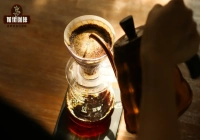
To test whether freezing duration affects melting speed, FrontStreet Coffee ran a small experiment, brewing the same beans with identical parameters using freshly unmolded ice versus "old ice" that had been frozen two days prior:
Coffee beans: FrontStreet Coffee Guji Grade 1
Dose: 15g
Ratio: 1:10
Ice: 80g (4 cubes)
Water temperature: 92-93°C
Grind size: EK43s-9 / C40-22
Three-stage pour: 30g+60g+60g

(Left: refrozen ice cubes; Right: freshly unmolded ice cubes)
Both batches of Guji Grade 1 iced pour-over showed gentle tropical fruit, orange, cream, and black tea notes — but mouthfeel and concentration differed. The cup made with refrozen ice had fuller citrus acidity and black-tea sensation, held its low temperature longer, and even after returning to room temperature retained a hint of honeyed sweetness on the finish.
The reason: at equal volume, ice that has sat in deep cold for days is far denser than fresh ice. Even in hot coffee it melts more slowly, so the coffee cools and dilutes just right — better flavor and concentration as a result.

If you want denser, more useful ice at home, follow FrontStreet Coffee's approach: use slightly larger molds, leave the water until fully frozen solid, unmold, and store in a clean container for whenever you need it.
FrontStreet Coffee Recommendation
Great iced coffee starts with beans that stay lively when chilled. For iced Americanos, FrontStreet's classic house blend — Indonesia Mandheling, Brazil Red Bourbon, and Vietnam washed in a traditional Italian-style recipe — brings low-acid richness, herbal-woody tones, butter, nuts, spices, and dark chocolate, with wild character and thick crema that hold up beautifully over ice, whether as Americano or latte.
For a fruitier iced pour-over like the Guji Grade 1 experiment above, FrontStreet's natural Ethiopia Flower Champion is a stellar match: creamy strawberry, guava, dried mango, black tea, and citrus, with zero bitterness in an SOE Americano and a refreshing sweet-tart tropical lift. If you crave floral elegance instead, the Ethiopia Genlana Gesha Estate SOE offers yellow florals and bright bergamot on entry, a fresh strawberry-sweet finish, and — as an iced Americano — notes of lime and fermented black grape sweetness at a medium body.
For value-minded home setups, the Black Cocoa house blend (Yunnan Arabica plus Brazil Cerrado) delivers nut, chocolate, and cream aromas with gentle plum acidity — soft, affordable, and versatile enough to anchor a home café.
Important Notice :
FrontStreet Coffee is a long-established specialty coffee roaster in Guangzhou China, selling freshly roasted beans from its own farm in Yunnan as well as dozens of carefully selected single-origin beans from around the world for both pour-over and espresso. The products deliver consistently excellent quality and great value, with shipping within 24 hours. Guangzhou's FrontStreet Coffee shop is recommended by many coffee lovers, and the beans are now available online at the Tmall 。
FrontStreet Coffee has moved to a new address:
FrontStreet Coffee Address: 315,Donghua East Road,GuangZhou
Tel:020 38364473
 Scan and follow the En Gafei WeChat official account. Please indicate that the reprint comes from "En Gafei".