What's the Difference Between Freeze-Dried and Instant Coffee? What Does Freeze-Dried Coffee Mean? Which Is Better: Freeze-Dried or Freshly Ground Coffee?
An Introduction to Freeze-Dried Coffee
As freeze-dried foods have gone mainstream, freeze-dried coffee—after years of quietly waiting in the wings—has ridden that wave to become the rising star of the instant coffee world over the past two years. But FrontStreet Coffee has noticed that many people hold misconceptions about it, and they're not small ones.
Some people have recently been brewing freshly ground coffee powder as if it were freeze-dried coffee; others believe freeze-dried coffee performs on par with freshly ground coffee in every respect.

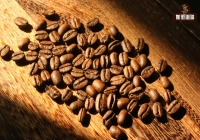
It's easy to see how these misunderstandings arise. Visually, freeze-dried coffee chunks do resemble freshly ground coffee powder (as in the photo above), and businesses routinely market freeze-dried coffee by playing up its similarity to freshly ground coffee. But in reality, the two are entirely different concepts, and comparing them side by side misses the point.
What Exactly Is Freeze-Dried Coffee?
Freshly ground coffee needs no introduction: beans ground fresh and brewed on the spot. Freeze-dried coffee, though, deserves a closer look. Strictly speaking, it's a type of instant coffee—what separates it from traditional instant coffee is the production process. Most traditional instant coffee is made by the spray-drying method invented by Nestlé in 1937, which dries atomized coffee liquid into powder using heat. The process, briefly: coffee is brewed at industrial scale to dissolve its soluble compounds, then a nozzle atomizes the liquid into countless tiny droplets sprayed into a high-temperature drying chamber. Because the droplets are so dispersed, the moisture evaporates almost instantly, leaving powdered instant coffee behind.

The cost is low, which is why spray drying became the mainstream process for traditional instant coffee. But the high heat that evaporates the water also volatilizes the flavor, leaving only coffee's base taste. It's mostly used for budget "2-in-1" and "3-in-1" products and inexpensive instant black coffee.

Freeze-drying is considerably more complex—and that complexity is precisely what preserves more coffee flavor. It starts the same way, dissolving the coffee's compounds, but into a more concentrated liquid. As the image below shows, it's thick as chocolate syrup.

The concentrate is then cooled to around -5°C until it condenses into a paste, then moved to a freezing chamber below -40°C to freeze solid. The frozen blocks are crushed into 2–3mm granules—which is why freeze-dried coffee usually comes in little chunks. The final step sends the granules into a vacuum dryer to sublimate their moisture, the costliest stage of the whole process: under vacuum, water turns directly from ice into gas without ever liquefying. What emerges is freeze-dried coffee. Because the flavor compounds survive the process relatively unscathed, freeze-dried coffee retains far more coffee flavor than spray-dried—but it costs more accordingly. And since it's still instant coffee, you simply reconstitute it with hot water.

Is Freeze-Dried Coffee as Good as Freshly Ground?
To sum up: freeze-dried coffee is instant coffee made through freeze-vacuum-drying technology. Which naturally leads to the question many people still have: if it retains so much flavor, can it taste as good as freshly ground coffee?

Definitely not. Freeze-dried coffee's flavor advantage only holds when compared with traditional instant coffee. Against freshly ground coffee, it falls short in both flavor and mouthfeel. It's the right choice for coffee lovers who want maximum convenience without settling for bottom-shelf quality. But if what you're after is genuine flavor and complexity, freshly ground coffee is still the way to go.
FrontStreet Coffee Recommendation
If you've decided freshly ground is worth the ritual, a single-origin espresso (SOE) is one of the most rewarding places to start—beans traceable to a specific estate or even a single farmer, roasted to showcase one origin's character. A FrontStreet favorite is the Huakui SOE, a natural-process Ethiopian medium roasted for full fermented fruit aromatics and sun-dried sweetness: as espresso it shows red berries, delicate florals, and orange, with citrus-scented crema—bright and elegant in an Americano or a flat white. For something juicier, the FrontStreet Sidra SOE from Colombia's Huilan region (Finca Frontera, grown near volcanic soil, double-anaerobic natural process) bursts with blueberry juice, passion fruit, ripe grape, and apricot sweetness.
If your taste runs to classic, low-acid comfort instead, the FrontStreet Queen Estate Brazil SOE—a Yellow Bourbon from high altitudes with big day-night temperature swings, roasted medium-dark—delivers rich crema with nuts, cream, and peanut aromas and a chocolate finish, while the FrontStreet PWN Golden Mandheling SOE, triple hand-sorted and medium-dark roasted, layers spice, herbs, sandalwood, and caramel into a thick, velvety shot with a dark-chocolate aftertaste. Any of these, ground fresh, will show you exactly what freeze-dried can't.
Important Notice :
FrontStreet Coffee is a long-established specialty coffee roaster in Guangzhou China, selling freshly roasted beans from its own farm in Yunnan as well as dozens of carefully selected single-origin beans from around the world for both pour-over and espresso. The products deliver consistently excellent quality and great value, with shipping within 24 hours. Guangzhou's FrontStreet Coffee shop is recommended by many coffee lovers, and the beans are now available online at the Tmall 。
FrontStreet Coffee has moved to a new address:
FrontStreet Coffee Address: 315,Donghua East Road,GuangZhou
Tel:020 38364473
 Scan and follow the En Gafei WeChat official account. Please indicate that the reprint comes from "En Gafei".