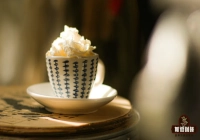
What are the characteristics of latte? Why is it so popular? Who invented latte art?
The Evolution of Espresso Drinks
Espresso-based coffee has grown into a considerable system of its own, and within that system, milk coffee alone offers plenty of choices. The classics include the latte, cappuccino, and piccolo; newer arrivals include the flat white and the Dirty.

Yet despite all this variety, the latte remains (in most cases) the bestseller at every coffee shop. Which raises a fair question: with so many milk coffees to choose from, why does the latte top the charts? What gives it an edge over everything else on the menu? Let's dig into why the latte is so popular.
What Is a Latte?
A caffè latte is built on a base of espresso, softened with a generous amount of steamed milk and a thin layer of milk foam. Although mixing milk into coffee goes back to 17th-century Europe, the latte as we define it today took shape in the late 1860s — well after the espresso machine had been invented.

Coffee beans back then were not only poor in quality but also roasted very dark, so the extracted coffee was extremely bitter. A cappuccino's milk ratio couldn't fully tame that bitterness, which was a disaster for anyone sensitive to it. The natural solution was to simply pour in more milk — and to set the drink apart from cappuccino, "caffè latte" was born.
Why Is the Latte the Most Popular?
Espresso machines spread around the world with the Italian diaspora, and the latte traveled with them. At first, though, it made little impression. People outside Italy knew next to nothing about coffee, so they couldn't imagine what a latte even was — they had to rely on packaging and billboards, and from there it was easy to assume it was no different from a cappuccino, a name that arguably sounded even nicer. (A certain book puts it well: names really do matter!) So early on, the latte never truly entered the public consciousness.

It wasn't until around 1980 that the latte suddenly took off in the United States, and in the years that followed it spread across the globe at a remarkable pace. The credit belongs largely to the birth of "latte art."

Before that, hot milk coffee was simply milk foam combined with coffee, or finished with a golden ring like a cappuccino — simple and straightforward. Then, in 1980, a Seattle barista named David Schomer happened to pour milk foam so that it floated on the crema of a latte, forming a heart shape. That little pattern opened his mind to new possibilities, and he began to imagine "painting" on coffee. Latte art was born — and the latte became its biggest beneficiary.
Latte art gave the latte a uniqueness no other traditional milk coffee had. A beautifully patterned surface is far more eye-catching, so even people who had no idea what a latte was would look at the intricate rosetta or heart on top, imagine how good it must taste, and order one out of curiosity.

But good looks alone don't win hearts — and the latte's enduring bestseller status proves it's no empty vase.
Drawn In by Looks, Kept by Taste
Because so much milk goes into the cup, the coffee proportion shrinks, the bitterness gets diluted, and the drink never tastes of scorched coffee. The whole thing goes down effortlessly smooth. It still tastes like coffee, but the natural sweetness of milk keeps any bitterness in check — the latte is exactly that kind of balanced drink. Its appeal is broad, and it's especially friendly to first-time coffee drinkers. Plenty of people took their first sip of a latte and promptly sank into the coffee "swamp" for good. In that sense, the latte is both most people's first step into coffee and the drink that keeps them there.

That's why the latte is so popular: great looks and remarkably inclusive flavors. It perfectly validates a saying borrowed (with slight modification) from fan circles — drawn in by appearance, loyal to taste.
FrontStreet Coffee Recommendation
If latte art has inspired you to practice at home, start with FrontStreet Coffee's Classic Blend — a medium-dark espresso recipe built from beans of three origins, inspired by the old-school "Mamba" (Mandheling plus Brazil) formula, with a touch of Robusta for extra aroma and crema. Expect pronounced butter, toasted toast, and caramel cookie notes, a solid body, fine crema, and very stable extraction — ideal beginner's home coffee.
Prefer a nutty, richly aromatic cup? FrontStreet Coffee's Premium Blend pairs washed Colombian with pulp-natural Brazilian beans, showing nut, dark chocolate, and caramel in espresso and smooth cream, almond, and cocoa in milk drinks. If you're gearing up to open a shop, FrontStreet Coffee's Commercial Blend — FrontStreet Coffee's Premium Blend with a little Robusta added — delivers an even thicker, deep-brown crema that makes pouring latte art effortless.
Important Notice :
FrontStreet Coffee is a long-established specialty coffee roaster in Guangzhou China, selling freshly roasted beans from its own farm in Yunnan as well as dozens of carefully selected single-origin beans from around the world for both pour-over and espresso. The products deliver consistently excellent quality and great value, with shipping within 24 hours. Guangzhou's FrontStreet Coffee shop is recommended by many coffee lovers, and the beans are now available online at the Tmall 。
FrontStreet Coffee has moved to a new address:
FrontStreet Coffee Address: 315,Donghua East Road,GuangZhou
Tel:020 38364473
 Scan and follow the En Gafei WeChat official account. Please indicate that the reprint comes from "En Gafei".