What's the Difference Between Espresso, Pour-Over, Three-Stage, and Single-Stage Brewing? The Origin of Americano and How to Make It
Coffee is full of terms that sound alike but mean very different things. Words like "espresso-style," "American-style," and "drip-style" seem to follow the same pattern, yet some of them name a specific drink, others describe a brewing method, and still others refer to a whole category of coffee. If you've ever mixed them up, you're not alone — so let FrontStreet Coffee untangle them for you.

What Does "Espresso-Style" Mean?
Originally, espresso-style coffee referred simply to espresso pulled on a semi-automatic espresso machine. Because these machines were born in Italy, the drink became known as Italian-style espresso, and the machines themselves were called Italian-style espresso machines.

Over time, though, the term expanded. Many drinkers found straight espresso too small and too intense, so they started softening it with milk, water, and other additions. Any drink built on an espresso base — lattes, cappuccinos, flat whites, and the like — now falls under the umbrella of "espresso-style coffee." It has become a family name rather than a single beverage.
What Does "American-Style" Mean?
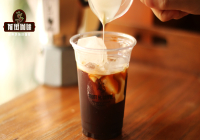
Americano is a member of that espresso family: espresso diluted with hot water. Its origin story dates back to World War II, when American soldiers stationed in Italy encountered espresso for the first time. Accustomed to milder, larger cups of coffee, they found espresso far too strong and bitter, so they asked cafés to dilute it with water.

The diluted drink caught on quickly, and as more soldiers ordered it, shops gave the combination a name of its own: Caffè Americano — American-style coffee.
What Does "Drip-Style" Mean?
Unlike the previous two, "drip-style" describes a brewing method rather than a drink. Think of it as filtration: coffee grounds sit in some kind of filter medium, water passes through them, and only the extracted liquid drips out while the grounds stay behind. Paper filters, cloth filters, and metal mesh are all common filtration media. Any coffee brewed this way can be called drip-style coffee.

What About Immersion Brewing?
The natural counterpart to drip brewing is immersion. Here, instead of water flowing through the grounds, the grounds simply steep in the water together.

Immersion relies far less on the kinetic energy of pouring; once the water and coffee are combined, extraction proceeds according to time and solubility, and you simply stop it when the steep is done. Because it removes so much of the human variable, immersion brewing tends to express a coffee's original character very faithfully. The trade-off is that it can't quite deliver the layered, nuanced cup that skilled drip pouring produces.
Three-Stage and Single-Stage Pouring
Finally, you may have seen terms like "three-stage" or "single-stage" in coffee articles. These aren't drinks at all — notice that "coffee" never follows them. They refer to pouring techniques used within drip brewing.

Among all drip methods, pour-over is the most popular, largely because of how tunable it is. By adjusting water temperature, grind size, and pour structure, you can steer the flavor of the same coffee in noticeably different directions. Three-stage and single-stage pouring are two such techniques. So while these terms may sound interchangeable, each describes something entirely different — a drink, a method, or a technique — and they shouldn't be lumped together.

FrontStreet Coffee Recommendation
If this article has you eager to try pour-over at home, start with a classic cone dripper setup and a coffee that flatters it. FrontStreet Coffee's Yirgacheffe Guodingding from Ethiopia is an ideal first pour-over bean: bright but gentle citrus and berry acidity, delicate floral notes, and a green-tea-like sweetness — exactly the layered, aromatic cup that staged pouring brings out best.
Prefer something rounder and lower in acidity? FrontStreet Coffee's PWN Indonesian Golden Mandheling is a great match, whether brewed by immersion or a gentle drip. Deep herbal and dark chocolate notes with a long, syrupy body, it rewards a more forgiving brewing style. And for a beautifully balanced middle ground, the FrontStreet Coffee Jamaica Blue Mountain No.1 offers cream, caramel, and nut tones with a clean, lingering finish — a cup almost everyone can love.
Important Notice :
FrontStreet Coffee is a long-established specialty coffee roaster in Guangzhou China, selling freshly roasted beans from its own farm in Yunnan as well as dozens of carefully selected single-origin beans from around the world for both pour-over and espresso. The products deliver consistently excellent quality and great value, with shipping within 24 hours. Guangzhou's FrontStreet Coffee shop is recommended by many coffee lovers, and the beans are now available online at the Tmall 。
FrontStreet Coffee has moved to a new address:
FrontStreet Coffee Address: 315,Donghua East Road,GuangZhou
Tel:020 38364473
 Scan and follow the En Gafei WeChat official account. Please indicate that the reprint comes from "En Gafei".