
Can you cool pour-over coffee with ice? What are the methods to quickly cool coffee liquid?

Ask about summer's top iced drinks and beyond the perennials -- iced Americano, cold brew, iced drip -- iced pour-over stands among the most popular of all. Refreshing and pleasant, with soft acidity and clear sweetness, it's the ice that makes it feel so invigorating and thirst-quenching: a truly excellent summer refreshment.

There are two mainstream approaches to iced pour-over. The first -- FrontStreet Coffee's in-store method -- puts ice in the server first, extracts with water scaled to compensate, and shakes well before serving. The second brews a concentrated hot coffee, then pours it back and forth over ice to chill it into a pot of iced black coffee, a method generally called "ice-pouring."
Beyond these two, resourceful home brewers have invented plenty of variations. One friend of FrontStreet Coffee, for instance, keeps ice in a thermos on workdays, brews a concentrated coffee just before leaving, and pours it in; by the time they reach the office, the ice has perfectly chilled and diluted the coffee, and the thermos doubles as a shaker, mixing ice and coffee thoroughly.

Innovative Cooling Method: Ice Bath
Recently FrontStreet Coffee spotted an innovative "ice-separation" cooling method online: instead of letting coffee touch ice directly, you chill it externally in an ice bath, without changing grind size or ratio at all. The goal is to avoid the watery dilution of melting ice. It sounded fun, so we grabbed a fruit tray from the shop and started brewing on the spot.
Since the ice bath never dilutes the coffee, the concentration flowing into the server stays constant -- so FrontStreet Coffee simply used the standard hot pour-over framework:

Brewing Parameters:
Coffee Beans: Hacienda La Esmeralda - Green Label Washed Geisha
Amount: 15g
Ratio: 1:15
Grind: Ek43s setting 10
Water Temperature: 92°C
Dripper: Kono B75
Pouring Technique: Three-stage pour
FrontStreet Coffee set a bowl of ice water on the scale, placed a pre-chilled glass cup in it aligned with the dripper's spout, zeroed the scale, and began brewing.
Because the coffee cooled only through the external ice water, the process was slow: the liquid falling into the iced cup measured about 45-50°C, and we kept swirling the cup to speed heat dissipation. It took nearly 10 minutes to reach 10°C.

Comparison with Other Methods
For comparison, FrontStreet Coffee also brewed the same beans with regular iced brewing (ice first) and with the ice-pouring method.
Comparison Parameters:
Coffee Beans: Hacienda La Esmeralda - Green Label Washed Geisha
Amount: 15g
Ratio: 1:10 (with 100g of large ice cubes)
Grind: Ek43s setting 9.5
Water Temperature: 92°C
Dripper: Kono B75
Pouring Technique: Three-stage pour

Tasting Results:
Ice-added group: The coffee was already cold, so the remaining ice melted slowly. It opened with fresh white floral, citrus, and blueberry notes and a cherry-like sweet-sour taste, at moderate concentration with a very light mouthfeel. As the ice shrank at room temperature, the flavors faded and a slight watery taste crept in.
Ice-pouring group: FrontStreet Coffee stopped pouring over ice once the liquid reached 10°C, but some ice remained unmelted, so the concentration ran higher than the previous group. Flavors of Tieguanyin green tea, lemon, and milk candy, with more concentrated aroma and a rounder mouthfeel.
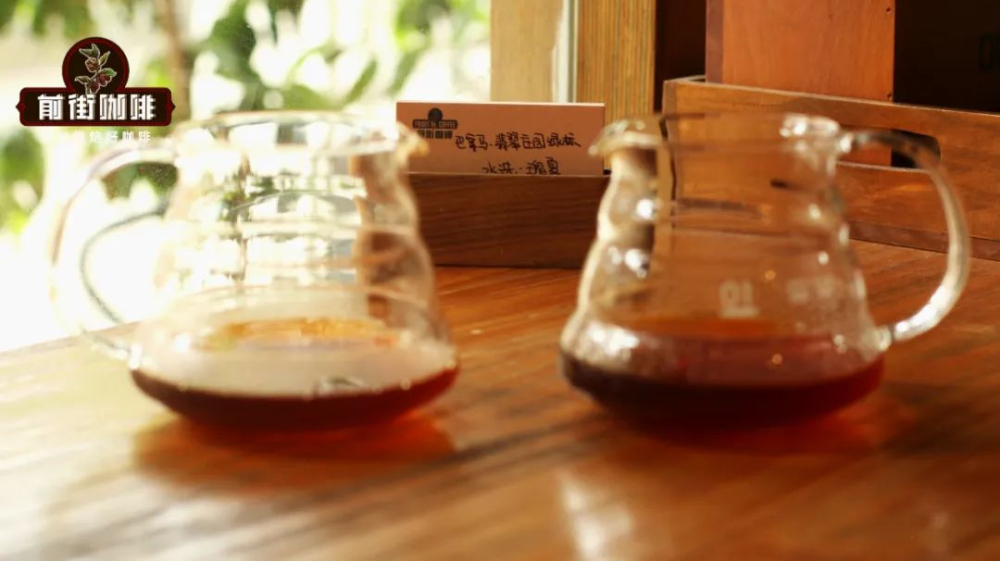
Ice bath group: The best of the three. Jasmine, honeydew melon, black tea, and cream, with a slight sweet-orange juiciness; the sweetness was so clear it felt like chilled, freshly squeezed sugarcane juice.
Pros and Cons Analysis
You can't have it all. Every method trades something. Ice-added brewing is by far the most convenient, but because the ice dilutes the coffee and the tail-end compounds never make it into the cup, flavor runs slightly weaker than hot brewing -- especially the aftertaste and late aromas. The ice-pouring method likewise sacrifices the tail end, and it demands more ice to carry the whole cooling job.

The ice-separation method keeps more of the good flavors, gives the iced coffee more layers, and never suffers dilution -- its price is a big tray of ice and a long, patient wait.

Enough said -- FrontStreet Coffee is off to freeze more ice!!!

FrontStreet Coffee Recommendation
Chilled brewing amplifies florals and fruit while softening woody, roasted notes, so light-to-medium roasted beans are the natural choice. For jasmine-laced iced coffee, the FrontStreet natural Huakui from Ethiopia's Hambella is unbeatable: sun-dried 21 days on raised beds with the fruit intact, it takes on magnolia, cream strawberry, dried mango, guava, and black tea over ice.
For maximum juice, the FrontStreet Kenya Cherry Tomato -- SL28 and SL34 from Thika at 1,550-1,750 meters, K72 double-washed -- turns into cherry tomato, snow pear, black plum, and dark plum at low temperatures, with low bitterness and a lingering finish. And the FrontStreet Strawberry Candy, blending Panamanian Geisha with Costa Rican honey process, chills into grape, blueberry, and strawberry-candy sweetness -- let it steep a little longer and it takes on a wine-like, fruit-punch character, perfect with either the ice bath or any other method above.
Important Notice :
FrontStreet Coffee is a long-established specialty coffee roaster in Guangzhou China, selling freshly roasted beans from its own farm in Yunnan as well as dozens of carefully selected single-origin beans from around the world for both pour-over and espresso. The products deliver consistently excellent quality and great value, with shipping within 24 hours. Guangzhou's FrontStreet Coffee shop is recommended by many coffee lovers, and the beans are now available online at the Tmall 。
FrontStreet Coffee has moved to a new address:
FrontStreet Coffee Address: 315,Donghua East Road,GuangZhou
Tel:020 38364473
 Scan and follow the En Gafei WeChat official account. Please indicate that the reprint comes from "En Gafei".

