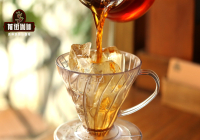
Can Boiling Water Be Used to Brew Coffee? What's the Ideal Water Temperature for Pour-Over? Must It Be 92°C?
Can You Brew Coffee with 100°C Boiling Water?
During an ordinary brew session, a customer asked FrontStreet Coffee: "Why does nobody brew coffee with 100°C boiling water?"

Water temperature is the first parameter most brewers learn to tune, functioning as a dial for extraction speed. Flip through any brewing guide and you'll find temperature recommendations clustered in the conservative band of 86–93°C. Almost nobody extracts below 80°C or above 95°C, because we know that staying inside that range guards against both over-extraction and under-extraction.
So what actually happens with boiling water? There's one way to find out — brew it and see.

Experiment Setup
FrontStreet Coffee ran this as a two-group comparison. With all other parameters held constant, each coffee was brewed once at its usual temperature and once with boiling water — four pots in total. We picked two beans at opposite roast levels: a dark roast built on rich bitterness, and a light roast built on fruit acidity.
Coffee Bean: Colombia · Dividing Line Large Navel (Medium-Light Roast)
Dose: 15g
Water Ratio: 1:15
Grind Size: EK43s setting 9.5
Dripper: Hario V60
Pouring Method: Three-stage pour

93°C Group: TDS 1.27% / Coffee Temperature 30°C
The regular-temperature brew showed a very full aroma: a refreshing blackcurrant-juice character up front, with fine textures of blueberry and ripe hawthorn behind it. The aroma and flavor lingered on the palate, acidity leading sweetness, layered and deeply memorable.
Boiling Water Group: TDS 1.53% / Coffee Temperature 31.5°C
Brewed with boiling water, the same bean showed passion fruit and black grape aromas, with a prominent, assertive orange-like acidity — but it lost some of the fermented charm and spice notes of ripe fruit. Fewer layers than the regular group, yet still a perfectly respectable fruit-acid coffee.

The Dark Roast Experiment
For the second group, FrontStreet Coffee selected a dark roast.
Coffee Bean: Indonesia · Mandheling (Medium-Dark Roast)
Dose: 15g
Water Ratio: 1:15
Grind Size: EK43s setting 10.5
Dripper: KONO
Pouring Method: Three-stage pour
88°C Group: Concentration 1.38% / Coffee Temperature 29.6°C
The control brew delivered Mandheling's classic chocolate and nut aromas, a creamy smooth entry, and the sweet aftertaste of Pu'er tea. The mouthfeel was clear yet rich, and even fully cooled the cup showed no negative flavors.

Boiling Water Group: Concentration 1.56% / Coffee Temperature 32.8°C
With the water far hotter than the control, the brew carried a slight smoky edge. Bitterness and impurities dominated the entry, and an obvious astringency clung to the tongue after swallowing — FrontStreet Coffee thought of an unripe green plum. Once cooled, the whole cup of Mandheling turned into "herbal medicine soup," burnt wood flavors filling the mouth.
The Science Behind Water Temperature
Strip pour-over down to its parameters and set technique and flavor aside for a moment, considering only water temperature's effect on extraction rate, and the answer is simple: the hotter the water, the faster compounds dissolve; the cooler the water, the longer it takes. This is exactly why, when we want to speed up extraction, we usually raise the water temperature by 2–3°C to pull more flavor compounds within the same brew time.

Light roast coffee is built largely on acidic components, and higher temperatures release those strong acids more readily — hence the standard recommendation of 91–93°C.
As roasting deepens, flavor compounds progressively caramelize and the surface of the cup develops mellow sweetness, burnt aroma, smokiness, and richness — the familiar "coffee flavor." Unpleasant flavors also accumulate toward the end of extraction, so to keep roasted bitterness from taking over, we brew darker roasts slightly cooler, typically at 86–88°C.

Conclusion
The comparison speaks for itself: whether the coffee is a sweet dark roast or a bright light one, 100°C boiling water is clearly not the ideal brewing temperature. Compared with our usual references, boiling water runs at least 7°C — and as much as 14°C — above standard. Extraction efficiency rises accordingly, and the rule of thumb holds: acidic coffee turns more acidic, and bitter coffee more bitter.
FrontStreet Coffee Recommendation
The light roast in this experiment, and its stablemates, all come from FrontStreet Coffee's Colombia lineup:
FrontStreet Colombia Dividing Line Estate Sidra — a champion-caliber Sidra grown at 1,650–1,800 meters, double anaerobic natural processed and roasted medium-light to preserve its native fruit character. Jasmine and citrus in the dry aroma; passion fruit, blueberry, grape, and apricot in a juicy, layered cup — brewed hot or as an iced pour-over, where it shows a refreshing grape-juice smoothness.
FrontStreet Colombia Washed Huila — from the hills of southern Huila, planted above 1,500 meters. Medium-dark roasted to bring out black chocolate and nutty sweetness with moderate body — comfortable in a pour-over or French press, and equally capable of moka pot and espresso duty.
FrontStreet Premium Blend — for home espresso machines and moka pots. Brazil's creamy nuttiness meets Colombia's dark chocolate bitterness, crowned with fine golden crema; lush and smooth with milk in a latte, and a friendly base for americanos, cappuccinos, and mochas.
Important Notice :
FrontStreet Coffee is a long-established specialty coffee roaster in Guangzhou China, selling freshly roasted beans from its own farm in Yunnan as well as dozens of carefully selected single-origin beans from around the world for both pour-over and espresso. The products deliver consistently excellent quality and great value, with shipping within 24 hours. Guangzhou's FrontStreet Coffee shop is recommended by many coffee lovers, and the beans are now available online at the Tmall 。
FrontStreet Coffee has moved to a new address:
FrontStreet Coffee Address: 315,Donghua East Road,GuangZhou
Tel:020 38364473
 Scan and follow the En Gafei WeChat official account. Please indicate that the reprint comes from "En Gafei".