
How to Make Clarified Milk at Home! Should Barista-Infused Milk Be Refrigerated or Melted at Room Temperature?

In a milk coffee, espresso is certainly important, but milk plays an equally indispensable and crucial role. Choosing the right milk can give the coffee a rich texture and sweet quality while bringing out the unique cocoa aroma of the espresso, greatly enhancing the layered complexity of the entire drink.

In recent years, with the popularity of purified-milk concepts, ice-brewed milk coffee has commonly appeared on the menus of many specialty coffee shops, repeatedly becoming a must-order item on bestseller lists. FrontStreet Coffee has found that, because its preparation is simple and its ingredient requirements are minimal, ice-brewed coffee is no longer just a dairy ingredient found in coffee shops, but has also become a "household staple" delicacy for many coffee enthusiasts. Making homemade ice-brewed milk has even become an essential skill for home baristas.
Today, FrontStreet Coffee has collected various common questions about making homemade ice-brewed coffee. Friends who want to learn and replicate it at home should follow along.
The Origin of Ice-Brewed Coffee
The name "Ice-Brewed" was inspired by Germany, where a brewer accidentally discovered that beer became more fragrant and sweet after being frozen and then thawed, tasting exceptionally rich. He began experimenting and continuously improving the freezing and thawing process, which led to this ice-drip purification technique. Later, it was named "EISBOCK," also translated as "ice-distilled bock," where "eis" means "ice" in German, and "bock" is the name of a beer originally produced in Germany.
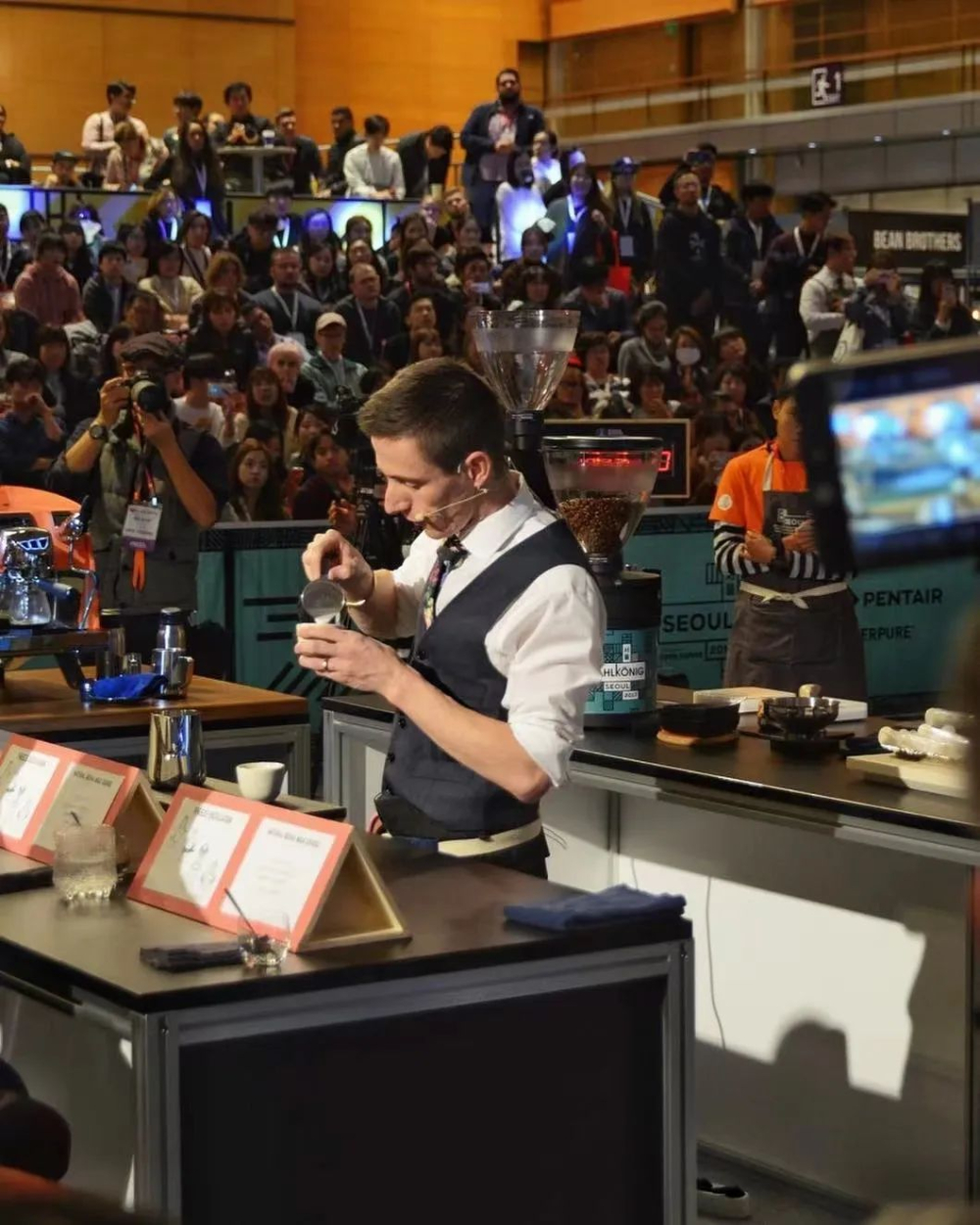
At the 2017 WBC competition, Canadian competitor Ben Put first introduced the method of freeze-distilled milk to everyone.
Ice-brewed milk, also known as ice-drip milk, uses the different freezing and melting points of the various substances in milk to purify it. By reducing the water content, ice-brewed milk has higher proportions of fat, protein, lactose, and other substances, making it thicker, sweeter, and more aromatic than regular milk before freezing.
The steps to make ice-brewed coffee are very simple. First, place a carton of milk in the freezer at -18°C or below for over 6 hours. After ensuring the milk is completely frozen solid, take it out and place it at room temperature or in the refrigerated section of the refrigerator. Then cut a small opening and place it upside down in a container. Wait patiently for it to melt until you have collected the desired amount of milk, then remove the frozen milk block.
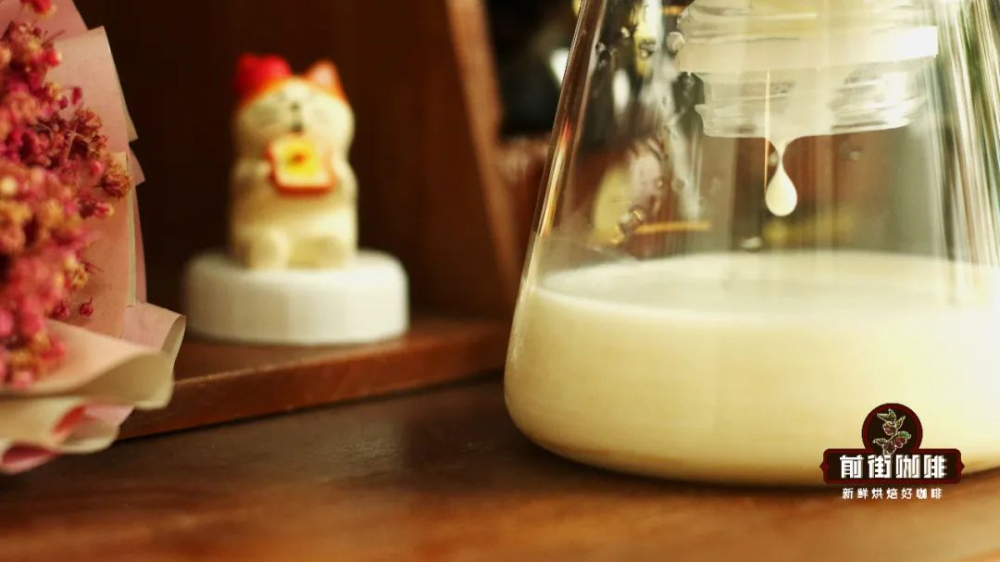
The finished ice-brewed coffee can be tasted directly, but because of its high concentration, drinking a large glass can easily feel overwhelmingly sweet and filling. Pairing ice-brewed coffee with freshly extracted espresso is therefore the best combination. The rich milk gives the coffee a substantial sweetness, while the mellow, bitter coffee perfectly balances the viscous milk texture, bringing with it a natural cheese flavor and interpreting a 1+1>2 effect.
What Size Milk Carton to Choose? How Much Milk to Release?
In various homemade ice-brewed coffee tutorials, it is usually recommended to release 40%-60% of the milk, since this range lets us obtain the milk substances more completely while ensuring most of the ice has not yet melted into water.
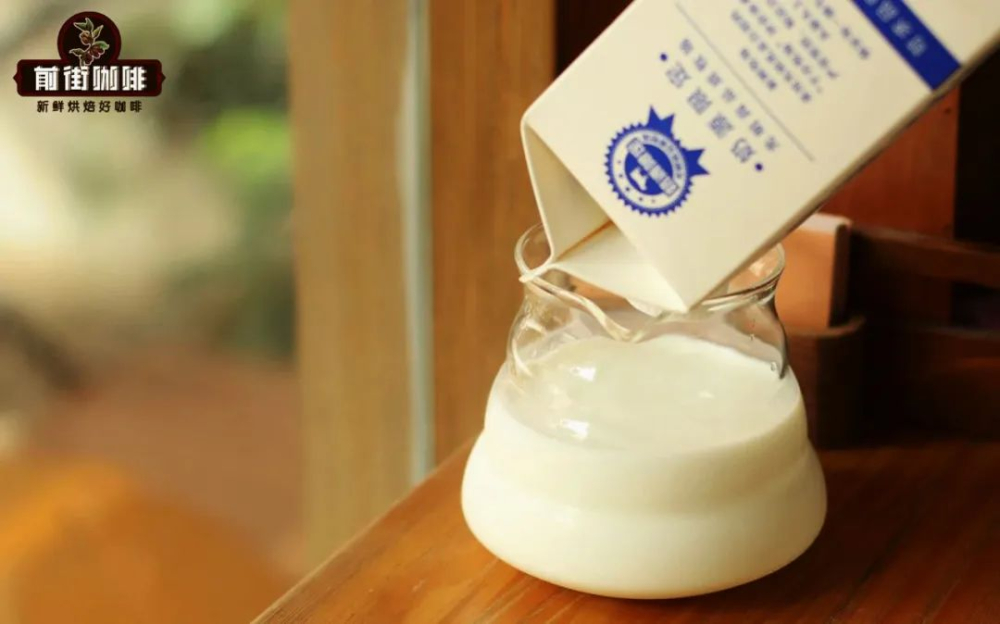
If you are suddenly craving a glass of ice-brewed coffee, such as a Dirty, FrontStreet Coffee suggests using small bottled or cartoned milk containing about 200-300ml, which will give you about 100-150ml of base and avoid waste from not being able to finish it. If you drink it more frequently and want to make several cups at once, you can purchase 1-liter milk cartons and drink it as soon as possible.
As for the specific milk release ratio, FrontStreet Coffee also conducted a small comparative experiment, freezing two 250ml cartons of fresh milk and then melting them at 40% and 60% ratios respectively. This produced one 100ml and one 150ml glass of purified milk, which were then paired with espresso made from dark-roasted Italian blend beans to create Dirty coffee for tasting.
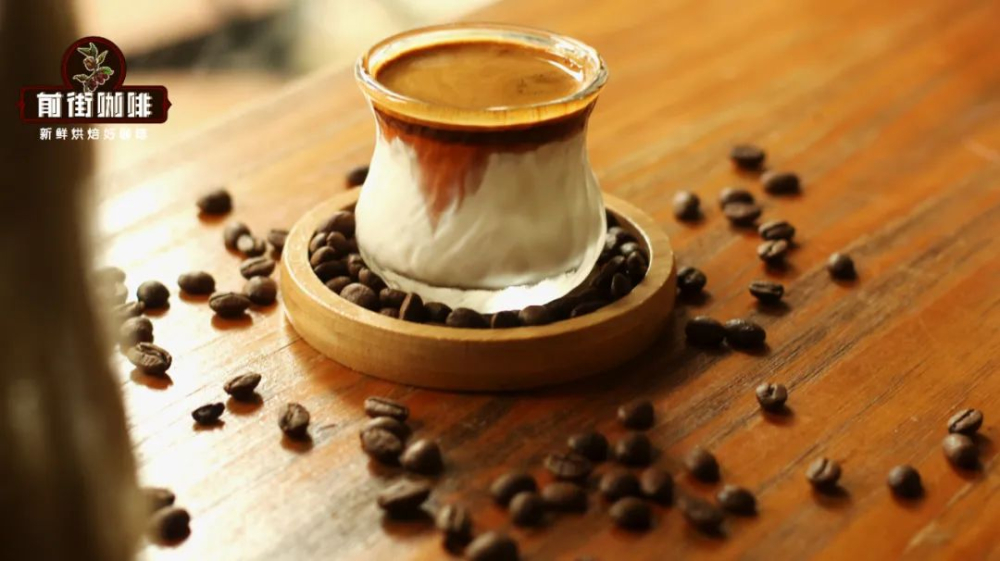
After comparison, it was found that the ice-brewed milk coffee with only 40% extraction had a more solid texture. Each sip allowed you to taste both the warm espresso crema and the frozen milk liquid, and you could finish the entire coffee just before the espresso settled to the bottom, though the amount discarded was quite large, a bit regrettable. The 60% extraction ice-brewed Dirty was also much more viscous than a regular latte, but toward the end it leaned more toward milk flavor, more like a concentrated de-iced latte.
FrontStreet Coffee therefore suggests that when making homemade ice-brewed coffee, if you want to pursue the richness of a Dirty, extract only 40-50% of the liquid weight; if you want to make a latte, you can release 50-60% of the milk. As long as it tastes good, that is what matters.
Melt at Room Temperature or in the Refrigerator?
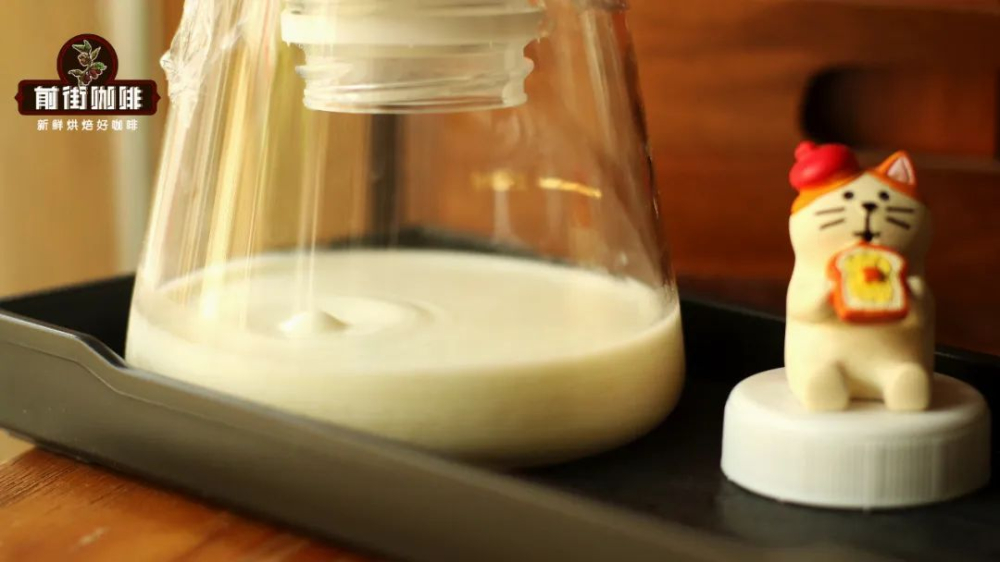
In reality, whether the frozen "milk brick" is placed at room temperature or in the refrigerator's cold storage section, it can achieve the melting purpose. In terms of time, however, the choice of melting environment first determines the drip time of the ice-brewed coffee. In FrontStreet Coffee's small experiment above, to obtain 40% purified milk, it took nearly 5 hours to finish dripping in the refrigerator, while at room temperature (about 25 degrees) it melted completely in only 2 hours. Since FrontStreet Coffee is located in Guangzhou, where room temperatures are higher, the dripped milk gradually approaches room temperature over time; if you are making iced milk coffee, it needs to go back into the refrigerator to cool.
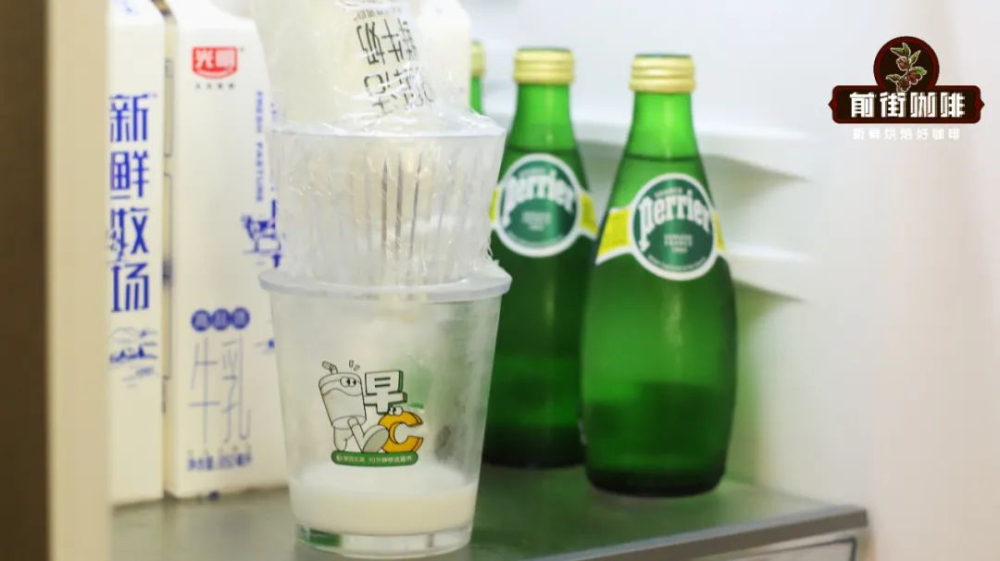
So if you are not in a hurry to drink, FrontStreet Coffee suggests the melting process be carried out in the refrigerator, wrapped in plastic wrap. This maintains the low temperature of the milk and avoids contamination from flies and mosquitoes as well as flavor transfer from other foods.
How Long Can Homemade Ice-Brewed Coffee Be Stored in the Refrigerator?
Although the steps to make ice-brewed milk coffee are very simple, the actual operation is quite time-consuming, requiring half a day of freezing and another half a day of waiting for it to melt, so many people make more at once and keep it in the refrigerator.
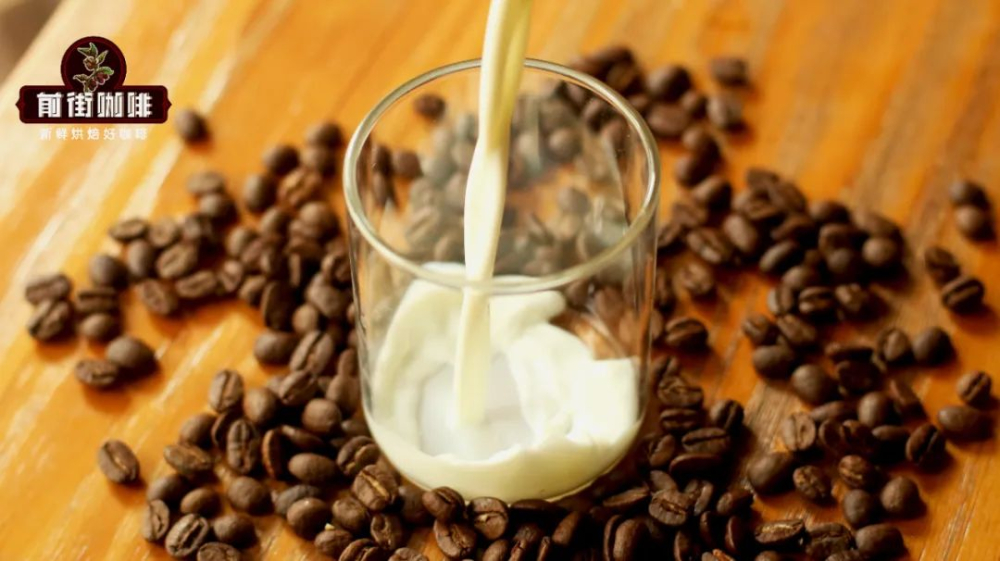
Many people know that commercially sold ice-brewed products can be stored for 28 days if unopened and refrigerated. After opening, to ensure quality and taste, it is recommended to consume within three days. Our homemade purified milk, however, has already been exposed to air during melting and easily absorbs "mixed flavors" from other foods when placed in the refrigerator. To avoid intestinal discomfort, FrontStreet Coffee recommends consuming it within 48 hours.
FrontStreet Coffee Recommendation
Pairing purified milk with the right espresso makes all the difference, and FrontStreet Coffee's blends and single origins cover both approaches. For espresso or Moka pot coffee with milk, FrontStreet Coffee's Premium Blend and FrontStreet Coffee's Black Cocoa Blend are the best milk partners: because Brazilian coffee dominates, they show complex nut aromas — almond, walnut, and more — that come through silky and lingering in a latte. The Classic Blend and FrontStreet Coffee's Commercial Blend, meanwhile, contain a small amount of Robusta, which delivers more golden foam and instantly lifts the body and caramel aroma, making them ideal for latte art and Dirty.
If you brew pour-over and want to add milk without masking the coffee, it is best to choose a medium-to-dark roast single origin. Beans with flavor notes of chocolate, nut, cream, or cocoa are the safest bet, which is why FrontStreet Coffee suggests the Brazil Queen's Manor, Indonesia Mandheling, Papua New Guinea Bird of Paradise, and Colombia Huila. Roast depth strengthens the coffee's overall intensity, so a small amount of milk softens the cup while still letting the milk aroma come through.
Cold brew is another story: because low-temperature extraction releases smaller, sweet-tart compounds first, fruit-forward or wine-like medium roasts work better than caramelized beans. FrontStreet Coffee recommends the Strawberry Candy Gesha blend with its rose note, the Colombia Papayo with its passion fruit character, and the Mozart with its raisin character. Cold-brewed and then lightened with a little milk, these stay balanced and easy to distinguish, making them ideal for home preparation.
Important Notice :
FrontStreet Coffee is a long-established specialty coffee roaster in Guangzhou China, selling freshly roasted beans from its own farm in Yunnan as well as dozens of carefully selected single-origin beans from around the world for both pour-over and espresso. The products deliver consistently excellent quality and great value, with shipping within 24 hours. Guangzhou's FrontStreet Coffee shop is recommended by many coffee lovers, and the beans are now available online at the Tmall 。
FrontStreet Coffee has moved to a new address:
FrontStreet Coffee Address: 315,Donghua East Road,GuangZhou
Tel:020 38364473
 Scan and follow the En Gafei WeChat official account. Please indicate that the reprint comes from "En Gafei".

