How to Make Iced Pour-Over Coffee at Home? When Should You Use the Stirring Method vs. the Single-Stage Method?
Yesterday, a customer who had just bought coffee beans asked FrontStreet Coffee about moving from the hot pour-over they were used to, with its nearly fixed parameters, to the cold pour-over they had recently fallen for in the shop. They wanted to know whether they could replicate it at home, and what parameters needed adjusting when switching from hot to cold.
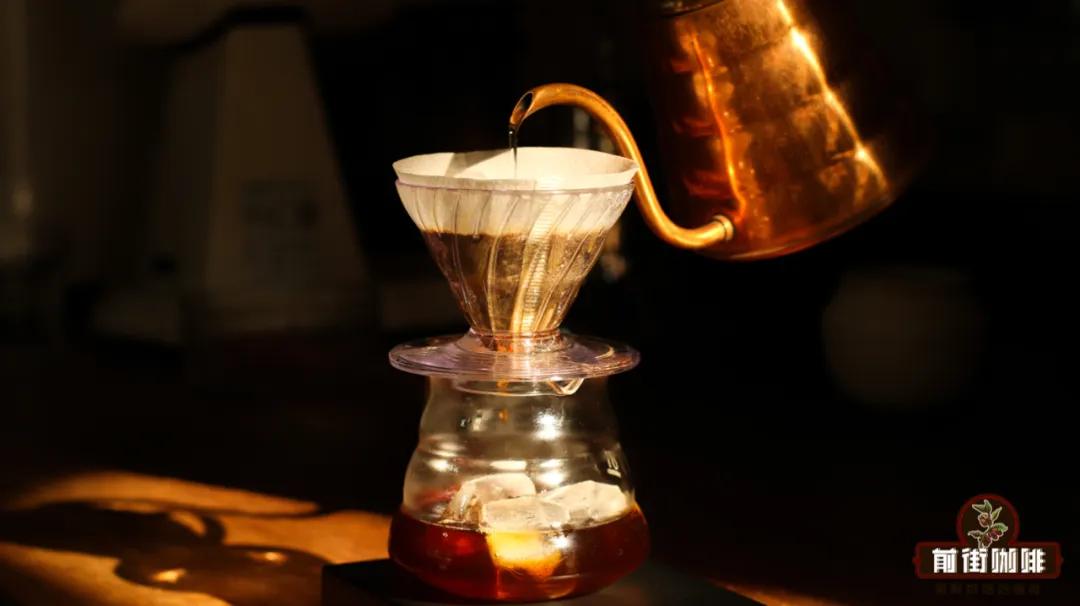
Remember! Cold Pour-Over is Not "Pour-Over Coffee Plus Ice"
Cold pour-over is a brewing method that uses ice to rapidly cool the coffee liquid in a short time while appropriately diluting the extraction, which is why it is also called "rapid cooling pour-over." It is not only the standard serving method in mainstream independent coffee shops but also a beloved home brewing method for countless pour-over enthusiasts.
FrontStreet Coffee has noticed that some tutorials describe cold pour-over as "hot coffee plus ice cubes," which blurs the two. In reality, a coffee brewed at a preset ratio such as 1:15 is already within an appropriate concentration range. Add extra ice on top of that and the coffee will most likely turn thin as water. So if you want coffee that is both refreshingly cold and still full of aromatic layers, we need to adjust parameters based on hot pour-over brewing.
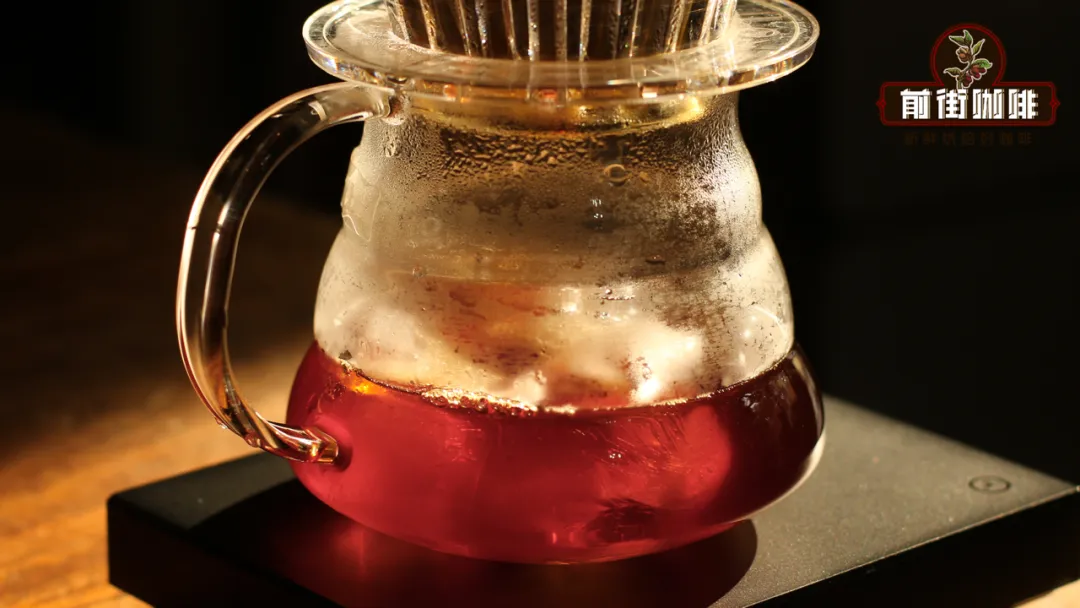
Breaking Down Cold Pour-Over Parameters
Break down the framework of cold pour-over and we can identify six parameters: coffee amount, water amount, ice amount, grind size, water temperature, and time. Put simply, the coffee amount depends on how large a cup you want to drink; the water temperature depends on the roast level of your beans, with 86-88°C for medium-dark roasts and 90-93°C for medium-light roasts; and time is mainly influenced by technique and flow rate. What remains are the coffee-to-ice-to-water ratio and the grind size.
Ice and Hot Water: A 4:6 Ratio
Precisely because of the added factor of ice, the first thing to consider in cold pour-over is the amount and use of the ice. Here, ice serves two purposes: cooling and dilution. The optimal amount of ice should ensure that when it melts completely into water, the coffee liquid reaches an ideal drinking concentration while being sufficiently cold.
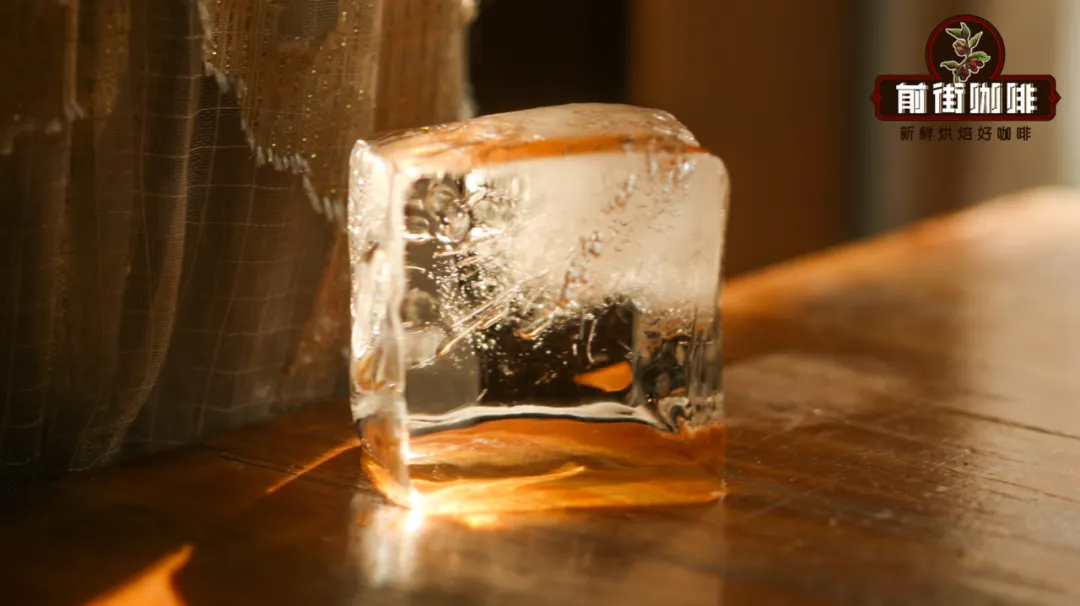
To that end, WBC champion James Hoffmann ran extensive cold brewing experiments, comparing different ice amounts across multiple batches of coffee and measuring the final temperatures. He found that once the liquid cooled to around 5°C, the remaining ice in every coffee melted slowly and the temperature gradually stabilized. At that point, no matter how much more ice was added, the coffee could not get any colder. The portion of ice that had already melted into water, then, is the optimal amount we are after.
Of course, the actual amount of ice used should also account for its quality. James compared coffee brewed with -18°C ice against -20°C ice and found that colder ice melts more slowly and cools more efficiently. With the same extraction parameters, higher-quality ice yields a sufficiently cold pour-over coffee faster. If your home freezer cools well and your molds are large enough, the ice will be denser and you can use less of it. But if you are using ice from an ice maker or small, not-cold-enough particles, you will need more ice to cool the coffee.
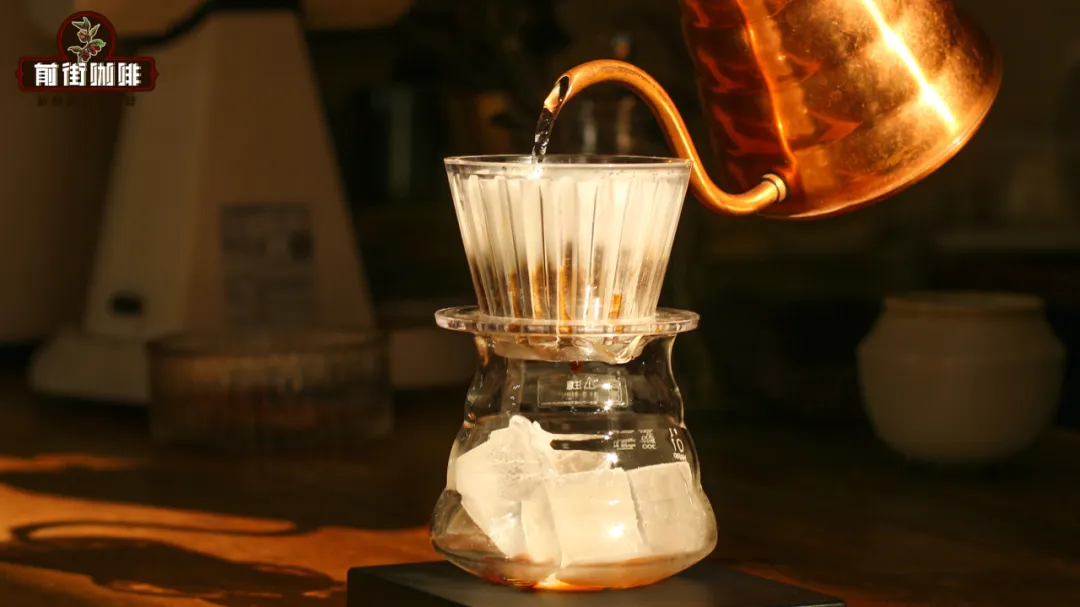
After analyzing the data, James concluded that the ice-to-water ratio can be controlled at 4:6. FrontStreet Coffee's standard single serving, for example, uses 15 grams of coffee with a 1:15 coffee-to-water ratio for hot brewing, which corresponds to cold brew parameters of 90 grams of ice plus 135 grams of hot water. When the ice temperature is sufficiently low, the ice proportion can be reduced to roughly 80 grams of ice plus 150 grams of hot water.
Grind Finer for More Aroma
With cold pour-over, we have to acknowledge one fact: when coffee cools, its aromatic intensity diminishes, and flavors like sweetness and complexity also become muted. This is why, whenever customers struggle to choose between hot and cold, FrontStreet Coffee stresses that if you want the full flavor profile, hot is the better option.

The main reason to grind finer is to compensate for the shorter extraction time caused by using less water. A finer grind also raises the extraction rate, letting the coffee release more flavor compounds when brewed with relatively less hot water. With the EK43s grinder FrontStreet Coffee uses, for instance, if a coffee is brewed hot at a setting of 10, the cold brew would be adjusted to 9.5. For hand grinders like the C40, settings 24-26 suit moderate hot pour-over grinding, but for cold pour-over we can adjust 2-3 settings finer.
Small Water Flow, Take It Slow
As mentioned earlier, cold brew uses less hot water than hot brew. If you rinse the grounds with the usual large flow, the brewing time drops sharply, and many flavors that normally release in the middle and late stages will not have time to dissolve before the target water amount is fully poured. This means we need to mirror the hot brew framework and redistribute the water we pour. FrontStreet Coffee typically splits the water into more segments or controls the flow to stretch the time back to around 2 minutes.
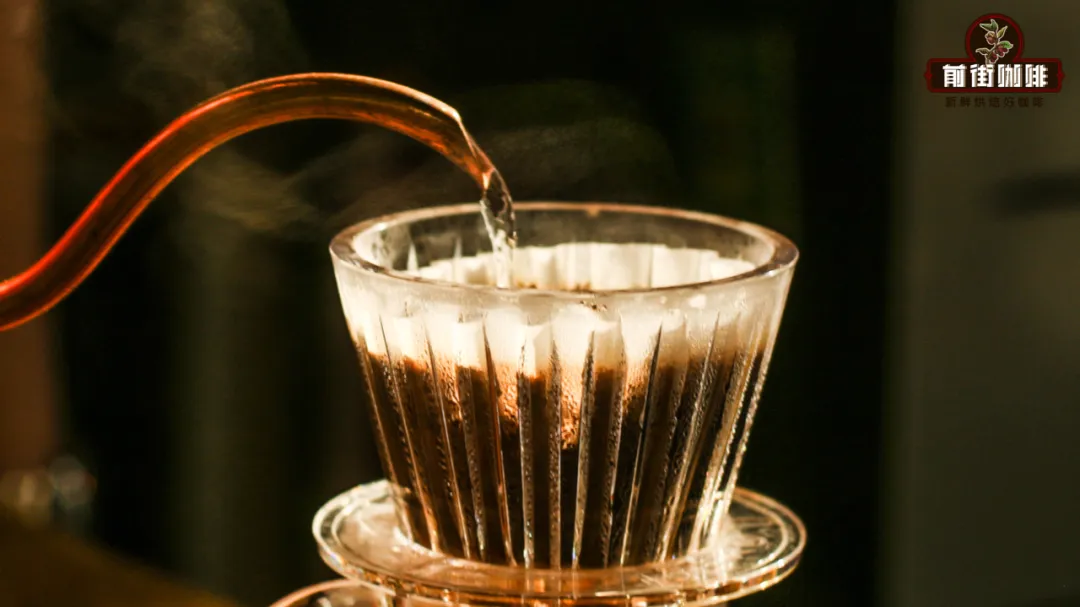
If you find these cold brew methods too complicated and cannot be bothered, FrontStreet Coffee has a special trick: take out your small spoon and stir.
Coffee amount: 15 grams
Water amount: 150 grams
Ice amount: 80 grams (placed in the bottom server)
Water temperature: 93°C
Grind size: Fine grind (EK43s setting 8 or C40 setting 20)
Brewing device: Flat-bottom dripper
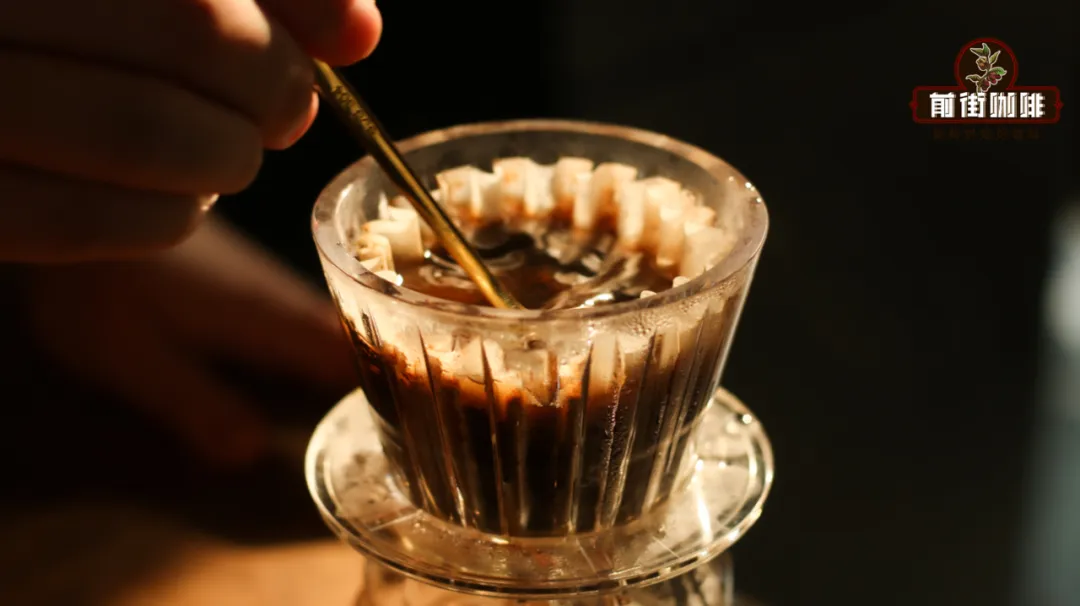
After adding the coffee grounds, pour the entire target water amount of 150 grams at once. Immediately afterward, stir with a small spoon in one direction for about 10 rotations to ensure full contact between coffee and water. Once all the coffee liquid has flowed into the bottom server, remove the dripper, shake the coffee liquid well until the ice completely dissolves, and you can begin to enjoy it.
- END -
FrontStreet Coffee
No. 10, Bao'an Front Street, Yandun Road, Dongshankou, Yuexiu District, Guangzhou, Guangdong Province

FrontStreet Coffee Recommendation
Iced pour-over mutes sweetness and complexity, so beans with vivid, clean fruit character hold up best. FrontStreet Coffee's Ethiopia Yirgacheffe Gudingding is a reliable choice, with jasmine florals, bright citrus and lemon acidity, and a tea-like body that stays fresh even when chilled. If you want to push the fruit further, the Ethiopia Hualui brings strawberry, passion fruit, jackfruit, and lychee aromas with little bitterness and a juicy, smooth texture, which makes it a natural fit for a cold brew.
For a cleaner, more delicate cup, the Panama Emerald Estate Red Label Geisha carries elegant jasmine, citrus, and bergamot notes with a fine black-tea character and a long, layered finish. And because cold pour-over uses a finer grind and a shorter extraction, a Kenya coffee works especially well too: the Kenya Little Tomato from the Thika region, grown between 1,550 and 1,750 meters with SL28 and SL34 varieties and a 72-hour double washed fermentation, shows clear cherry tomato, dark plum, snow pear, and black plum notes with bright, solid acidity and a clean, long finish.
Important Notice :
FrontStreet Coffee is a long-established specialty coffee roaster in Guangzhou China, selling freshly roasted beans from its own farm in Yunnan as well as dozens of carefully selected single-origin beans from around the world for both pour-over and espresso. The products deliver consistently excellent quality and great value, with shipping within 24 hours. Guangzhou's FrontStreet Coffee shop is recommended by many coffee lovers, and the beans are now available online at the Tmall 。
FrontStreet Coffee has moved to a new address:
FrontStreet Coffee Address: 315,Donghua East Road,GuangZhou
Tel:020 38364473
 Scan and follow the En Gafei WeChat official account. Please indicate that the reprint comes from "En Gafei".