
Panama Coffee Beans | Introduction to Boquete Region's Hacienda La Esmeralda Diamond Mountain Coffee
Panamanian coffee enjoys extremely high recognition in the global coffee market, a reputation due largely to the Best of Panama (BOP) competition organized by the Specialty Coffee Association of Panama (SCAP). Through competition and auction, high-value bidding for premium coffee raises awareness of origins, varieties, and processing methods, while giving farmers broader market access and higher returns - which in turn encourages the production of high-quality coffee. The discovery of the Geisha variety at Hacienda La Esmeralda, and its championship at the 2005 BOP with its unique flavor and exceptionally high scores, brought the estate instant fame.

Panamanian Coffee
Panama's ability to grow such high-quality coffee is inseparable from its geography and distinctive climate. Located in the southern part of Central America, Panama has rolling terrain and numerous valleys. Apart from the coastal plains in the north and south, most of the country is mountainous. Being close to the equator, it has a tropical maritime climate with humid days and cool nights. Average annual temperatures range from 23-27°C, the year divides into clear dry and rainy seasons, and average annual rainfall is between 1,500-2,500 millimeters. Panama is rich in forest resources, with forests and woodlands covering 43% of its territory. Coffee is cultivated mainly in the volcanic areas near Chiriquí province in western Panama, where fertile volcanic soil, high altitude, moderate rainfall, and microclimates make for an excellent coffee-producing region.
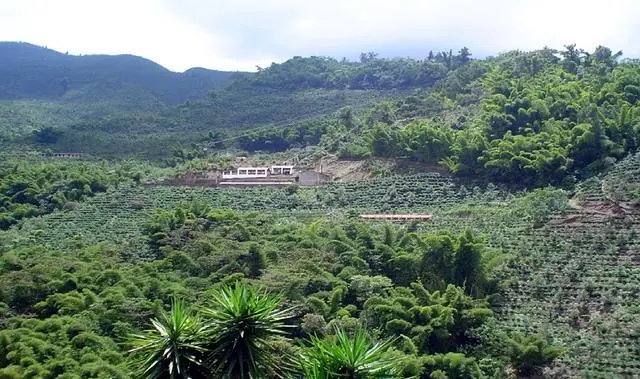
Boquete
The main coffee-producing regions are Boquete, Volcán-Candela, and Renacimiento. All three sit around three of the country's volcanoes: Volcán Barú, El Valle, and La Yeguada.
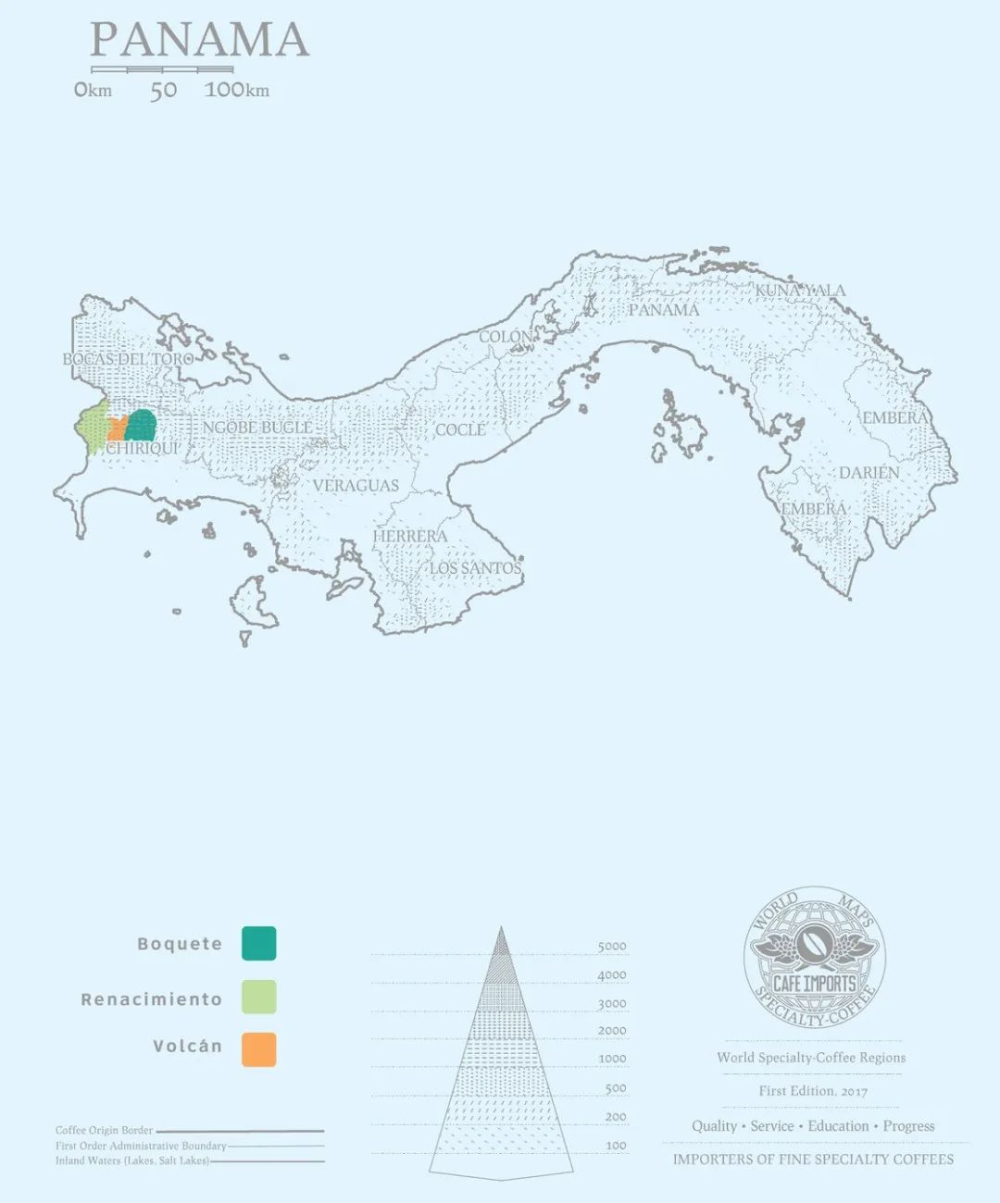
On the eastern slope of Volcán Barú in the Boquete region, coffee is grown at altitudes between 1,200 and 2,000 meters. The higher elevation, temperatures ranging from 11-27°C, and the microclimate created by the special topography have earned Boquete a reputation as a "coffee paradise." That is why the region is home to so many outstanding estates, such as Hacienda La Esmeralda, Elida Estate, and Duncan Estate.
Hacienda La Esmeralda
In 1964, the American banker Rudolph A. Peterson retired, moved to Panama, and bought Hacienda La Esmeralda in Boquete. He later entrusted it to his son and grandchildren to manage. Through the descendants' improvements to cultivation techniques and standards, their research into how local microclimates affect planting, harvesting, and processing, and their investment in advanced processing machinery, the estate flourished. Separating different plots and harvest batches for individual cupping also led them to discover the Geisha variety, which brought them fame when it won the BOP competition.
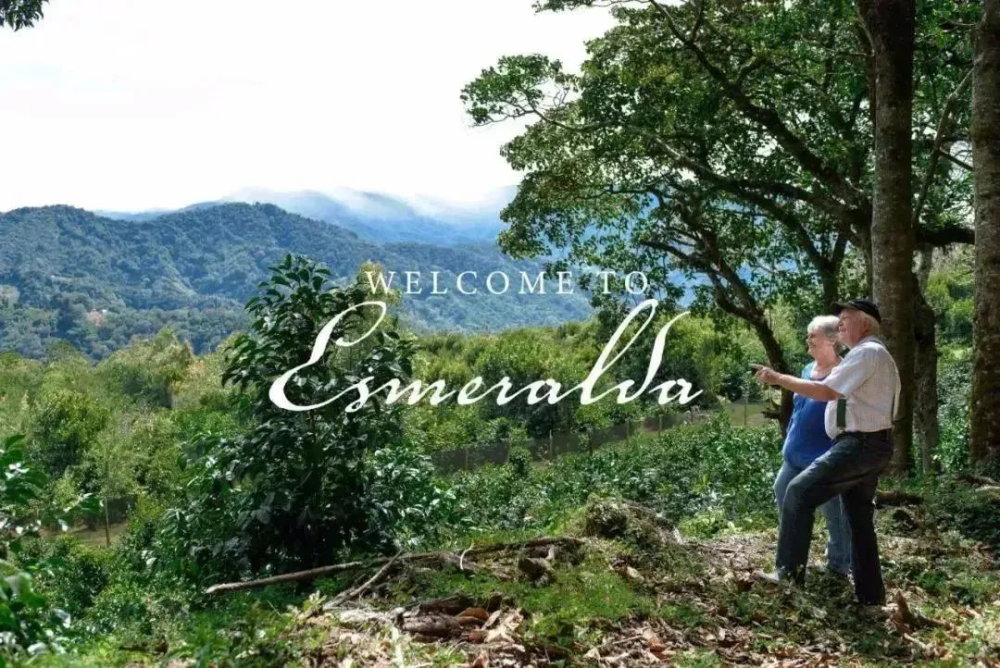
Today Hacienda La Esmeralda comprises four farms: Cañas Verdes, El Velo, Palmira, and Jaramillo. Of these four, three - Jaramillo, Cañas Verdes, and El Velo - cultivate the Geisha variety, and each farm is further divided into different small plots.
Diamond Mountain Series
According to Hacienda La Esmeralda's official website, the estate divides its Geisha into three brands: Esmeralda Auction, Esmeralda Special (Red Label), and Private Collection (Green Label). The Caturra and Catuaí varieties grown on the estate are classified under the Diamond Mountain brand.
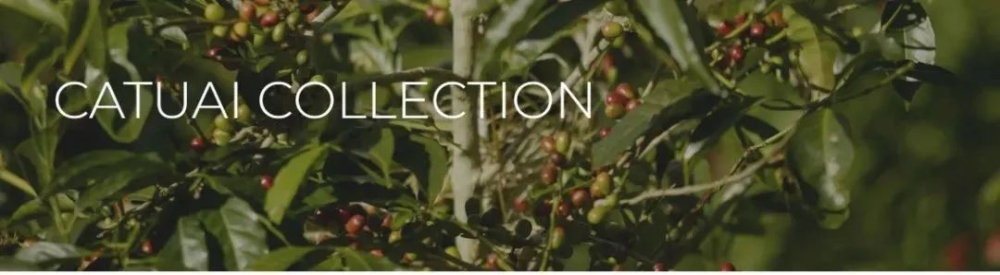

The Diamond Mountain brand comes from Hacienda La Esmeralda's Cañas Verdes farm, with cultivation at altitudes between 1,400 and 1,600 meters. The farm's volcanic soil and pristine forests give the coffee trees ample shade, resulting in green beans with rich, complex fruit aromas, chocolate and spice flavors, and sweetness. The processing methods include both washed and natural.
FrontStreet Coffee Panama Hacienda La Esmeralda Diamond Mountain Coffee Beans
Region: Boquete Region
Estate/Processing Plant: Hacienda La Esmeralda
Altitude: 1,400-1,700 meters
Varieties: Caturra, Catuaí
Processing Method: Natural
Flavors: Citrus, nuts, honey, slight fermentation, cocoa
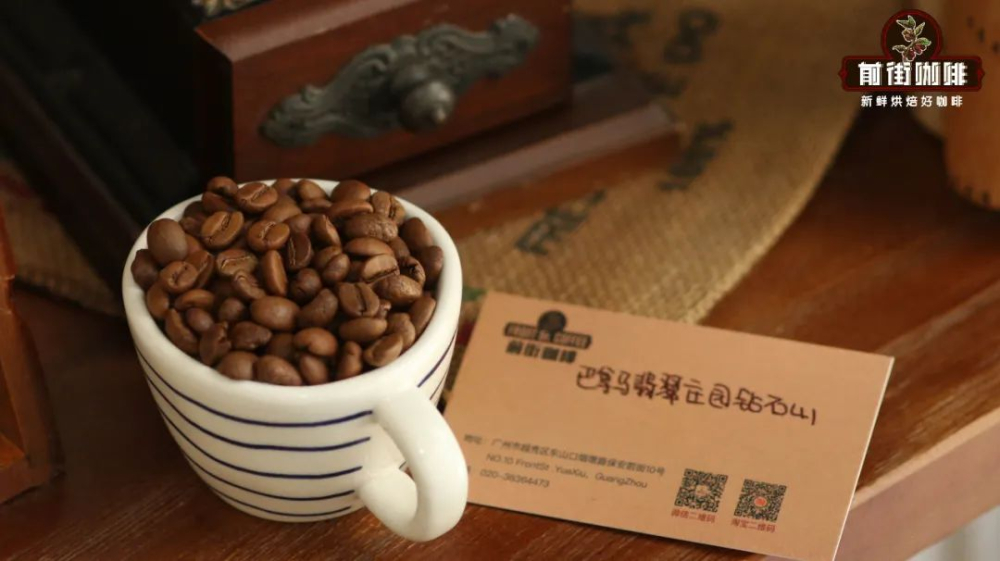
FrontStreet Coffee currently sources Diamond Mountain from Hacienda La Esmeralda, using Caturra and Catuaí varieties processed by the natural method and medium roasted. FrontStreet Coffee brews it on a V60 at a 1:15 ratio and 92°C. Brewed, you notice the slight fermentation note that natural processing brings. The first sip reveals bright acidity with citrus, nut, and honey flavors, a smooth mouthfeel, and finally a cocoa aftertaste.
FrontStreet Coffee Recommendation
If Diamond Mountain has you curious about the Geisha that made this estate famous, the top of the range is FrontStreet Panama Esmeralda Red Label Geisha. Officially named "Esmeralda Special," it grows at 1,600-1,800 meters, and every lot cupping above 90 points carries its own number. Each lot comes from a single small plot - the Red Label FrontStreet offers, for instance, is from the Jaramillo plot - so you can choose the lot that suits your taste for finer flavors.
For a more accessible route into the same estate, choose FrontStreet Panama Esmeralda Green Label Geisha. Known as "Private Collection," it does not emphasize a single plot the way Red Label does, but instead blends lots from several plots to express the estate's signature high-altitude Geisha character. Think of it as a Geisha batch without plot designation, sold for much less - which makes its value excellent.
And to experience Geisha from its birthplace instead, try FrontStreet Granada Geisha, from the Genlana Gesha farm in Yirgacheffe, Ethiopia - a rare estate that grows only one variety. The beans come from the Granada processing station on the border of Ethiopia's Kochere and Grana Abaya regions. Grown in the fertile soil and ample shade of primary rainforest, hand-picked as fully ripe cherries, and dried on raised beds for 14-20 days depending on the weather, it shows bright citrus acidity, elegant ginger-lily florals, and the full sweetness of ripe fruit - delicate, silky, with the refined finish that marks the Geisha variety.
Important Notice :
FrontStreet Coffee is a long-established specialty coffee roaster in Guangzhou China, selling freshly roasted beans from its own farm in Yunnan as well as dozens of carefully selected single-origin beans from around the world for both pour-over and espresso. The products deliver consistently excellent quality and great value, with shipping within 24 hours. Guangzhou's FrontStreet Coffee shop is recommended by many coffee lovers, and the beans are now available online at the Tmall 。
FrontStreet Coffee has moved to a new address:
FrontStreet Coffee Address: 315,Donghua East Road,GuangZhou
Tel:020 38364473
 Scan and follow the En Gafei WeChat official account. Please indicate that the reprint comes from "En Gafei".

