Panama Coffee Beans | Introduction to Hartman Estate Geisha Coffee Beans from Volcán Region
Panamanian Coffee
Panama is the southernmost country in Central America, with the Caribbean Sea to its east and the Pacific to its west, Costa Rica on its northern border and Colombia to the south — the crucial isthmus that links North and South America. Thanks to this geography, Panama is a patchwork of complex microclimates. Cold air currents moving east to west are funneled through the central mountain range and converge above 6,500 feet, creating a unique microclimate in the Boquete and Volcán-Candela regions, which have become the country's main coffee-growing areas. The surrounding land is rich in nutrients, and these fertile soils provide near-perfect conditions for coffee cultivation.
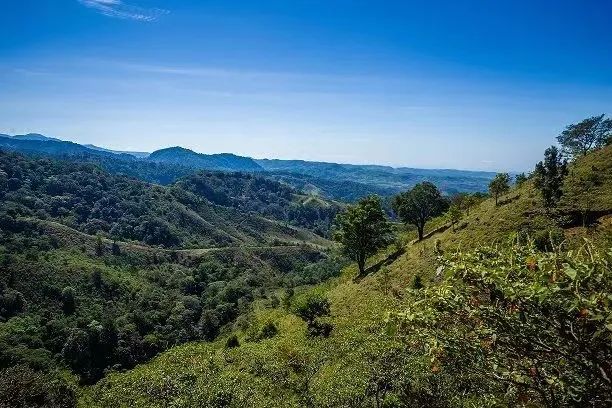
Volcán Production Area
Panama's coffee regions fall into three groups: Boquete, Volcán-Candela, and Renacimiento, all clustered around the country's three volcanoes — Volcán Baru, El Valle, and La Yeguada.
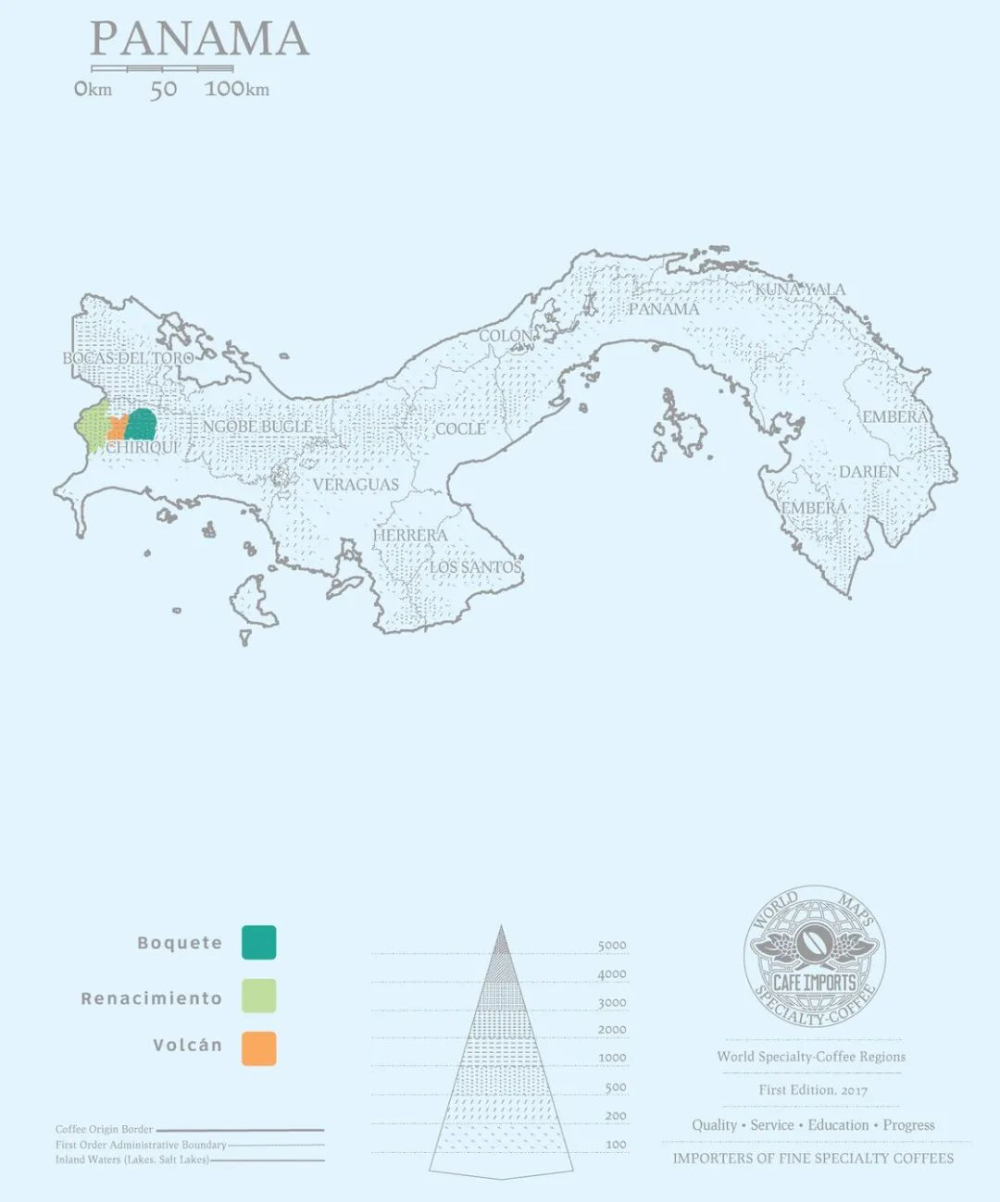
Ask anyone about Panamanian coffee and they'll usually think of Boquete first. In recent years, though, outstanding estates from the Volcán region have been appearing constantly in the Best of Panama (BOP) competition — sometimes taking the championship outright. The Volcán region sits at 1,200–1,600 meters and receives less rainfall on average than Boquete. Its position on the western flank of Volcán Barú, its volcanic soil, and its altitude combine to give the coffee trees excellent growing conditions. Early on, most of the Volcán region was devoted to fruits and vegetables as cash crops, with only a handful of farmers growing coffee. Among them, the Hartmann family were the true pioneers of coffee cultivation in Volcán.
Hartmann Estate
Alois Strasil Hartmann, the founding ancestor of the Hartmann family, was born in the Austro-Hungarian Empire — present-day Czech Republic. With political unrest at home, he set out to build a new life abroad, first in New York and eventually in Panama. A few months in, he found he couldn't adapt to life in Panama City, so he followed the mountain ranges inland and settled in the Volcán region. He later married and had a son, Hartmann Troetsch. From 1940, Troetsch took over his father's farmland, began preparing the land, and formally established Hartmann Estate, which continues to this day.
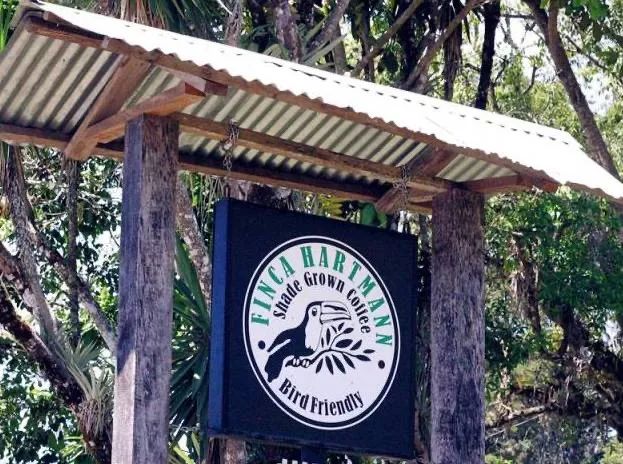
From the very beginning, the elder Hartmann chose to preserve most of the estate's original forest. That conservation ethic has been passed down to the third-generation managers who run the estate today: coffee cultivation still occupies only about 20% of the total land. The intact forest has made the estate a haven for native bird species, and the locally famous toucan now serves as its official logo. The estate is currently run jointly by five siblings, each overseeing a different piece of the operation — coffee growing, harvesting and processing, and estate tours. In 2013 they also acquired the Guarumo Coffee Farm, just north of Hartmann Estate. The estate grows an unusually wide range of varieties, including Typica, Caturra, Catuai, Bourbon, Pacamara, Maragogipe, and Geisha.
FrontStreet Coffee Panama Hartmann Estate Geisha Coffee Beans
Production Area: Volcán Region
Estate/Processing Plant: Hartmann Estate
Altitude: 1,500-2,300 meters
Variety: Geisha
Processing Method: Anaerobic Natural
Flavor Profile: White floral notes, bergamot, pineapple, blueberry, Earl Grey tea
FrontStreet Coffee also carries this Geisha from Hartmann Estate, anaerobic natural processed and roasted medium-light. Brewed on a V60 at a 1:15 ratio with 92°C water, it opens with white floral aromas; on tasting you get layered, varied fruit acidity with bergamot, pineapple, and blueberry. The texture is silky and tea-like, echoing Earl Grey, with a sweet aftertaste that lingers.
FrontStreet Coffee Recommendation
If this Hartmann anaerobic Geisha is your first taste of Panama Geisha, the best-value next step is FrontStreet's Boquete Geisha — an entry-level Panama Geisha that captures the classic orange-blossom sweetness and honeyed finish, with oolong-tea texture and delicate fruit acidity, all at a friendly price. For the full landmark experience, FrontStreet also carries the Esmeralda Estate lines: the Red Label ("Esmeralda Special"), grown at 1,600–1,800 meters and cupping above 90 points from single-lot micro-plots like the famous Hartmann-adjacent Mario plot system, and the more affordable Green Label ("Private Collection"), a blend of high-altitude lots that showcases Esmeralda's signature Geisha character.
Geisha is a floral, fruit-forward coffee roasted medium-light, and its dense, hard beans tend to sink and clog the dripper, so grind coarser — roughly a 78% pass rate on a #20 sieve (fine-granulated-sugar size). FrontStreet brews it with 15 grams of coffee on a small Hario V60 at 91°C and a 1:16 ratio, in three pours: 30 grams to bloom for 30 seconds, then a gentle spiral pour to 125 grams, and a final slow pour to 225 grams, finishing total drawdown in about 2:10–2:20. For espresso lovers, the medium-roasted Granana Estate Geisha makes a superb SOE — as espresso it turns to apricot, caramel, and nut, and diluted 1:5 with 200 grams of hot water, it drinks like an Americano with orange, nut, and blueberry notes.
Important Notice :
FrontStreet Coffee is a long-established specialty coffee roaster in Guangzhou China, selling freshly roasted beans from its own farm in Yunnan as well as dozens of carefully selected single-origin beans from around the world for both pour-over and espresso. The products deliver consistently excellent quality and great value, with shipping within 24 hours. Guangzhou's FrontStreet Coffee shop is recommended by many coffee lovers, and the beans are now available online at the Tmall 。
FrontStreet Coffee has moved to a new address:
FrontStreet Coffee Address: 315,Donghua East Road,GuangZhou
Tel:020 38364473
 Scan and follow the En Gafei WeChat official account. Please indicate that the reprint comes from "En Gafei".