Papua New Guinea Coffee Beans | Introduction to Paradise Bird Coffee Beans from Sigri Estate in Western Highlands Region
When coffee comes up in conversation, most people think first of Blue Mountain—famous for its tiny production and steep price. But in Oceania there is a country whose beans are nicknamed the "Little Blue Mountain": Papua New Guinea.
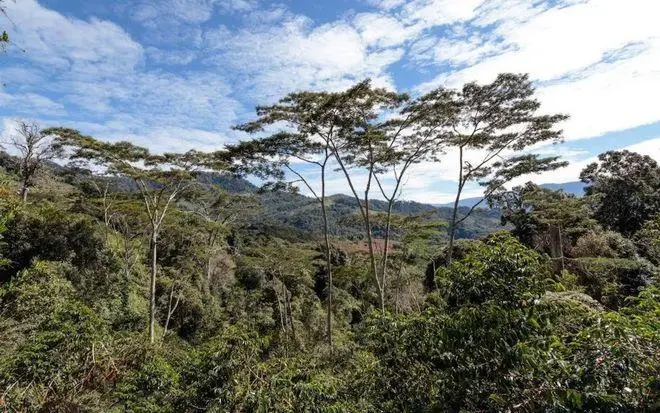
Papua New Guinea lies east of Indonesia in the southwestern Pacific, part of the Melanesian archipelago and made up of more than 600 islands. The country has a typical maritime climate—tropical conditions prevail everywhere except above 1,000 meters, where a mountainous climate takes over. Tropical rainforest, volcanic rock, and highland plateaus combine within its borders, making it an ideal region for coffee cultivation.
Coffee Cultivation History in Papua New Guinea
Coffee was introduced in the late 18th century by Dutch sailors, and commercial cultivation officially began in the 1890s, though at first the crop was not really treated as a commercial product. By 1926, 18 estates had been established in the country, and Typica varieties were imported from Jamaica, pushing commercial production upward. Given that Papua New Guinea shares with Jamaica a similar island climate, high altitude, and volcanic soil, its Typica beans came out remarkably close in flavor. Papua New Guinea coffee has the same body as Jamaican coffee but with a touch more fruit acidity—hence the nickname "Little Blue Mountain."
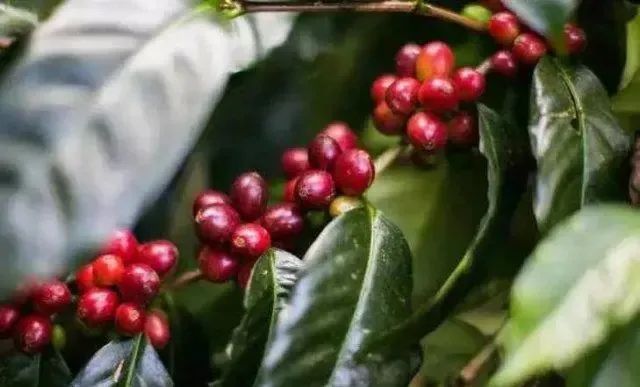
In the 1970s the government rolled out programs encouraging small farms to band together into cooperatives, but the subsequent slide in coffee prices pushed many estates into financial crisis. Because Papua's coffee is grown mostly by small farmers, who feel market swings less acutely, production carried on. To this day, 95% of the country's producers are small farmers, and 95% of the coffee grown is Arabica.
Western Highlands Region
Papua New Guinea coffee is currently produced in five highland provinces: Western Highlands, Eastern Highlands, Chimbu, Morobe, and East Sepik. The Eastern and Western Highlands are the main Typica provinces, with small amounts of Catimor and Bourbon also grown. Beans from other regions are of lower quality, most of them Robusta.
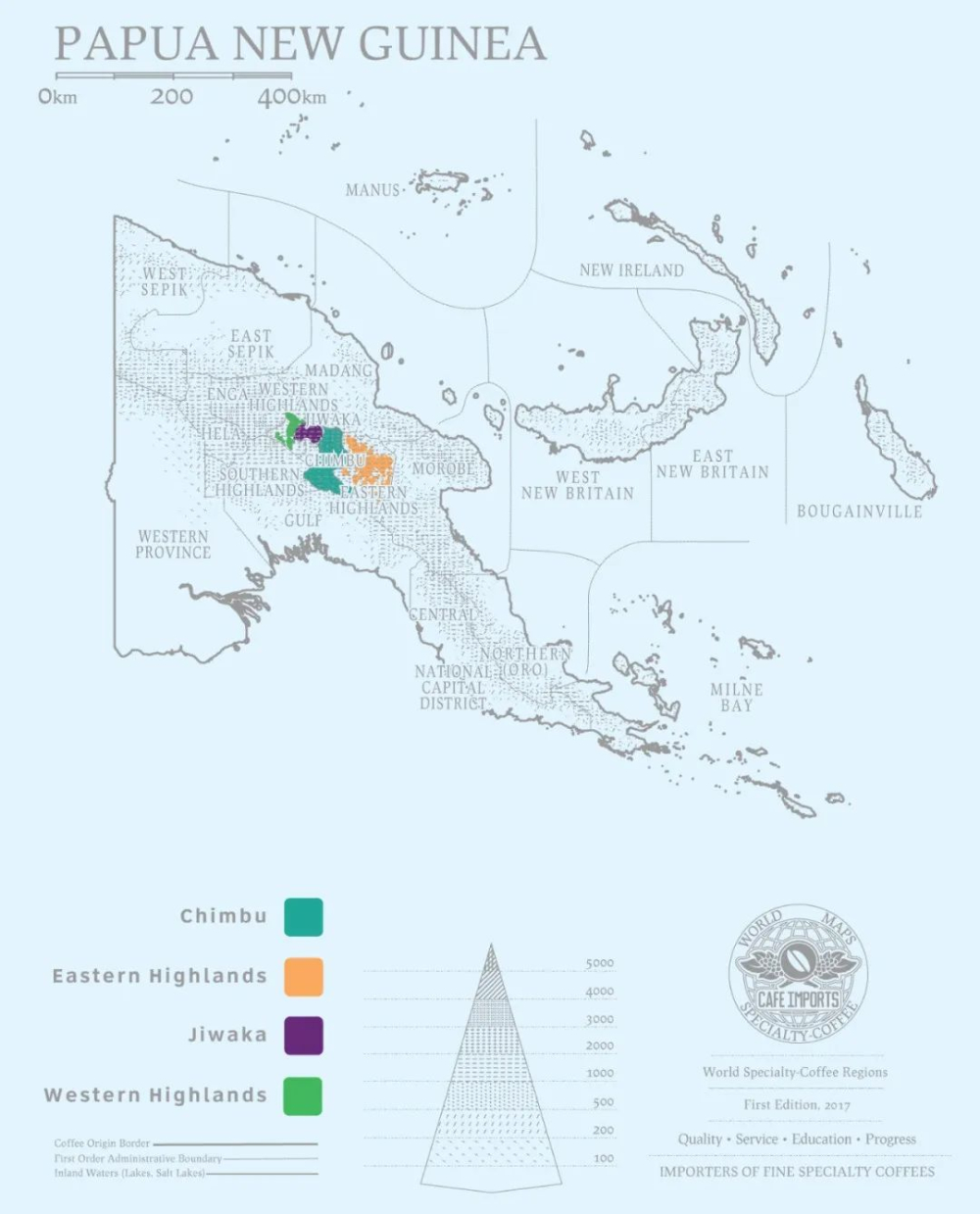
Western Highlands Province is the most important and largest coffee-producing province in Papua New Guinea, with elevations from 1,000 to 1,800 meters. An ancient dormant volcano sits in this area, and the pairing of high altitude with volcanic soil creates outstanding natural conditions for coffee. The renowned Sigri Estate calls this region home.
Sigri Estate
Founded in 1950, Sigri Estate was a pioneer of the local coffee industry. It sits in the Waghi Valley of Western Highlands Province at a lofty 1,500 meters. Beyond its superb natural setting, Sigri has kept strict cultivation and processing standards over the decades, with a strong commitment to ecological protection—it refuses to use pesticides or insecticides. Its standards for the beans themselves are equally firm: cherries are handpicked only at full red ripeness and processed on the very day of harvest.
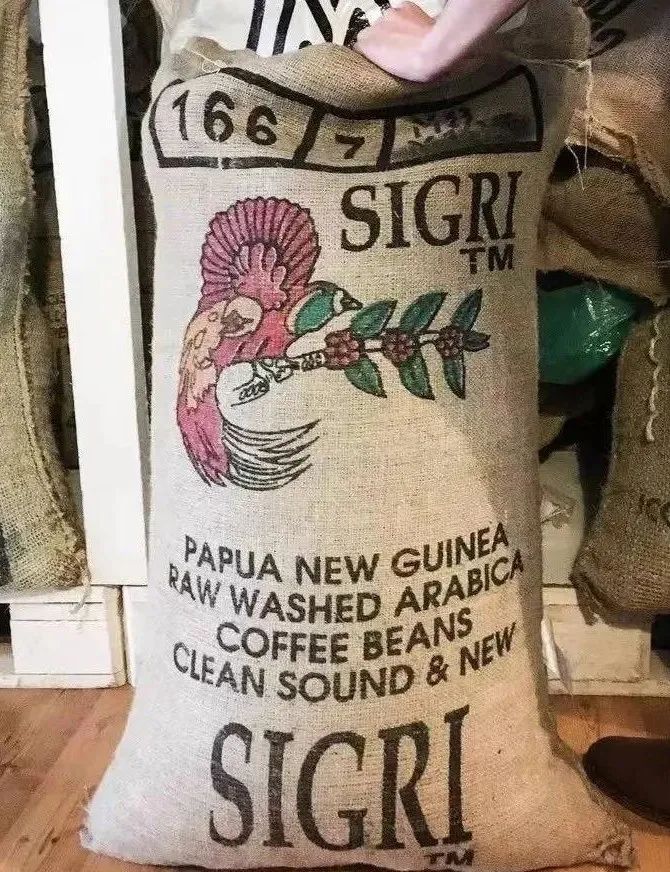
Coffee exported from Sigri is packed in burlap bags printed with a bird-of-paradise. The bird-of-paradise is unique to Papua New Guinea and serves as the national bird. Thanks to that emblem on the green-bean sacks, this coffee is widely known domestically simply as "Bird of Paradise."
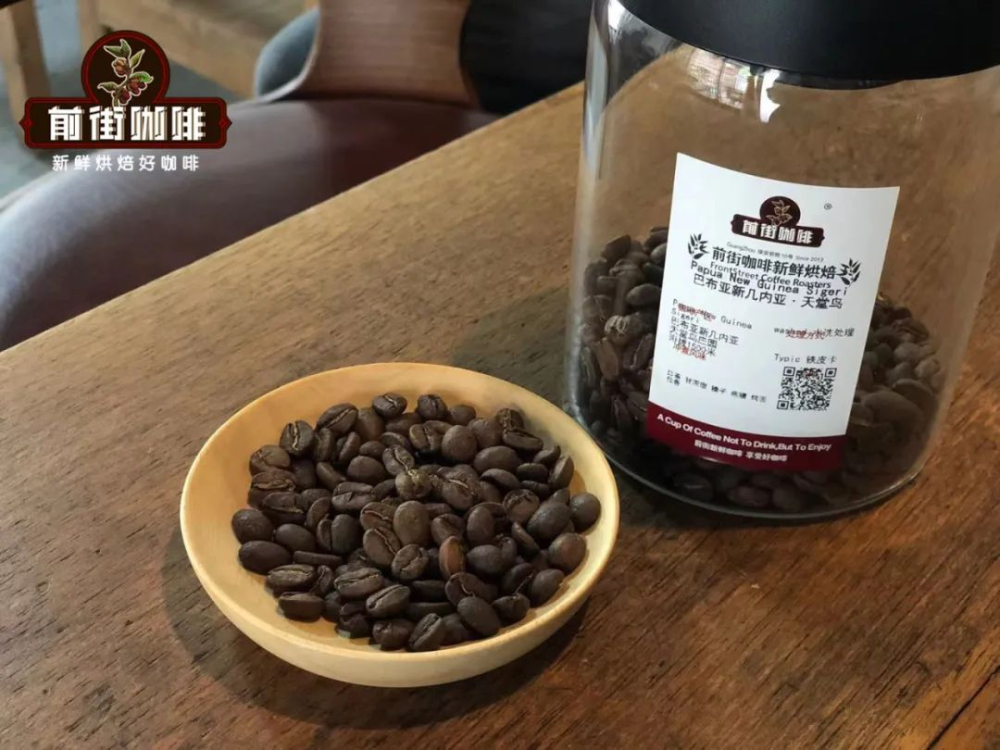
FrontStreet Coffee Papua New Guinea Sigri Estate Bird of Paradise Coffee Beans
Region: Western Highlands
Estate: Sigri Estate
Altitude: 1,500 meters+
Variety: Typica
Processing Method: Washed
Flavor Notes: Caramel, cocoa, almond, balanced, low-temperature citrus acidity
FrontStreet Coffee's Bird of Paradise is washed processed and medium-dark roasted. We brew it on a KONO dripper at a 1:15 ratio with 91°C water. The cup offers caramel, cocoa, and almond with a smooth, silky body, and as it cools a citrus-like acidity emerges—an overall soft, balanced profile.
FrontStreet Coffee Recommendation
Since "Little Blue Mountain" fans usually love the real thing too, here are two certified picks from the FrontStreet Coffee shelf:
FrontStreet Jamaica Blue Mountain No.1 — The highest grade of Jamaican Blue Mountain, sourced from the historic Clifton Estate, where coffee has been grown since roughly 1750. The growing and processing areas sit at an average of 4,300 feet (1,310.64 meters), where ample altitude, gentle afternoon cloud cover, abundant sunshine, and mineral-rich soil prolong cherry ripening. Roasted medium-dark, it unfolds in layers of nuts, dark chocolate, cream caramel, and soft sweetness, with acidity, sweetness, bitterness, and aroma in perfect accord.
FrontStreet Jamaica Blue Mountain — Genuine Blue Mountain carries Jamaica's official certification and proof of origin, travels in traditional wooden barrels of 15, 45, or 70 kilograms stamped with batch details, and shows green, plump beans with slightly upturned tips. The cup is intensely aromatic yet clean and quiet—dense, complex, and gentle, with perfectly matched sweetness, acidity, and bitterness and a persistent fruity finish. If you want to taste the legend behind the "Little Blue Mountain" nickname, start here.
Brewing tip — Blue Mountain's balance shines in many formats: hand-drip at 1:15 to 1:16 with 85–88°C water and a medium-coarse grind to highlight cream, caramel, and nuts; or a moka pot with a slightly finer grind, hot water in the base, moderate heat, and the pot pulled off the flame just before the flow ends for a fuller chocolate-and-caramel cup that still keeps its signature poise.
Important Notice :
FrontStreet Coffee is a long-established specialty coffee roaster in Guangzhou China, selling freshly roasted beans from its own farm in Yunnan as well as dozens of carefully selected single-origin beans from around the world for both pour-over and espresso. The products deliver consistently excellent quality and great value, with shipping within 24 hours. Guangzhou's FrontStreet Coffee shop is recommended by many coffee lovers, and the beans are now available online at the Tmall 。
FrontStreet Coffee has moved to a new address:
FrontStreet Coffee Address: 315,Donghua East Road,GuangZhou
Tel:020 38364473
 Scan and follow the En Gafei WeChat official account. Please indicate that the reprint comes from "En Gafei".