Costa Rican Coffee Cultivation: Introduction to Mirasoul Estate's Strawberry Sugar from Tarrazú Region
As everyone knows, the band between the Tropic of Cancer and the Tropic of Capricorn is called the coffee growing belt. Parts of the Americas fall precisely within it, and North America alone has many renowned coffee-producing countries, among them Panama, Honduras, and Costa Rica. Of these, Costa Rica was the first country in Central America to introduce coffee cultivation.
Coffee Cultivation in Costa Rica
Costa Rica lies on the Central American isthmus, bordering Nicaragua and Panama, with the Caribbean Sea to the east and the Pacific Ocean to the west. Its coastal areas are plains, while the central region is split by rugged mountains. The climate is tropical and subtropical, with a rainy season from April to early December and a dry season from late December to April, and average annual temperatures between 15 and 26°C.
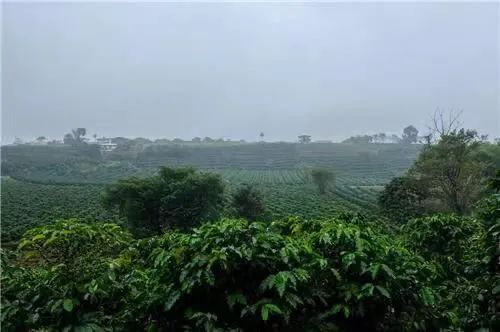
The country also has volcanic regions, with fertile volcanic soil, good drainage, and a suitable climate - hence its high-quality beans. All of the coffee grown is Arabica. The Costa Rican government places great importance on coffee cultivation and quality, establishing the Costa Rican Coffee Institute (ICAFE) in 1948 to research coffee varieties and cultivation and to promote Costa Rican coffee worldwide. The government also issued a decree in 1989 banning the cultivation of Robusta domestically.
The Tarrazú Region
Costa Rica has eight coffee regions, among them the Western Valley (Valle Central Occidental), the Central Valley (Valle Central), Tarrazú, Tres Rios, Orosi, Brunca, and Turrialba. They are almost all distributed across the central mountain ranges.
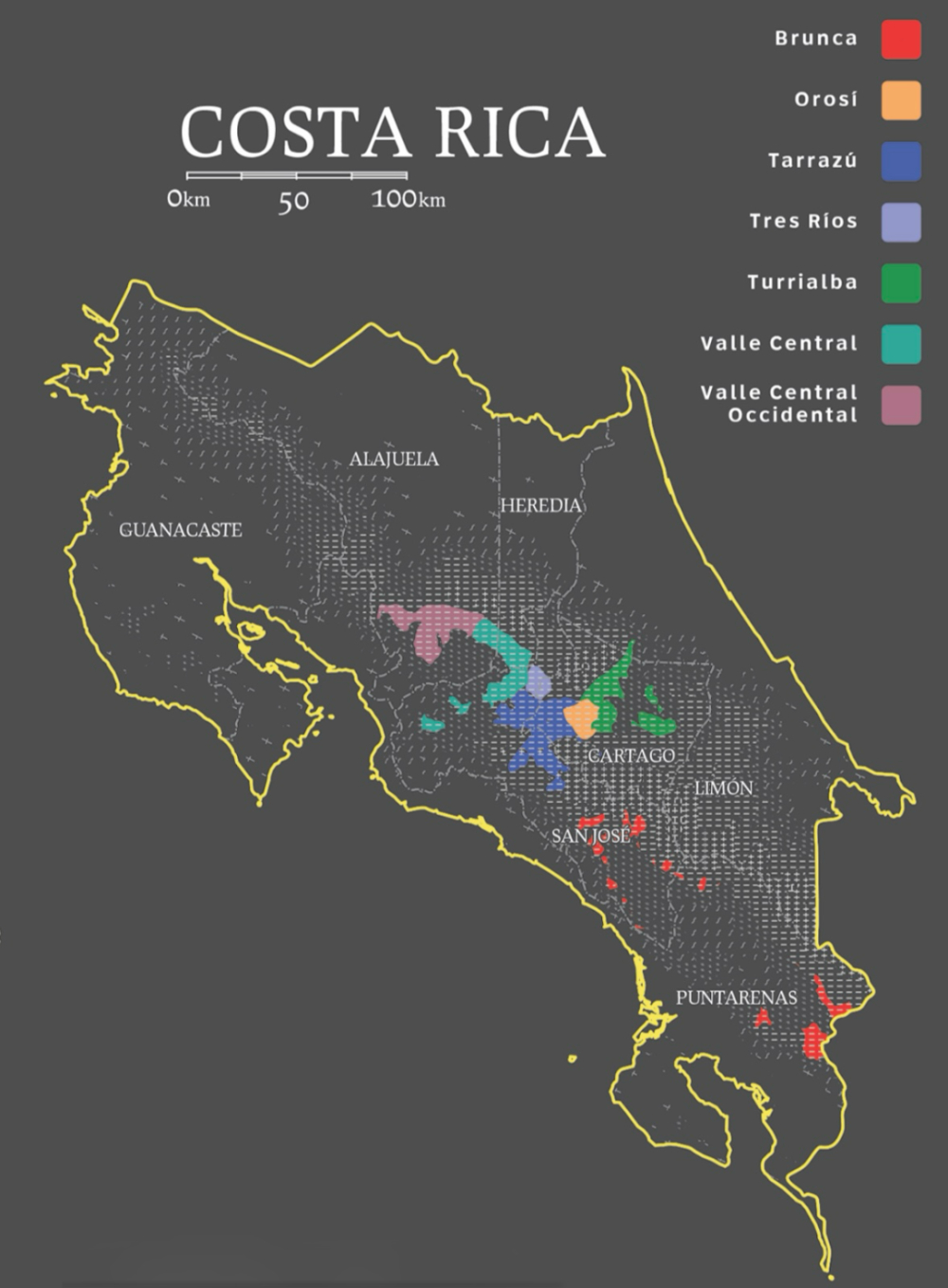
When people mention Costa Rican coffee, though, Tarrazú is always the first region that comes to mind. It was also the first region in Costa Rica to receive origin certification. Located in central Costa Rica within San José province, it is influenced by warm, humid air from the Pacific Ocean, with annual rainfall reaching 2,400 millimeters. Coffee grows between 1,500 and 2,100 meters, with access to fertile volcanic soil - an excellent environment for the crop. The coffee produced here is almost entirely hard bean, with pleasant acidity and chocolate, floral, and fruity notes that are widely loved. Because of the region's reputation, Costa Rica registered the "Cafe de Tarrazu" origin name with the European Union and the World Intellectual Property Organization (WIPO) in 2019 to protect coffee produced there. FrontStreet Coffee's entry-level range includes beans from the Tarrazú region.
Mirazu Estate
Mirazu Estate is a relatively small coffee estate in the Tarrazú region, managed by Esteban Sanches and his family. Esteban originally belonged to the neighboring Pena Vela estate family. Out of his passion and dedication to coffee, he established his own estate and named it "Mirazu," meaning "overlooking Tarrazú."
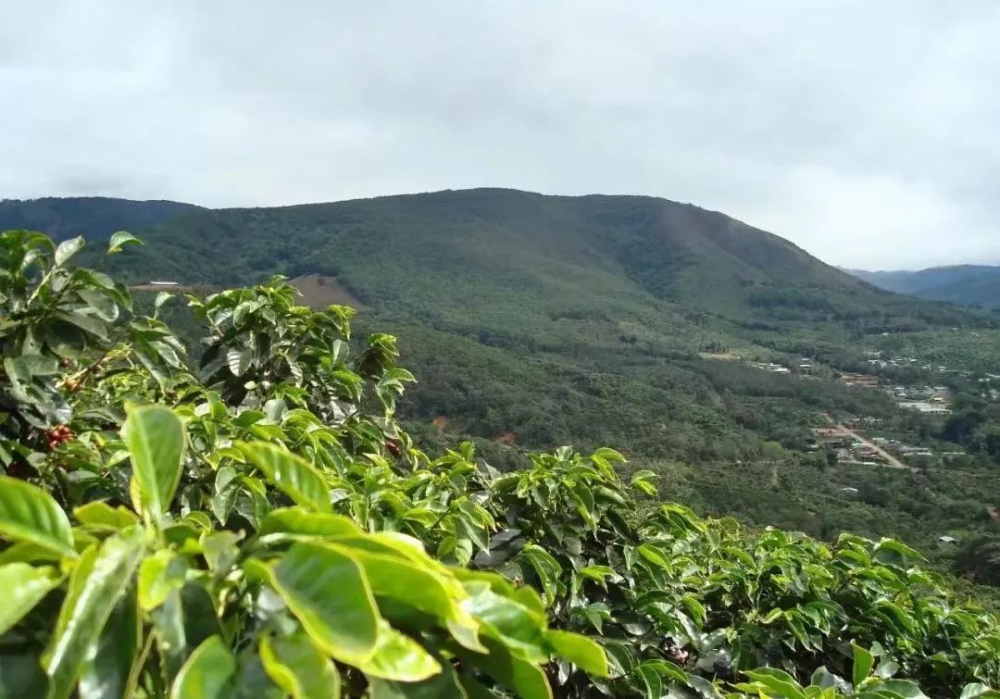
Esteban graduated from the Costa Rican Agricultural University with a specialty in coffee, bringing formal training to his work on the estate. Besides experimenting with growing the Ethiopian native variety ET47, he personally designed and assembled the small wet-processing machines at the estate's processing plant. Because he devotes so much energy to machines and coffee, nearby farmers call him "Dr. Machine" and "the coffee expert."
Raisin Honey Processing
Raisin honey processing preserves 100% of the mucilage and uses zero water, which raises the difficulty of the honey method and demands strict timing. First, harvested cherries go into water tanks for flotation selection. After screening, they are dried to remove the skin and pulp, then sun-dried. Even drying requires constant turning, with the frequency carefully controlled to manage fermentation. The method yields coffee with abundant sweetness, a white-wine-like mouthfeel, balanced acidity, and rich fermentation aromas.

FrontStreet Coffee Costa Rica Mirazu Estate Strawberry Candy coffee beans. Region: Tarrazú Region. Estate/Processing Plant: Mirazu Estate. Altitude: 1,700 meters. Varieties: Geisha, ET47, MAICO, SL28. Processing Method: Raisin Honey Processing. Flavor Notes: Raisin, Strawberry, Candy, Rose, Cream.
This Costa Rican Mirazu Estate Strawberry Candy from FrontStreet Coffee uses raisin honey processing and is medium roasted. FrontStreet Coffee brews it in a V60 at a 1:15 ratio. You will smell fresh rose aromas, and on the palate find strawberry, raisin, and almond, with abundant sweetness and a silky mouthfeel.

FrontStreet Coffee Recommendation
Costa Rica and Panama share the same Central American coffee belt, and both are known for clean, sweet, carefully processed cups. If the rose and honeyed sweetness of a honey-processed coffee appeals to you, FrontStreet Coffee's Panama Washed Butterfly is a natural companion. It carries half Geisha lineage - Geisha, Caturra, and Catuai - planted in Boquete's Barú volcano area, and the region's microclimate, with abundant rainfall, wide day-night temperature swings, and volcanic rock soil, gives it impressive body, citrus acidity, and Geisha jasmine aroma. It works well for both pour-over and cold brew.
For an elegant, entry-level Geisha, FrontStreet Coffee's Boquete Geisha is grown at 1,600 meters, where mist between the mountains keeps the days humid and the nights cool and the fertile volcanic ash feeds a rich aroma. Brewed, it shows jasmine, green tea, honey, citrus, and orange. And to taste the top of the range, FrontStreet Coffee's Esmeralda Red Label Geisha is harvested from a single plot above 1,700 meters and must cup at 90 points or more, with a refined orange-blossom honeyed character.
Important Notice :
FrontStreet Coffee is a long-established specialty coffee roaster in Guangzhou China, selling freshly roasted beans from its own farm in Yunnan as well as dozens of carefully selected single-origin beans from around the world for both pour-over and espresso. The products deliver consistently excellent quality and great value, with shipping within 24 hours. Guangzhou's FrontStreet Coffee shop is recommended by many coffee lovers, and the beans are now available online at the Tmall 。
FrontStreet Coffee has moved to a new address:
FrontStreet Coffee Address: 315,Donghua East Road,GuangZhou
Tel:020 38364473
 Scan and follow the En Gafei WeChat official account. Please indicate that the reprint comes from "En Gafei".