
How to Grind Coffee Beans Without a Grinder? Can You Brew Coffee After Grinding?

Picture this: you have coffee beans, hot water, and every piece of pour-over gear at home — everything, that is, except the one tool that turns beans into grounds. The grinder.

Before heading home for the holidays, FrontStreet Coffee packed several favorite coffees into the luggage to satisfy a New Year coffee craving. But just as the first pot was about to be brewed, the hand grinder that had sat idle at home for years went on strike. The beans were still whole. How were they supposed to become grounds?
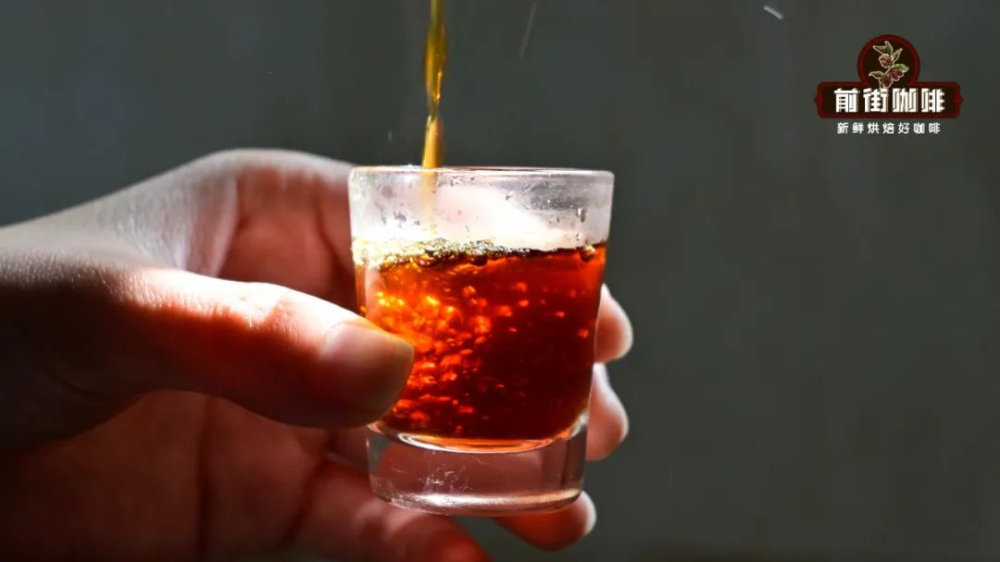
Where there is a will, there is a way. Inspiration struck, and attention turned to that most ordinary household item: the mortar and pestle. For generations people have used it to pound and roll tablets, herbs, and spices into fine powder. Surely coffee beans would work too.
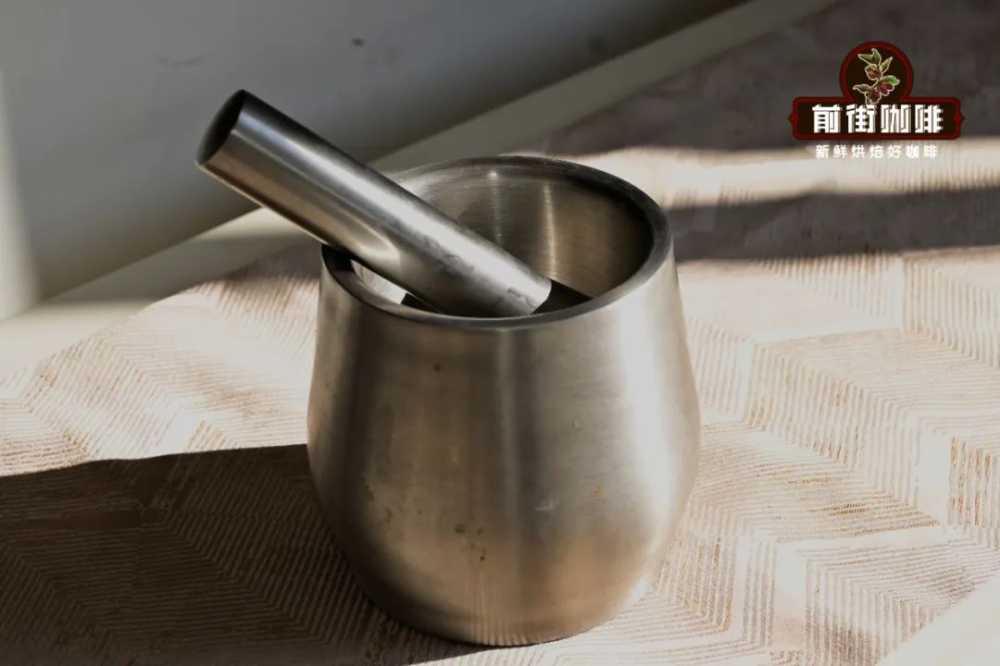
So let's see what kind of grounds this "ancient" method produces — and how the final cup turns out. Without further ado, let's get started.
Brewing Parameters
Coffee beans: La Esmeralda Washed Green Label Geisha
Amount: 18 grams
Ratio: 1:15
Water temperature: 93°C
Filter: 60-degree V-shaped dripper
Grind size: visually similar to granulated sugar
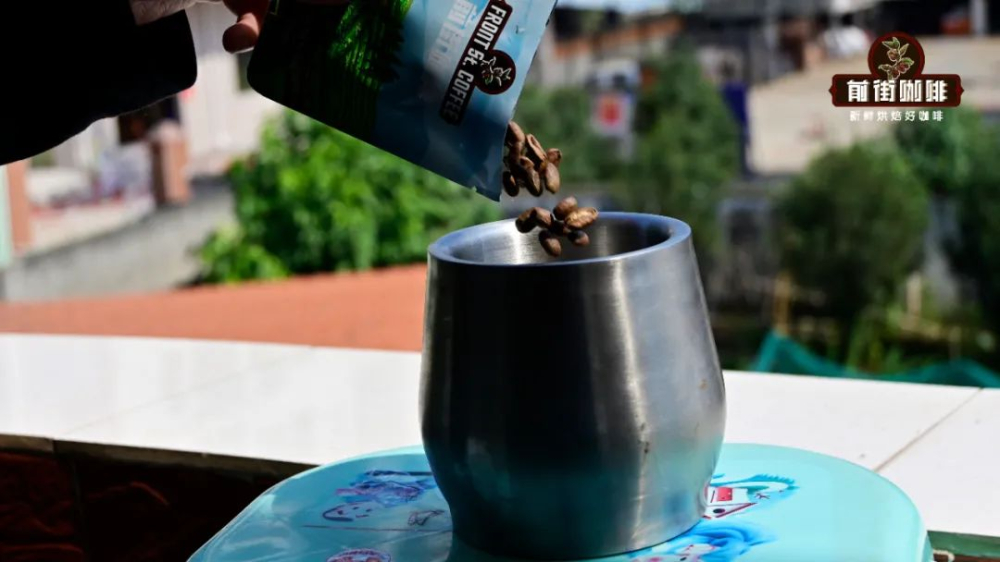
FrontStreet Coffee first tipped the pre-weighed 18 grams of washed La Esmeralda Green Label Geisha into a clean mortar, set it flat on the counter (or the floor), and covered it with the round lid so particles would not jump out during pounding. Then, holding the mortar with one hand and the pestle with the other, the beans were crushed forcefully until they broke down to roughly the right consistency.
Things to Keep in Mind When Extracting
In regular counter brewing, these floral, fruity beans are hard and lightly roasted, so the cells expand relatively little and water absorption is weaker. When hot water meets the particles, more time is needed to pull out the flavor compounds we want. To coax out more aromatics, the extraction rate can be raised through the parameters: FrontStreet Coffee typically uses a higher water temperature (91-93°C) paired with a finer grind (fine sugar, EK43s setting 10).
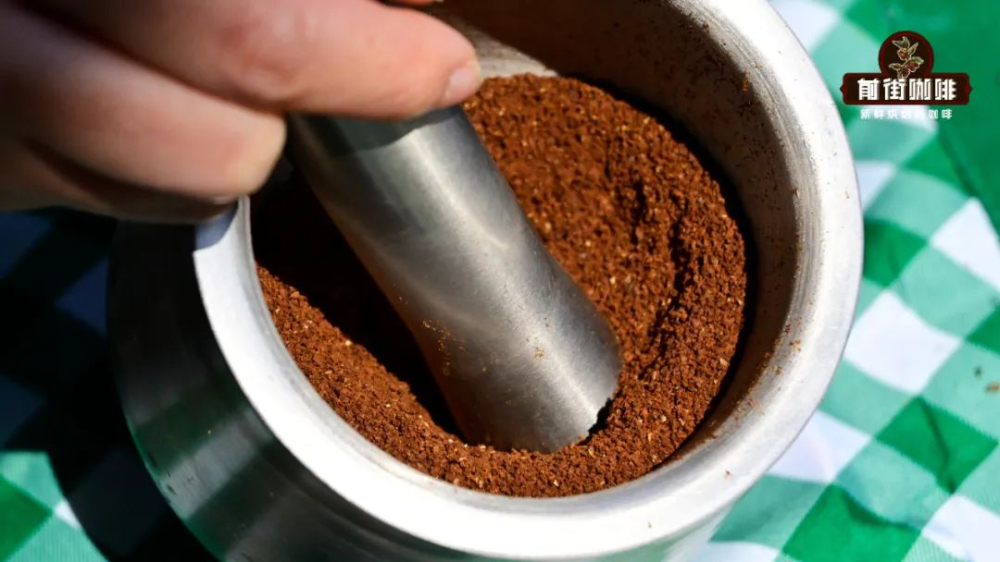
After about 15 minutes of effort, the beans had gone from distinct chunks to a fine powder with a few small particles left in it. It still felt a little rough to the touch, but the overall consistency had reached granulated sugar level — good enough to brew.
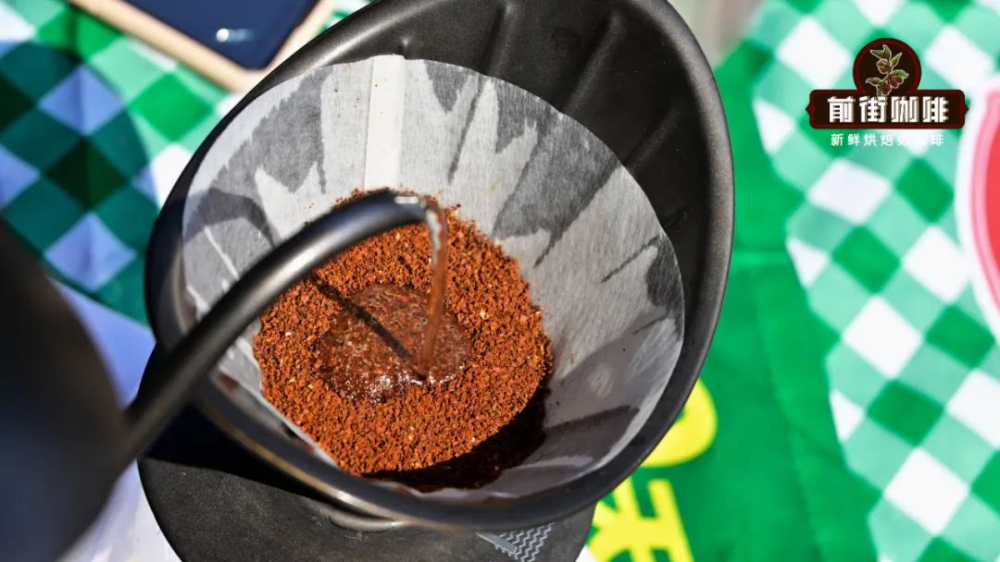
Pouring Technique and Results
Pouring technique: first pour 35 grams of water for a 30-second bloom, then 110 grams (the scale reads around 145 grams), finishing in about 50-60 seconds. When the water level drops to two-thirds of the coffee bed, pour the remaining 125 grams (the scale reads around 270 grams), finishing by about 1 minute 35 seconds. The coffee finishes dripping at roughly 2 minutes 10 seconds; remove the filter to complete extraction.
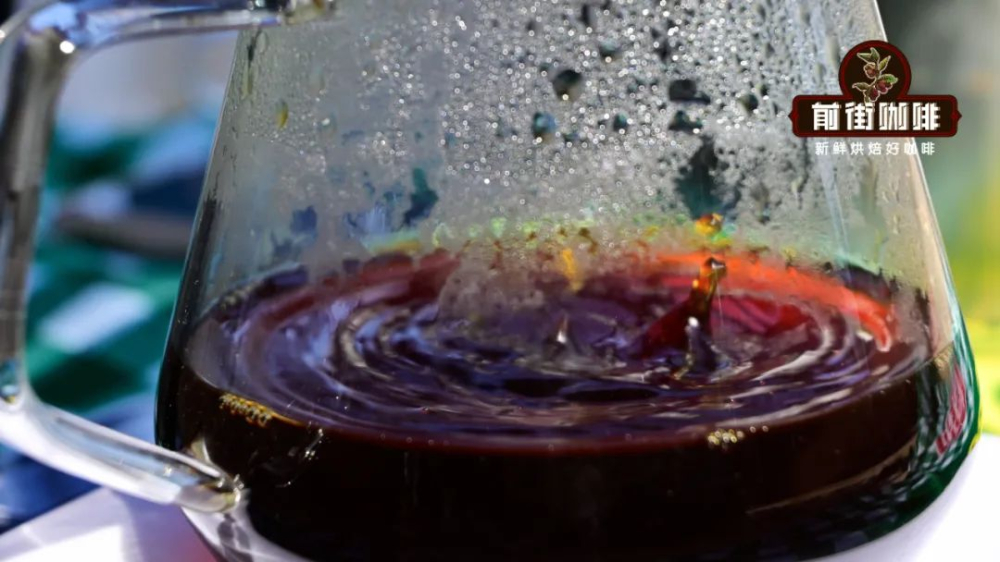
The cup opens with prominent honey tangerine, green tea, and lime, backed by subtle white florals and brown-sugar sweetness. The texture, however, trends muddy, and after swallowing an uncomfortable astringency lingers on the tongue.
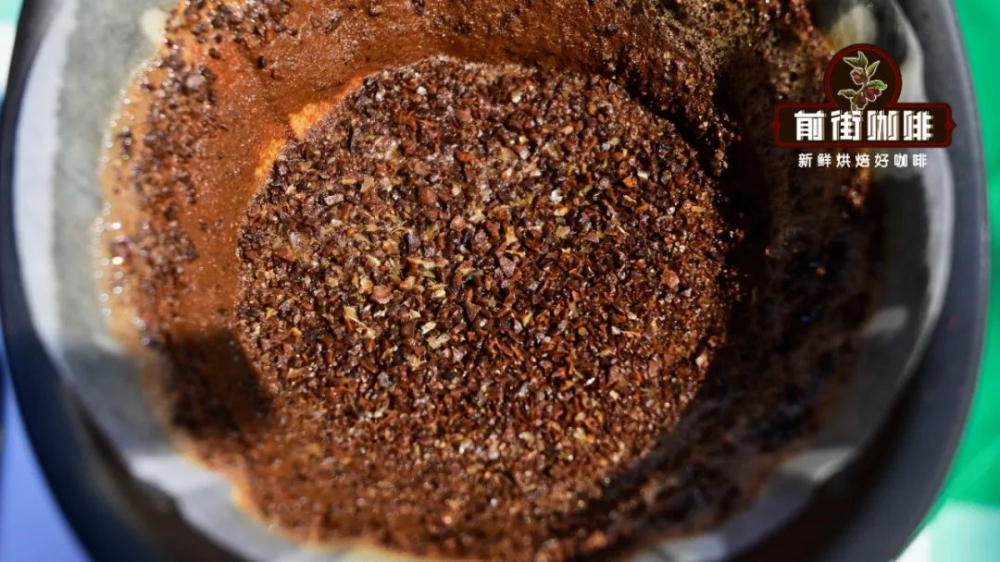
Looking at the spent grounds, FrontStreet Coffee found the surface covered in large, irregular chunks with signs that the coffee bed had been "broken through," and hardly any coffee residue left on the filter paper, which was instead coated in muddy powder. The suspicion was that this pot suffered from both under-extraction and, very likely, over-extraction.
What Went Wrong
When beans are crushed with a grinding motion, the burst under strong pressure throws off a large amount of dust-like fine powder. During brewing those fine particles settle onto the filter paper first as the liquid agitates, clogging the drainage holes and causing localized over-extraction.
On top of that, manual crushing is far from uniform. Whether the grounds coming out of the pestle hit the right fineness depends mainly on the operator's stamina (and grip strength), visual judgment, and brewing experience. It is hard to pin down with precise numbers — and unlike professional grinding equipment, which lets you adjust settings freely to control particle size and uniformity, this method inevitably turns out a few large "escapees."

FrontStreet Coffee Recommendation
If this experiment has you curious about Geisha, the most approachable starting point is FrontStreet Panama Boquete Geisha. It delivers the classic Panama Geisha profile — orange-blossom honey sweetness, an oolong-tea texture, and delicate fruit acidity — at a price that lets you learn the varietal without committing to an auction lot.
For a step up, FrontStreet Emerald Estate Green Label Geisha, formally the Private Collection, blends several estate lots rather than following the strict single-plot approach of the Red Label. It still shows the estate's signature high-altitude Geisha character, with jasmine and citrus, but it is the more affordable way to brew a genuine Esmeralda Geisha at home.
Important Notice :
FrontStreet Coffee is a long-established specialty coffee roaster in Guangzhou China, selling freshly roasted beans from its own farm in Yunnan as well as dozens of carefully selected single-origin beans from around the world for both pour-over and espresso. The products deliver consistently excellent quality and great value, with shipping within 24 hours. Guangzhou's FrontStreet Coffee shop is recommended by many coffee lovers, and the beans are now available online at the Tmall 。
FrontStreet Coffee has moved to a new address:
FrontStreet Coffee Address: 315,Donghua East Road,GuangZhou
Tel:020 38364473
 Scan and follow the En Gafei WeChat official account. Please indicate that the reprint comes from "En Gafei".

