
How to Adjust Pour-Over Coffee When It's Too Sour or Bitter? What Causes Overextraction in Black Coffee?

In the cupping system, when a coffee's acidity, sweetness, flavor, cleanliness, mouthfeel, and aftertaste all feel harmonious, its balance score is guaranteed to be high—which also signals excellent bean quality and, ultimately, an impressive total score.
But brewing is full of variables—grind size, ratio, water temperature, and more—and one small misstep can shatter that "balance," leaving coffee either too sour or excessively bitter. You may not know which step failed, but you can be certain it was an extraction problem. In this article, FrontStreet Coffee shows how to adjust quickly when that happens.
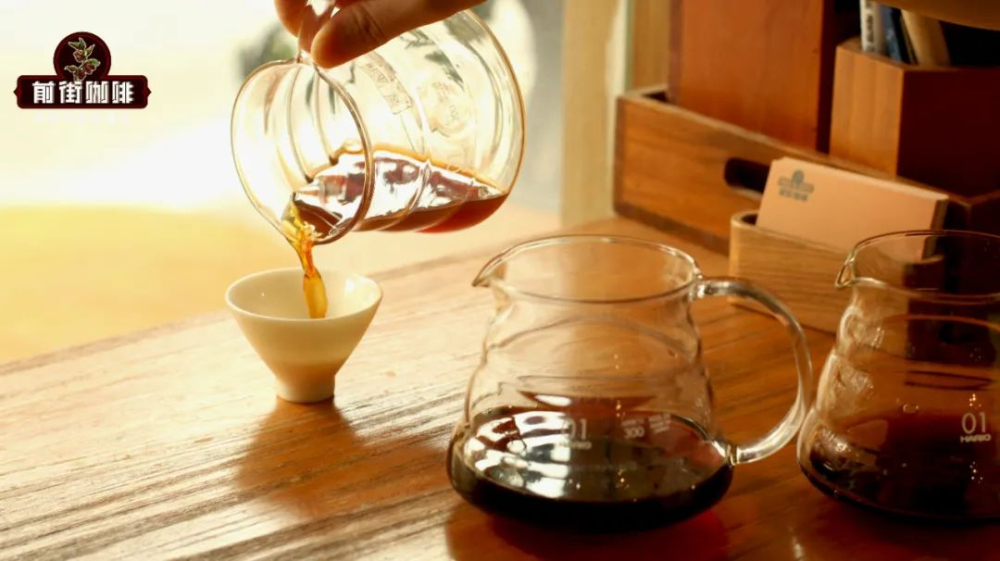
Why is Coffee Too Acidic/Too Bitter?
The taste of coffee is governed mainly by the proportions of acidic, sweet, and bitter flavors—that is, by the ratio of dissolved flavor compounds. A very sour cup doesn't necessarily mean too many acid compounds dissolved; it may simply mean the sweet and bitter components weren't enough to build balance.
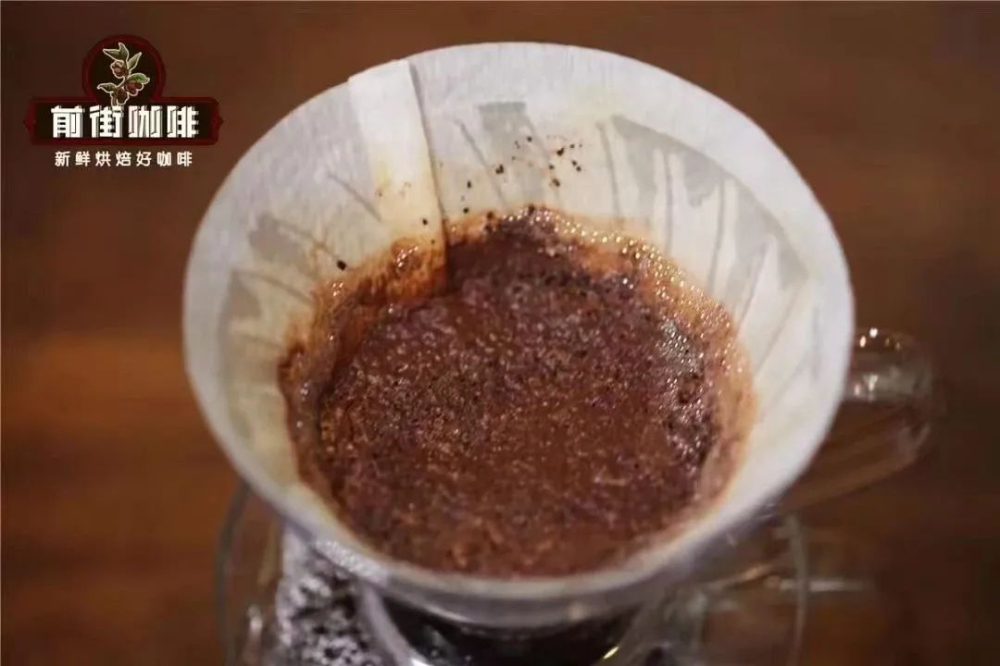
What Should You Do if Coffee is Too Bitter?
For most beginners, over-bitter coffee traces back to a wrong grind size. Ground coffee lives in a microscopic world measured in millimeters—and unlike other parameters, it can't be expressed in intuitive numbers or improved by sheer practice. For newcomers with limited brewing mileage, nailing the grind is the hardest part.

When the grind is too fine, water meets greater resistance, drains poorly, and the extended steeping releases excessive bitterness. Finer particles also dissolve more efficiently, pushing the cup further toward bitter. The telltale sign: flow is steady in the first half of the brew but slows dramatically in the second, with water pooling in the dripper—the holes are clogging with fines. The simplest fix is to grind coarser, using extraction time as your reference.
Ideally, flow should stay consistent and total extraction should land around 2 minutes (for 15g of grounds). Some drippers are simply slow by design, though, and they stretch steeping time into bitterness—switch to a faster-draining cone like the V60 instead.
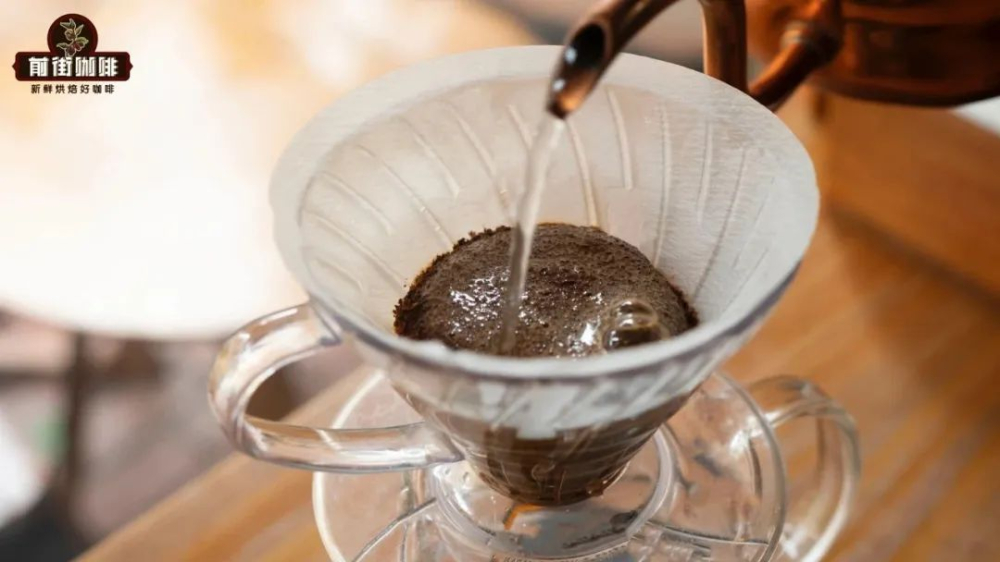
Unlike sharp acidity, bitterness is shaped not just by brewing but by roast degree. Bitterness tolerance varies wildly—some find Mandheling not bitter at all, while others liken it to herbal medicine. If you're sensitive to bitterness, avoid dark roasts whose labels tout caramel, dark chocolate, hazelnut, cocoa, or cream; choose light-to-medium roasts with prominent floral and fruit (i.e., acidic) descriptions instead.
FrontStreet Coffee
No. 10, Bao'an Front Street, Yandun Road, Dongshankou, Yuexiu District, Guangzhou, Guangdong Province
FrontStreet Coffee Recommendation
Low-Bitter Beans for the Bitterness-Sensitive
If bitterness is your enemy, brew light roasts on the V60. The FrontStreet Ethiopia Yirgacheffe Gudding offers gentle, bright citrus-berry acidity with a green-tea finish—nothing harsh. The Ethiopia Hambela pushes further with tropical fruit (strawberry, passion fruit, jackfruit, lychee) and almost zero bitterness, while the Panama Esmeralda Red-Label Geisha brings jasmine and bergamot elegance for special brews. All three flourish at the V60's fast extraction, where their florals and lively acidity shine without a trace of harshness.
For Those Who Like It Darker
Conversely, if your palate prefers depth, accept that some bitterness is part of the deal and manage it through the grind and temperature instead of the roast. The PWN Indonesian Golden Mandheling (dark chocolate and herbs, low acidity) and Brazil Queen Estate (nuts, cocoa, caramel sweetness) are the medium-dark benchmarks—grind them at an 80% #20-sieve passing rate, keep water near 92°C, and they'll taste rich and sweet rather than burnt.
Important Notice :
FrontStreet Coffee is a long-established specialty coffee roaster in Guangzhou China, selling freshly roasted beans from its own farm in Yunnan as well as dozens of carefully selected single-origin beans from around the world for both pour-over and espresso. The products deliver consistently excellent quality and great value, with shipping within 24 hours. Guangzhou's FrontStreet Coffee shop is recommended by many coffee lovers, and the beans are now available online at the Tmall 。
FrontStreet Coffee has moved to a new address:
FrontStreet Coffee Address: 315,Donghua East Road,GuangZhou
Tel:020 38364473
 Scan and follow the En Gafei WeChat official account. Please indicate that the reprint comes from "En Gafei".

