Guatemala Coffee Development, New Eastern Region, Geisha Variety, New Eastern Geisha Coffee Beans Introduction
The Development of Guatemalan Coffee
Guatemala sits at the southern end of North America, bordering Mexico, Honduras, Belize, and El Salvador. Two-thirds of its territory is mountains and plateau: the Cuchumatanes range in the west and the Sierra Madre in the south, both volcanic zones holding more than 30 volcanoes. Tropical rainforest, volcanic soil, and diverse microclimates give Guatemalan beans their elegant, lively acidity, clean flavors free of impurities, and distinct layering.
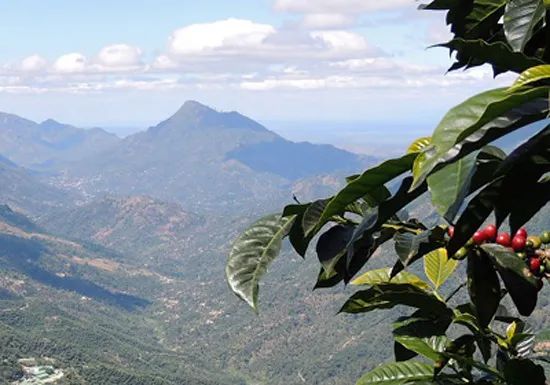
In the mid-18th century, Jesuit missionaries brought coffee seeds to Antigua, and by the early 19th century there are records of Guatemalans drinking coffee. At the time, however, the country's main cash crop was indigo dye. Later, locust damage and the arrival of synthetic dyes undermined that export. To revive the economy, the government began encouraging coffee and other crops. By 1856 coffee had become an important Guatemalan crop, and in 1960 the National Coffee Association (ANACAFE) was founded to strengthen the national economy through coffee production and export.
Nuevo Oriente Region
Of Guatemala's 22 provinces, 20 grow coffee. Eight regions are especially famous, split into five volcanic and three non-volcanic areas, with cultivation averaging above 1,500 meters. The non-volcanic regions are Huehuetenango, Coban, and Nuevo Oriente; the volcanic regions are Atitlan, Antigua, Acatenango, Fraijanes, and San Marcos. Huehuetenango and Antigua are the best known — FrontStreet Coffee offers a "Flora Goddess" bean from Antigua and an entry-level selected Guatemalan from Huehuetenango. But the Nuevo Oriente region has recently been turning heads too.
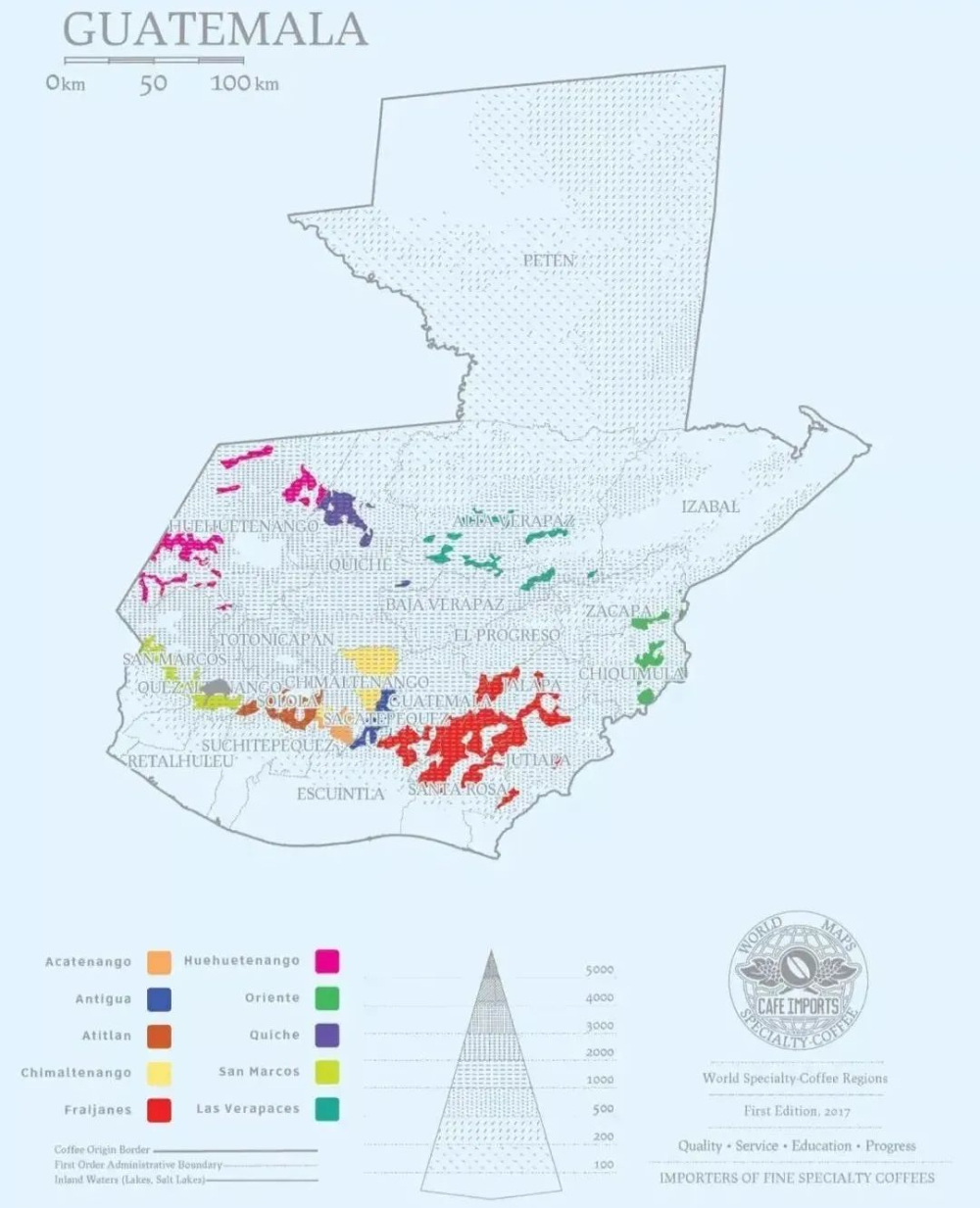
Nuevo Oriente lies in eastern Guatemala near the Honduran border and is the country's youngest coffee region — cultivation only began there in the 1950s. Rainfall is abundant year-round, and at 1,500–2,050 meters the altitude brings persistent mist and fewer sunshine hours, making it more humid than other regions. Nuevo Oriente was once among Guatemala's poorest and most isolated areas. Though it was a volcanic zone in ancient times, the soil is mineral-rich, and combined with plentiful rain and high altitude, the beans produced here show remarkably complex, varied flavor profiles.
Geisha Variety
Geisha was discovered in Ethiopia in the 1930s. From there it went to Tanzania in 1936, on to Costa Rica in 1953, and finally from Costa Rica to Panama in 1970. In those days quantity mattered more than quality, and Geisha's relatively weak branches made it unpopular with farmers, so it was never widely planted. The specialty coffee wave later shifted attention to the bean's inherent flavors. In 2005, Hacienda La Esmeralda entered Geisha in the Best of Panama competition and auction; with delicate florals, jasmine, peach, and bergamot plus exceptionally high scores, it took the record for coffee auction prices, selling for over $20 per pound. Countless countries rushed to introduce Geisha — Guatemala among them.
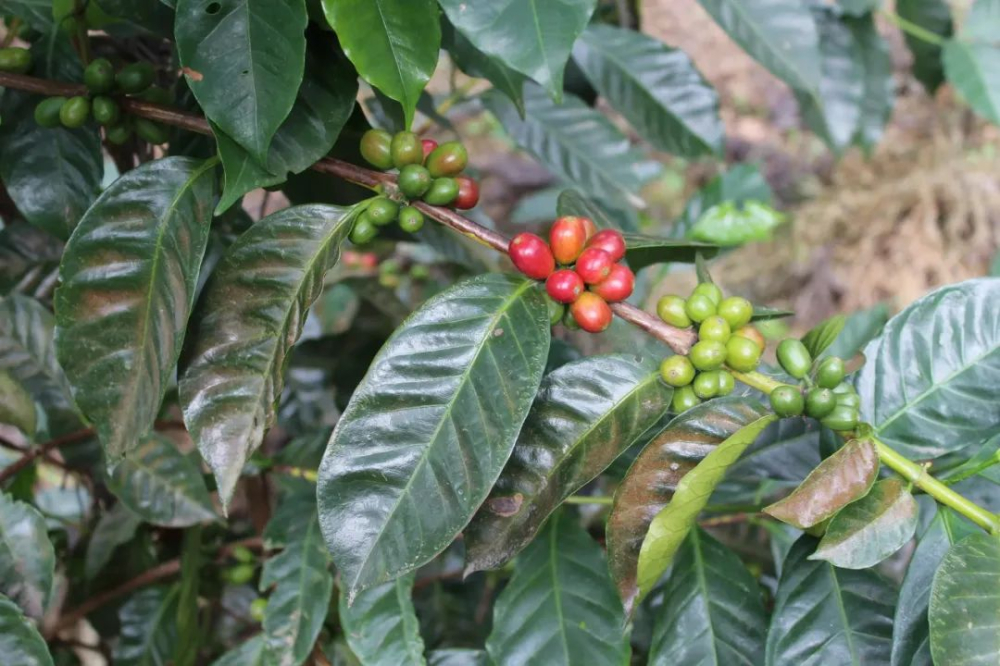
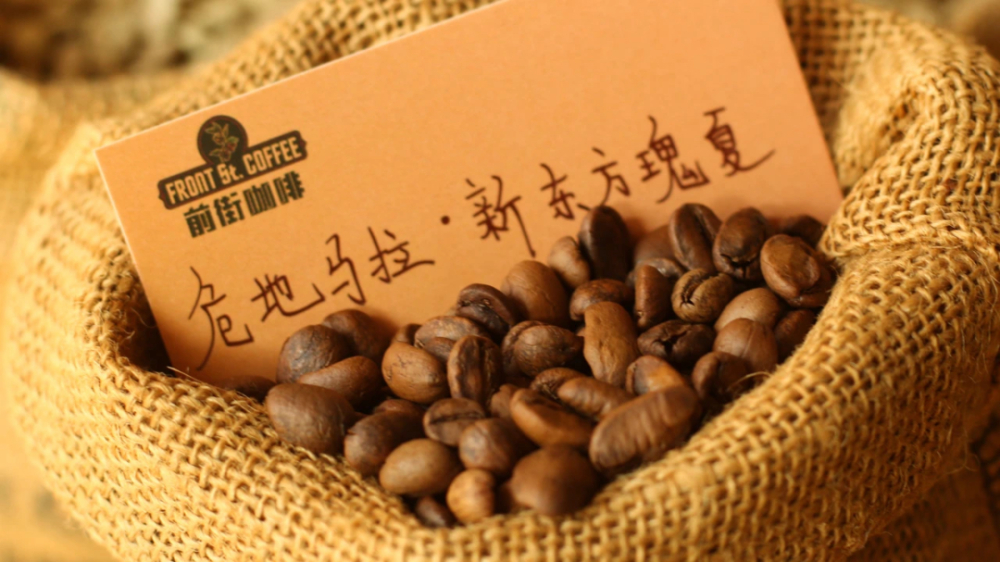
FrontStreet Coffee Guatemala Nuevo Oriente Geisha Coffee Beans
Region: Nuevo Oriente
Altitude: 1,500-2,050 meters
Variety: Geisha
Processing: Honey Process
Flavor Notes: White floral notes, sweet orange, bergamot, honey, toffee
FrontStreet Coffee's Nuevo Oriente Geisha is honey processed and roasted light-to-medium. Brewed on a V60 at 1:15 with 92°C water, it opens with elegant white florals, then shows gentle fruit acidity, sweet orange and bergamot, and toffee sweetness — a smooth, honey-soft mouthfeel with rich layered variation.
FrontStreet Coffee Recommendation
If this honey-processed Guatemalan Geisha awakens your curiosity about the variety, taste where it made its name: the FrontStreet Esmeralda Red Label ("Esmeralda Special") grows at 1,600–1,800 meters, must cup above 90 points, and comes from single micro-plots — like the famous Jaramillo block — while the more affordable Green Label ("Private Collection") blends batches from multiple high-altitude plots into Esmeralda's signature Geisha profile. For a gentle first taste of "Geisha flavor" at an entry-level price, the FrontStreet Boquete Geisha delivers the classic orange-blossom honey note, oolong-tea finish, and delicate fruit acidity.
Geisha is dense and floral, and it tends to sink and clog the bed, so grind a touch coarser — about a 78% pass rate on a #20 sieve — and brew at 91°C: 15g of coffee in a small Hario V60 at 1:16, in three pours of 30g bloom, 125g, then 225g, finishing around 2:10–2:20.
Important Notice :
FrontStreet Coffee is a long-established specialty coffee roaster in Guangzhou China, selling freshly roasted beans from its own farm in Yunnan as well as dozens of carefully selected single-origin beans from around the world for both pour-over and espresso. The products deliver consistently excellent quality and great value, with shipping within 24 hours. Guangzhou's FrontStreet Coffee shop is recommended by many coffee lovers, and the beans are now available online at the Tmall 。
FrontStreet Coffee has moved to a new address:
FrontStreet Coffee Address: 315,Donghua East Road,GuangZhou
Tel:020 38364473
 Scan and follow the En Gafei WeChat official account. Please indicate that the reprint comes from "En Gafei".