How to Create Smooth and Fine Milk Foam? Reasons for Rough Latte Foam

Among latte art enthusiasts there's a well-worn saying: "Get the milk foam right, and the latte art pours itself." The point is that every beautiful pattern starts with foam that is fine, silky, and free-flowing. As the saying goes, "all things are difficult before they are easy." Recreating that perfect, café-quality microfoam in your own kitchen is exactly where most beginners get stuck.

Today FrontStreet Coffee will grab one of our everyday pitchers and walk you, step by step, through producing fine and smooth milk foam!

Key Points to Remember
First, a quick word on what the steam wand of an espresso machine is actually doing.
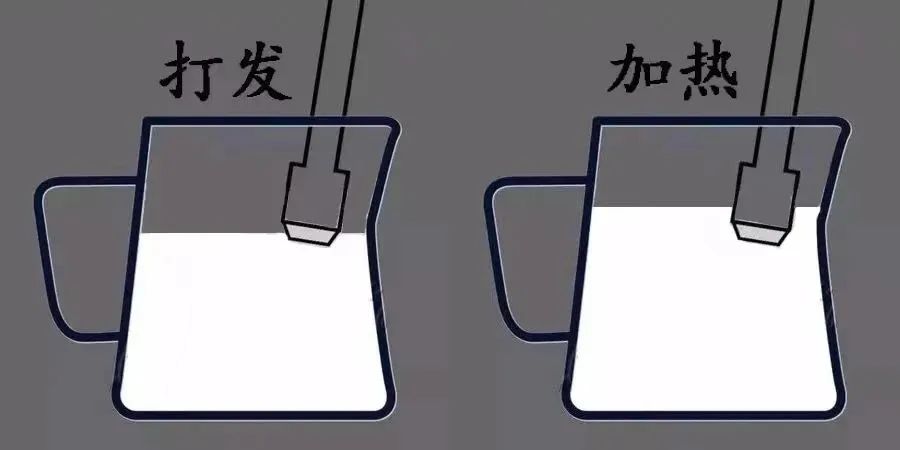
When you open the steam valve, jets of hot water vapor shoot out of several small holes at the wand's tip, striking the milk surface and heating it rapidly—that's the heating side of the job. Frothing, or "foaming," is different: by adjusting the angle between pitcher and wand, you let the escaping steam drag air down into the milk. Milk proteins then wrap around that air, forming a soft layer of foam that floats on the surface.
In practice, the opening move is to keep the steam holes half in air and half submerged in milk. Then, depending on how thick you want the foam, you control the air intake by listening for the "tss~tss~tss~" sound and stopping at the right moment. Only once aeration is finished should the milk fully "swallow" the steam holes, cutting off further foaming and moving on to the next stage: texturing.
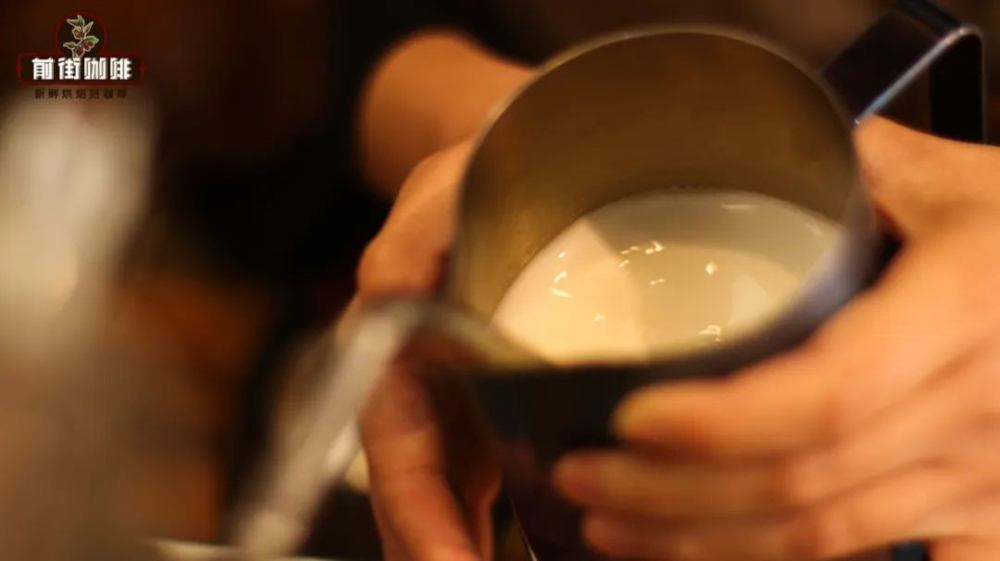
The Key to Texturing: Creating a Vortex
Understand that the steam from those holes does more than force air into the milk—it also keeps slicing through the "air pockets" the proteins have encapsulated.
As proteins trap more and more air, they form ever-larger bubbles, and big bubbles burst easily. The escaping steam conveniently shreds these unstable giants, splitting them into countless small bubbles—far more stable and far less likely to pop. Packed together, those fine bubbles form a smooth microfoam layer. The whole point of creating a vortex is to stop the steam from scattering randomly and concentrate its energy on eliminating the large bubbles.
From experience, FrontStreet Coffee believes two small tricks make a vortex much easier to achieve: first, finding the right position and angle for the steam wand, and second, maximizing the milk's surface area in the pitcher.

To get a proper vortex, you must do more than adjust where the wand meets the milk—you need the steam to generate a horizontally acting force. When you plunge the wand into the milk, aim for the 3 or 9 o'clock position, with the metal tube at a 60-degree angle to the liquid surface. That way the steam cuts into the milk sideways. In other words, once you've mastered the angle and the landing point of the steam holes, you can produce fine microfoam even without steadying the pitcher by hand.
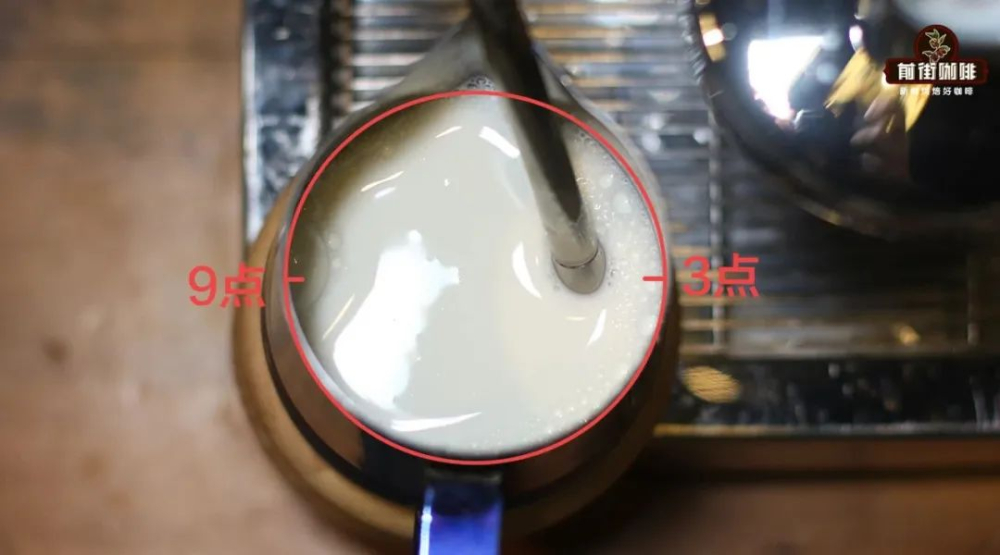
The other key is tilting the pitcher to expose a larger surface area. First, this makes a moving vortex easier to build. Second, once a certain amount of foam exists, the wider the milk surface, the thinner the foam layer becomes—large bubbles get cut down to size faster, and the texture turns out finer.
How to Froth and Texture Simultaneously?
FrontStreet Coffee has noticed that some people do manage to build a vortex, yet their foam still comes out rough—sometimes even stiff and overworked. Why?
The problem occurs at the handoff between frothing and texturing. If the steam holes sit at the bottom of the vortex when aeration ends, the steam slams into the pitcher wall and generates an undercurrent, and the upper layer of bubbles never gets rolled down into it. For the milk, the vortex is then doing nothing but heating; the bubbles stay just as coarse as before. So after incorporating air, get the steam holes into the foam layer as quickly as possible—that's when true texturing begins.

In FrontStreet Coffee's view, rather than treating these as two separate stages, why not simply run frothing and texturing at the same time?
Start with the steam holes fully submerged, then quickly adjust the angle to build a vortex and gradually lower the pitcher. As the pitcher drops, the milk surface relative to the steam holes falls too, letting the holes peek just above the surface and begin aerating. The essence is in moving gradually—that gives you fine control over how much air goes in. And because the steam is already spinning a vortex through the foam layer, the foam starts out in a relatively fine state. Once the right amount of air is in, fix the pitcher in place and continue texturing.
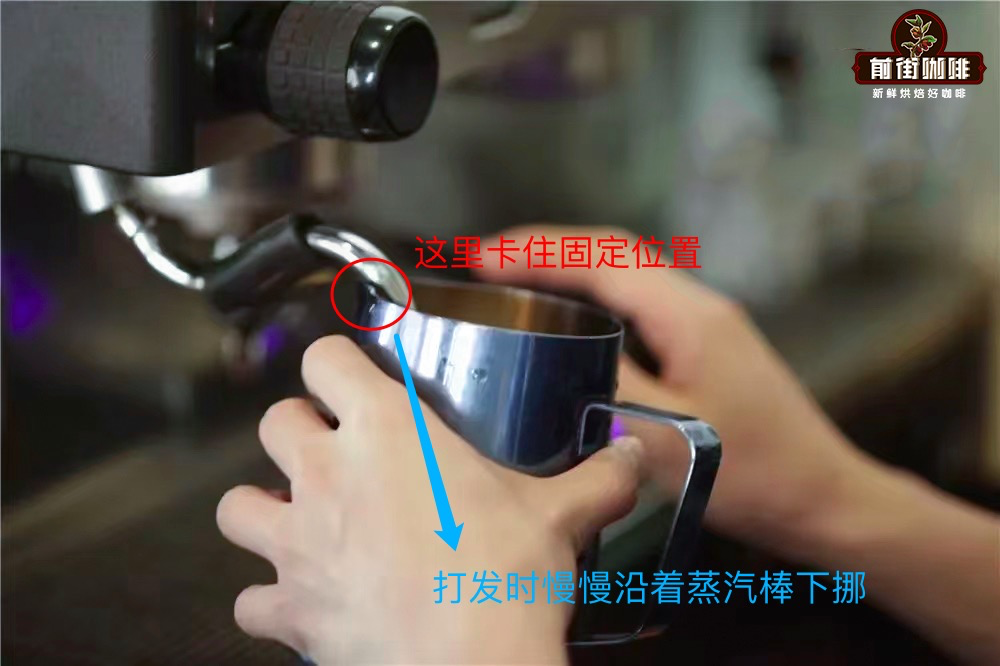
To lock in this stable position, first practice bracing the pitcher against the steam wand so it slides up and down freely. FrontStreet Coffee generally suggests using the pitcher's spout to travel slowly down along the wand. Practice with water first to develop the feel before you move on to real milk.
- END -
FrontStreet Coffee
No. 10, Bao'an Qianjie, Yandun Road, Dongshankou, Yuexiu District, Guangzhou, Guangdong Province

FrontStreet Coffee Recommendation
FrontStreet Classic Blend
If latte art practice is your goal, the FrontStreet Classic Blend is the bean to buy. It is a medium-dark espresso recipe assembled from beans across three growing regions, with its design inspired by the old-time favorite "Mamba" pairing of Mandheling and Brazil. A small amount of Robusta is added for extra aroma and crema. When extracted, it releases distinct notes of butter, toasted bread, and caramel biscuits—bold flavor, a solid body, and fine, silky crema. Extraction is remarkably stable, making it a must-have home coffee for beginners.
FrontStreet Specialty Blend
Another medium-dark espresso bean, the FrontStreet Specialty Blend suits anyone drawn to rich, nutty profiles. It pairs washed Colombian beans with pulped natural Brazilian beans, delivering nuts, dark chocolate, and caramel in espresso. Across Americanos, lattes, flat whites, and other milk coffees, it brings out smooth aromas of cream, almond, and cocoa, with crema that loses nothing to café output—easily sufficient for latte art practice. It's the natural choice whether you plan to open a shop or learn at home.
FrontStreet Commercial Blend
If the Specialty and Classic Blends are made for newcomers, the FrontStreet Commercial Blend is cut to measure for those about to open a café. This traditional espresso formula adds a small share of Robusta on top of the Specialty Blend, producing more deep-brown, delicate crema and a heavier, weightier character. Americanos, lattes, and mochas all carry nuts, cocoa, and caramel—and it makes latte art feel almost effortless.
Important Notice :
FrontStreet Coffee is a long-established specialty coffee roaster in Guangzhou China, selling freshly roasted beans from its own farm in Yunnan as well as dozens of carefully selected single-origin beans from around the world for both pour-over and espresso. The products deliver consistently excellent quality and great value, with shipping within 24 hours. Guangzhou's FrontStreet Coffee shop is recommended by many coffee lovers, and the beans are now available online at the Tmall 。
FrontStreet Coffee has moved to a new address:
FrontStreet Coffee Address: 315,Donghua East Road,GuangZhou
Tel:020 38364473
 Scan and follow the En Gafei WeChat official account. Please indicate that the reprint comes from "En Gafei".