
Why is Espresso Extraction Pressure 9 Bar? How Does It Relate to Extraction Parameters and How to Adjust?
The Hidden Key Player: Understanding Extraction Pressure in Espresso
FrontStreet Coffee often says that once you understand how espresso extraction parameters relate to one another, a delicious shot is practically effortless — slight exaggeration intended. Those parameters include grind size, dose, brew ratio, and extraction time.
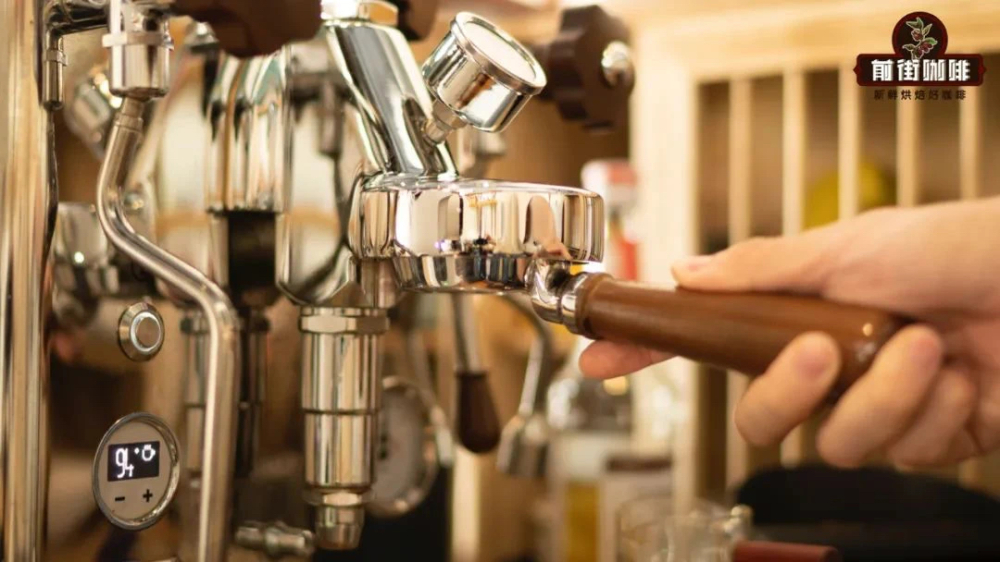
But did you know there is actually another parameter that matters a great deal? On some machines it can be a nuisance to adjust, which is why FrontStreet Coffee usually focuses on the parameters above, the ones that are easy to control. Today, though, FrontStreet Coffee is going to share this "hidden heavyweight" of extraction: extraction pressure.
The golden crema that pressure produces is what sets espresso apart from ordinary coffee, since only pressurized extraction can create that dense, thick layer of foam.
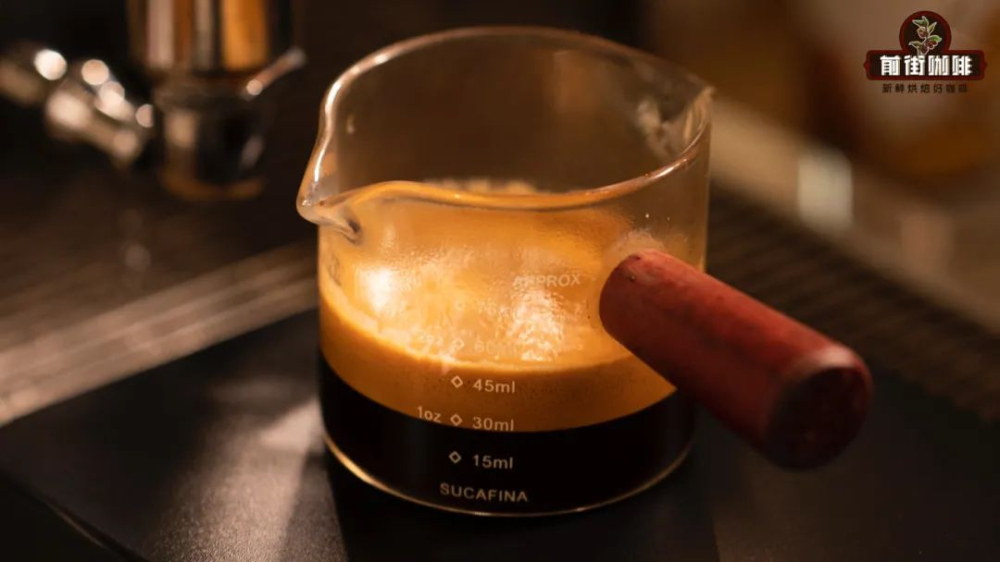
People almost always associate machine pressure with "9bar," largely thanks to the espresso tutorials found all over the internet. That is not wrong, of course — machines generally leave the factory set to 9bar as the default. So here is the question: do you know why 9bar is the default?
Understanding the Different Pressures in a Coffee Machine
First, let's get clear on the different types of pressure in a coffee machine. Machine pressure divides into extraction pressure and pump pressure.
Extraction Pressure: When we talk about 9bar, we mean extraction pressure. It is the pressure applied once the portafilter is locked in to pull substances out of the coffee.
Pump Pressure: A machine's extraction pressure comes from the pressure pump inside it. Pump pressure is the direct pressure the pump provides when the extraction button is pressed. Both extraction pressure and pump pressure have their own gauges. When you simply run water through the machine with nothing attached that requires pressure, one gauge needle moves the instant you press the button — that is the pump pressure gauge.
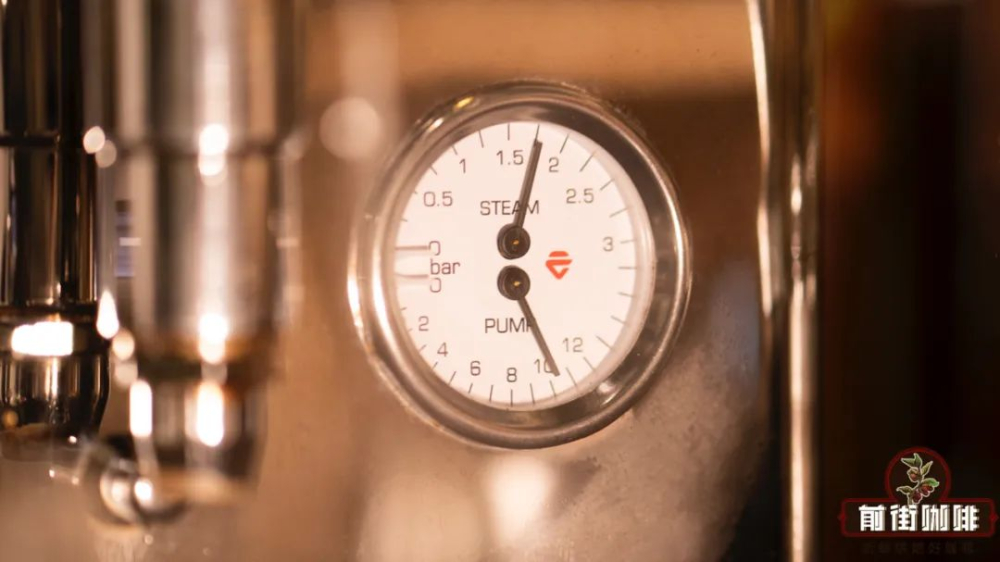
When you lock in a portafilter loaded with a puck, or use a bottomless portafilter for extraction, one gauge's reading will climb gradually after the water starts flowing — that is the extraction pressure gauge.
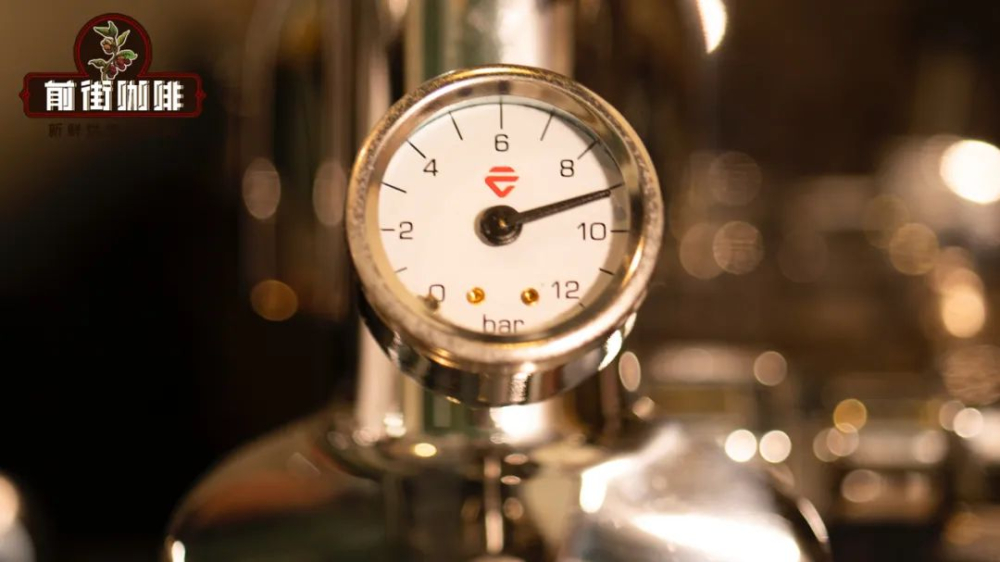
Now that the two types of pressure are clear, let's look at why extraction pressure is typically set at 9bar.
Why Is 9bar the Standard for Extraction Pressure?
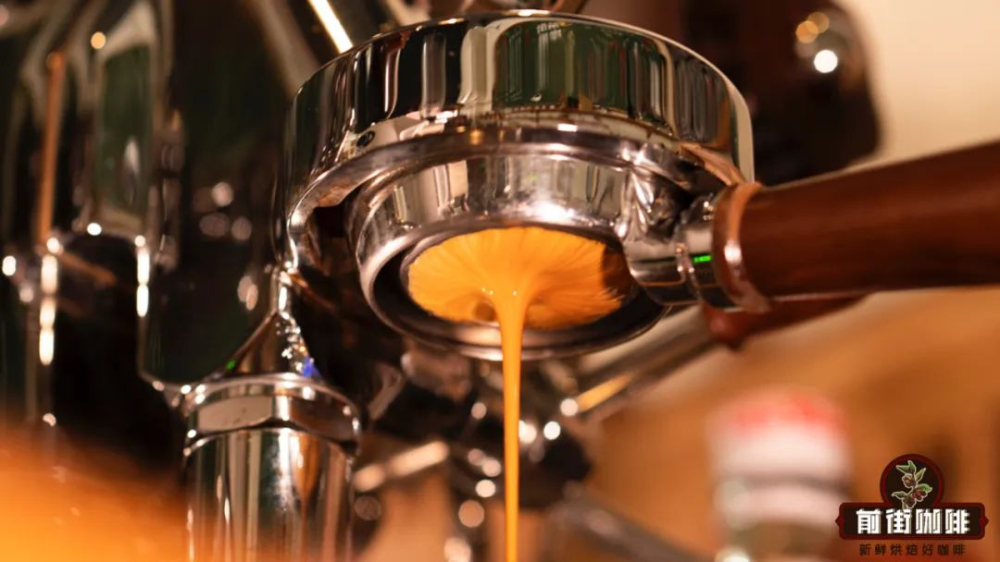
To understand why 9bar became the standard, we can run an extraction experiment and see directly how espresso changes under different pressures. This experiment uses a 20g dose with a 1:2 brew ratio (40ml), the parameters FrontStreet Coffee has set based on 9bar. At the standard 9bar, extracting 40ml of espresso from 20g of grounds takes 30 seconds, with a flow rate of 1.4-1.6ml per second.
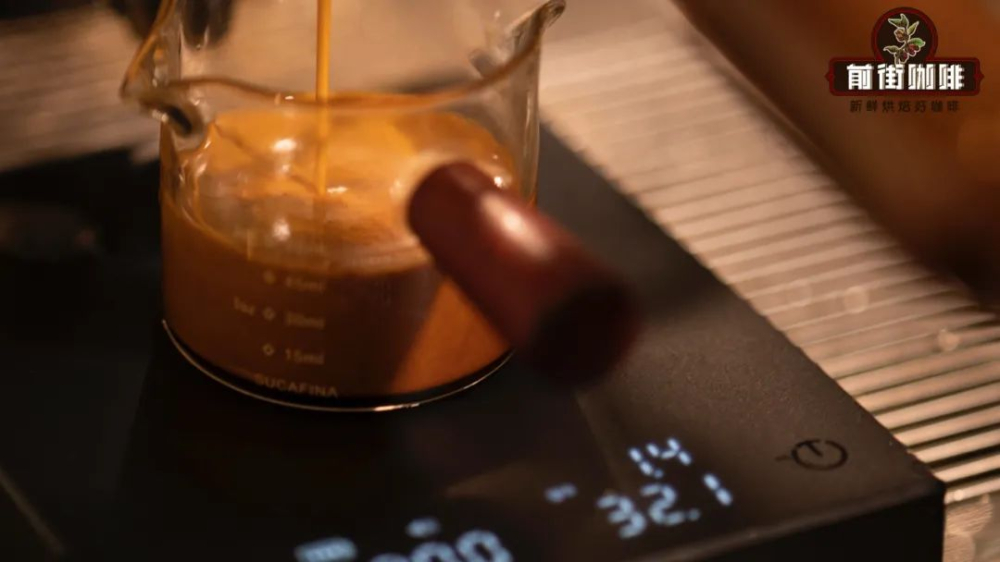
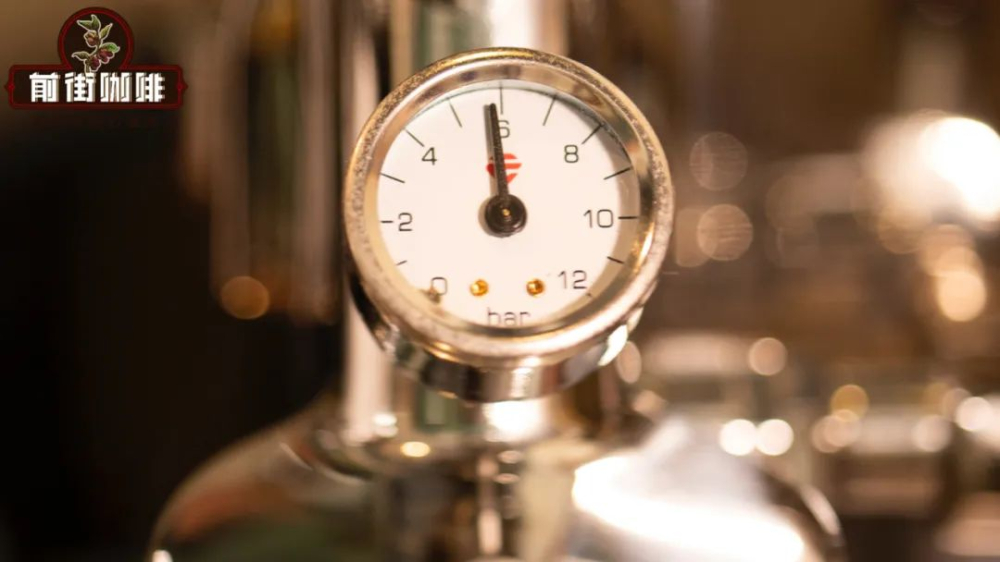
Then we use 6bar and 11bar respectively to see how long they take and how the flavour differs. When the pressure is adjusted to 6bar, the extraction pressure gauge changes noticeably. With 9bar, going from 0 to 9bar took only 5-6 seconds; at 6bar, going from 0 to 6bar takes 7 seconds, with a slower flow rate of 0.7-0.9ml per second. Extracting 40ml of espresso from 20g of grounds took 38 seconds.
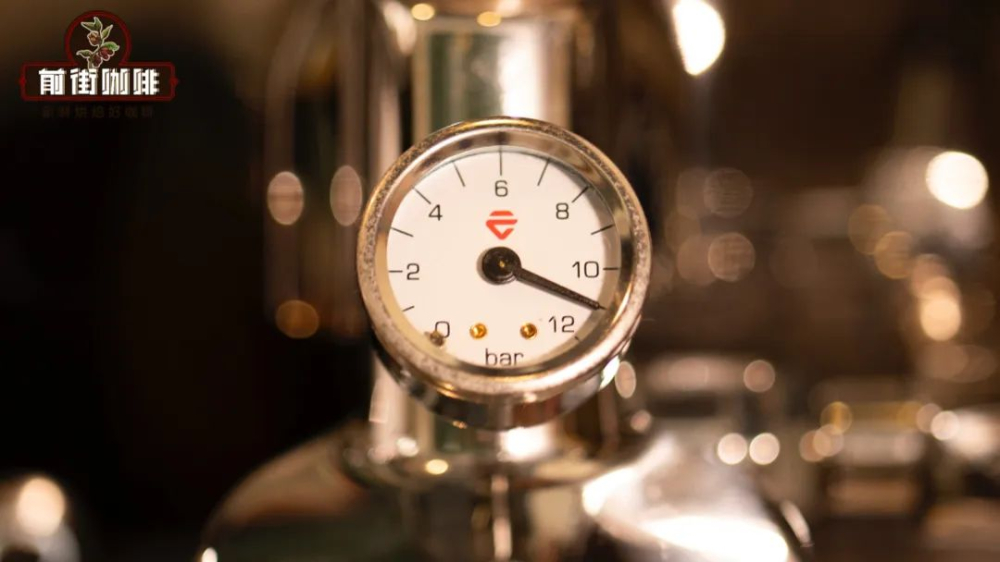
Finally comes the 11bar test. Through the gauge we can see that reaching 11bar from 0 takes 5 seconds. The initial flow rate is no different from 9bar, but as time goes on it extracts faster and faster. Ultimately it took 27 seconds, with a flow rate of 1.5-1.8ml per second.
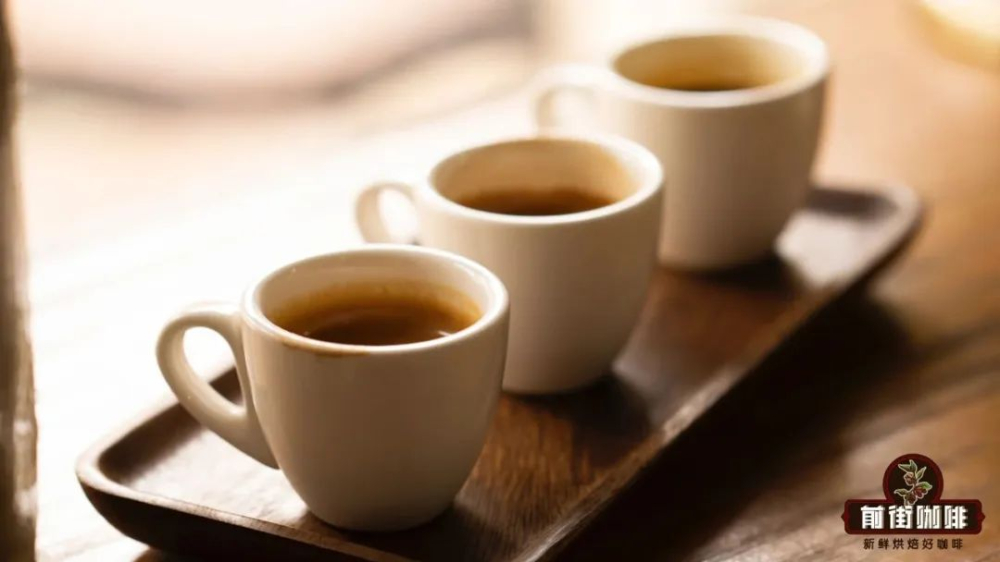
After extraction, FrontStreet Coffee tasted all three immediately, and here are the results. The 6bar espresso looks similar to the 9bar shot, but its crema tastes somewhat coarser, and its acidic aroma is not as rich as the 9bar version, with less distinct layers; on the other hand, it tastes smoother and richer. The 11bar espresso likewise shows no significant difference in appearance, but on tasting you find its acidic aroma is more prominent and intense, to the point of being stimulating.
Although this experiment used parameters based on 9bar, it shows clearly that under the same parameters — grind, dose, brew ratio — lower extraction pressure needs a longer extraction time, with less distinct flavour layers and a smoother taste, while higher extraction pressure needs a shorter time and delivers a more impactful flavour. This relates to the sour-sweet-bitter extraction formula FrontStreet Coffee often mentions, though that is not today's focus.
The History Behind 9bar as the Standard
Back to why 9bar became the current standard. When pump-pressurized machines became widespread, they completely replaced the early machines that offered only 3-4bar. Modern machines have higher extraction pressure and can pull coffee more quickly, but that created problems. People found that higher pressure and greater speed do not necessarily produce better-tasting coffee. Once pressure exceeds 10bar, the espresso easily develops burnt, woody, charcoal-like flavours. At 9bar, negative conditions occur least often and the resulting coffee tastes pleasant with good flavour. So the advantages of 9bar were passed around, and it gradually became the default pressure for coffee machines.
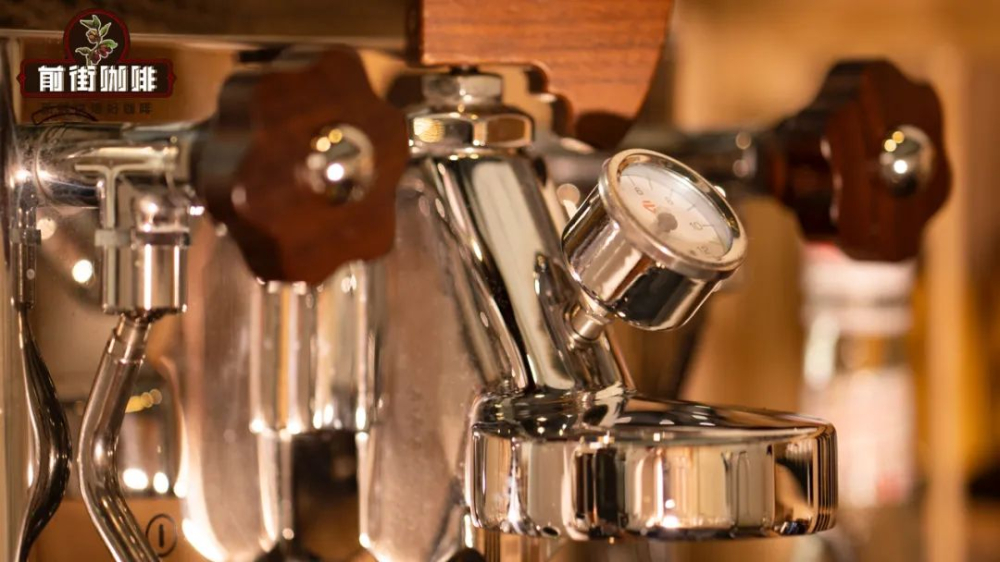
As FrontStreet Coffee mentioned in a recent article, extraction pressure is no longer fixed at 9bar. During extraction, pressure can be adjusted by hand to create changes, letting espresso present the flavours we want. This method has a professional name: "variable pressure extraction." When time permits, FrontStreet Coffee will go into it further.
- END -
FrontStreet Coffee
No. 10, Bao'an Qianjie, Yandun Road, Dongshankou, Yuexiu District, Guangzhou, Guangdong Province
FrontStreet Coffee Recommendation
Different pressure profiles reward different beans, and single origins show the change most clearly. FrontStreet Coffee's sun-dried Huakui SOE is a striking example. Grown at elevations up to 2,300 metres in Guji's Hambella area of Ethiopia, the cherries get a long, slow ripening period that translates into complex aromas, and the natural process builds in more sweetness still. Roasted to a medium level, it keeps the variety's elegant floral and fruit character while caramelising just enough: as an Americano or a latte it brings cream, cocoa, berry, faint florals, and a black tea note, with the creamy strawberry flavour that makes it stand out.
If you prefer a high-sweetness shot over a bright, acidic one, FrontStreet Coffee's Costa Rica Blackberry SOE is worth trying. It is a honey-processed single origin: after picking, the ripe cherries are taken to the estate, sorted, washed, stripped of their skin, and dried, which shortens drying and lets the bean absorb the fruity, mucilage-driven aroma and clean sweetness of blackberry. Roasted medium, it makes a sweet-sour, refreshing Americano, and with milk it shows cranberry cookie, raisin, and nut.
Important Notice :
FrontStreet Coffee is a long-established specialty coffee roaster in Guangzhou China, selling freshly roasted beans from its own farm in Yunnan as well as dozens of carefully selected single-origin beans from around the world for both pour-over and espresso. The products deliver consistently excellent quality and great value, with shipping within 24 hours. Guangzhou's FrontStreet Coffee shop is recommended by many coffee lovers, and the beans are now available online at the Tmall 。
FrontStreet Coffee has moved to a new address:
FrontStreet Coffee Address: 315,Donghua East Road,GuangZhou
Tel:020 38364473
 Scan and follow the En Gafei WeChat official account. Please indicate that the reprint comes from "En Gafei".

