
Ethiopian Coffee Regions, Guji Zone, the History of Guji Coffee, and Introduction to Guji Coffee 7.0
Ethiopia: The Birthplace of Coffee
When people think of coffee, many think of Ethiopia. Ethiopia is the largest Arabica coffee-producing country in Africa, with a long and storied coffee history. It is home to a huge number of varieties - by one estimate, between 10,000 and 15,000 - most of which have not yet undergone formal genetic identification.
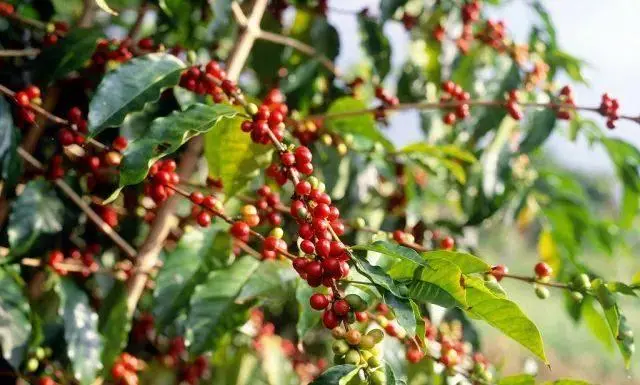
Ethiopia is the world's largest coffee gene pool. As the birthplace of coffee, it has multiple producing regions, with Guji, Yirgacheffe and Sidama particularly renowned. Among them, Guji is home to the famous Flower Queen coffee beans.
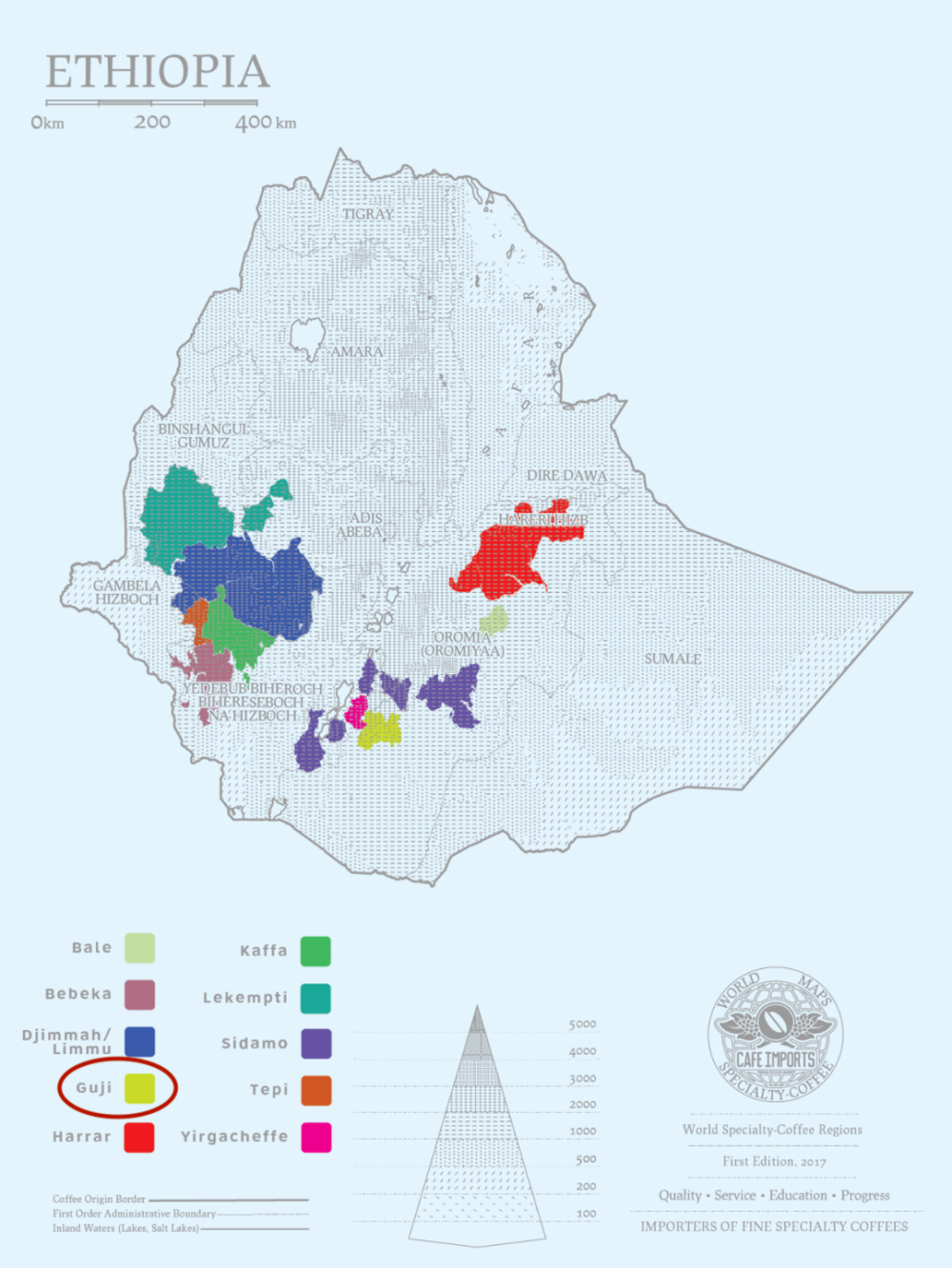
Guji Region: Home of Flower Queen Coffee
The Guji region, formerly part of the Sidama region, was independently designated as a new region by the Ethiopia Commodity Exchange (ECX) in 2010. The most famous beans from Guji are Flower Queen, which originated in one of its sub-regions, Hambella. The western part of Hambella faces the Kochere mountains of Yirgacheffe, with cultivation altitudes reaching 2,100-2,300 meters. To the southeast, east and north it borders other Guji sub-regions, Shakiso and Uraga. There are currently about 20 processing plants of various sizes in Hambella, with a harvest period from November to January of the following year.
Flower Queen made its name at the 2017 TOH (Ethiopia National Taste of Harvest Competition), winning the championship with its outstanding strawberry and cream flavor. That same year, Li Jianfei of Beijing, runner-up in the China region of the World Coffee Brewing Championship, also used Flower Queen beans to take second place, adding considerably to the beans' reputation.
The Evolution of Flower Queen Coffee
The championship-winning Flower Queen was a natural processed lot from the Buku Abel processing plant in Hambella, owned by DW Company. It was Chinese green bean importers who named it "Flower Queen" for its rich strawberry and cream aroma. Later, DW expanded its Hambella processing plants to four, adding Buku Saysay, Haro Soresa and Tirtiro Goye to the original Buku Abel, capable of producing roughly 1,100 tons of coffee a year. Strictly speaking, among all these estates and facilities, only the natural processed coffee from Buku Abel can be called "Flower Queen coffee beans." That explains why Flower Queen 2.0, Flower Queen 3.0 and Flower Queen 3.1 appeared in 2018 and 2019.
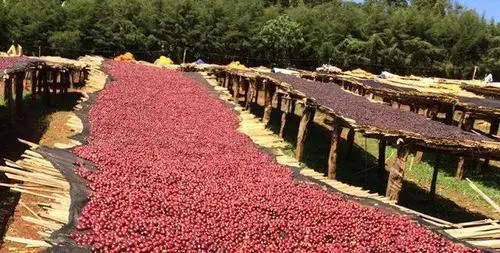
Flower Queen 2.0 was introduced in 2018, followed by 3.0 and 3.1 in 2019. Since then a Flower Queen x.0 series has been released each year, with Flower Queen 7.0 arriving in 2023. With DW's gradual expansion of its processing plants and rising production, however, the flavor has visibly diverged from the original Flower Queen that made its name in 2017.
Flower Queen 7.0: Tasting Notes
FrontStreet Coffee currently offers Flower Queen 7.0, which comes from the Buku Abel processing plant and uses natural processing. Brewed with a V60 at a 1:15 ratio, it opens with citrus, apricot and passion fruit sweet-sour notes on entry, a slight fermentation sensation, a smooth mouthfeel and tea-like qualities.
FrontStreet Coffee Recommendation
Flower Queen is one of Ethiopia's great calling cards, but if you want to get to know the country through its most classic washed profile, begin with the entry-level FrontStreet Washed Yirgacheffe. Known for white jasmine, bright citrus and lemon acidity and a tea-like body, it is the bean many drinkers start their specialty coffee journey with, and its friendly price helps.
Yirgacheffe is a town in southern Ethiopia, within the Sidama province, at roughly 1,700-2,100 meters, with the coffee trees planted above 1,800 meters, making it one of the highest coffee regions in the world. Once a wetland, it became synonymous with the distinctive white floral and lemon-citrus acidity of Ethiopian specialty coffee. By 2010, Yirgacheffe's fame was such that the Ethiopia Commodity Exchange separated it from the Sidama region, giving rise to the household name we know.
Many people don't realize that the Yirgacheffe area is made up of many smaller zones - even small villages - housing seasoned cooperatives whose mature craft lifts the Yirgacheffe flavor to another level. The most representative is FrontStreet Washed Gedingding Cooperative from Gedingding village. It sits in the Worka region at the southeastern edge of Yirgacheffe and was originally part of the Worka Cooperative under the Yirgacheffe union YCFCU; as demand for green bean traceability grew, it was mined out by coffee hunters worldwide as a "single region." Following the most traditional washed processing - and called by some the last pure land of Yirgacheffe - FrontStreet Gedingding carries no traditional bitterness, with fresh, bright citrus and lemon acidity and the fragrance of jasmine that wins over many drinkers on the first sip.
Also from Yirgacheffe, FrontStreet Sun-Dried Red Cherry uses a full-red-cherry sun-dried process: only fully ripe, sound cherries are picked and sent to the processing station for a first sorting, then spread on raised beds to dry. In the first few days they are turned every 2-3 hours to prevent uneven heat and over-fermentation. After three to five weeks of sun-drying, workers hull the outer pulp as weather and temperature allow and move the beans to storage. Because the cherries dry with the fruit still on, the result keeps the typical Yirgacheffe character while gaining the tropical fruit of natural processing: citrus acidity, berry juiciness, honeyed sweetness and a creamy smoothness.
As for brewing, FrontStreet suggests a V60 at 90-91°C, with 15g of coffee, a 1:15 ratio and a EK43s grind setting of 10 - fine sugar size, with 80% passing a #20 sieve. The FrontStreet method is to bloom with 30g of water for 30 seconds, then pour 95g (about 125g on the scale) over roughly one minute, then, when the water level drops to two-thirds of the bed, pour the remaining 100g (about 225g on the scale) in about 1 minute 35 seconds, finishing the drawdown in 2:00-2:10 before removing the dripper to complete extraction.
Important Notice :
FrontStreet Coffee is a long-established specialty coffee roaster in Guangzhou China, selling freshly roasted beans from its own farm in Yunnan as well as dozens of carefully selected single-origin beans from around the world for both pour-over and espresso. The products deliver consistently excellent quality and great value, with shipping within 24 hours. Guangzhou's FrontStreet Coffee shop is recommended by many coffee lovers, and the beans are now available online at the Tmall 。
FrontStreet Coffee has moved to a new address:
FrontStreet Coffee Address: 315,Donghua East Road,GuangZhou
Tel:020 38364473
 Scan and follow the En Gafei WeChat official account. Please indicate that the reprint comes from "En Gafei".

