How to Use a Vietnamese Drip Filter? Can It Be Used for Pour-Over Coffee Brewing?

Most regions have their own characteristic coffee pot. Even if it was not invented locally, it was certainly popularized there. Think of Ethiopia's ceramic coffee pot, the Turkish ibrik that releases coffee liquid continuously, the Italian Moka pot discussed in the previous article, and the protagonist of this one: the Vietnamese Phin filter.

The Vietnamese Phin filter, also known as a Vietnamese drip filter, is an essential tool for making Vietnamese condensed milk coffee. It consists of three main parts: the chamber that holds the coffee grounds and hot water, a press plate that compresses the grounds, and a lid that doubles as a base.
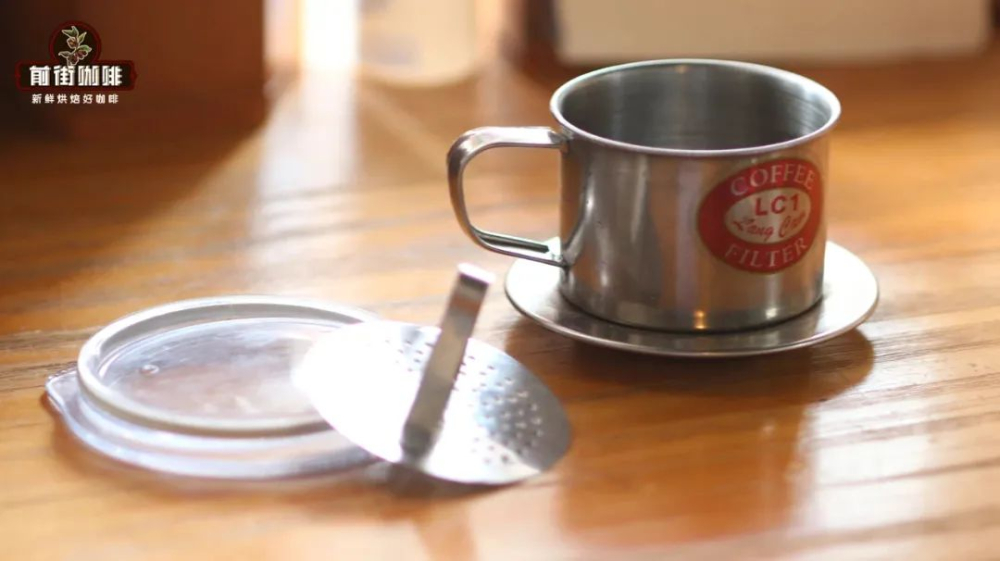
The Origin of the Vietnamese Phin Filter
The exact origin of the Vietnamese Phin filter cannot be precisely traced. The most widely circulated description online is that it already existed when Vietnam first started growing coffee. It is important to note that Vietnam's coffee cultivation began in the late 19th century during the French colonial period. That means the device predates this period, since Vietnam was only just beginning to grow coffee then and would not have been inventing brewing devices. Drawing on various inferences, the conclusion reached online is that although this Phin filter carries Vietnam's name, it was not actually invented in Vietnam.
Vietnamese Condensed Milk Coffee
Although Vietnam achieved great success in coffee cultivation and quickly joined the ranks of major coffee-producing countries, its main bean is Robusta, so locally extracted coffee generally tastes bitter and strong. That led people in Vietnam not to expect excellent floral and fruit aromas, since as long as the coffee was not bitter and was drinkable, it was good enough. So they thought of adding condensed milk to the coffee to neutralize Robusta's bitterness. Unexpectedly, the practice was widely loved, and at that time Vietnamese condensed milk coffee vendors could be found on every street corner.
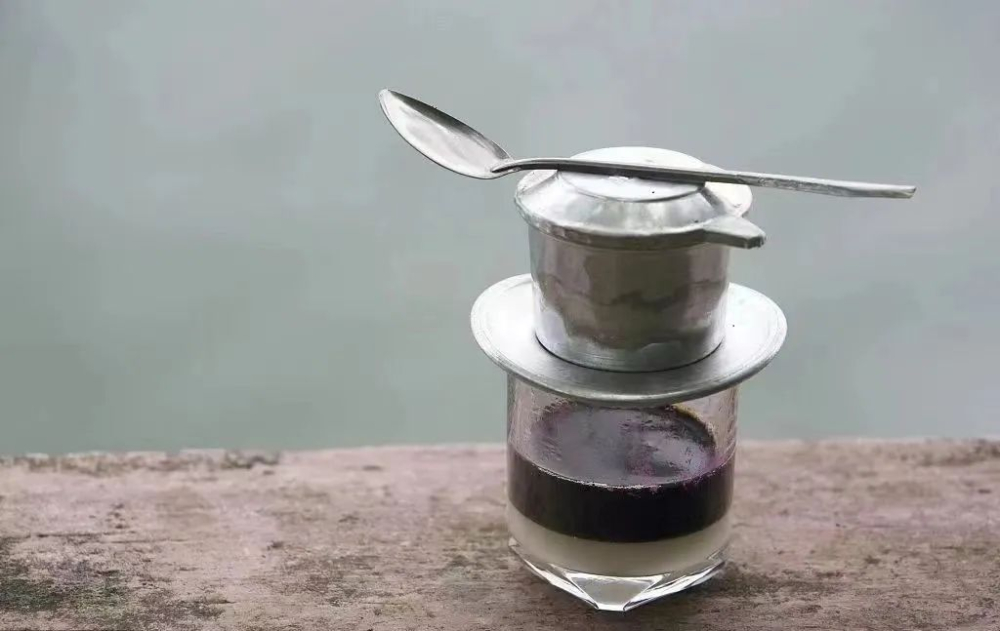
How to Use the Vietnamese Phin Filter
Next, how to use the Vietnamese Phin filter, which is also very simple. FrontStreet Coffee's extraction parameters are as follows.
Beans used: Indonesia · Golden Mandheling
Amount used: 10g, because FrontStreet Coffee's Phin filter is for small cups
Grind setting: EK43 setting 11, with a 65 percent pass-through rate on a #20 sieve
Coffee-to-water ratio: 1:15
Brewing water temperature: 90°C
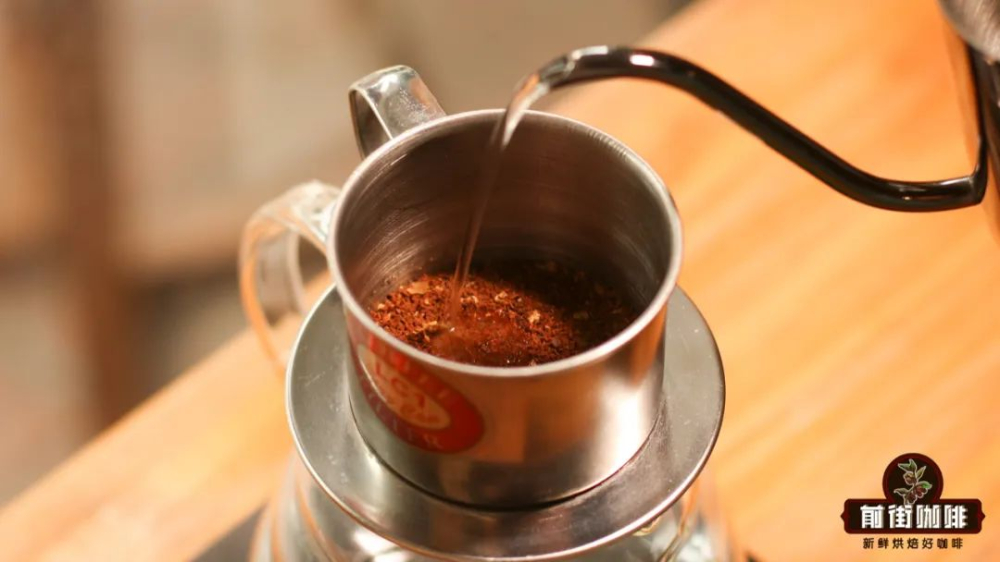
The traditional method is to add coffee grounds to the chamber, press them flat with the press plate, then pour in the target amount of hot water all at once, cover with the lid, and wait for the coffee liquid to finish dripping through the holes. It takes 3 minutes, and the extracted flavor is very balanced without unpleasant sensations.
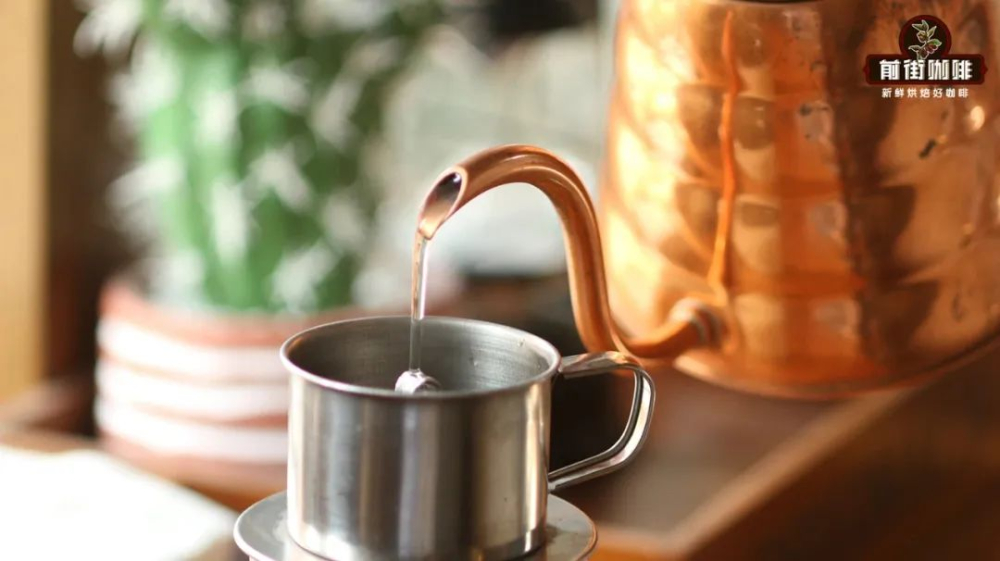
It does have one drawback: the gaps in the holes are too large, which often lets fine powder drip through with the coffee. FrontStreet Coffee therefore recommends placing a layer of filter paper at the bottom, which reduces the unpleasant sensations caused by fine powder. If you want to make Vietnamese condensed milk coffee, simply add your preferred amount of condensed milk to the bottom of the cup; FrontStreet Coffee adds 8ml of condensed milk per 100ml of coffee liquid.
Wait, why does it look somewhat like a pour-over drip cone? This gave FrontStreet Coffee a bold idea: if we use the pour-over method for brewing, what kind of characteristics would the coffee have? Let's brew it right away. The extraction parameters are as follows.
Beans used: Kenya · Assalia
Amount used: 10g
Grind setting: EK43 setting 10, with a 70 percent pass-through rate on a #20 sieve
Coffee-to-water ratio: 1:15
Brewing water temperature: 92°C
Pouring method: Three-stage pour
First, pour twice the amount of water as the grounds (20ml) for a 30-second bloom. After the bloom ends, slowly pour the second stage of 80ml of hot water in a large circular motion. When the water level is about to reach the bottom, slowly pour the remaining 50ml of hot water in another large circular motion, then wait for the dripping to finish.
The total time was 3 minutes and 5 seconds. Although it steeped for so long, there were no over-extracted bitter flavors. Kenya's black plum and tomato flavors came through well, but overall it was somewhat flat, lacking distinct layering. That is fine, though. This was just a fun experiment, and it is always good to explore the diversity of brewing equipment.
- END -

FrontStreet Coffee Recommendation
Vietnam's Phin is built around Robusta's strong, bitter character, so if you prefer a softer, brighter cup, Ethiopia is the place to look, as the birthplace of coffee and home to countless native varieties. FrontStreet Coffee's washed Yirgacheffe is an entry-level way into that world, with clear jasmine florals and bright citrus acidity. Yirgacheffe is a small town in southern Ethiopia, cool and misty year-round, where thousands of coffee trees flourish and give the cup its interwoven floral and fruity acidity, light and elegant with a tea-like body, like a clean glass of lemon tea.
For a more fruit-driven cup, the Gotiti Cooperative sits at the southeastern edge of Yirgacheffe in the Woka area and illustrates how much careful processing can add. It began as part of the Woka cooperative under the Yirgacheffe union YCFCU, with around 300 farmer members, and became an independent single origin in 2012 as demand for traceability grew. Because the fruit is stripped before drying, the coffee's inherent aromatics come through more clearly, showing citrus and lemon tones and elegant white florals, bright and delicate.
If you want the bold, distinctive sweetness that makes Ethiopian coffee so memorable, FrontStreet Coffee's Sun-Dried Huakui comes from the Hambella area of Guji in Sidamo, where ripe cherries are dried on raised beds for 21 days and turned regularly for even drying, with defective beans hand-sorted every three to five days. At a medium-light roast it shows a light ferment, florals, citrus, and mango, with honeyed sweetness, a cocoa note, and a thick body with a long finish.
Important Notice :
FrontStreet Coffee is a long-established specialty coffee roaster in Guangzhou China, selling freshly roasted beans from its own farm in Yunnan as well as dozens of carefully selected single-origin beans from around the world for both pour-over and espresso. The products deliver consistently excellent quality and great value, with shipping within 24 hours. Guangzhou's FrontStreet Coffee shop is recommended by many coffee lovers, and the beans are now available online at the Tmall 。
FrontStreet Coffee has moved to a new address:
FrontStreet Coffee Address: 315,Donghua East Road,GuangZhou
Tel:020 38364473
 Scan and follow the En Gafei WeChat official account. Please indicate that the reprint comes from "En Gafei".