
History of Jamaican Coffee Development, Coffee Growing Regions, and Introduction to Blue Mountain Coffee
Jamaica: An Island Made for Coffee
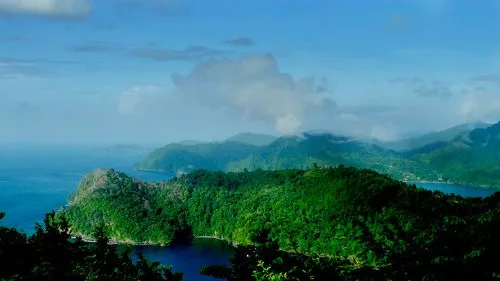
Jamaica is an island nation in the Caribbean Sea, separated from Haiti to the east by the Jamaica Channel and the third-largest island in the Caribbean. Its coastal areas are plains, the east is mountainous, and the center and west are hills and limestone plateaus. The climate is tropical rainforest: May to June and September to November are the rainy seasons, while December through March is the dry season. The central and northern regions receive abundant rainfall, with temperatures typically between 22 and 32 degrees Celsius and an annual average of 27 degrees.
The Historical Journey of Jamaican Coffee
In 1728, Governor Sir Nicholas Lawes received a coffee seedling as a gift from the governor of Martinique, then part of France — and with it began the island's coffee history. Sir Lawes had previously experimented with many crops, and he planted the seeds in the parish of St. Andrew. Early production was limited: by 1752, Jamaica was already exporting 27 tons of coffee.
In the late 18th century, cultivation expanded from St. Andrew into the Blue Mountains. By 1800 there were 686 coffee plantations on the island. But the abolition of slavery in 1807, fully implemented in 1838, brought labor shortages. Combined with poor management and the loss of favorable trade terms for colonial goods with Britain, the coffee industry declined, leaving only 180 plantations in the 19th century. Quality at the time was poor, so in 1891 the government passed legislation to educate producers in cultivation techniques, and also improved infrastructure, enabling centralized processing and grading of coffee. In 1944 the Central Coffee Clearing House was established, and all coffee had to be approved by it before export. In 1950 the Jamaica Coffee Industry Board (CIB) was established; this body merged with other Jamaican commodity agencies in 2018 to form JACRA (Jamaica Agricultural Commodities Regulatory Authority), through which every barrel of Blue Mountain coffee beans must now pass quality supervision. The Coffee Industry Regulation Law was enacted at the same time, defining the world-famous "Blue Mountain Coffee growing region."
The Blue Mountain Coffee Growing Region
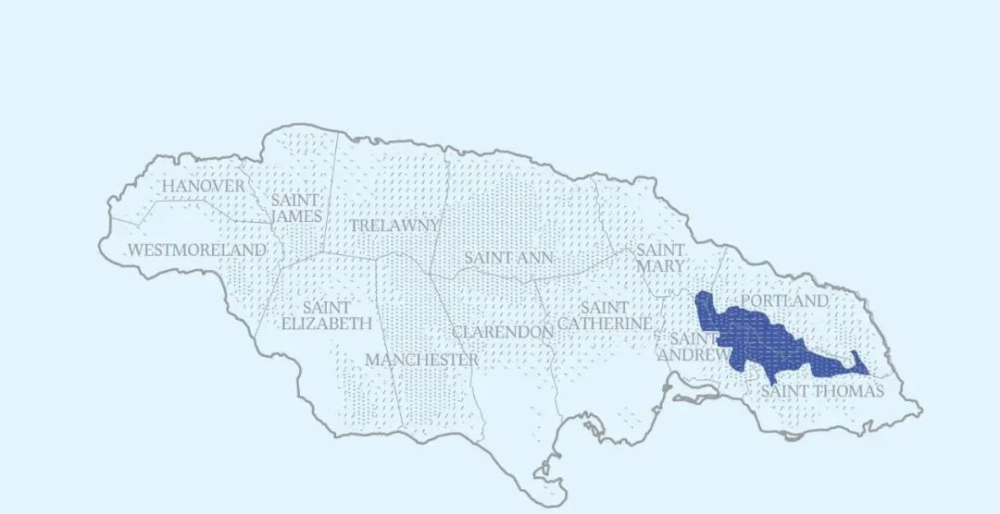
Under the Coffee Industry Regulation Law, the Blue Mountain growing areas are spread across four parishes: St. Andrew, St. Thomas, Portland and St. Mary. Only Typica variety coffee grown between 915 and 1,700 meters within this region may be called Jamaica Blue Mountain Coffee.
The Unique Terroir of Blue Mountain Coffee
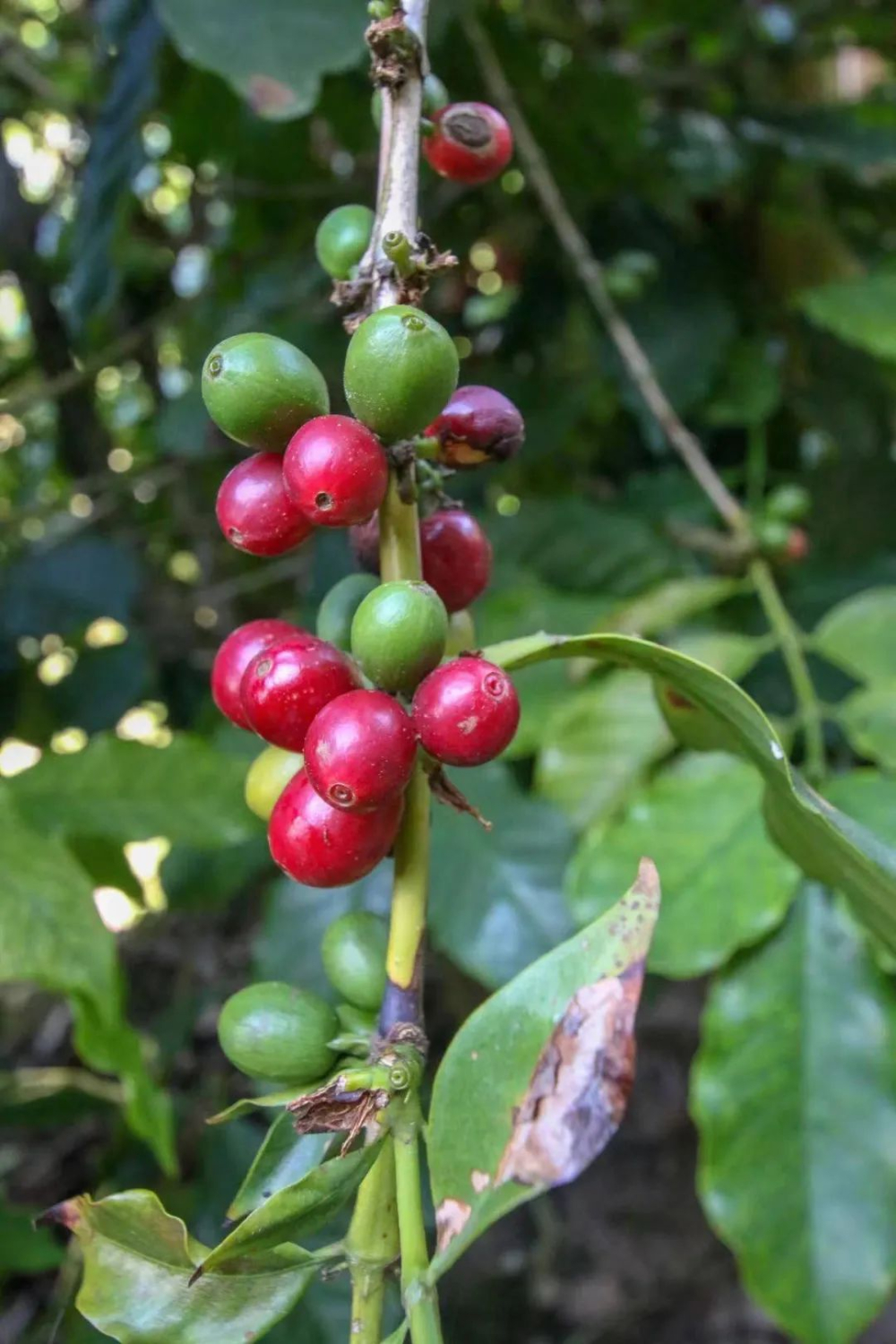
The Blue Mountain Range lies in eastern Jamaica, with elevations between 1,000 and 1,700 meters. Surrounded by the Caribbean Sea, it takes its name from the blue glow of the sea reflected off the peaks when sunlight strikes the water on a clear day. The Blue Mountain coffee belt has fertile volcanic soil, fresh air, and a humid climate with year-round mist and rainfall. These conditions created the world-renowned Jamaica Blue Mountain Coffee. The region also grows Blue Mountain Typica, which, after more than 200 years of evolution, has developed better disease resistance than typical Typica varieties.
Unique Barrel Packaging and Classification
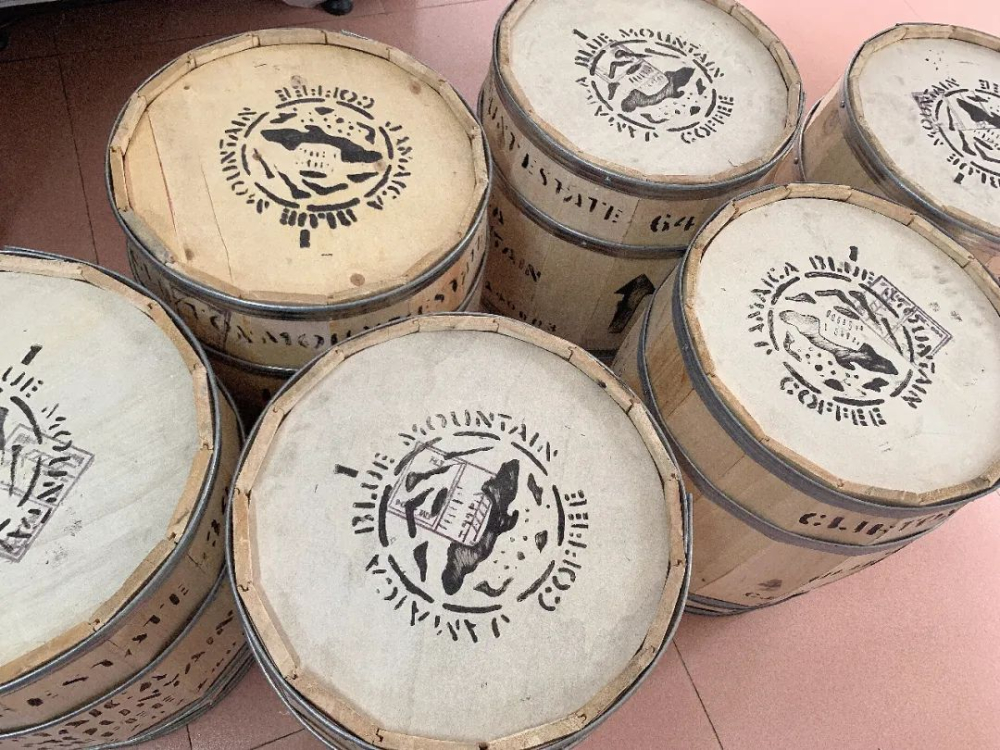
Blue Mountain Coffee is the only coffee in the world exported in wooden barrels shaped like small wine casks, each holding 70 kilograms of green beans. Their use is restricted too: only Jamaica Blue Mountain (Grade 1, Grade 2, Grade 3 and PB) and Jamaica High Mountain (High Mountain Supreme, High Mountain PB) may use them, in specifications of 70 kg, 30 kg and 15 kg. All other grades can only be packaged in burlap bags.
The Flavor Profile of Blue Mountain Coffee
Blue Mountain Coffee is smooth and rich, and its excellent balance is its defining trait. The Blue Mountain Coffee sourced by FrontStreet Coffee today comes from Clifton Estate. Using washed processing, it delivers balanced acidity, body and aroma in the cup, with a delicate, silky mouthfeel. After tasting, there is a slight, gentle fruity acidity and a hint of cocoa in the aftertaste.
FrontStreet Coffee Recommendation
For many coffee lovers, Blue Mountain is a name they cannot avoid. In an era before specialty coffee went mainstream, treating someone to Blue Mountain was shorthand for high-quality coffee. Even today, as more and more specialty regions are discovered, Blue Mountain holds an irreplaceable place through its distinctive flavor and balance.
Strictly speaking, not all coffee grown in Jamaica qualifies: only coffee grown in the designated Blue Mountain range and officially certified by Jamaica may be called Jamaica Blue Mountain Coffee. Authentic Blue Mountain has no traceability code, but importers usually hold complete export certification and proof of origin. FrontStreet's product images show the certificate from Jamaica's Clifton Estate together with its used Blue Mountain green-bean barrels — and because traditional Blue Mountain is shipped in wooden barrels, each barrel is itself a mark of the genuine article.
FrontStreet Jamaica Blue Mountain No. 1 is one of the highest grades in Jamaica Blue Mountain coffee, with strict standards for bean size, defect rate and overall quality. It uses certified growing-region green beans and a medium-dark roast, which lets the classic balance of Blue Mountain show fully. Brewed, it unfolds layer by layer into nuts, dark chocolate, creamy caramel and gentle sweetness, with acidity, sweetness, bitterness and aroma in harmony. For pour-over, FrontStreet suggests a 1:15 ratio, water at 87-88°C, and a grind coarser than a light roast — roughly granulated sugar. A three-stage pour works well: 30 g of water to bloom for 30 seconds, then pour to 120 g, then to 225 g. The cup is very clean and complex, extremely mild, chocolate-sweet and full-bodied, with the bitter, sour and sweet notes in perfect proportion, barely any bitterness, only a moderate and elegant acidity, and a long fruity finish. Rest the beans for 4-7 days from the roast date before brewing.
Blue Mountain is not limited to pour-over. Its balance means a moka pot or an espresso machine will each reveal a different side: with a moka pot, use a slightly finer grind than pour-over, fill with hot water, heat over medium-low, and take it off the heat just before the coffee finishes flowing. That brings forward the chocolate, caramel and nut notes while keeping the signature balance — and it performs beautifully with milk in a latte or flat white.
Important Notice :
FrontStreet Coffee is a long-established specialty coffee roaster in Guangzhou China, selling freshly roasted beans from its own farm in Yunnan as well as dozens of carefully selected single-origin beans from around the world for both pour-over and espresso. The products deliver consistently excellent quality and great value, with shipping within 24 hours. Guangzhou's FrontStreet Coffee shop is recommended by many coffee lovers, and the beans are now available online at the Tmall 。
FrontStreet Coffee has moved to a new address:
FrontStreet Coffee Address: 315,Donghua East Road,GuangZhou
Tel:020 38364473
 Scan and follow the En Gafei WeChat official account. Please indicate that the reprint comes from "En Gafei".

