
COE Competition and Coffee Cupping Scoring Standards

Last month, FrontStreet Coffee shared the cupping scoring system and briefly touched on COE. In daily life the term "COE" appears frequently on coffee labels, which naturally raises the question: what exactly is COE?

What Is COE?
"COE" stands for "Cup of Excellence." It is a competition first held in Brazil in 1999 by the non-profit Alliance for Coffee Excellence (ACE). It is arguably the world's most renowned and authoritative competition for premium green coffee.
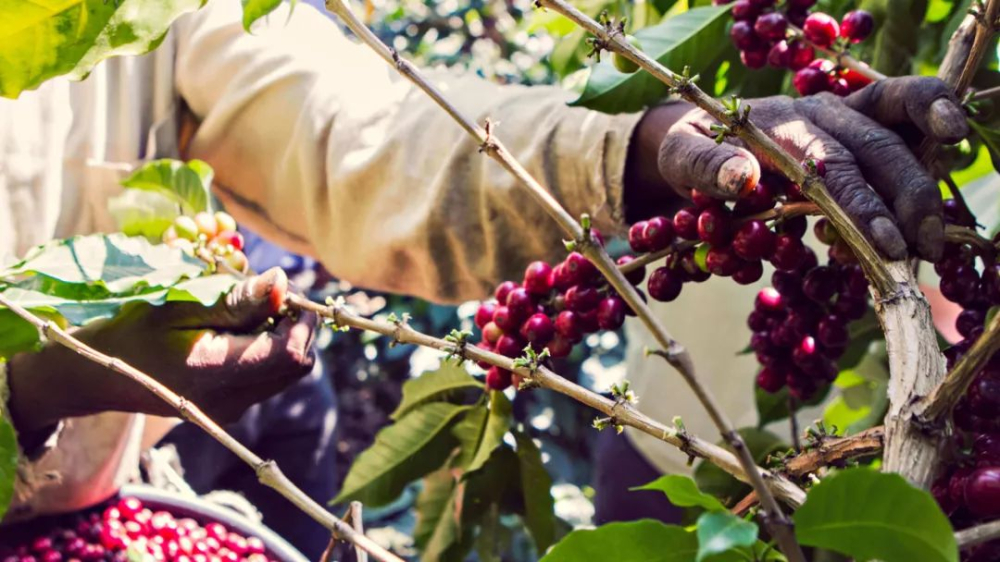
Each country can host its own COE competition, and the "contestants" are the coffee beans of the host country. The winning beans bring their estates prestige and considerable auction revenue once the event concludes. Those auction proceeds motivate farmers to grow higher-quality coffee, and in turn we get to drink better coffee. COE, in short, proves to farmers that hard work pays off.
COE Scoring System
COE cupping differs slightly from the SCA scoring system, from which it was derived; you can refer to the article "SCA Scoring Items" for the details of the SCA system. In COE cupping, each sample consists of four cups, and the scoring table is as follows:
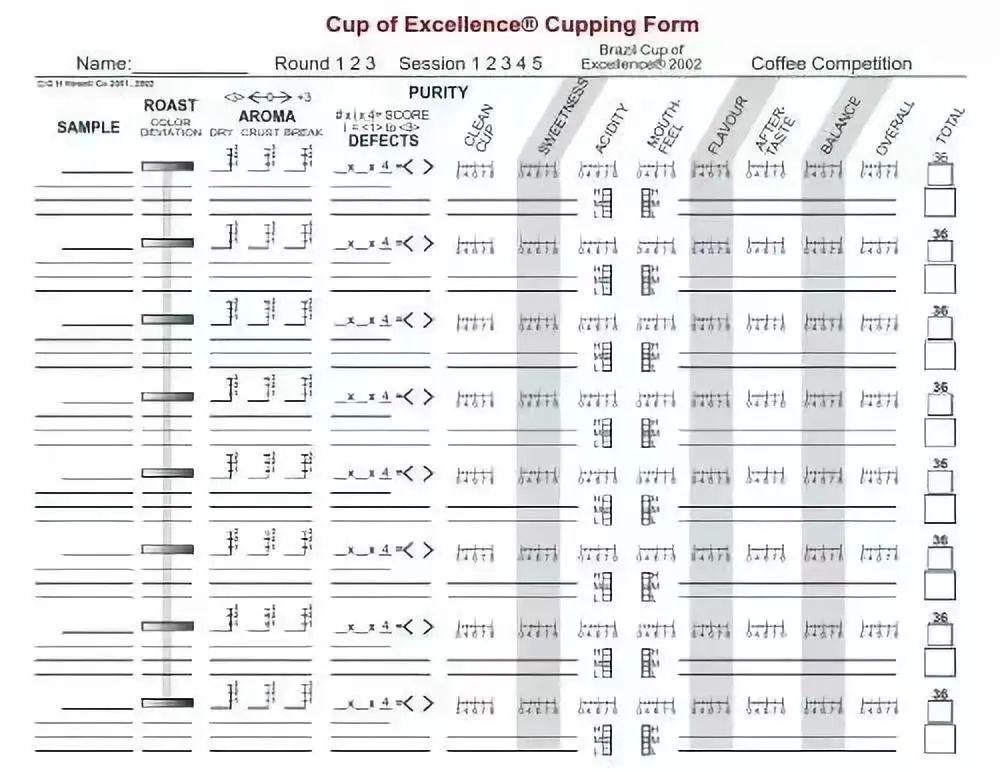
The two systems are largely similar, with the main differences in individual details. In COE scoring, dry and wet aroma no longer count toward the total score, and cleanliness is judged more strictly. Body is changed directly to "Mouthfeel," which evaluates not only body but also smoothness, astringency, and other qualities, aiming to score from more diverse perspectives. Flavor evaluation references the new flavor wheel so judges can evaluate more precisely and concretely, and a blank column remains for descriptions. COE also eliminates the "Uniformity" item.
COE Competition Format
Each country's COE format varies somewhat. Take the 2020 Ethiopian COE as an example. The entire event consists of three parts: pre-selection, the National Jury, and the International Jury.
Pre-selection Stage
The pre-selection judges are all professionals from the host country, typically numbering around 12 to 18. They conduct strict reviews of the competing samples, covering roast degree, cupping procedures, and more. Only beans scoring above 85 points in pre-selection qualify to advance to the next round.
National Jury Stage
This stage also uses professional judges from the host country, primarily to conduct another screening of the beans that advanced from pre-selection. Beans that win this round enter the final International Jury stage.
International Jury Stage
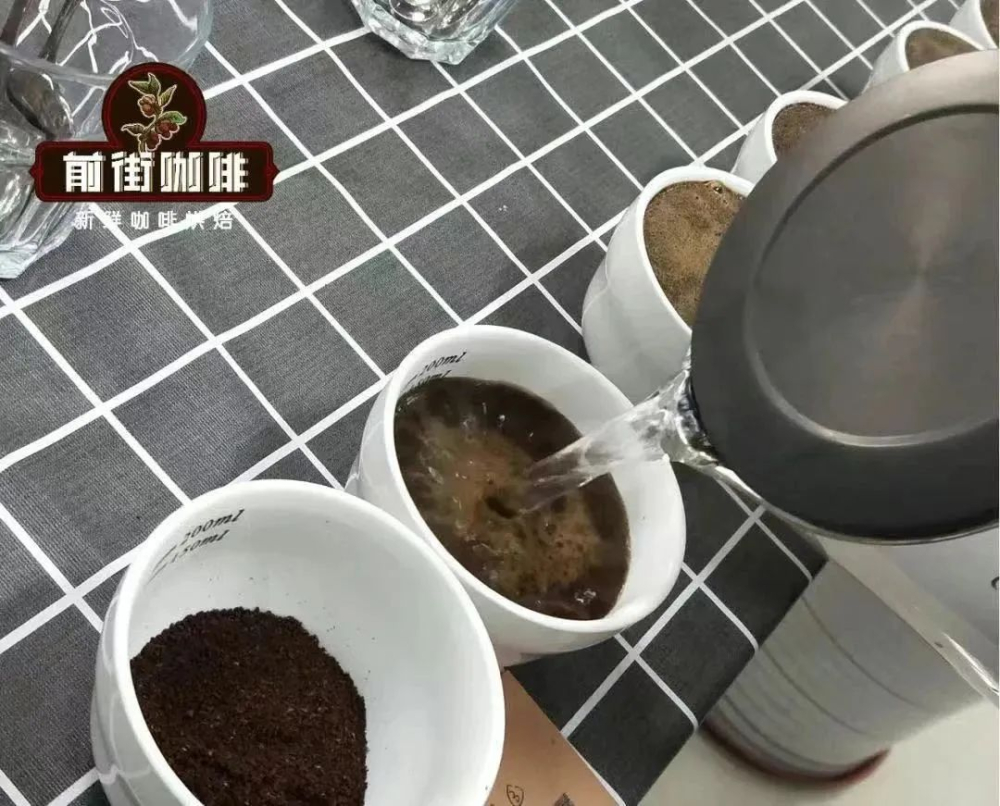
The panel at this stage is made up of international cuppers. All competing samples are labeled with a random number, and only administrators know which bean corresponds to each number. Once the numbers are assigned, the beans go into blind tasting by the panel. Finally, beans scoring above 87 points are designated COE auction lots, while the remaining beans, though short of auction-lot standard, generally score above 85 points and belong to the National Winners category.
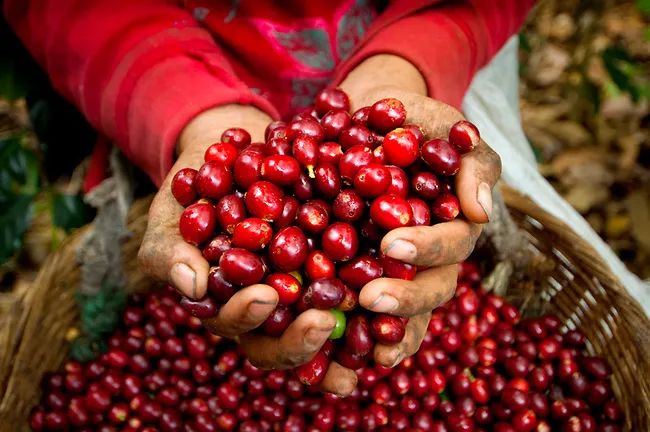
Whether they are COE auction lots or National Winners, though, they ultimately have to be acquired at auction, the most crucial stage for farmers. So when you buy beans, the COE label you occasionally see may indicate a "contestant" that won recognition in the competition. As for why "may," it is because some are "COE same batch" but not necessarily COE auction lots.

FrontStreet Coffee Recommendation
Brazil is where the COE began in 1999, and it is also home to some of the most approachable coffees to drink while you explore what a competition-winning origin can taste like. As the world's largest coffee producer, Brazil also has a remarkable record of estates that have placed in its own Cup of Excellence.
If you want to taste the textbook Brazil profile, FrontStreet Half-Sun-Dried Cerrado is a classic single-origin bean from the well-known Cerrado region. Grown from Red Bourbon in South America, it shows cream peanut, toast, caramel, and hazelnut aromas under a medium roast, with a round, low-acid, lightly bitter body that works for pour-over, moka pot, espresso SOE, siphon, or French press.
For a sweeter, richer Brazilian cup, FrontStreet Brazil Queen's Estate comes from Mogiana, near South Minas, where fertile red volcanic soil and careful processing bring out the rare Yellow Bourbon variety. It offers a sugarcane-like clarity other regions lack, alongside fruit and chocolate notes, and performs well in pour-over, moka pot, or a home espresso machine.
Important Notice :
FrontStreet Coffee is a long-established specialty coffee roaster in Guangzhou China, selling freshly roasted beans from its own farm in Yunnan as well as dozens of carefully selected single-origin beans from around the world for both pour-over and espresso. The products deliver consistently excellent quality and great value, with shipping within 24 hours. Guangzhou's FrontStreet Coffee shop is recommended by many coffee lovers, and the beans are now available online at the Tmall 。
FrontStreet Coffee has moved to a new address:
FrontStreet Coffee Address: 315,Donghua East Road,GuangZhou
Tel:020 38364473
 Scan and follow the En Gafei WeChat official account. Please indicate that the reprint comes from "En Gafei".

