
Summer Cold Brew Coffee Recipe! Ultra-Simple Iced Coffee Tutorial with Illustrated Guide
How to Simply Brew Delicious Drip Bag Coffee
Granted, the flavor of drip bag coffee falls well short of freshly ground pour-over — but its great advantage is convenience. It eliminates the fiddly work of pour-over: grinding, weighing, technique. Just tear it open, add water, and you have a cup of coffee in no time.

What some people don't realize, though, is that a good drip bag cup still takes a little care. It isn't just mindless pouring — and if you accidentally add too much water, the coffee easily goes weak and diluted. So today FrontStreet Coffee shares the simplest way to get delicious drip bag coffee (delicious, that is, within the limits of drip bag coffee).
The Essential Factors for Brewing
First, understand that drip bag brewing and pour-over brewing are not fundamentally different. The drip bag simply has everything prepped for you, saving time and effort. So what you need to focus on are the "partial parameters" of pour-over, applied to the drip bag.

Pour-over has four variables to watch: grind size, ratio, water temperature, and pouring method. As noted, grind size isn't your problem — the merchant pre-grinds the beans and seals them in the bag. That leaves the other three.
Water Temperature Guidelines
Generally, FrontStreet Coffee doesn't recommend brewing with freshly boiled water, which easily pulls out bitter, over-extracted flavors. Borrow from pour-over practice: use 90-93°C for light-to-medium roast drip bags, and 85-90°C for medium-to-dark roast ones.

No thermometer? A 300ml kettle of just-boiled water loses heat at roughly 2-3°C per minute, so boil, wait a bit, and pour once it's in range.
Choosing the Right Cup
Next, the cup. Best is a "tall cup" of 280ml or more, which effectively prevents the drip bag from sitting soaked in water for long. In a shorter cup, the hot water can easily submerge half the bag during brewing — and prolonged soaking pulls out those same bitter, over-extracted flavors.

Why 280ml or more? Drip bags generally hold about 10g of grounds. Taking 10g as the example, coffee at an appropriate concentration needs roughly the same coffee-to-water ratio as pour-over. And since the convenience here means no scale, give yourself a slightly wider margin: if FrontStreet Coffee brews pour-over at 1:15, then keeping drip bag coffee between 1:14 and 1:17 is reasonable — about 140ml to 170ml. In a tall, large-capacity cup that fills only about half the height, so there's no risk of the bag soaking.
Brewing Tutorial
Right — everything's ready. Let's brew.
Step One: Setup
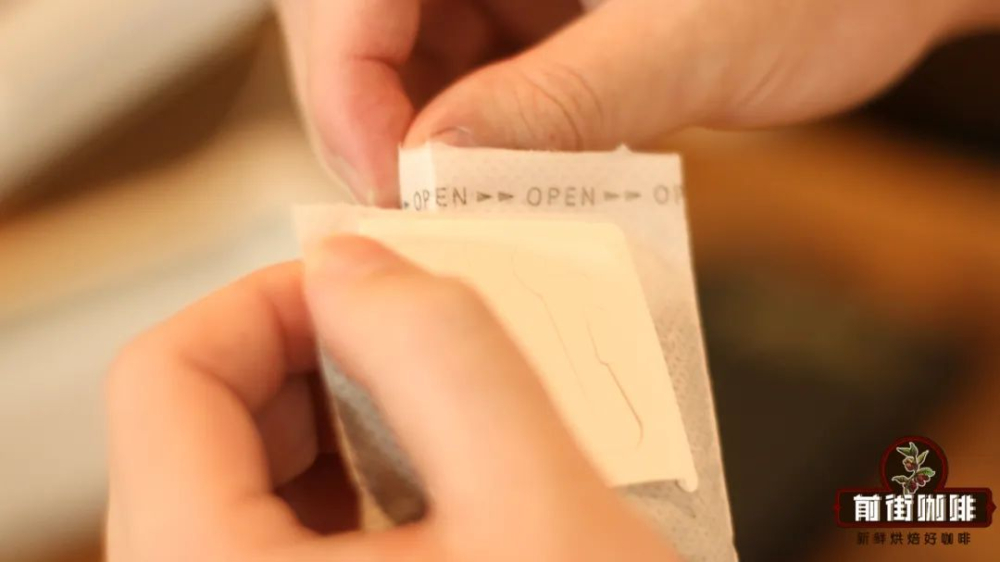
Set out your cup, open the packet, take out the drip bag, tear the seal, and hang it on the rim.
Step Two: First Pour and Bloom
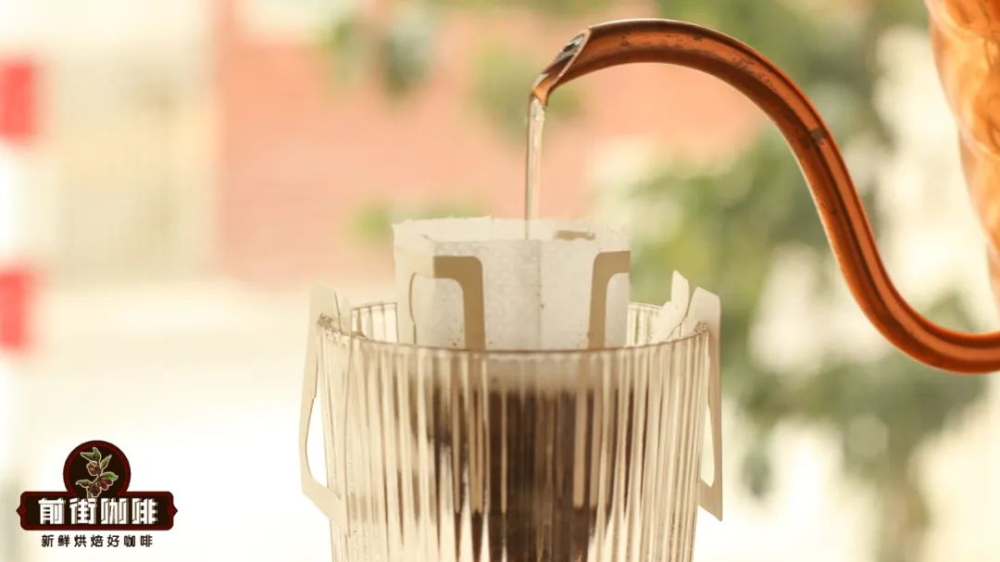
Once the water is in range, pour into the center of the bag until the water level reaches half its height, then wait 10-15 seconds for the bloom. (Grounds in drip bags hold little gas, so no long bloom is needed.)
Step Three: Multiple Pours
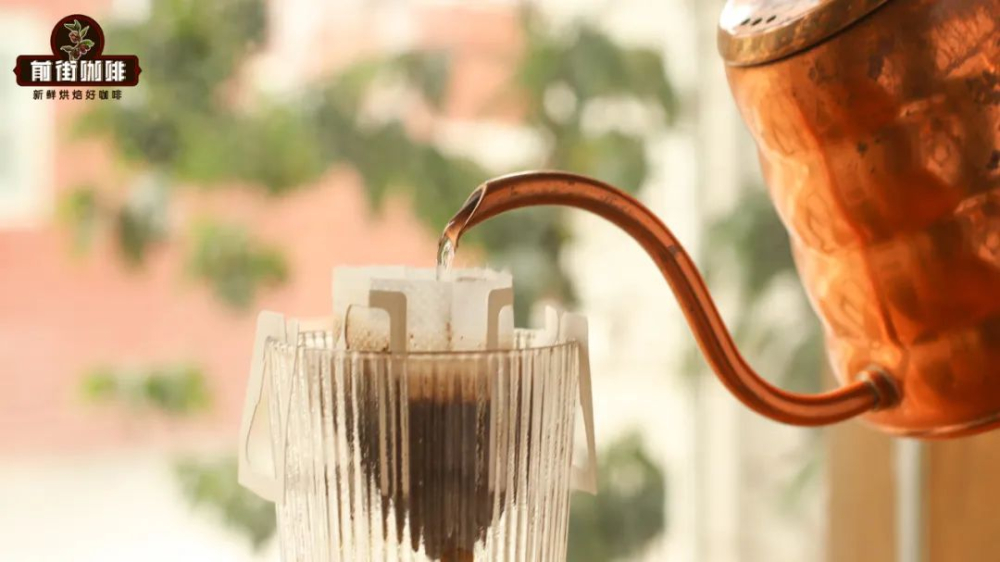
Pour a second time, this time filling the bag to nine-tenths. Once it drains through, pour a third time, again to nine-tenths. After that drains, make a fourth pour of hot water, again to nine-tenths.
Step Four: Finish and Enjoy
Once dripping is complete, remove the bag and enjoy your coffee.

(If it tastes too strong, add a little hot water to bring it to your preferred strength.)

FrontStreet Coffee Recommendation
Drip bags are perfect summer companions, and cold brew is their iced cousin: cold brewing amplifies floral and fruity character while softening woody and roasted notes, so light-to-medium roasts perform best.
FrontStreet Coffee Strawberry Candy Gesha Blend: A marriage of classic Panama Gesha and a Costa Rican honey-processed coffee — delicate rose and orange on one side, the sweetness of grape, dried blueberry, and strawberry candy on the other. As cold brew it is sweet-tart, lively, and layered; let it ferment and settle briefly and it takes on a fruit-wine character.
FrontStreet Coffee Natural Huajuan: From Ethiopia, the birthplace of coffee. Natural processing lets the beans soak up abundant sweet aromatics from pulp and skin; brewed cold it shows magnolia, creamy strawberry, dried mango, guava, and black tea. The obvious pick if you love floral iced coffee.
FrontStreet Coffee Kenya Cherry Tomato: For a cold brew with full juice-like texture, start here. Cherry tomato, snow pear, black plum, and dried dark plum acidity come through vividly at low temperature, with low bitterness and lasting fragrance over ice. Grown in Thika from SL28 and SL34, processed with the local K72 double-washed method, and roasted medium-light to convert precursor aromatics into rich fruit character.
FrontStreet Coffee Colombia Sidra + Costa Rica Tarrazu: Cold brew uses more grounds than pour-over, so for everyday value blend: add FrontStreet Coffee's Costa Rica Tarrazu to the passion-fruit-and-apricot Sidra at a 1:2 ratio and enjoy both the florals and the crisp citrus acidity at a friendlier price.
FrontStreet Coffee Ethiopia Yirgacheffe Worka Cooperative: A washed Yirgacheffe with a clean, bright sweet-tart cup — fragrant berry notes, layered structure, and honey — at an everyday price and versatile across pour-over, siphon, French press, drip bags, and cold brew. The natural first choice for home brewers.
Important Notice :
FrontStreet Coffee is a long-established specialty coffee roaster in Guangzhou China, selling freshly roasted beans from its own farm in Yunnan as well as dozens of carefully selected single-origin beans from around the world for both pour-over and espresso. The products deliver consistently excellent quality and great value, with shipping within 24 hours. Guangzhou's FrontStreet Coffee shop is recommended by many coffee lovers, and the beans are now available online at the Tmall 。
FrontStreet Coffee has moved to a new address:
FrontStreet Coffee Address: 315,Donghua East Road,GuangZhou
Tel:020 38364473
 Scan and follow the En Gafei WeChat official account. Please indicate that the reprint comes from "En Gafei".

