
"Kopi Luwak," Is It Really Cat Droppings?
What Makes Kopi Luwak So Expensive?
Most people have heard of "Kopi Luwak" — a coffee with such an off-putting name that it nonetheless commands prices comparable to Red Label coffee! That naturally sparks intense curiosity about what it actually tastes like. Today, let's briefly discuss why this coffee, nicknamed "the gold of the coffee world," is so expensive.

A note before we start: no need to set aside a special time or place to read this. It may sound unappetizing, but don't worry — the scenes you're imagining won't appear (probably). Read on with confidence!
Is Kopi Luwak Really Cat Poop?
Technically, yes and no. It is indeed made from cat droppings — but the "cat" in question is the palm civet of the tropical rainforests, not the pampered house cats in our cities. So, cat owners, keep your hands away from your own pets!
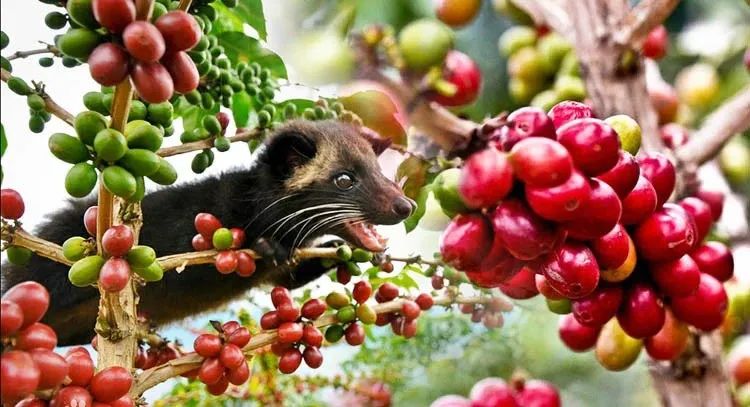
The palm civet (also known as the large Indian civet or masked palm civet) is an omnivorous wild animal native to Indonesia. It eats everything — including coffee cherries. It swallows cherries whole, digests the skin and pulp in its stomach, and excretes the denser, harder-to-digest raw coffee beans. And those excretions — yes — are the raw material of "Kopi Luwak."
The Birth of Kopi Luwak
In the 17th century, the Dutch spotted coffee's enormous business potential and set off for Indonesia to start plantations. Their first stop was Java. The island's climate suited the coffee plant perfectly, and years later the Dutch were making a fortune off abundant harvests. Emboldened, they quickly spread cultivation from Java to the other islands.
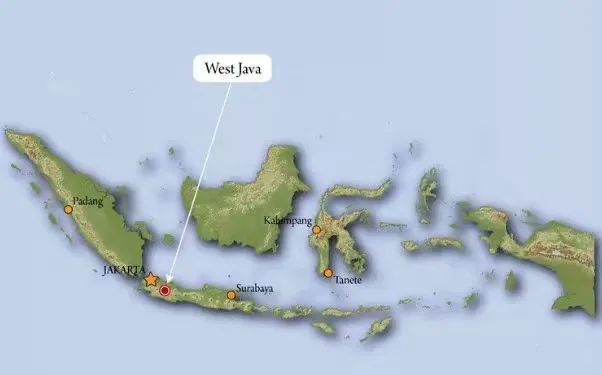
Indonesian laborers did the actual work of growing and processing the coffee, and constant exposure naturally bred curiosity: they wanted to know what the coffee they tended actually tasted like. But this coffee was a valuable commodity bound for Europe, and the Dutch strictly forbade them from picking and drinking it.
The Dutch could forbid the laborers, but they couldn't forbid the wildlife. Ripe cherries attracted wild palm civets in droves; the animals climbed the trees, ate the ripe red fruit, and left the unripe green ones behind — which infuriated the Dutch. And so the laborers' workload grew: besides tending the coffee, they now had to chase off civets too!
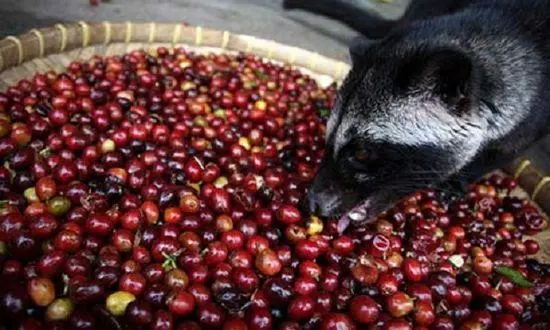
Then one laborer followed civet tracks and found, near the roots of a tree, several droppings mixed with raw coffee beans. Perfect. Years of suppressed curiosity overcame him: he gathered the droppings, took them home, cleaned them, extracted the beans, threw them straight into a pan to roast over high heat, ground them, and brewed the world's first cup of "specially" processed coffee. It tasted surprisingly good — and the laborer spread the story of Kopi Luwak locally. From there the tale traveled, and Kopi Luwak made its way from Indonesia to the wider world.
At first people treated the stuff as a curiosity, but as reports accumulated, Kopi Luwak shot to fame. Attitudes flipped completely, and everyone scrambled for a taste.
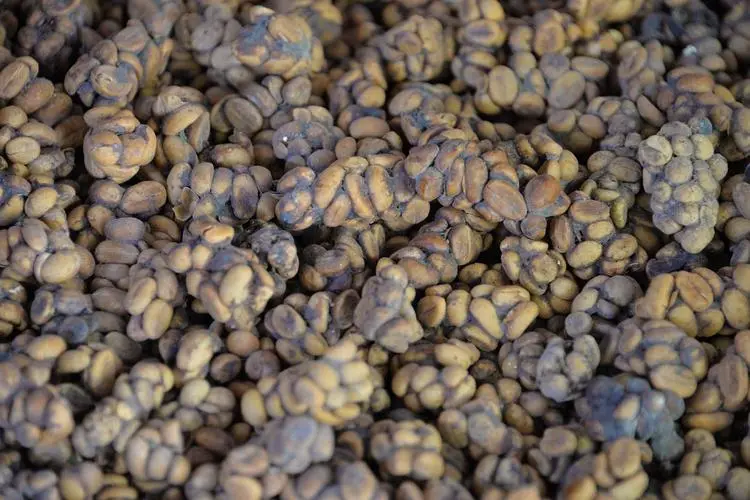
The problem: production was far too low. One jin (500g) of wild civet droppings yields only 150g of raw Kopi Luwak beans, and roasting losses make the already scarce beans scarcer still. Scarcity drove the price skyward — at its peak, several times that of Red Label coffee. And that gave rise to the widely condemned practice of captive breeding: farmers captured and caged palm civets and fed them nothing but coffee cherries three meals a day to mass-produce the beans.
Palm civets, however, are naturally timid and not social animals. Caging them easily triggers territorial disputes, fighting, injuries, infections, and cross-infections. This is exactly why so many people online call for boycotting Kopi Luwak.
What Does Kopi Luwak Taste Like?
By the time Kopi Luwak was discovered, Indonesia had already been hit by leaf rust, and Arabica varieties had long since been replaced with Robusta. So the coffee in the very first cup of Kopi Luwak was already Robusta.
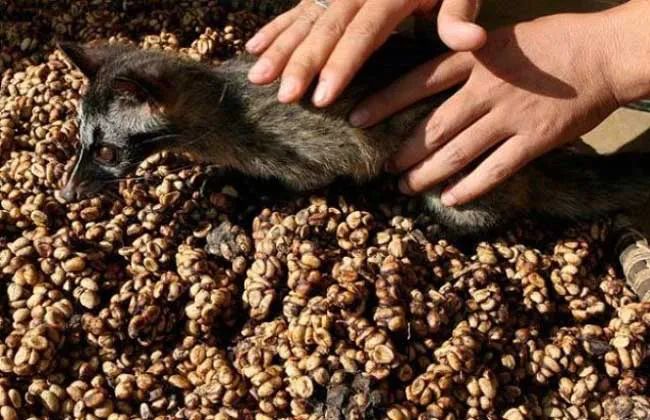
Raw beans eroded by stomach acid inside the civet's digestive tract have their proteins broken down into more free amino acids, making the whole cup taste richer and more mellow. But bear in mind: this is already a form of heavy fermentation. Set aside whether Robusta suits light roasting at all — given that heavy fermented character alone, the result of a light roast is easy to imagine.

And so Kopi Luwak is almost always dark roasted. Dark-roasted Kopi Luwak carries spice and chocolate flavors similar to Mandheling, though with an even richer body... well. To borrow a line from a famous Bilibili creator: some coffees belong in stories — you don't necessarily need to spend money to try them. That's better for everyone, and for the animals.
Besides Kopi Luwak, other "animal-fermented" coffees have appeared over the years — Brazil's "bird poop coffee," Thailand's "elephant dung coffee," and so on.
- END -
FrontStreet Coffee Recommendation
If it's the deep, mellow character of Indonesian coffee that appeals to you, you don't need civet droppings to find it — FrontStreet Coffee's Indonesian lineup delivers that classic profile, ethically and affordably. Start with the FrontStreet Coffee Indonesia Wet-Hulled Mandheling from the Lake Toba area of the Lintong region, Sumatra: processed with the local wet-hulled method, in which the parchment is stripped from the half-dried beans and the green coffee dries fully exposed to the air, it carries the style's signature herbal and spice notes. A medium-dark roast keeps the acidity low and the body full, with rich caramel, dark chocolate, and toasted bread aromas and a long, sweet finish.
For the top tier of Sumatran coffee, choose the FrontStreet Coffee PWN Golden Mandheling: sorted against strict standards for density, size, shape, and color — machine-sorted plus hand-picked to remove defects — the beans emerge whole, even, and luminous, with the earthy and grassy edge minimized. Freshly roasted, it offers sandalwood, herbs, spice, toasted hazelnut, caramel, and dark chocolate in a clean, richly layered, aromatic cup. And for espresso lovers, the FrontStreet Coffee Classic Blend revives the old "Mandheling-Brazil" formula — the wildness of Mandheling smoothed by Brazil's silky body, with a touch of Robusta added and roasted dark to maximize the chocolate, nut, and caramel aromas and deliver that thick, golden crema even beginners can extract.

Important Notice :
FrontStreet Coffee is a long-established specialty coffee roaster in Guangzhou China, selling freshly roasted beans from its own farm in Yunnan as well as dozens of carefully selected single-origin beans from around the world for both pour-over and espresso. The products deliver consistently excellent quality and great value, with shipping within 24 hours. Guangzhou's FrontStreet Coffee shop is recommended by many coffee lovers, and the beans are now available online at the Tmall 。
FrontStreet Coffee has moved to a new address:
FrontStreet Coffee Address: 315,Donghua East Road,GuangZhou
Tel:020 38364473
 Scan and follow the En Gafei WeChat official account. Please indicate that the reprint comes from "En Gafei".

