
How to Test Whether Your Coffee Grind Size is Correct
If you've clicked into this article, chances are you're wrestling with coffee grind size too.
In pour-over coffee, grind size is the parameter people find hardest to put into words. Since everyone's grinder is different, when discussing grind with customers, many baristas fall back on visual analogies first. We know such comparisons have limits, but they remain one of the fastest ways to establish a conservative brewing framework.
So learning to quickly sort your grounds into the right coarseness category is a crucial step toward brewing delicious coffee. The most common reference materials for comparison are fine salt, fine sugar, coarse sugar, and sea salt.
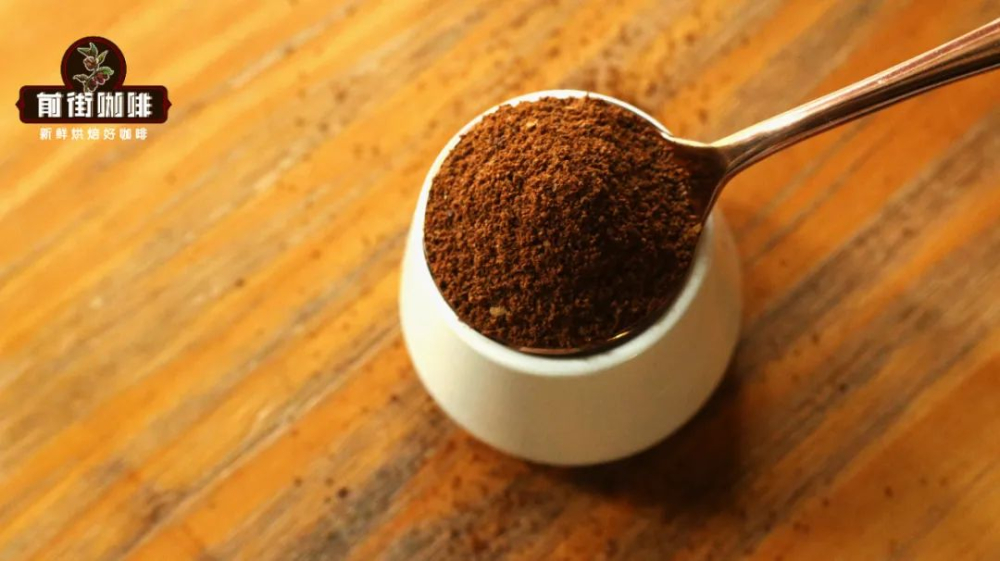
Fine Salt
The defining trait of the fine-salt analogy is "refined and fine"—loose yet uniform, with almost no gritty feeling when rubbed between fingers. This fineness suits pressurized methods such as the moka pot, where fine grounds release coffee oils effectively under high temperature and pressure.
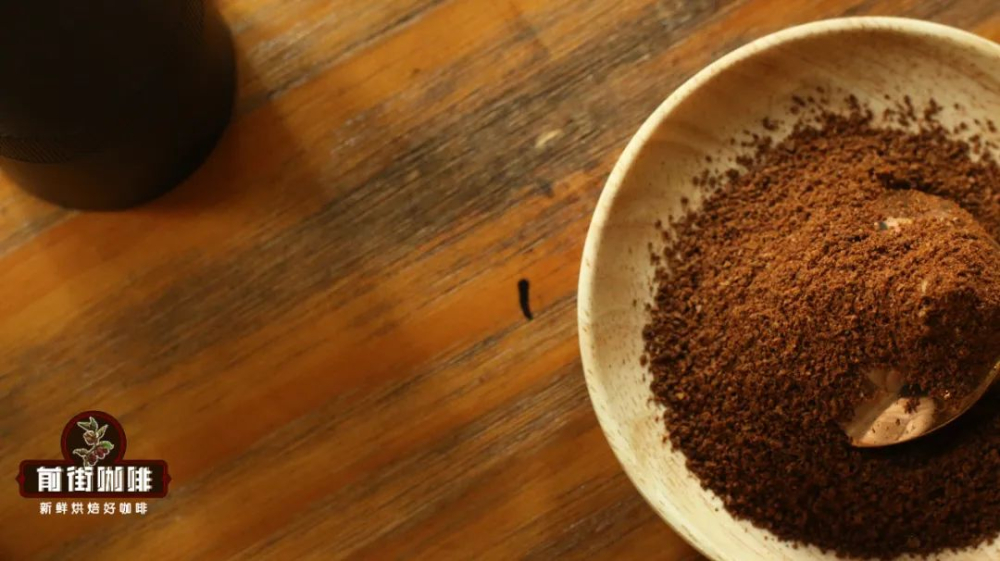
Fine Sugar
Fine sugar is the most common analogy for pour-over grind: soft and slightly sandy to the touch, with no obvious clumping. Smaller particles release flavor compounds more fully during extraction, which generally suits light-to-medium roasted beans built around floral and fruity aromas.
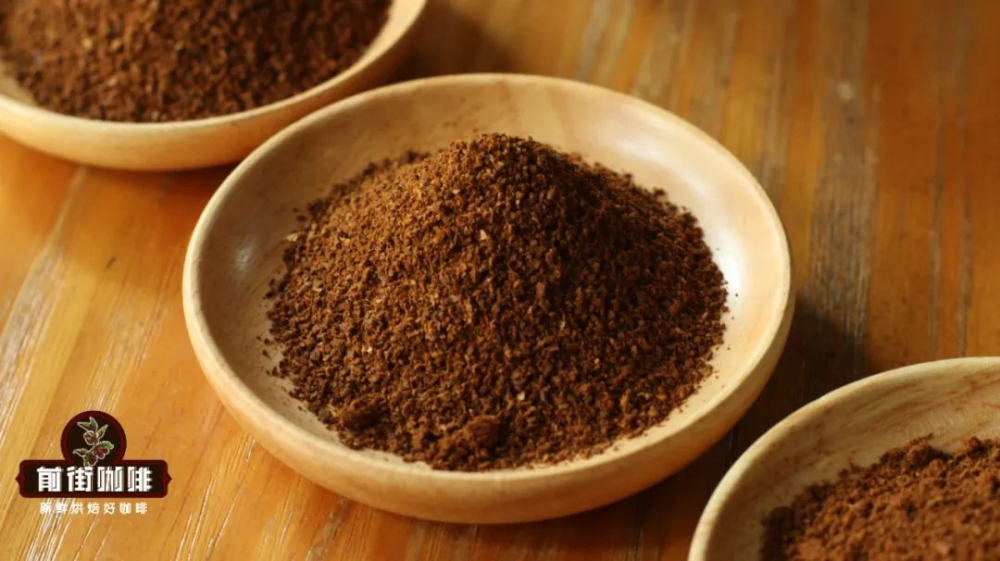
Coarse Sugar
Coarse sugar (white sugar) is hard to tell from fine sugar by eye alone, but rub it between thumb and forefinger and you'll feel a clear granular texture (chew a few grains and you'll hear them crunch). Coarse grounds have relatively more surface area per particle, helping avoid over-extraction from prolonged contact—suited to medium-dark and dark roasts, the kind featuring chocolate, caramel, and cocoa.
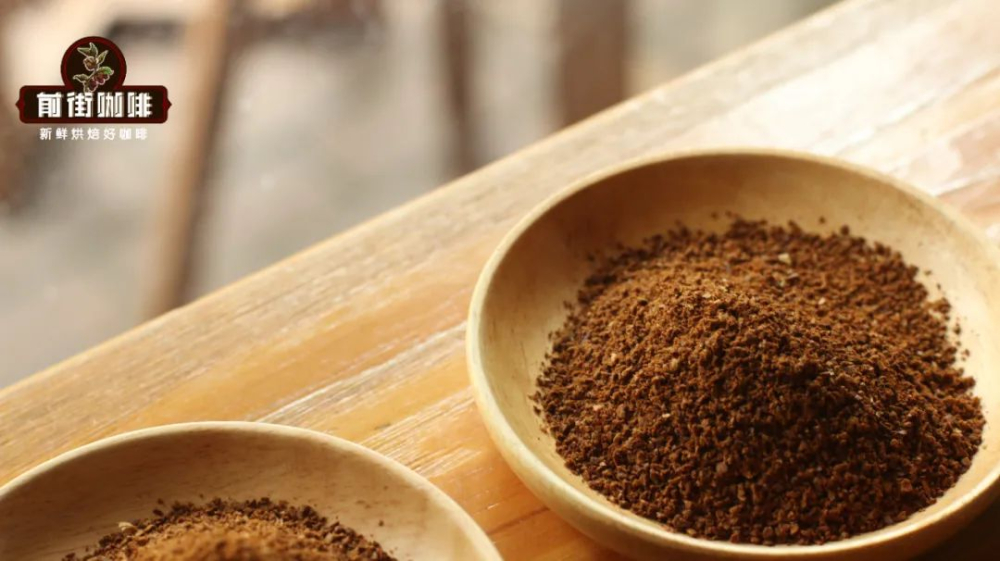
Sea Salt Texture
Sea salt is the easiest to identify: large crystallized grains, mostly visible chunks, uneven overall. These grounds suit immersion rather than drip brewing, paired with 2–3 minute extraction times—French press or the Clever dripper, for example.
If visual inspection doesn't settle it, you can also judge from particle behavior and timing during the extraction itself. Whatever the size distribution, the verdict still comes from the actual brew and the final taste: watch the suspended particles during the bloom, the total drip time, and the spent grounds to find your answer.
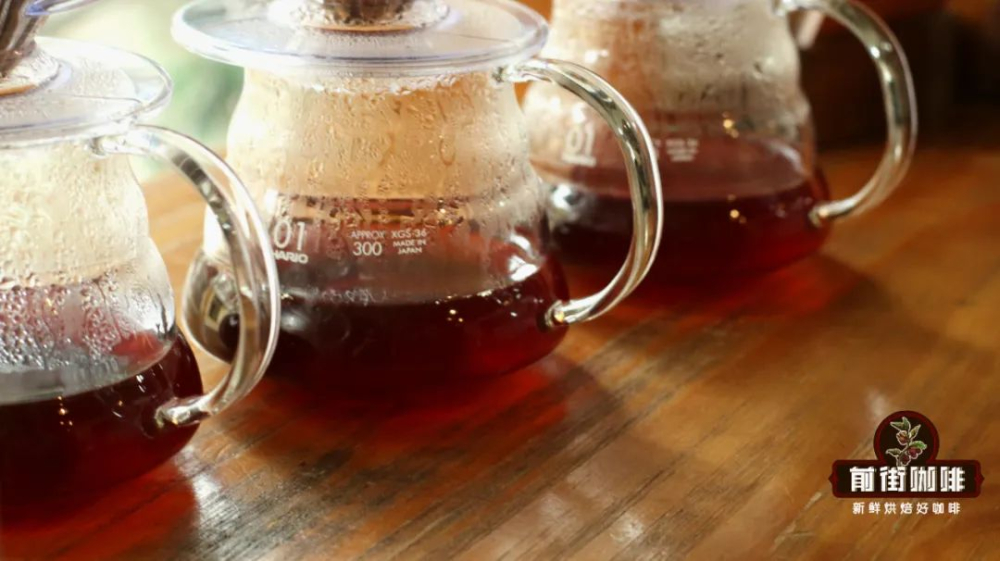
Practical Grinding Test
Here, FrontStreet Coffee uses natural Red Cherry beans as the star, with a MAVO Wizard 2.0 hand grinder, to demonstrate how to "blind test" the ideal grind setting on an unfamiliar grinder.
First, grind a small amount of beans (3–5g) at the current setting. The particles came out mostly chunky—clearly sea-salt territory—so we should adjust considerably finer. FrontStreet Coffee moved 10 clicks toward finer grinding, and the resulting powder approached fine-sugar size, meeting pour-over requirements. Now we can verify it in the brew.
Sun-dried Red Cherry Coffee Beans: 15g
Total Water: 225g
Water Temperature: 91°C
Filter: V60
Three-Stage Pouring: 30g, 95g, 100g
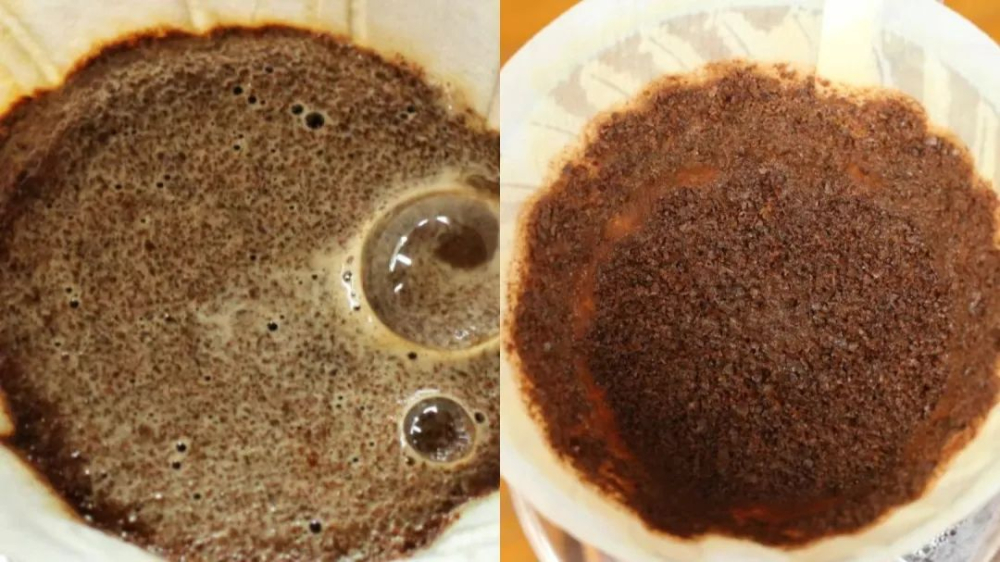
During the bloom, the newly finer particles clung together tightly and retained a lot of water. As the pour neared its end, flow slowed noticeably—the filter paper was likely clogging with excess fines—and extraction ran past two and a half minutes. The spent bed showed mud-like slurry on its surface, and the cup carried heavy berry notes with a slightly astringent finish. That means the grind is too fine and over-extracting, so we go slightly coarser. FrontStreet Coffee backed off 3 clicks and tested again.
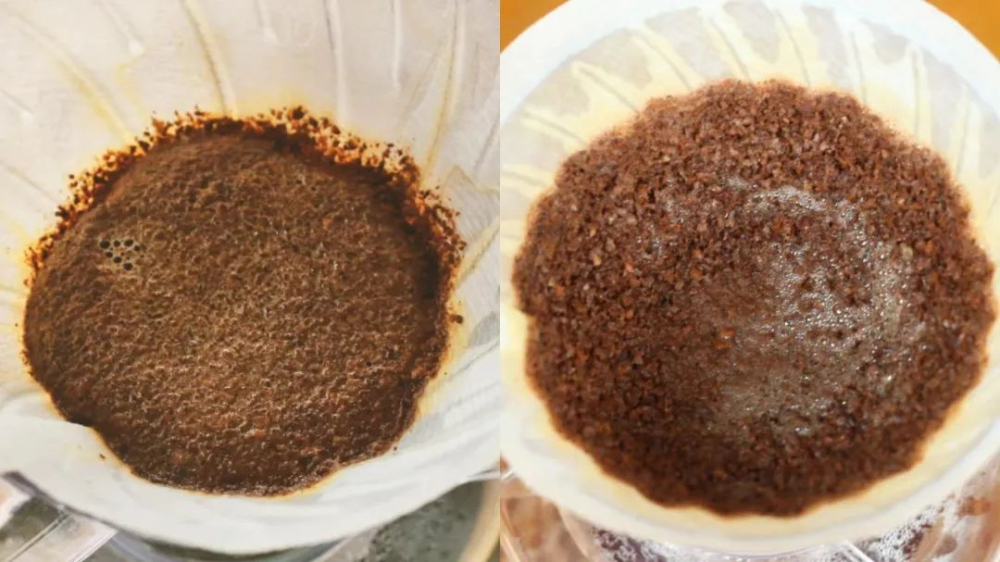
Under the same brewing parameters, the new setting showed larger suspended particles during the bloom and a drier slurry. Flow stayed stable through the entire pour, with total extraction of 2 minutes 8 seconds. The spent grounds sat fluffy and evenly distributed against the filter wall, and the coffee tasted moderately concentrated, with citrus-like acidity and a caramel aftertaste. This, it seems, is the ideal grind size we were hunting for.
- END -
FrontStreet Coffee
No. 10, Bao'an Qianjie, Yandun Road, Dongshankou, Yuexiu District, Guangzhou, Guangdong Province

FrontStreet Coffee Recommendation
FrontStreet Classic Blend
For moka pot brewing, a blend is the easy first pick, and the FrontStreet Classic Blend was designed specifically for espresso and moka pots. Its greatest strength is outstanding crema—even a beginner with a non-professional home machine can extract dense, fine crema without effort. It uses the traditional "Mamba" recipe with a mellow, smooth body that both veterans and newcomers take to easily, making it the go-to choice for home or commercial use.
FrontStreet Queen Estate (Brazil)
Low acidity and a beautifully balanced cup define the FrontStreet Brazil Queen Estate: rich nut and cocoa aromas with pronounced caramel sweetness, smooth and never astringent, warm and long on the finish. It works equally well for pour-over, espresso, or moka pot extraction.
FrontStreet Colombia Pink Bourbon
For those chasing floral-and-fruit character, the FrontStreet Colombia Pink Bourbon comes from Finca La División at 1,650–1,800m. This champion-variety lot uses double anaerobic natural processing with a medium-light roast: jasmine and citrus dry aroma, a juicy rush of passion fruit, blueberry, grape, and apricot, bright yet gentle acidity, a faint spice note mid-palate, and a lasting cocoa aftertaste. It suits pour-over, espresso SOE, cold drip, and more—iced pour-over especially highlights its fresh, smooth grape-juice mouthfeel.
Important Notice :
FrontStreet Coffee is a long-established specialty coffee roaster in Guangzhou China, selling freshly roasted beans from its own farm in Yunnan as well as dozens of carefully selected single-origin beans from around the world for both pour-over and espresso. The products deliver consistently excellent quality and great value, with shipping within 24 hours. Guangzhou's FrontStreet Coffee shop is recommended by many coffee lovers, and the beans are now available online at the Tmall 。
FrontStreet Coffee has moved to a new address:
FrontStreet Coffee Address: 315,Donghua East Road,GuangZhou
Tel:020 38364473
 Scan and follow the En Gafei WeChat official account. Please indicate that the reprint comes from "En Gafei".

