
Why Are Yemen Coffee Beans So Rare Nowadays?
Yemen's Place in Coffee History
Many people know Ethiopian coffee—Ethiopia being the land where coffee was first discovered. But in the 17th century, the first Yemeni coffee reached Europe through the ancient little port of Mocha, and Ethiopia, just across the sea, also shipped its coffee out through that same port. Yemeni Mocha is the originator of the world's coffee trade, and it's where the term "Mocha coffee" comes from. Historically, "Mocha" even served as a general nickname for coffee itself—the mocha coffee and moka pot we speak of today are tributes to Yemen.

Yemen was, in fact, the first country in the world to grow coffee as a large-scale crop. Its coffee is cultivated at average altitudes above 2,300 meters, and top-quality Yemeni coffee has a flavor profile all its own: complex Middle Eastern spices, ripe fruit, wine-like notes, and cocoa, with a rich body and an intense finish.
Why Yemeni Coffee Declined
Yemeni coffee has known glory, but its decline continues to this day, driven by several factors:
1. Little suitable growing land, and continuous warfare since 2015.
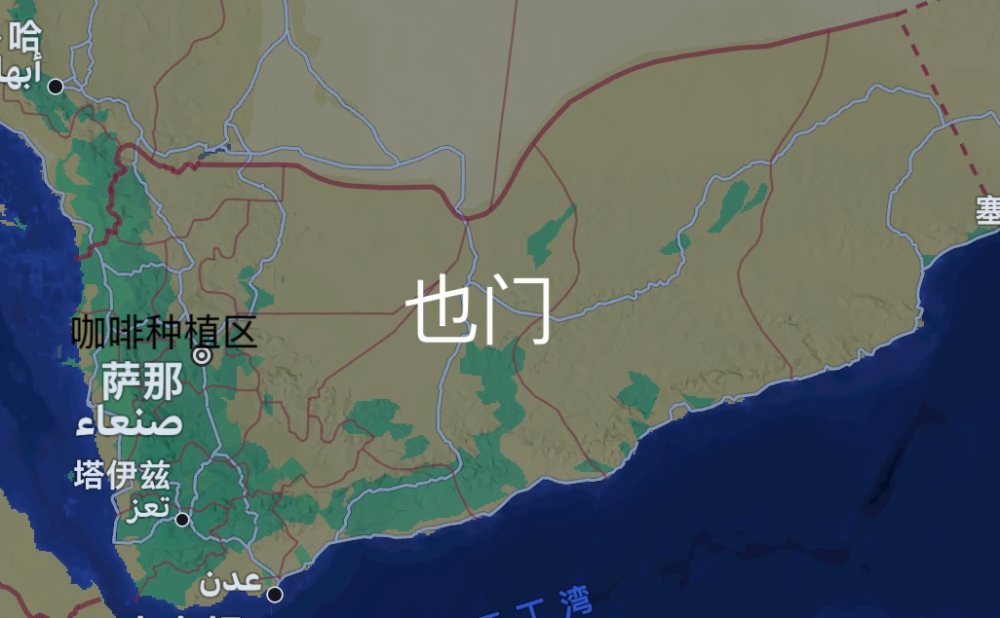
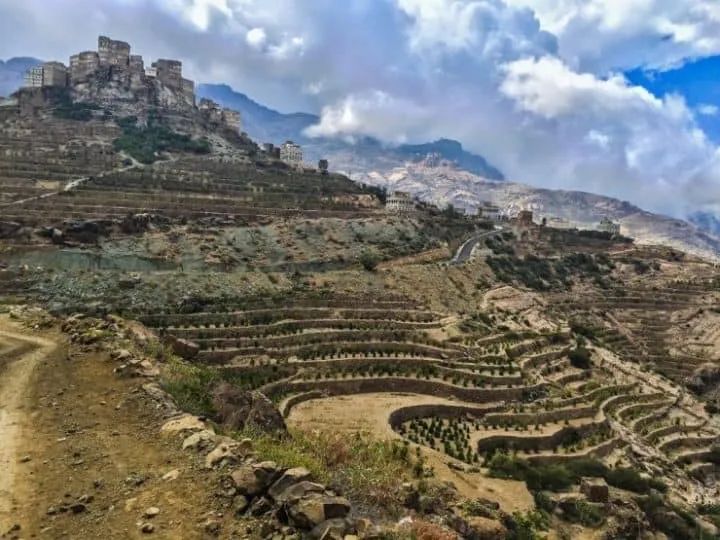
Yemen's coffee-growing areas are concentrated almost entirely in the western mountains, dependent on sunlight, rainfall, and the region's unique soil. Since the war began in 2015, transportation infrastructure—including the routes that carry fuel and food—has been severely damaged. Travel costs have soared, goods struggle to move in and out, and the country faces severe inflation. Countless families have lost their income, government offices cannot pay wages, and huge numbers of people have been displaced—leaving no energy to spare for developing the coffee industry.
2. Competition from Qat, a narcotic plant grown locally.
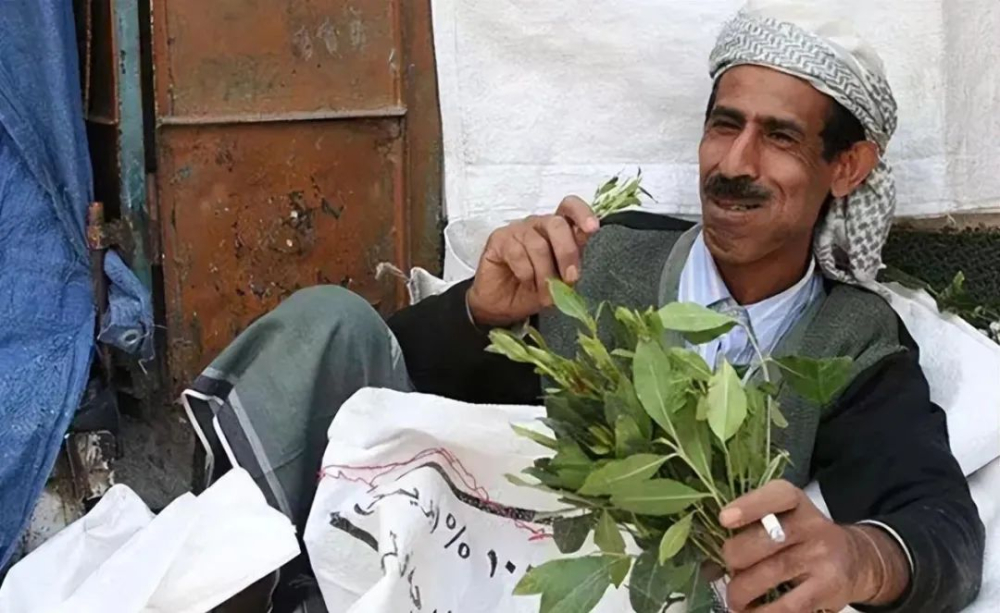
World coffee market prices are unstable and often low, and Yemeni farmers discovered that Qat paid far better—so most of them switched. By 2012 figures, Yemen's coffee production was just 198 tons, while Qat production reached 190,800 tons. By 2016, Yemeni coffee accounted for only 0.1% of world production—and that was commercial beans, with specialty coffee a vanishingly rare 0.0001%.
3. Lack of modern processing, so lots rarely reach specialty level.
Yemen is the world's only coffee-producing country that relies entirely on natural (dry) processing. The climate is extremely arid: coffee grows mainly in the western highlands, where annual rainfall is just 400–750 millimeters—far below the 1,500–2,000 millimeters Arabica ideally needs. In this water-scarce environment, farmers have never been able to introduce washed processing.
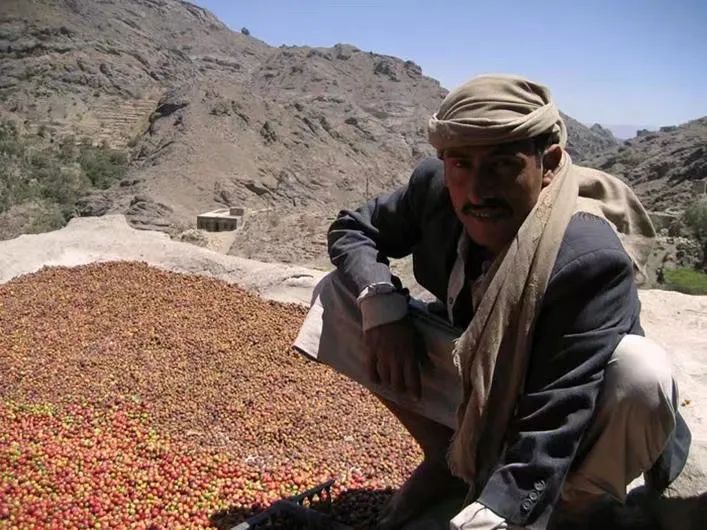
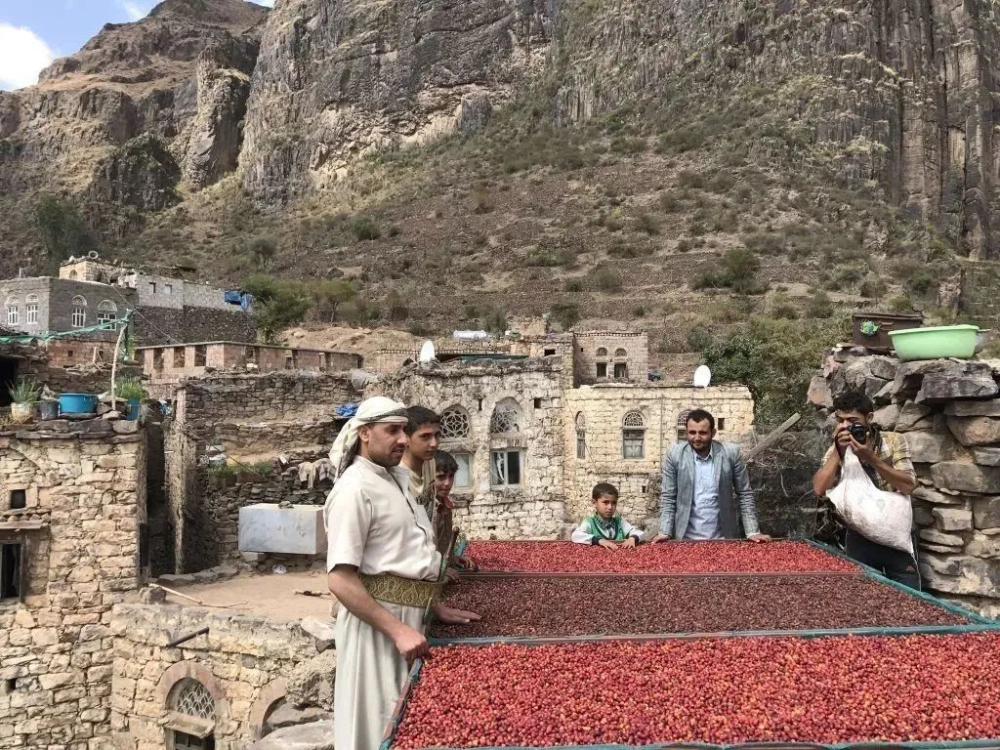
Instead, harvested cherries are laid out to dry on the roofs of stone houses built into the mountainsides. Much like drying rice grain, workers rake the cherries with wooden tools so every bean dries evenly. After roughly twenty days, once drying is complete, the dried pulp and skin are removed to extract the beans—and both depulping and hulling rely entirely on rudimentary stone grinding equipment. The resulting coffee is rich, complex, wild and mellow, with pronounced fermentation notes and lower acidity. But Yemeni coffee also carries an uncontrollable variable—the timing of seasonal rainfall—that makes each lot something of a gamble.
Revival and the Road Ahead
Today, only a handful of coffee shops anywhere have the chance to serve Yemeni coffee. But in recent years Yemen has been steadily improving its cultivation, appearing more and more often on the specialty coffee stage. New processing methods have emerged too—among them one with a powerful, almost mystical name: Alchemy processing. Whole cherries or depulped fruit are sealed in jars and infused with different inert gases (carbon dioxide, nitrogen, and others), combining 10 bar (145 psi) of pressure, temperature control, gas regulation, and managed drying to process the green beans.
Yemeni coffee remains rare and niche on the market today—but going forward, drinkers will have more and more chances to encounter it.
- END -
FrontStreet Coffee

FrontStreet Coffee Recommendation
If the story of coffee's origins whets your appetite, our Ethiopian lineup—the birthplace of Arabica—offers these classics:
FrontStreet Washed Yirgacheffe — the go-to introduction to Ethiopian coffee, with clear jasmine florals and bright citrus acidity. Light, elegant, tea-like: like a clean, refreshing lemon tea.
FrontStreet Natural Huakui (Guji Hambella) — traditional natural processing on raised beds for 21 days, with regular turning and hand-sorting. Medium-light roasted, it shows a light fermented wine note, florals, citrus and mango, with thick honeyed sweetness, cocoa and a hint of spice, a heavy body and long finish.
FrontStreet Kaffa Forest — wild coffee grown under shade at 1,400–2,100 meters in Kaffa's native forest. Medium-light roasted: distinct white florals on grinding, bright lemon acidity, sweet orange and bergamot, a faint melon-and-nut sweetness, and a green-tea-like mouthfeel.
Important Notice :
FrontStreet Coffee is a long-established specialty coffee roaster in Guangzhou China, selling freshly roasted beans from its own farm in Yunnan as well as dozens of carefully selected single-origin beans from around the world for both pour-over and espresso. The products deliver consistently excellent quality and great value, with shipping within 24 hours. Guangzhou's FrontStreet Coffee shop is recommended by many coffee lovers, and the beans are now available online at the Tmall 。
FrontStreet Coffee has moved to a new address:
FrontStreet Coffee Address: 315,Donghua East Road,GuangZhou
Tel:020 38364473
 Scan and follow the En Gafei WeChat official account. Please indicate that the reprint comes from "En Gafei".

