
Why Pour-Over Coffee Should Be Served Hot: Coffee Concentration Meter Testing at Different Temperatures
Summer has arrived, and more and more customers at FrontStreet Coffee are ordering iced pour-over. But when someone tells us they want to really get to know a particular bean and understand its flavors, our baristas still recommend trying it hot. Why does hot coffee reveal the flavors better?
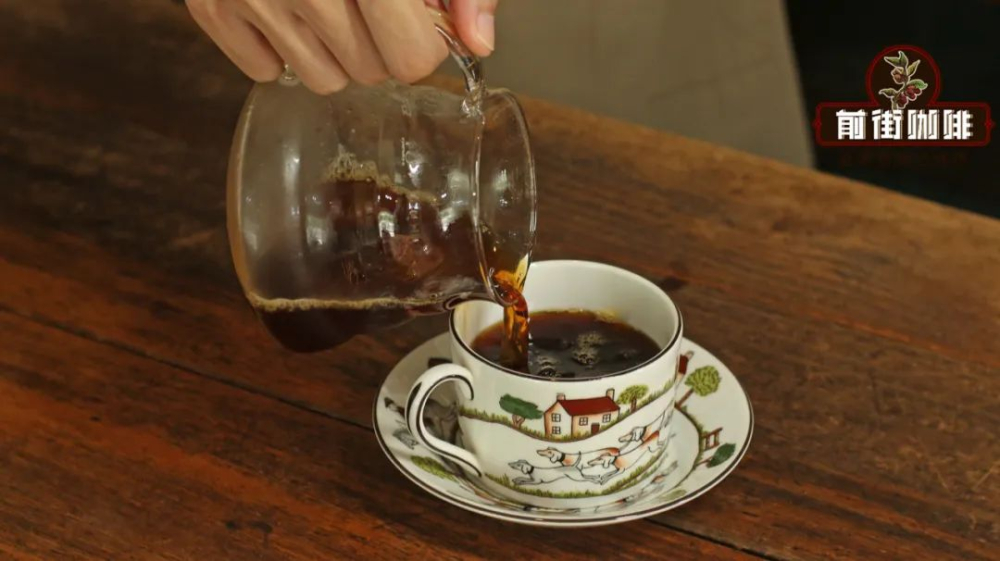
Why Drink Hot to Experience Flavors?
Iced pour-over is an adaptation of the hot version with one extra element: ice. Since the ice is added without participating in extraction, it dilutes the coffee's concentration. That means when brewing iced pour-over, we adjust our extraction parameters upward to compensate — aiming for an iced cup that stands comparison with the hot one.
Take FrontStreet Coffee's standard parameters for light-roast beans as an example:
Hot pour-over: 15g of coffee, ground at EK43s setting 10 (78–80% pass-through on a #20 standard sieve), water at 91–93°C, powder-to-water ratio 1:15, total water of 225ml.
Iced pour-over: 15g of coffee, ground at EK43s setting 9.5 (83–85% pass-through on a #20 standard sieve), water at 91–93°C, powder-to-water ratio 1:10, total water of 150ml, plus 100g of ice. (Note: the grind for iced pour-over should be slightly finer than for hot; exact sieve pass-through rates vary a little from bean to bean.)

Flavor Differences Between Hot and Iced Pour-Over
From an extraction standpoint, iced pour-over does adjust grind and ratio to raise the extraction rate and recover some of what's lost to the reduced water volume — but it still misses the final brewing stage that a hot pour-over enjoys.
So when you taste the same bean both ways, the iced version lacks the fullness, sweetness, complexity, and aftertaste of the hot one. The great strength of iced pour-over is simply being a "cooling remedy" in the dog days of summer. That's why FrontStreet Coffee's advice stands: if you truly want to know a bean, drink it hot.

The Advantage of Temperature Variation in Hot Coffee
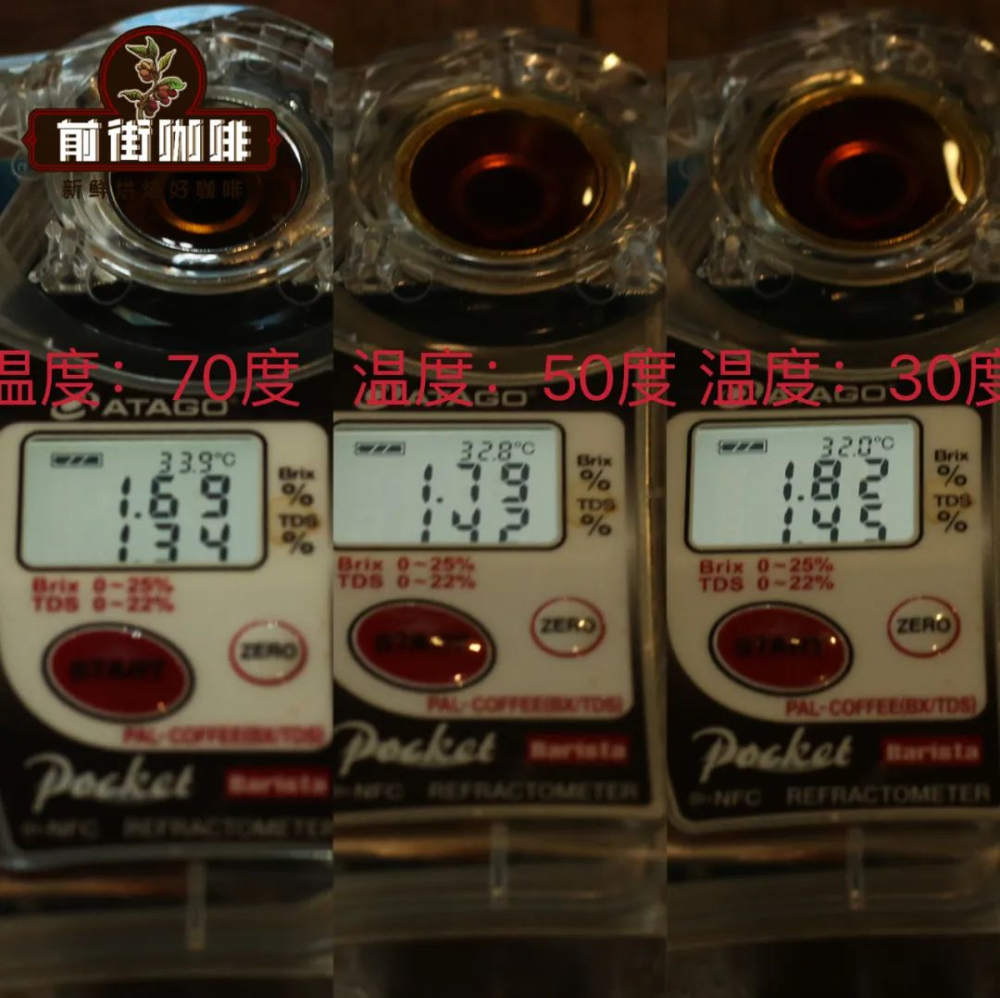
Hot pour-over has another significant advantage: it lets you track how the flavor changes across high, medium, and low temperatures. FrontStreet Coffee tested the TDS (Total Dissolved Solids) of the same pot at high temperature (about 70°C), medium temperature (about 50°C), and low temperature (30°C down to room temperature).
We used 90+ Eleta (medium-light roast) for the test, with these parameters: 15g of coffee, ground at EK43s setting 10 (78–80% pass-through on a #20 standard sieve), water at 91–93°C, powder-to-water ratio 1:15, total water of 225ml, brewed on a V60 dripper with a three-stage pour.
How Temperature Affects Coffee Flavor Perception
The comparison showed that as temperature changes, the flavor compounds in coffee keep evolving too. At high temperature, TDS is at its lowest, and it climbs as the coffee cools — because flavor compounds are still dissolving. In other words, at high temperature the flavors haven't fully stabilized yet. As the cup cools and compounds continue to release and settle, what we taste becomes fuller. Hence the slightly different impressions at each temperature.

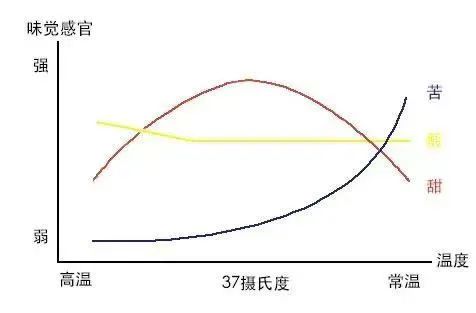
There's a human side to it as well: as a hot pour-over cools, our own sensitivity to the basic tastes shifts, so the same sip lands differently. This is why cupping moves from hot to cool — high temperature (about 70°C), medium (about 50°C), and low (30°C to room temperature).
Flavor Perception at Different Temperatures
At high temperature, the heat of the liquid overrides the taste buds and dulls their sensitivity. You can't pick out specific flavors in detail, but you can read the coffee's general direction — floral-fruity acidity or nutty-chocolate bitterness.
At medium temperature, our sensitivity to sweet and sour peaks. Here you can taste a bean's specific flavors most concretely, and it's the stage where flavor associations form most easily. Light roasts reward you with their beautiful acidity in fine detail; dark roasts can be enjoyed in generous sips for their rich body and sweetness.

As the coffee drops to low temperature or near room temperature, it hasn't developed negative flavors, but our perception tilts toward bitterness — and by then some volatile aromatics have already escaped. The final stretch of the cup may not be the pleasant one.
- END -
FrontStreet Coffee

FrontStreet Coffee Recommendation
If you're tasting a bean hot to catch its full arc from 70°C down to room temperature, these FrontStreet Coffee lots reward the slow journey:
FrontStreet Ethiopia Yirgacheffe Guodingding — A washed Yirgacheffe with citrus, berry, and floral top notes and a green-tea finish. Its soft, bright acidity unfurls exactly as the cup passes through the sweet spot at medium temperature — a textbook bean for learning what temperature does to flavor.
FrontStreet Kenya "Cherry Tomato" — From Thika at 1,550–1,750 meters, SL28 and SL34 given a 72-hour double-wash fermentation. Bright cherry-tomato and dried-plum acidity, full juice-like body, and a clean yellow-sugar finish — the high-density fruit flavors keep revealing new layers as the cup cools.
FrontStreet Jamaica Blue Mountain No.1 — The balance champion: cream, caramel, chocolate, nuts, honey, and a light fruit tone fused into one elegant cup. Roasted medium and brewed hot, it stays harmonious across the whole temperature journey without ever turning harsh near room temperature.
Important Notice :
FrontStreet Coffee is a long-established specialty coffee roaster in Guangzhou China, selling freshly roasted beans from its own farm in Yunnan as well as dozens of carefully selected single-origin beans from around the world for both pour-over and espresso. The products deliver consistently excellent quality and great value, with shipping within 24 hours. Guangzhou's FrontStreet Coffee shop is recommended by many coffee lovers, and the beans are now available online at the Tmall 。
FrontStreet Coffee has moved to a new address:
FrontStreet Coffee Address: 315,Donghua East Road,GuangZhou
Tel:020 38364473
 Scan and follow the En Gafei WeChat official account. Please indicate that the reprint comes from "En Gafei".

