Selecting Coffee Beans for SOE: Which Region's Beans Are Best for Single Origin Espresso?
Choosing the Right SOE Coffee Beans
Since the concept of specialty coffee emerged, the distinctive flavors of different producing regions have become increasingly familiar to coffee lovers, and SOE has grown steadily more popular in the market. So how do you choose the right SOE beans?
What Is SOE?
SOE stands for Single Origin Espresso. Its focus is to highlight the coffee flavor of a specific origin, essentially presenting the flavor of beans from a single origin in espresso form.
From the start, SOE has been associated with coffee that has good regional character. That means the beans chosen should highlight the unique flavors of their origin and create an impressive experience for the drinker.
Characteristics of Espresso Production
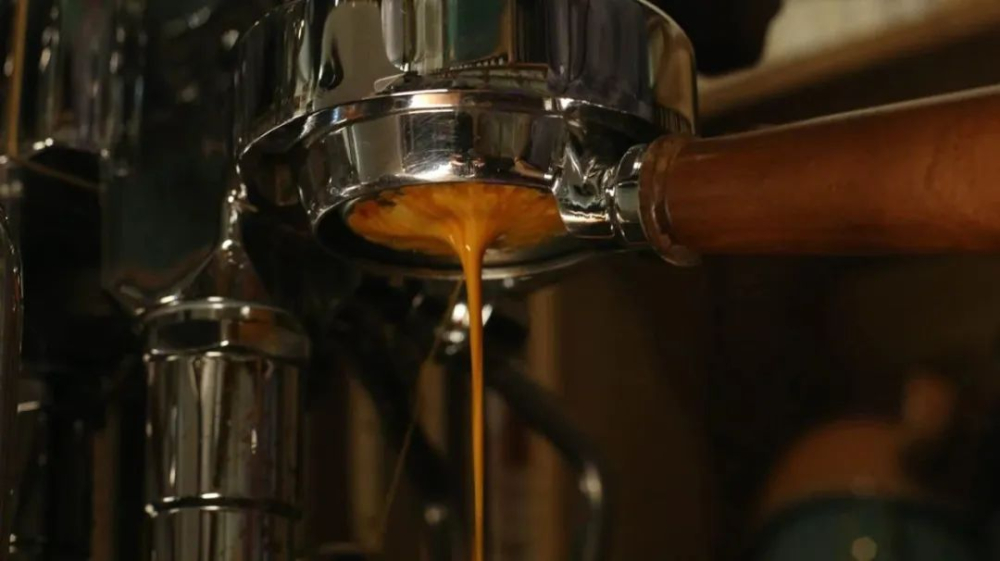
Espresso intensifies a coffee's regional character. Besides concentrating the aroma, it also increases acidity. What is more, for most people who make espresso, the aim is to use it as the base for milk drinks, which makes crema requirements essential.
Unlike pour-over and other drip methods, espresso must release most of its aromatic compounds in just 20-30 seconds. Espresso has a layer of golden crema, which we also call the "oil." Besides the coffee's natural oils, it includes carbon dioxide released from freshly roasted beans.

Crema is essentially insoluble oils from the coffee bean encapsulating carbon dioxide, which in turn holds the coffee's flavor compounds. The richness of the crema therefore largely determines the richness of the espresso's flavor. Sufficient crema is needed to support the flavor presentation of a shot, which is why freshly roasted beans show more crema.
In other words, typical espresso demands a certain level of acidity and appropriate crema performance. Setting flavor aside, what degree of roast suits SOE use?
For comparison, we take espresso made with very finely ground coffee, at a 1:1.9 to 1:2 powder-to-liquid ratio, extracted under high temperature (94°C) and high pressure (9bar) within 25-35 seconds, as our benchmark.
FrontStreet Coffee tried three daily beans at different roast levels: light-roasted Yirgacheffe, medium-roasted Brazil and dark-roasted Mandheling, making standard espresso with each and observing the richness of the crema at each roast level.
Extraction Parameters
Coffee Powder Weight | Coffee Liquid Weight | Extraction Time
Yirgacheffe | 20g | 38g | 28 seconds
Brazil | 20g | 38g | 30 seconds
Mandheling | 20g | 38g | 30 seconds
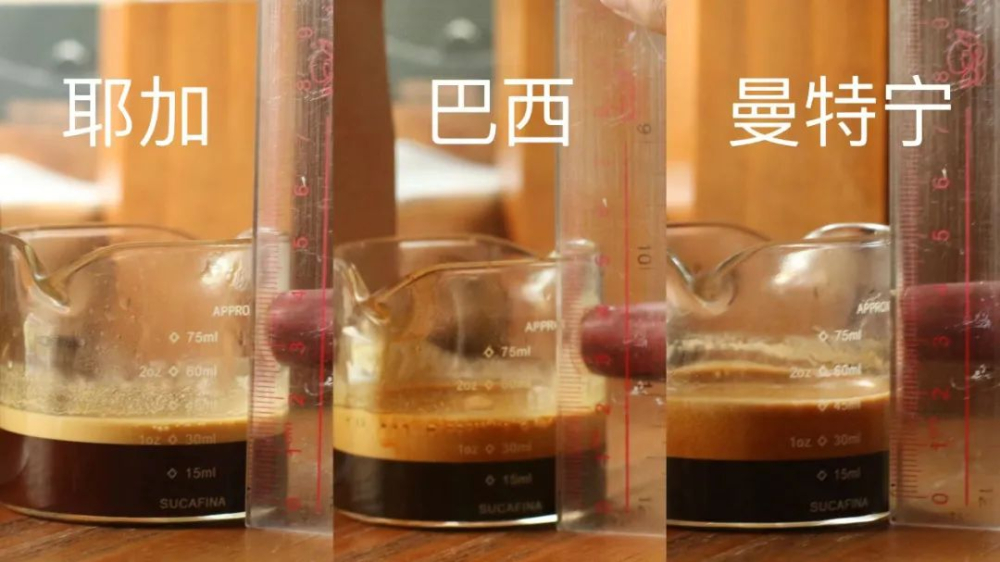
From this we can see clearly that, under the same parameters, the light-roasted Yirgacheffe produces less crema than the medium-roasted Brazil and Mandheling, and its crema color is lighter than the other two, while medium-roasted Brazil produces less crema than Mandheling. In terms of crema richness: Yirgacheffe comes lowest, then Brazil, then Mandheling.
This is, of course, a trade-off made from the perspective of crema requirements. In flavor terms, light-roasted Yirgacheffe offers rich lemon acidity on the first sip, but it is fleeting, with a short aftertaste and a relatively thin mouthfeel.
The medium and dark-roasted Brazil and Mandheling, meanwhile, lean bitter overall, with rich nut and chocolate notes, ample sweetness, a smooth and full body and a long-lasting aftertaste; Mandheling adds an herbal note in the finish that Brazil does not have.
Light-roasted Yirgacheffe does not perform as well on crema, but if you are seeking acidity in espresso you can choose light-roasted beans for SOE. If, however, you want an SOE with rich crema and a smooth, full body, FrontStreet Coffee recommends medium to medium-dark roasted beans.
Although a quality SOE reflects an origin's taste well, its limitation is that it can only express the regional flavor. Take the light-roasted Yirgacheffe above: if you love its acidity and delicate florals but find it lacks body and feels too thin, and the roaster follows your suggestion to change the roasting curve and add body, it will lose some fruit acidity and floral notes. This is where blends become the most cost-effective solution, combining complementary characteristics from different origins to achieve flavor balance.
This is only a comparison made with daily beans that carry the most basic flavors. In practice, we tend to choose higher-priced single-origin specialty beans as SOE options. Since these single-origin beans already possess excellent aromas, most of them perform exceptionally well as espresso, setting crema requirements aside, with the only drawback being the cost. Take it a step further, beyond daily beans and even beyond SOE, and a Geisha blend would be exceptional. FrontStreet Coffee's Costa Rica Mirasol blend, for example, is medium roasted, meeting the need for crema while being composed of outstanding specialty beans, so its candy-like aroma in espresso comes as no surprise.
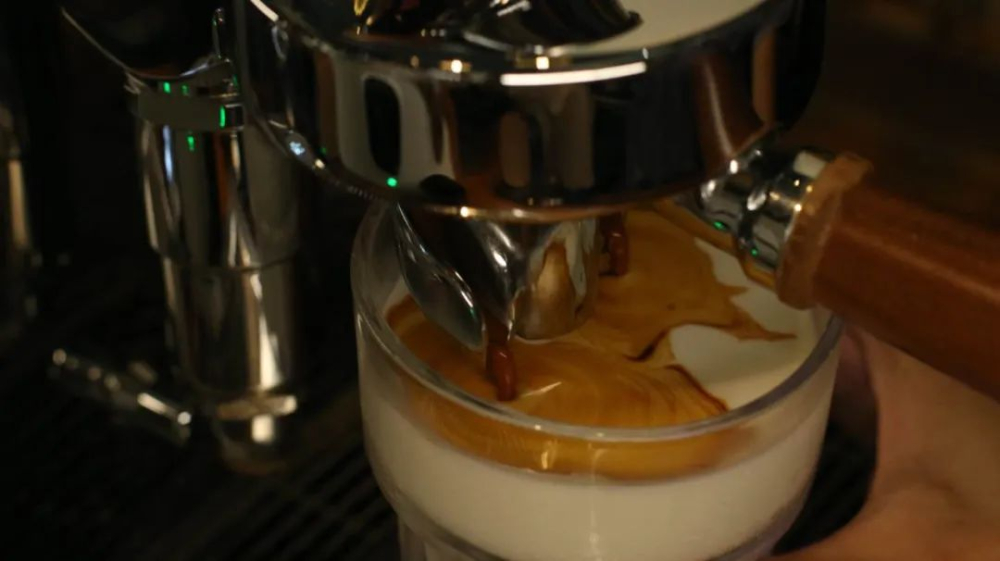
This article therefore examines the impact of roast degree on crema from this single angle, helping us understand the baseline of crema performance and giving reasons for using medium and medium-dark roasted beans for espresso. If you want to experience stronger acidity and can accept an SOE with less ideal crema, light-roasted beans may also meet your needs.
- END -

FrontStreet Coffee Recommendation
If you want an SOE with rich crema and a smooth, full body, choose medium to medium-dark beans, and a classic option is FrontStreet PWN Indonesia Golden Mandheling. Deep roasted, very low in acidity, and thick and lingering in the mouth, it opens with plenty of herbal and dark-chocolate aroma and a faint earthy note, with plenty of layers, ideal for anyone who likes a bold cup and dislikes acidity.
FrontStreet Brazil Queen Estate is another strong base for espresso. Low-acid and balanced, it is rich in nut and cocoa aroma with a clear caramel sweetness, and it goes down smooth without astringency, warm and long in the finish, working equally well as a pour-over, an espresso or a Moka pot. FrontStreet Papua New Guinea Bird of Paradise is a Typica grown between 1600 and 1800 meters in volcanic soil and AA grade, with a three-times-washed process, giving a clean, pure, non-acidic cup with standout sweetness.
If you want to enjoy a light-roast SOE for its acidity, FrontStreet Ethiopia Yirgacheffe Guting is among the most approachable Ethiopian beans, with vivid citrus, berry and floral notes and a soft, bright acidity, while FrontStreet Ethiopia Huakui leans tropical and juicy, with strawberry, passion fruit and jackfruit aromas, low bitterness and a smooth, fruit-forward body.
Important Notice :
FrontStreet Coffee is a long-established specialty coffee roaster in Guangzhou China, selling freshly roasted beans from its own farm in Yunnan as well as dozens of carefully selected single-origin beans from around the world for both pour-over and espresso. The products deliver consistently excellent quality and great value, with shipping within 24 hours. Guangzhou's FrontStreet Coffee shop is recommended by many coffee lovers, and the beans are now available online at the Tmall 。
FrontStreet Coffee has moved to a new address:
FrontStreet Coffee Address: 315,Donghua East Road,GuangZhou
Tel:020 38364473
 Scan and follow the En Gafei WeChat official account. Please indicate that the reprint comes from "En Gafei".