
Coffee Latte Art Tutorial: Thousand-Layer Heart, Tulip, Leaf, and Swan Designs

After daily practice in milk frothing, you have likely mastered how to create a perfect milk foam. If not, you can first read FrontStreet Coffee's earlier guide to the basics of milk frothing and solidify your foundation.

The Importance of Integration
First, remember that integration is a crucial step. It brings the density of the coffee and the milk foam closer together, so that the milk poured afterward interacts properly with the coffee and the finished drink has an even, uniform texture.
Integration: Pour milk from a greater height above the liquid surface while making circular motions. The circular motion stirs the espresso at the bottom with the incoming milk, creating integration.

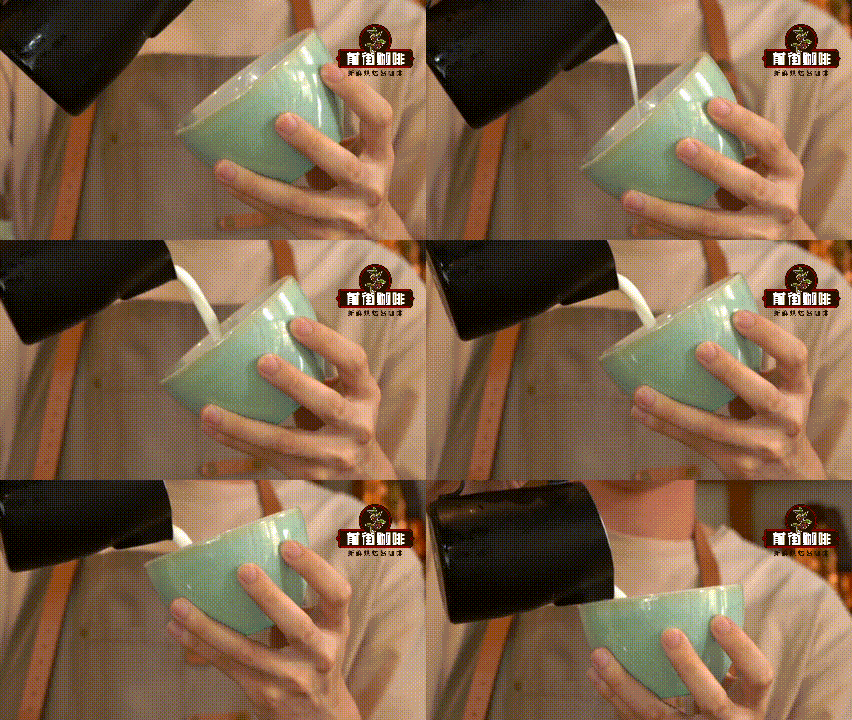
Cup Tilting Technique
Cup tilting means slowly returning the coffee cup to a horizontal position as you pour. This has two benefits: it maintains the liquid distance needed for a better pattern, and it prevents overflow.
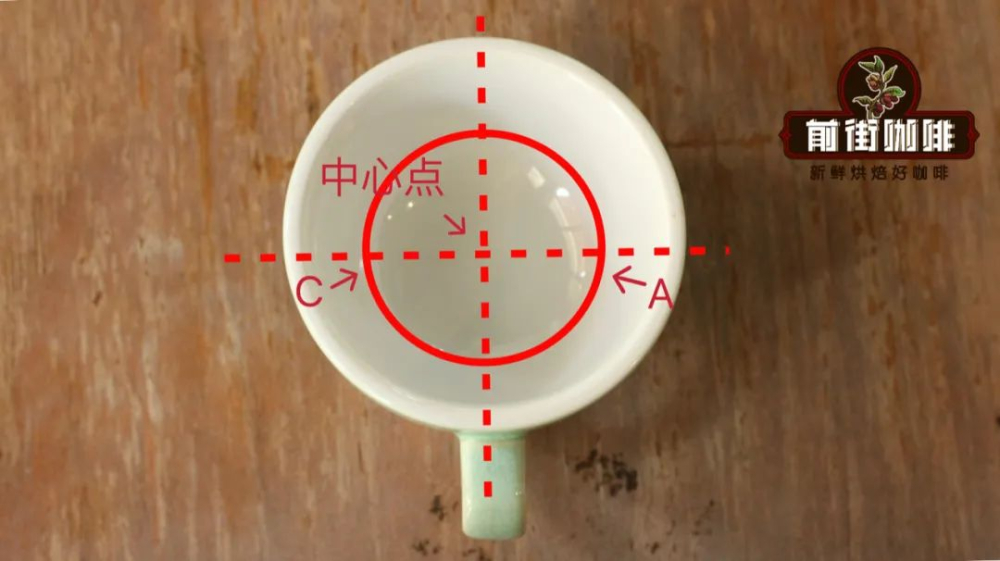
Understanding the Cup Surface Points
We first set three points on the cup surface to help you better understand where to enter for the patterns that follow.
Latte Art Tutorial
Now let's begin the lesson.
Heart
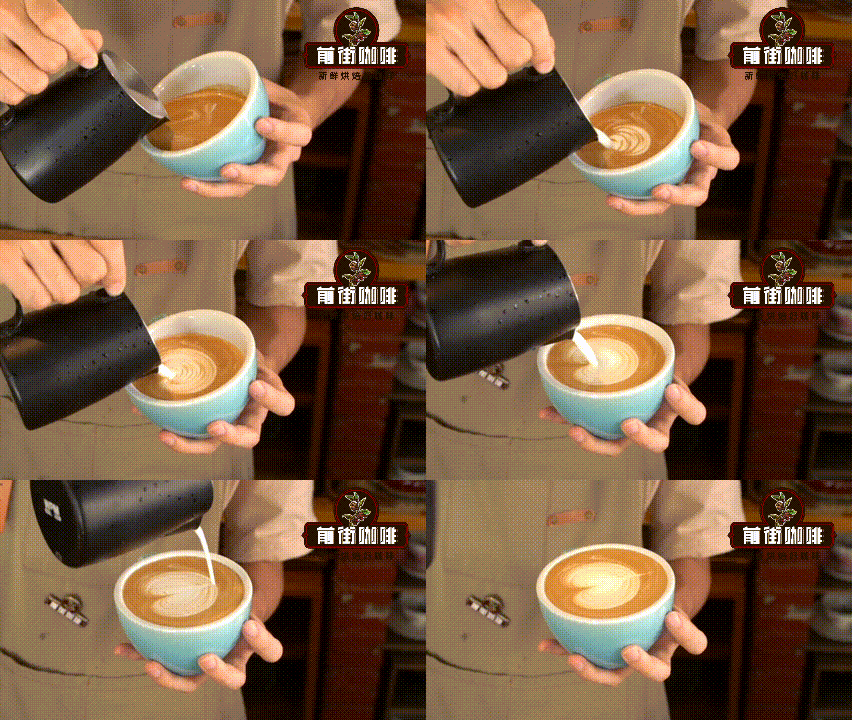
The simplest pattern for beginners, yet the most challenging for experienced baristas. Pour espresso into the cup, then pour milk from the pitcher to create integration. Integrate until the cup is half full, then lower the pitcher, move the spout to the center point, tilt the pitcher close to the liquid surface, and pour with a larger flow. As you pour, tilt the cup back and make adjustments. When the cup is nine-tenths full, raise the pitcher to finish.

Layered Heart
Just as with the basic heart, integrate until the cup is half full. After moving the spout to the center point, use a large flow to inject milk. Unlike the large white heart, this time shake the cup mouth: a slow, even shake creates the layered stacking in the pattern. When nine-tenths full, raise the pitcher to finish.
Leaf
Integrate until the cup is half full, move the spout to point C, and use a large flow to inject milk. While injecting, shake and slowly move backward until you reach point A, pause briefly to create the leaf tip, and when nine-tenths full, raise the pitcher to finish.

Tulip
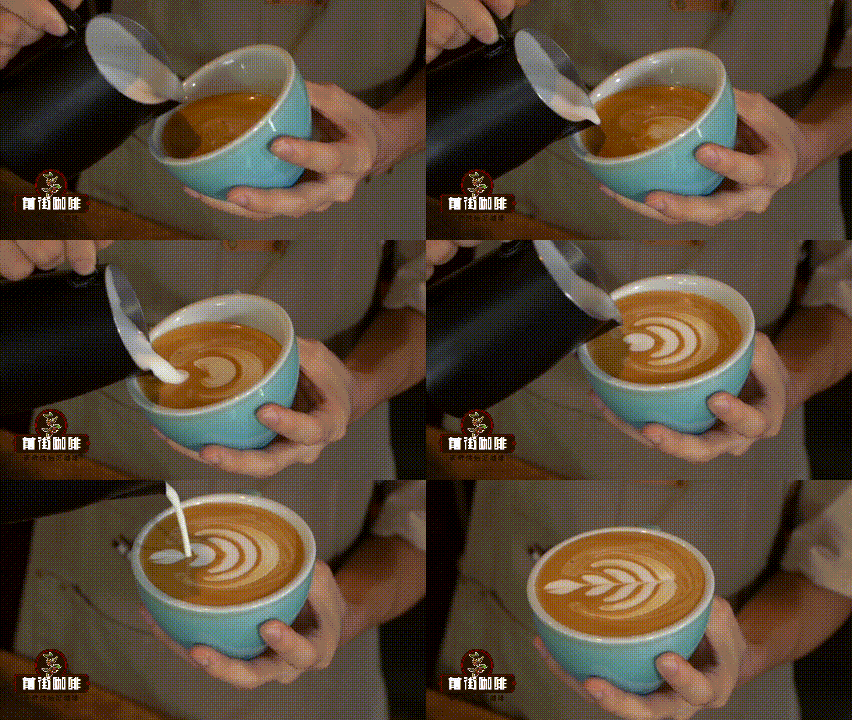
Integrate until the cup is half full, then push out half a heart at the center point, then another half heart, move back one step, then push another half heart, and so on. Continue until nine-tenths full, then raise the pitcher to finish. For a layered tulip, simply replace the half hearts of the tulip with half layered hearts.
Swan
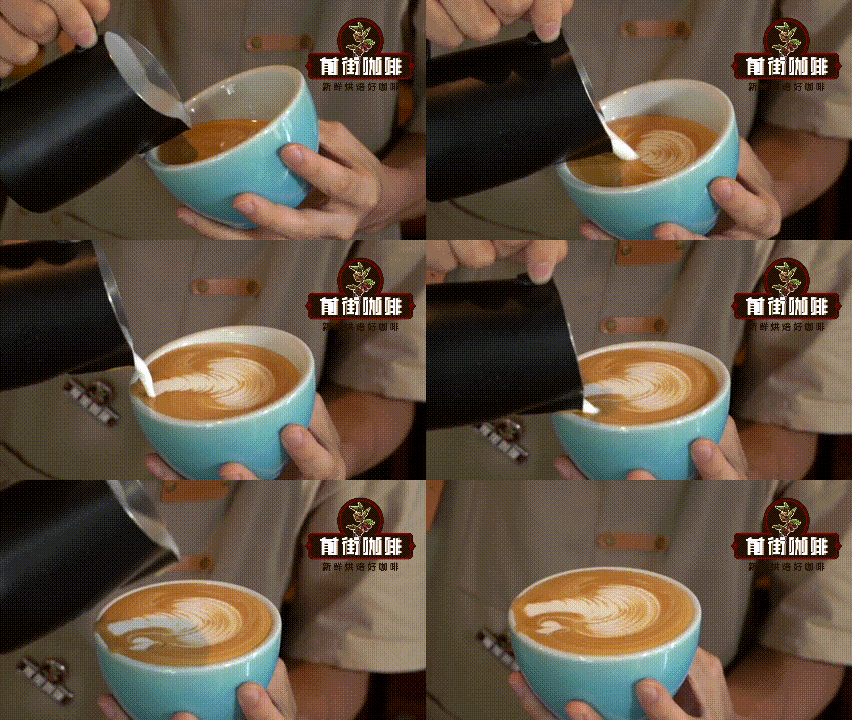
First integrate until half full, then create a leaf without finishing it. Raise the pitcher and reduce the flow, push forward along the edge of the leaf, push to the bottom, and then pull back. Pull to above point A, lower the spout and pause briefly, then raise the pitcher to complete the design.
- END -

FrontStreet Coffee Recommendation
Latte art depends on a stable espresso base and a rich, fine crema, so the bean you choose directly affects how well your patterns hold. If you want to learn at home, FrontStreet Classic Blend is the place to start: a medium-dark espresso recipe built from three regions, inspired by the old "Mamba" pairing of Mandheling and Brazil, with a small amount of Robusta added for extra aroma and body. It pours with clear butter, toasted bread, and caramel biscuit aromas — a strong flavor, a solid body, and fine crema, with very stable extraction. It is an essential home coffee for beginners.
If you prefer a rich, nutty style, FrontStreet Specialty Blend is the natural choice. Also a medium-dark espresso blend, it pairs washed Colombian beans with semi-washed Brazilian beans, giving an espresso of nut, dark chocolate, and caramel. Whether you make an Americano, a latte, or a Flat White, it highlights smooth cream, almond, and cocoa aromas. Its crema is every bit the equal of a café's, making it more than sufficient for latte art practice, and it is especially suited to anyone planning to open a shop or learn at home.
If the first two blends are made for beginners, FrontStreet Commercial Blend is made for those about to open a café. It is a traditional Italian-style recipe that adds a small amount of Robusta on top of the Specialty Blend, aiming to bring more deep-brown, fine crema and a heavier character. Whether you make an Americano, a latte, or a mocha, it carries nut, cocoa, and caramel flavors, and it makes latte art effortless.
Important Notice :
FrontStreet Coffee is a long-established specialty coffee roaster in Guangzhou China, selling freshly roasted beans from its own farm in Yunnan as well as dozens of carefully selected single-origin beans from around the world for both pour-over and espresso. The products deliver consistently excellent quality and great value, with shipping within 24 hours. Guangzhou's FrontStreet Coffee shop is recommended by many coffee lovers, and the beans are now available online at the Tmall 。
FrontStreet Coffee has moved to a new address:
FrontStreet Coffee Address: 315,Donghua East Road,GuangZhou
Tel:020 38364473
 Scan and follow the En Gafei WeChat official account. Please indicate that the reprint comes from "En Gafei".

