
How Does Different Water Quality Affect Cold Brew Coffee Flavor? What Water Makes the Best Tasting Coffee?

A freshly brewed pot of black coffee is mostly water, with only a small fraction of flavor compounds. To make coffee taste good, water quality matters just as much as water temperature. Seasoned coffee drinkers know that different brands of bottled water carry different mineral profiles, with varying hardness and pH—which inevitably changes the taste of the coffee you brew with them.
So one afternoon, FrontStreet Coffee designed a small experiment. We picked four common bottled waters from the market—Baishuishan Mineral Water, Nongfu Spring Natural Water, Jing Tian Natural Spring Water, and Yibao Purified Water—and cold-brewed the same coffee with each, to see how different waters shape the flavor of cold brew.
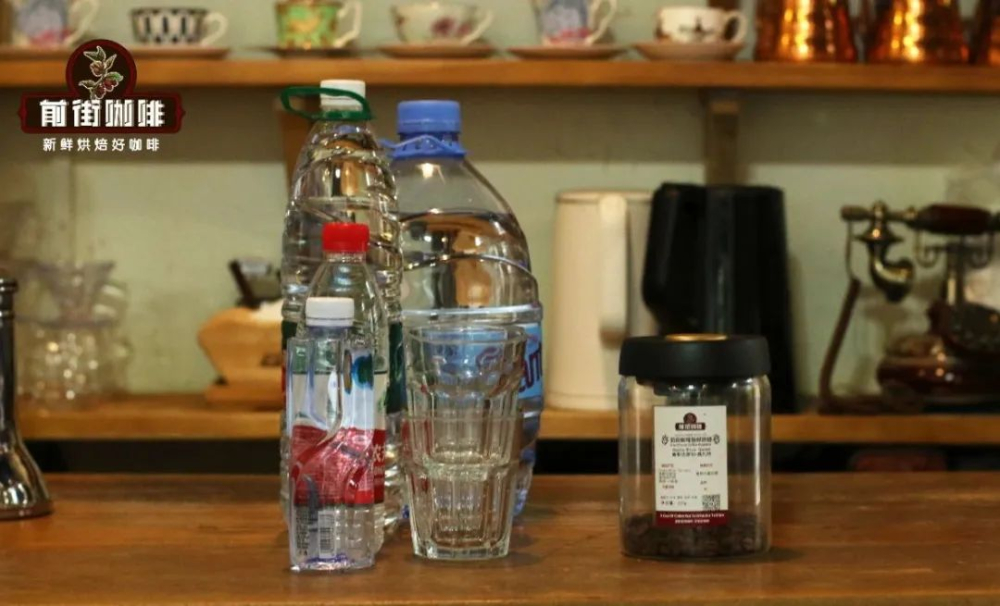
What We Measured and Recorded
The TDS of each water, the concentration of each cold brew, and each coffee's flavor and mouthfeel.
A Quick Look at TDS
TDS (Total Dissolved Solids) measures how much dissolved material a water contains—minerals, salts, metals, and other solids. The main components are ions such as calcium, magnesium, potassium, and sodium. These determine water's hardness, and as a general rule, hard water is not well suited to brewing coffee.
Research shows that water with moderate calcium content dissolves coffee's acidity more effectively, though calcium-heavy water easily forms scale. Water carrying small amounts of magnesium enhances the sweetness and aroma of the cup. Water with balanced calcium and magnesium ions is therefore ideal for brewing.
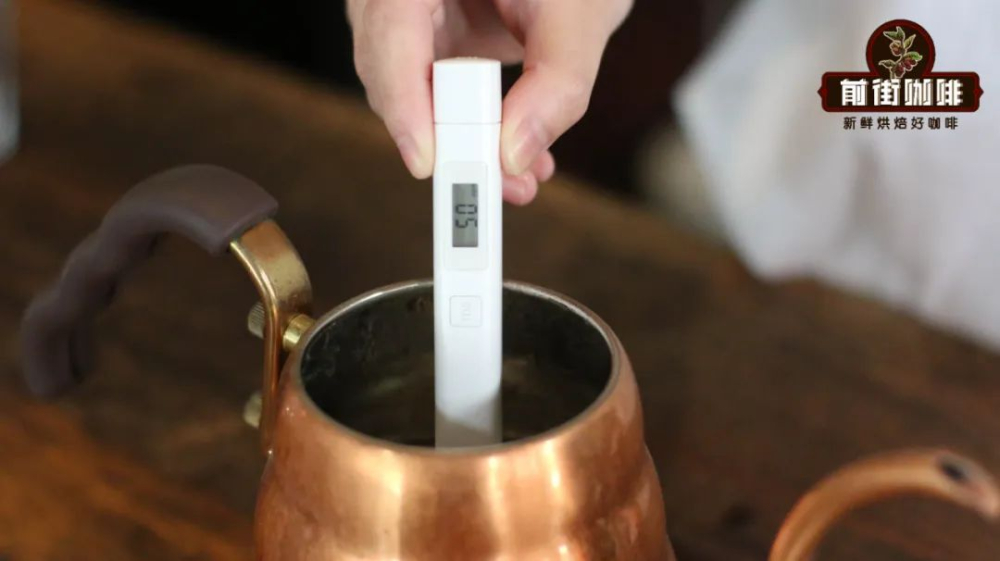
TDS is measured in mg/L and expressed in ppm—the higher the ppm, the more dissolved solids. Water at 50ppm, for instance, contains 50mg/L of dissolved solids. One caveat: TDS only tells you the total dissolved solids; it cannot identify the exact content of magnesium, calcium, or other trace elements.
Running the Experiment
For the beans, FrontStreet Coffee chose the Costa Rica Mozart. Its raisin honey processing gives it osmanthus florals and a high sweetness reminiscent of ripe and dried fruits, making it a natural fit for iced coffee.
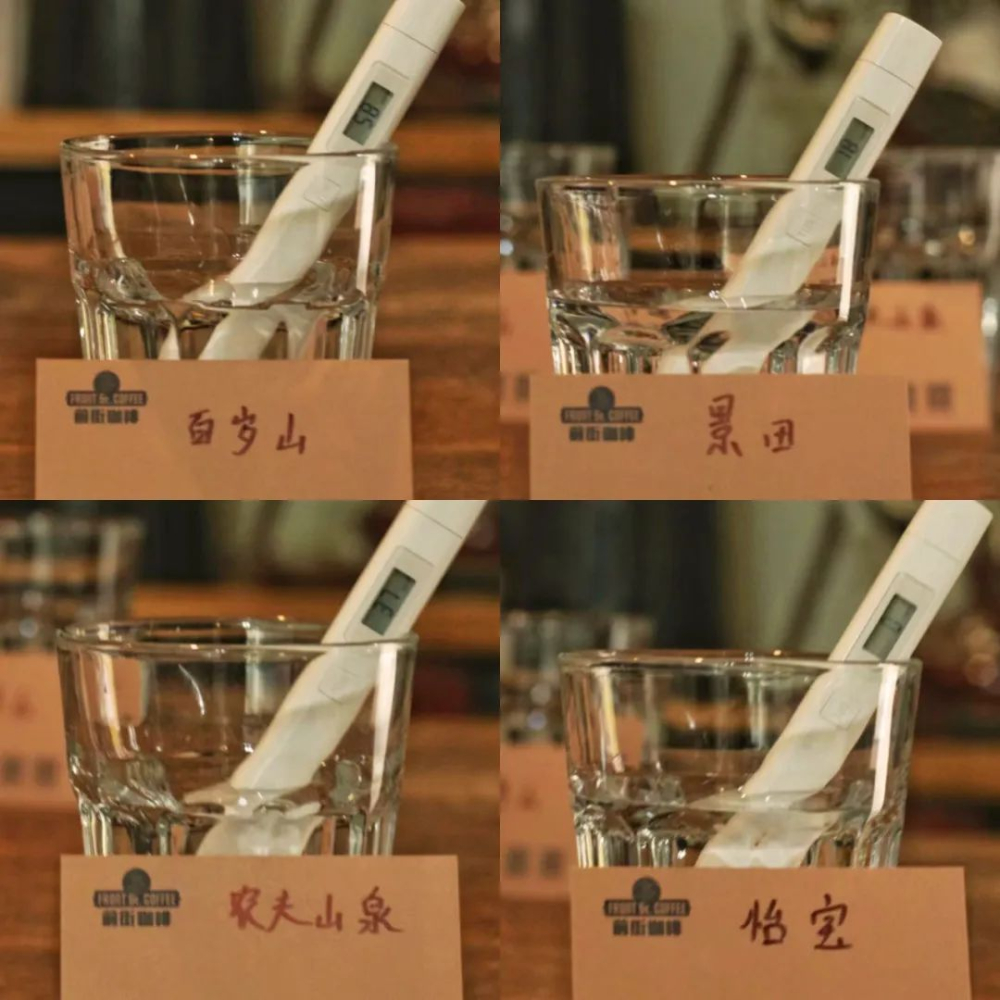
Water Quality Readings Before Brewing
Baishuishan Mineral Water TDS: 58ppm Nongfu Spring Natural Water TDS: 37ppm Jing Tian Natural Spring Water TDS: 18ppm Yibao Purified Water TDS: 0ppm
Cold Brew Parameters
Coffee grounds per sample: 15 grams Grind size: 83% passing through a #20 sieve (EK43s setting 9.0) Coffee-to-water ratio: 1:10 Steeping duration: 15 hours (filtered, then refrigerated for 2 hours)
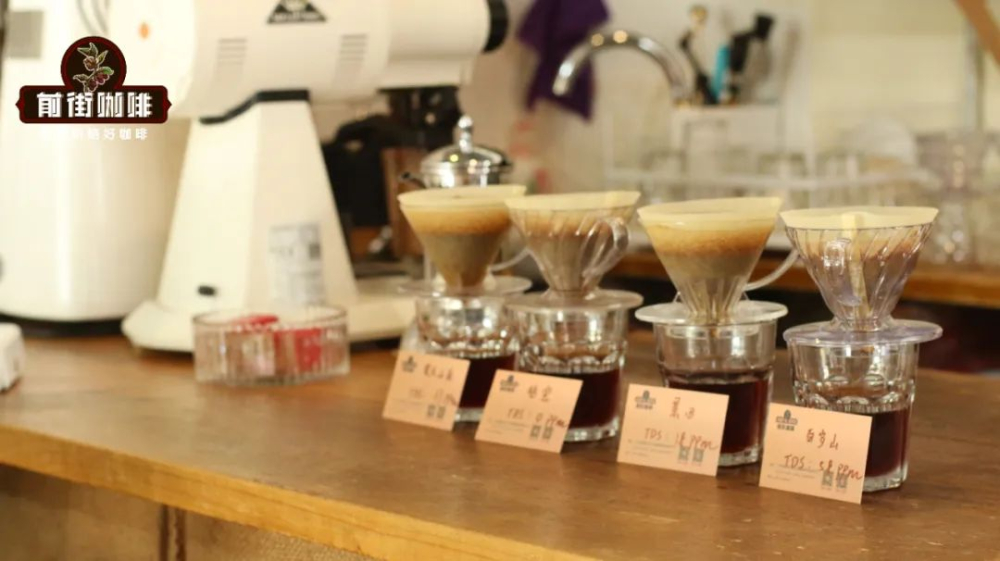
Concentration Readings and Tasting
Baishuishan Mineral Water - Cold brew concentration: 2.0% Mouthfeel: Berries, black tea; a monotonous, heavy flavor with a slight powdery texture
Nongfu Spring Natural Water - Cold brew concentration: 2.15% Mouthfeel: Raisins, tropical fruits, light florals, a noticeable fermented wine note; full and expressive
Jing Tian Natural Spring Water - Cold brew concentration: 1.98% Mouthfeel: Blueberries, dried fruits, slight fermentation, weak sweetness; unremarkable flavor and average aroma
Yibao Purified Water - Cold brew concentration: 2.09% Mouthfeel: Bright fruit acidity, sweet oranges, spices; the highest clarity, overall uplifting and refreshing
Cold brew operates under fairly stable extraction conditions—its concentration is dictated by the coffee-to-water ratio, grind size, and steeping time. So with only the water changed, even the gap between the lowest reading (Jing Tian, 1.98%) and the highest (Nongfu Spring, 2.15%) was not significant.
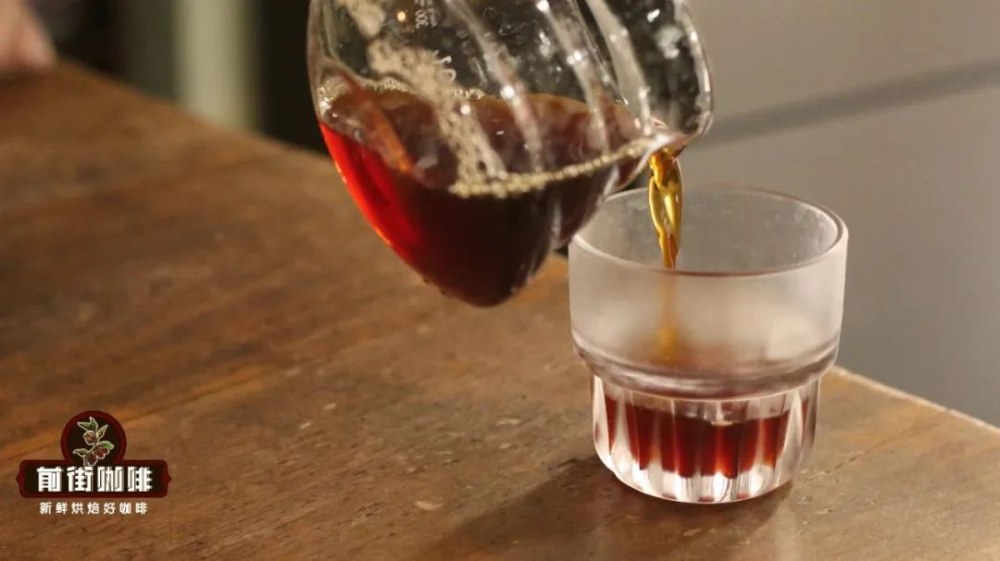
Because cold brew extracts at low temperature, water's extraction power is weak, drawing out mostly small-molecule compounds like floral aromatics and fruit acids. A light-to-medium roast is unlikely to turn bitter in cold brew, and indeed none of the four cups showed negative flavors. The differences between them came down to the varying trace components (calcium and magnesium ions) in each water, which shifted how much of each flavor compound was extracted.
Based on FrontStreet Coffee's cold brew experience and the results of this comparison: if you want a coffee that consistently shows its flavor profile with attractive fermentation character, we recommend a medium-ppm water like Nongfu Spring. If you prefer brighter acidity and fresher fruit, try steeping your grounds in a purified water like Yibao instead.
- END -
FrontStreet Coffee
No. 10, Bao'an Qianjie, Yandun Road, Dongshankou, Yuexiu District, Guangzhou, Guangdong Province
FrontStreet Coffee Recommendation
Want beans built for cold brew? FrontStreet Coffee's Strawberry Candy Geisha Blend pairs the classic Panama Geisha—delicate rose and orange notes—with Costa Rica honey-processed coffee carrying grape, dried blueberry, and strawberry-candy sweetness. Cold brewed, it is sweet-tart and lively, and with a little fermentation it takes on an almost fruit-wine character. If you love floral iced coffee, the natural-processed FrontStreet Ethiopia Aricha (Huakui) shows magnolia, creamy strawberry, dried mango, guava, and black tea notes in cold brew.
For a cup bursting with juice, the FrontStreet Kenya Cherry Tomato is the pick: cherry tomato, snow pear, black plum, and smoked plum notes shine under low-temperature extraction, with low bitterness and vibrant acidity that gets even more refreshing over ice. And since cold brew uses more grounds than pour-over, a budget-friendly option like the washed FrontStreet Yirgacheffe Guodingding—sweet berries, layered fruit, and honey—makes an excellent everyday choice.
Important Notice :
FrontStreet Coffee is a long-established specialty coffee roaster in Guangzhou China, selling freshly roasted beans from its own farm in Yunnan as well as dozens of carefully selected single-origin beans from around the world for both pour-over and espresso. The products deliver consistently excellent quality and great value, with shipping within 24 hours. Guangzhou's FrontStreet Coffee shop is recommended by many coffee lovers, and the beans are now available online at the Tmall 。
FrontStreet Coffee has moved to a new address:
FrontStreet Coffee Address: 315,Donghua East Road,GuangZhou
Tel:020 38364473
 Scan and follow the En Gafei WeChat official account. Please indicate that the reprint comes from "En Gafei".

