
Why Do Manual Grinders Produce More Fines Than Electric Grinders?

Whether you grind with a top-tier grinder or an entry-level one, some amount of fine particles is unavoidable. But how many fines you get affects the brew—inconsistency starts there. Your choice of grinder can, to some extent, ease that worry. So FrontStreet Coffee ran a comparison between electric and manual grinders to see how they differ at producing fines.
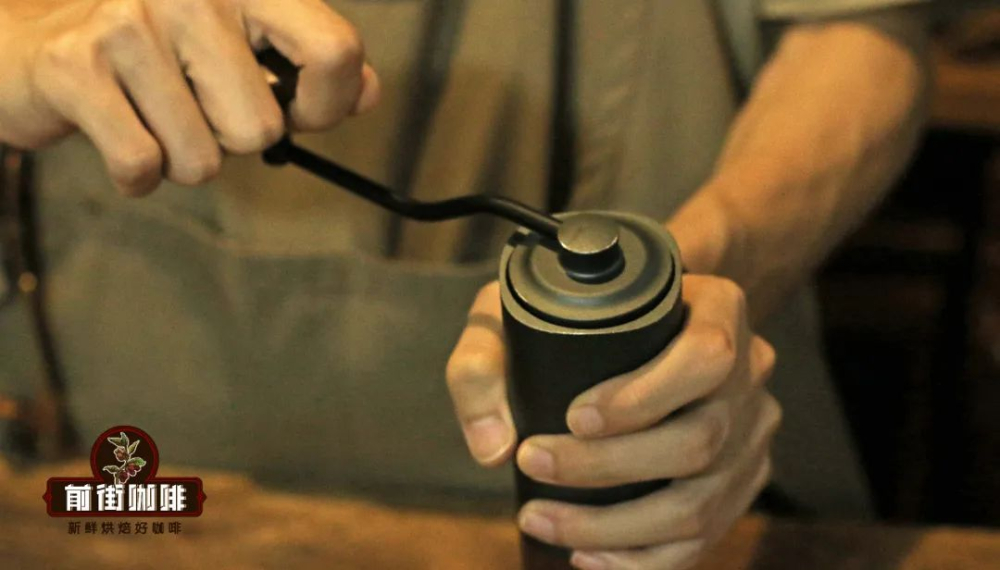
Grinder Mechanisms
Most manual grinders on the market use conical burrs, while electric grinders mostly use ghost-tooth or flat burrs. So we compared a conical-burr manual grinder against a flat-burr electric grinder.
Testing Method
We ground 10 grams of beans with each grinder (dark-roasted Golden Mandheling for the test), both set to a grind size at which 80% of particles would pass through a Chinese standard #20 sieve. The grounds went into the sieve, were gently shaken, and then the extremely fine particles were weighed and compared.
Test Results
Manual grinder: 1.6g of extremely fine particles

Flat-burr electric grinder: 0.9g of extremely fine particles
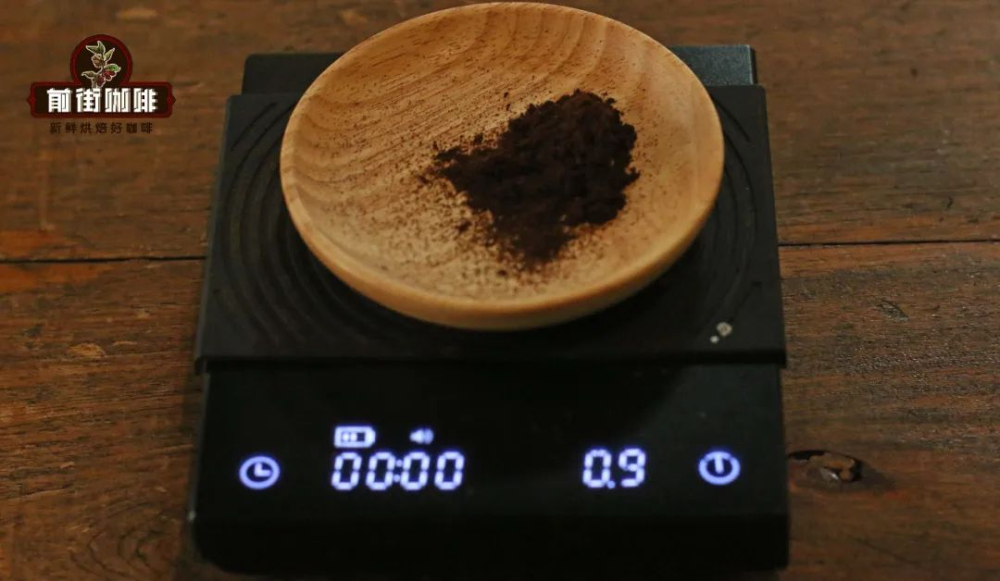
So when the same beans are ground to the same particle distribution, manual grinders really do produce more fines than electric grinders.
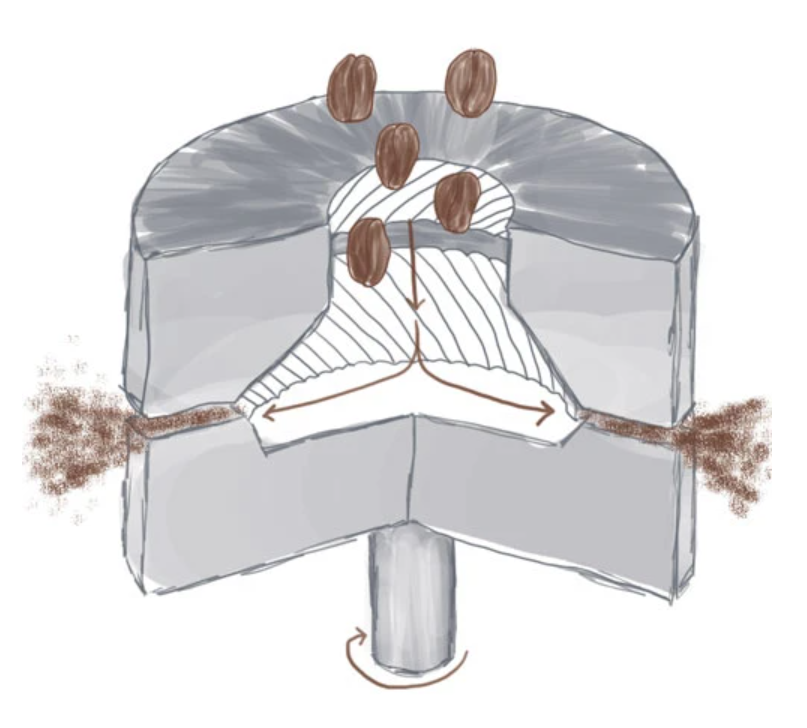
The reason lies in the burr design. A conical burr setup consists of a ring-shaped stationary burr and a cone-shaped rotating burr. The cone's diameter narrows progressively from top to bottom, which somewhat compromises uniformity and makes it more prone to producing extremely fine powder.
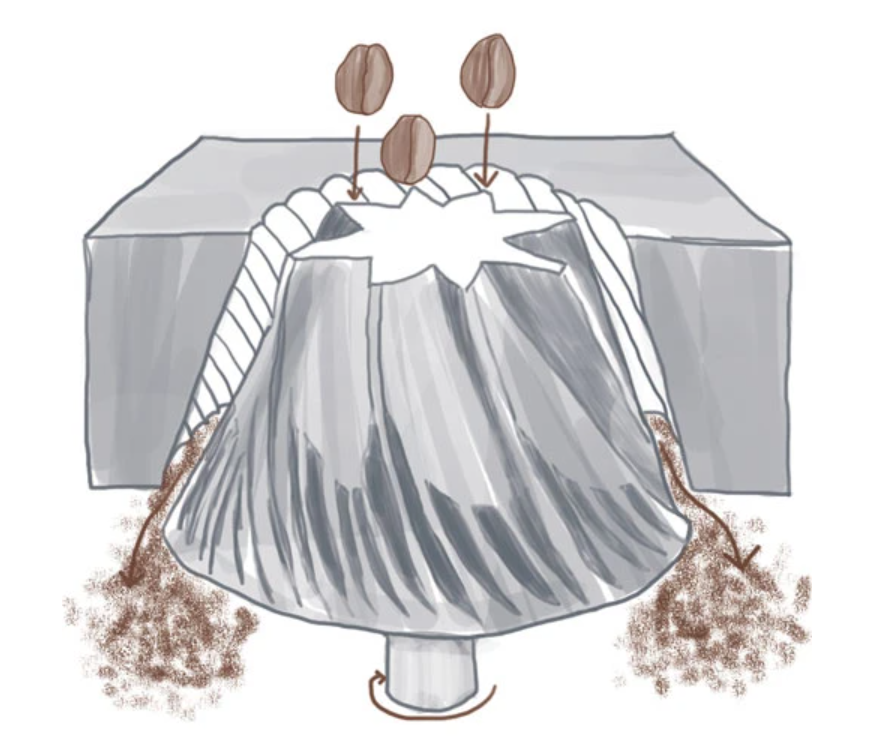
Electric flat burrs, by contrast, sit parallel to each other—one fixed to the housing, one spun by the motor. Beans are shattered and flung outward by centrifugal force, exiting through the gap between the burrs. The time a bean spends being crushed is shorter than with conical burrs, so fewer fines result. And with the motor doing the work, human error drops out and beans are ground at constant speed, which makes the grind more uniform overall.
Practical Tips
If your grinder produces too many fines, add one extra step: sift them out. Then stir a portion of the sifted fines back in. That way you cut the excess fines while keeping the body and flavor they contribute.
- END -

FrontStreet Coffee Recommendation
Our test beans were Golden Mandheling for a reason—it's one of our most beloved coffees. Two picks from the Mandheling family:
FrontStreet PWN Golden Mandheling — from Indonesia's PWN company, this is the benchmark for premium Mandheling: beans screened to 18 mesh and above, fewer than 3 defects per 300g of green sample (G1 grade), plus three rounds of hand sorting for exceptional cleanliness and sweetness. Medium-dark roasted, with rich roast aromas, a clean cup, and full, heavy body—perfect for anyone who dislikes acidic coffee. For pour-over, try 87–88°C water, 15g of coffee at a 1:15 ratio, a coarse-sugar grind, and a three-pour method to bring out its syrupy body and caramel sweetness.
FrontStreet Linh Dong Mandheling — from the traditional Lake Toba region of North Sumatra, made distinctive by the wet-hulled (giling basah) process and local fermentation: bold aroma, thick mouthfeel, intense flavor, clove and woody notes, low acidity with spice and mint, and a strong, lasting sweetness.
FrontStreet Classic Blend — for espresso lovers, this blend adds medium-dark Mandheling to Brazil's creamy, nutty base (plus a touch of robusta for crema). Butter, roasted chestnut and caramel notes with sandalwood, herbal and spice undertones—effortless for latte art or a layered Dirty.
Important Notice :
FrontStreet Coffee is a long-established specialty coffee roaster in Guangzhou China, selling freshly roasted beans from its own farm in Yunnan as well as dozens of carefully selected single-origin beans from around the world for both pour-over and espresso. The products deliver consistently excellent quality and great value, with shipping within 24 hours. Guangzhou's FrontStreet Coffee shop is recommended by many coffee lovers, and the beans are now available online at the Tmall 。
FrontStreet Coffee has moved to a new address:
FrontStreet Coffee Address: 315,Donghua East Road,GuangZhou
Tel:020 38364473
 Scan and follow the En Gafei WeChat official account. Please indicate that the reprint comes from "En Gafei".

