What to Consider When Ordering Coffee at a Café? Should You Stir a Latte or Flat White?
A Coffee Controversy: Stirring Latte Art in Australia
Recently an American internet user in Australia stirred a latte (or possibly a flat white) decorated with latte art, and the act caused an outcry among Australian netizens, going viral in the process.
According to various media reports, an Australian athlete brought her American boyfriend back to her home country and told him that Australia's coffee culture was superior to America's. Skeptical, the boyfriend went to a coffee shop and ordered a coffee with latte art.
The athlete recorded a video of her boyfriend's first attempt at "real" coffee. But the boyfriend kept stirring the drink, even spilling some of the milk foam, joking that he didn't really like foam, and then took only one sip. That single act triggered a flood of criticism from Australian netizens.

Many netizens urged the athlete to make her boyfriend stop stirring the foam, telling him that in Australia you are supposed to start drinking from the foam. Some joked that stirring coffee in Australia could be grounds for a visa refusal. Others said their eyes twitched watching him stir the foam (also a joke), and some felt that drinking coffee this way disrespected Australian coffee culture. Later the athlete posted a second video showing that her boyfriend had learned the proper Australian way to drink coffee, and said it was indeed much better.

Understanding Australian Coffee Culture
At this point many readers may not understand why stirring coffee in Australia would draw criticism. After all, stirring makes a drink more uniform and its flavors more integrated. The reason is that Australians have invested enormous effort in developing their own coffee culture through research into milk coffee, and that work has influenced the entire specialty coffee market.
How Intense Australian Coffee Culture Is
Australian coffee has always been distinctive. From roasting to drink names and preparation methods, it differs from other countries around the world. Almost every coffee shop enjoys booming business, and busy establishments turn out more than 200 cups per hour. Baristas are extremely busy, so most Australian baristas have mastered the skill of carrying multiple cups in one hand. Despite the rush, the quality of every cup remains the top priority.

Especially in major cities such as Melbourne and Sydney, every coffee shop delivers first-class quality at very affordable prices. Shops don't compete on style but on barista technique and the quality of each cup. That is why so many people who visit Australia come away with a lasting appreciation for the local coffee.
Customization and Innovation
In Australian cafés, beyond the standard offerings, most places keep a kind of "secret menu" that can accommodate complex customer preferences. For example, a cappuccino with soy milk where the foam fills three-quarters of the cup, meaning everything except the espresso is foam. Even during busy periods, baristas are expected to handle reasonable — though not outrageous — customization requests.
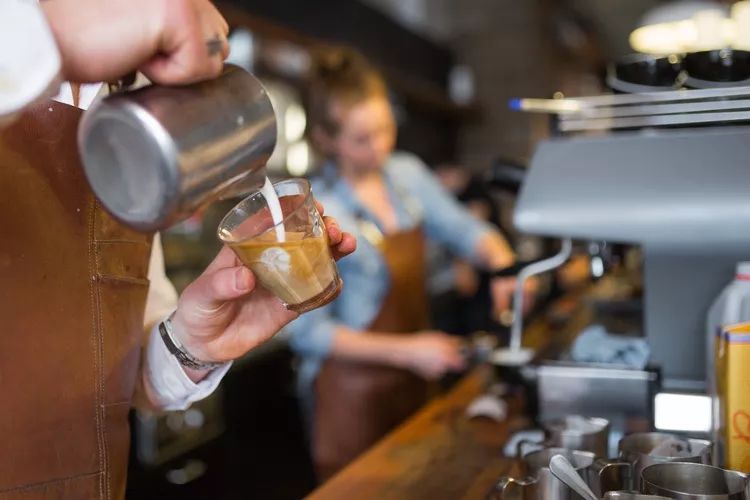
Some customized drinks have gradually become standard items on many coffee menus. The flat white and piccolo we know today, along with other preparations that look like variations on the latte, mostly originated from Australian creativity.
Historical Influences and Development
Australian coffee culture owes a great deal to Italian immigrants, who brought espresso machines and European café culture with them. Espresso therefore became an important part of Australian coffee. According to Australian historians, espresso was introduced in the 1950s, but local Australians discriminated against Italians at the time, so coffee culture didn't take off at first. It wasn't until the urban revitalization and gentrification of the 1980s that Australian coffee culture gained real momentum.
The president of the Australian Specialty Coffee Association has also noted that Australians love the texture of evenly blended velvety steamed milk with coffee. That is why Australians have researched cow breeds specifically to improve milk texture, making Australian milk coffee even more distinctive.
Excellence and Competition
As specialty coffee grew, local Australian baristas kept experimenting, improving, and raising the quality of every cup. As a result, many winners of barista and roaster competitions in recent years come from Australia. Some improved milk quality, others improved the coffee itself. Independent and specialty coffee shops multiplied across the country, even "driving out" Starbucks from the Australian market.
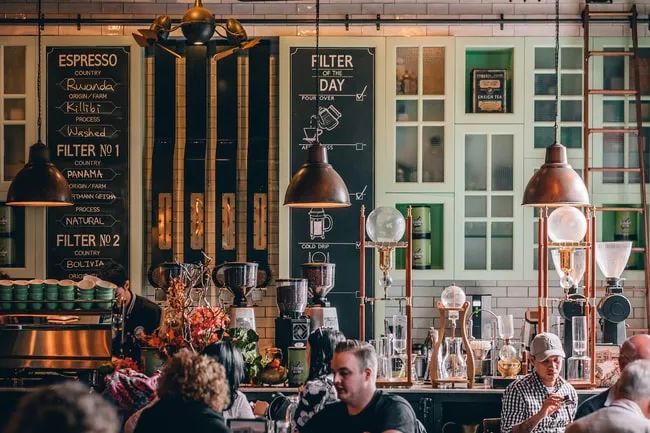
Baristas in every specialty coffee shop focus not only on the texture of milk coffee but also on how the beans are roasted, so that every cup customers drink has a silky, dense texture while still showing the origin's character. Through their roasting philosophy, roasters can highlight certain flavors in milk coffee, which led to the rise of SOE (Single Origin Espresso) and to milk coffee with layered coffee flavor.
Conclusion
Looking at these seemingly "crazy" pursuits, it suddenly becomes clear why Australian netizens get so worked up when they see someone stirring a latte or flat white.
Still, people in different regions have different coffee-drinking habits. Drinking coffee is meant to be relaxing, so enjoy it however you prefer without worrying too much about others' opinions. After all, stirring your coffee isn't illegal — as long as you're satisfied, that's what matters.
FrontStreet Coffee Recommendation
If this story has you wanting to make café-quality milk coffee at home, FrontStreet Classic Blend is the place to start. It is a medium-dark espresso recipe combining three origins, inspired by the old "Mamba" pairing of Mandheling and Brazil and finished with a small proportion of Robusta for extra aroma and crema. It pours with clear butter, toasted bread, and caramel-cookie aromas, a firm body, and fine, stable crema — steady enough to practice on and rich enough to serve.
For a milk coffee aimed at getting closer to commercial output, FrontStreet Commercial Blend is built for that. It takes the Specialty Blend recipe and adds a small proportion of Robusta, an old Italian approach meant to build more deep-brown, fine crema and a heavier body. Whether you make an Americano, latte, or mocha, it brings nut, cocoa, and caramel flavors, and the crema makes pouring latte art far easier.
Important Notice :
FrontStreet Coffee is a long-established specialty coffee roaster in Guangzhou China, selling freshly roasted beans from its own farm in Yunnan as well as dozens of carefully selected single-origin beans from around the world for both pour-over and espresso. The products deliver consistently excellent quality and great value, with shipping within 24 hours. Guangzhou's FrontStreet Coffee shop is recommended by many coffee lovers, and the beans are now available online at the Tmall 。
FrontStreet Coffee has moved to a new address:
FrontStreet Coffee Address: 315,Donghua East Road,GuangZhou
Tel:020 38364473
 Scan and follow the En Gafei WeChat official account. Please indicate that the reprint comes from "En Gafei".